Для отримання судинного доступу використовується низка процедур.
Катетеризація периферійної вени
Потреби більшості пацієнтів у в/в рідині та препаратах можна задовольнити за допомогою черезшкірного периферичного венозного катетера. Якщо черезшкірне розміщення у сліпому режимі є складним, ультразвуковий контроль зазвичай призводить до успішного розміщення.
У рідкісних випадках, коли черезшкірне введення катетера неможливе, можна використовувати венозний розтин. Типовими місцями розтину є підшкірна латеральна вена руки та підшкірна вена на щиколотці. Однак потреба у венозному розтині виникає рідко через популярність уведених через периферичні вени центральних катетерів (ПВЦК), серединних катетерів та внутрішньокісткових катетерів як у дорослих, так і у дітей.
Покроковий опис того, як проводити катетеризацію периферичних вен, див. у розділі Як вводити периферичний внутрішньовенний катетер і Як проводити введення периферичних внутрішньовенних катетерів за допомогою ультразвукового контролю.


Часті ускладнення (наприклад, місцева інфекція, венозний тромбоз, тромбофлебіт, вихід інтерстиціальної рідини зі стінок судин) можна зменшити за допомогою доскональної стерильної методики під час введення, а також дотримання заміни або видалення катетерів в межах 72 годин.
Катетеризація центральних вен
Пацієнти, які потребують безпечного або тривалого судинного доступу (наприклад, для отримання антибіотиків, хіміотерапії або парентерального харчування), а також пацієнти з поганим периферичним венозним доступом потребують центрального венозного катетера (ЦВК). ЦВК дозволяють вводити розчини, які занадто концентровані або подразнюють периферичні вени, та дозволяють контролювати центральний венозний тиск (ЦВТ).
ЦВК можна вводити через яремні, підключичні, пахвові або стегнові вени або через периферичні вени плеча (катетер ПВЦК). Хоча тип катетера та обрані ділянки часто визначаються окремими клінічними характеристиками та характеристиками пацієнта, введений через яремну вену ЦВК або ПВЦК, як правило, є переважаючим порівняно з підключичним доступом ЦВК (супроводжується підвищеним ризиком кровотечі та пневмотораксу) або стегновим доступом ЦВК (що супроводжується підвищеним ризиком інфекції). Під час зупинки серця рідина та препарати, що вводяться через ЦВК до стегнової вени, часто не можуть циркулювати над діафрагмою через підвищений внутрішньогрудний тиск, що виникає при серцево-легеневій реанімації (СЛР). У цьому випадку може бути переважним підхід через підключичну або внутрішню яремну вену.
Ультразвуковий контроль для розміщення катетерів у внутрішніх яремних венах або пахвових венах та катетерів ПВЦК тепер є стандартним методом при наданні медичної допомоги, який знижує ризик ускладнень. Коли можливо, слід здійснити корегування коагулопатії до введення ЦВК, а підключичний підхід не слід застосовувати у пацієнтів з некоригованою коагулопатією, оскільки місце венепункції неможливо контролювати або натиснути на нього.

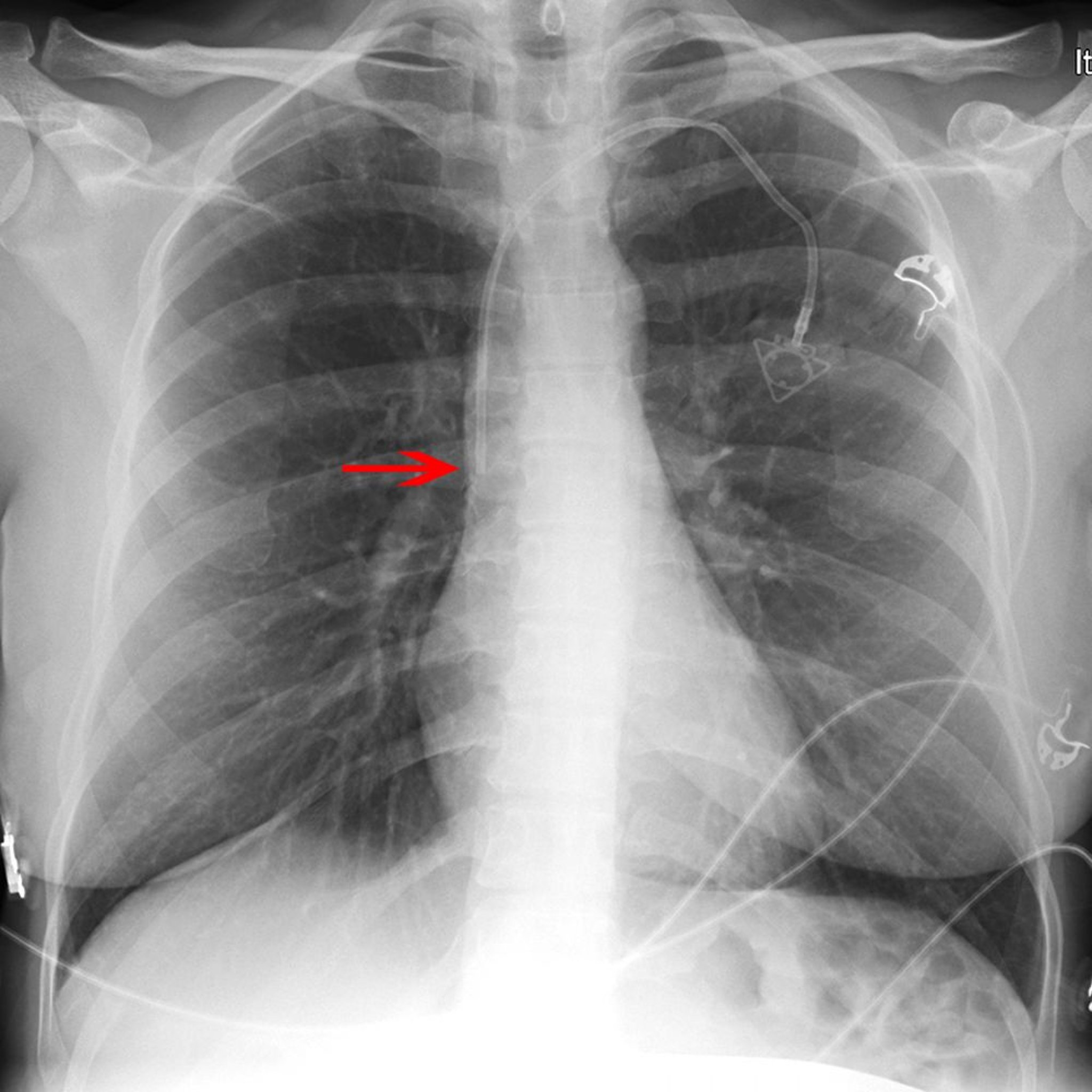
Червона стрілка вказує на кінчик катетера лівого підключичного венозного порту (відповідно розташований у нижній верхній порожнистій вені).
© 2017 Elliot K. Fishman, MD.
Як виконувати катетеризацію променевої артерії під контролем ультразвукового дослідження
Як виконувати катетеризацію стегнової вени під контролем ультразвукового дослідження
Як виконувати катетеризацію підключичної вени під контролем ультразвукового дослідження
Як виконувати катетеризацію внутрішньої яремної вени під контролем ультразвукового дослідження

Тампон із хлоргексидином використовується для підготовки шкіри в правій пахвинній ділянці. Ми використовуємо підготовку
Відео, створене консультантами з лікарняних процедур на сайті www.hospitalprodures.org.
Пацієнт розміщується у положенні Тренделенбурга, потім за допомогою тампону з хлоргексидином виконується обробка лівої
Відео, створене консультантами з лікарняних процедур на сайті www.hospitalprodures.org.

Тампон із хлоргексидином використовується для проведення стерильної підготовки правої передньої частини стінки грудної
Відео, створене консультантами з лікарняних процедур на сайті www.hospitalprodures.org.

Відео, створене консультантами з лікарняних процедур на сайті www.hospitalprodures.org.

Відео, створене консультантами з лікарняних процедур на сайті www.hospitalprodures.org.

Відео, створене консультантами з лікарняних процедур на сайті www.hospitalprodures.org.


Тампон із хлоргексидином використовується для підготовки шкіри в правій пахвинній ділянці. Ми використовуємо підготовку широкого поля для процедури введення правого центрального венозного катетера. Після висихання підготовчої процедури ми розмістимо широкий стерильний бар’єр. Стерильне простирадло має охоплювати всю нижню половину тіла, включаючи ліжко між пацієнтом і оператором. Тепер ми використовуємо стерильну оболонку, щоб захопити ультразвуковий зонд, на який нанесено нестерильний ультразвуковий гель. Ви захоплюєте ультразвуковий зонд, а потім обережно потягніть стерильний інтродюсер по зонду, щоб мати стерильний зонд для виконання ультразвукового дослідження в режимі реального часу.
Тепер ми підготуємо катетер. Ми накладаємо безголкові ковпачки на синій порт і білий порт катетера, і ми використовуватимемо стерильний фізіологічний розчин для промивання кожного порту. Тут ми промиваємо білий і синій порт катетера, що має ковпачки. А з коричневим портом, який є дистальним портом, дріт буде виходити з цього порту, тому ми не матимемо ковпачка, але після промивання цього порту нам потрібно буде затиснути трубку, перш ніж виймати стерильний шприц із фізіологічним розчином.
Тепер з 1-відсотковим вмістом лідокаїну ми наклеюємо стерильну етикетку, щоб усі шприци могли мати стерильну ідентифікацію. Потім на шкіру наносимо стерильний ультразвуковий гель, і тепер ми дивимося на праву стегнову артерію та стегнову вену у поперечній проекції. Стегнова артерія знаходиться у верхній лівій частині тіла. При компресії видно, що права стегнова вена здавлюється, але права стегнова артерія, яка є більш поверхневою і ліворуч, не стискається. Ми використовуємо 1-відсотоковий лідокаїн для місцевої анестезії шкіри та м’яких тканин, що лежать в її основі.
Тепер ми вводимо голку інтродюсера під кутом приблизно 45 градусів, вставленим на ту саму глибину від зонда, що й вена глибоко до зонда. Ми вставляємо препарат так, щоб ми поступово побачили введення голки у вену, і тепер ми повертаємо венозну кров. Ми візьмемося за втулку голки і витягнемо шприц, щоб підтвердити, що це непульсуюча кров. Тепер ми вставимо стерильний провід через інтродюсер і через голку. Ми збираємося повернути зонд у повздовжню орієнтацію, і ми бачимо, що дріт втягується у вену, коли дріт просувається через голку.
У стегновому положенні дріт можна просунути навіть на глибині до 30 сантиметрів. Тепер інтродюсер знімається, а провід залишається на місці. Важливо ніколи не відпускати провід, оскільки він може емболізувати його та проходити через вену. Тепер голку витягають і залишають дріт на місці, Ви все ще можете побачити, що дріт знаходиться у вені на ультразвуковому зображенні. Тепер зонд можна падати, і для чіткого визначення місця введення можна використовувати стерильну марлю, а потім скальпель можна використовувати для знеболення шкіри через дріт. Тепер розширювач вставляється над дротом, а дріт захоплюється з протилежного боку розширювача. Дилятатор просувається з скручуванням, щоб розширювати тракт через підшкірну тканину та у стегнову вену.
Тепер розширювач вилучається, залишаючи дріт на місці. Потім провід вводиться назад через центральний венозний катетер, поки Ви не зможете захопити провід на протилежному кінці коричневого або дистального порту катетера. Тепер провідник захоплюється дистальним кінцем катетера, а потім катетер просувається до кінця катетера. А тепер провід вилучається назад у стерильну оболонку і повністю виводиться з організму. Після повного зняття дроту коричневий порт обрізається.
Зараз ми вводимо останній безголковий ковпачок у коричневий порт, а потім його від’єднають, після чого Ви наберете кров у шприц, а потім промиєте всю трубку, намагаючись не вводити повітря в порт. Тепер білі та сині порти центрального венозного катетера промиваються стерильним фізіологічним розчином. Тепер деяка місцева анестезія використовується для знеболювання шкіри поруч із центральним венозним катетером, біонакладку накладають у місці введення з синьою стороною, нахиленою в напрямку стелі. Це пластир, просочений хлоргексидином, щоб звести до мінімуму ризик інфекцій кровотоку, пов’язаних із катетером.
Тепер використовується шов для фіксації катетера на місці у двох місцях. Після цього на центральну лінію накладуть стерильну оклюзійну пов’язку для завершення процедури. Тут використовується хомут інструмента для закріплення центральної лінії за допомогою шва, який виконується у двох місцях.
Відео, створене консультантами з лікарняних процедур на сайті www.hospitalprodures.org.
Пацієнт розміщується у положенні Тренделенбурга, потім за допомогою тампону з хлоргексидином виконується обробка лівої передньої частини стінки грудної клітки повністю догори, до половини шиї, а потім широко для охоплення лівого плеча. Для належного протисепсису необхідно дати хлоргексидину принаймні дві хвилини, щоб він повністю висох. Тепер накладається стерильне широке простирадло з отвором, розташованим по центру місця введення. Це стерильне простирадло має покривати голову і майже все ліжко.
Тепер ми складаємо 1 відсоток лідокаїну, який ми використовуватимемо для місцевої анестезії. Оскільки вся рідина в стерильному полі повинна бути маркована після заповнення шприца лідокаїном, на шприц наноситься стерильна етикетка з 1-відсотковим вмістом лідокаїну. Шприци з фізіологічним розчином вже попередньо промарковані, тому на них не потрібно наклеювати додаткову стерильну етикетку. Тепер ми наносимо стерильний інтродюсер на лінійний зонд, щоб ми могли виконувати ультразвукове керівництво в режимі реального часу для цієї підключичної лінії з ультразвуковим керуванням. Стерильний інтродюсер повинен покривати все стерильне простирадло.
Тепер ми накладатимемо декілька стерильних гумових стрічок, щоб тримати стерильний футляр на місці. Тут ми використовуємо стерильний фізіологічний розчин для промивання всіх портів катетера. Ми також змінюємо класичні ковпачки голки для безголкових ковпачків, які застосовуються до синього та білого портів цього двопросвітного катетера. Бурий порт двопросвітного катетера — це дистальний порт, який буде залишений без ковпачка, оскільки дріт зрештою буде намотуватися назад через цей коричневий порт. Після промивання коричневого порту порт необхідно обрізати перед зняттям шприца.
Тепер ми використовуємо місцеву анестезію, щоб знеболити шкіру та підшкірну тканину в місці введення. Ми використовуємо лінійний зонд із технікою площини, щоб можна було побачити голку зі шкіри аж до пахвової вени, яка візуалізується в поздовжній площині. У цей момент Ви бачите, що голка майже потрапила у вену. У цей момент він просто спливає прямо зараз, щоб можна було провести аспірацію фіолетової крові, як видно тут. Потім знімають роз'єм голки, шприц знімають, а потім провід з J-подібним наконечником прорізують через роз'єм голки з кривою, спрямованою до серця. Ви бачите, що голка — провід візуалізується, проникаючи через вену, коли ми поступово проводимо провід через голку. Провід різьбиться на 20-сантиметрову глибину шкіри.
Тепер інтродюсер знімається, а потім голка знімається над дротом. Потім над дротом у місці введення створюється скальпельний гребінь, і ми гарантуємо, що дріт може вільно рухатися всередині цієї упорної рани. Тепер дилятатор вводиться через дріт, а потім розширювач поступово просуватиметься скручуючим рухом для розширення підшкірного тракту аж до кінця пахвової вени. Тепер розширювач знятий, слідкуючи за тим, щоб не випадково не витягти провід. Тепер катетер вводиться через провід і поступово відтягується назад, поки провід не буде захоплено за дистальний коричневий порт.
Після захоплення дроту за коричневий порт можна ввести катетер до відповідної глибини введення, яка в лівій підключичній вені зазвичай становить 16-17 сантиметрів. Однак, з ультразвуковими вказівками ви додали б ще 3 сантиметри на додаток до цього. Тому ми вводимо цей катетер до 19 сантиметрів на шкірі. Зараз ми промиваємо всі три порти: синій, білий і, нарешті, коричневий порт стерильним фізіологічним розчином.
Тепер до місця введення накладається пластир із просоченою антимікробною речовиною або біопластир, щоб мінімізувати ризик інфікування кровотоку, пов’язаного з катетером. Для місцевої анестезії ми використовуємо ще трохи 1-процентного розчину лідокаїну, а потім накладаємо шви, щоб закріпити катетер у двох місцях. Для фіксації катетера на місці можна використовувати хомут інструмента. Тепер ми накладаємо стерильну оклюзійну пов'язку з біонакладкою та всім місцем введення, візуалізованим у відкритому вікні, а потім накладають крила внизу, щоб мінімізувати отвір, через який проходять три порти. І процедуру завершено.
Відео, створене консультантами з лікарняних процедур на сайті www.hospitalprodures.org.

Тампон із хлоргексидином використовується для проведення стерильної підготовки правої передньої частини стінки грудної клітки. Ми використовуємо тампон, рухаючись вперед і назад, щоб підготувати велику ділянку передньої грудної стінки та правого плеча.
Тепер ми накладаємо стерильне простирадло на цю ділянку. Це стерильне простирадло покриває все ліжко.
Тепер ми використовуємо стерильний фізіологічний розчин для промивання всіх трьох портів двопросвітного катетера. Ми можемо перемкнути нормальні ковпачки на трьохпросвітному катетері на безголкові ковпачки. Ми накладаємо безголкові ковпачки на білий порт і синій порт трьохпросвітного катетера. Ми не будемо накладати безголковий ковпачок на коричневий порт, який є дистальним портом потрійного просвітного катетера, оскільки це порт, з якого в кінцевому підсумку вийде провідник.
Коли ми промиваємо коричневий порт, як показано тут, ми повинні затиснути лінію, перш ніж знімати шприц.
Тепер ми зберемо все необхідне обладнання, зокрема голку інтродюсера, стерильний провідник, скальпель і розширювач у місці, де ми можемо їх легко взяти. J-крива дроту буде спрямована до серця, яке в підключичній лінії спрямоване до стоп, як показано тут для правої та лівої сторін.
Зараз ми наберемо трохи 1 % лідокаїну, який буде використовуватися для місцевої анестезії шкіри та періостеуму ключиці.
Усі ці шприци, що містять стерильну рідину, повинні бути марковані на Вашому стерильному полі. Стерильний фізіологічний розчин попередньо позначений як хлорид натрію, але шприц з 1 % лідокаїном не маркований, і тому ці стерильні етикетки можна використовувати для маркування шприца з 1 % лідокаїном, як показано тут.
Тепер ми використовуємо наші дві руки, щоб визначити криву ключиці, яка є головним орієнтиром, який вам потрібно визначити, коли ви виконуєте розміщення підключичної лінії. Коли ви визначите вигин ключиці, ви позначите місце введення на один сантиметр у напрямку до дельтопекторальної борозни від вигину ключиці. У цьому місці введення ми використовуватимемо 1 % лідокаїн для місцевої анестезії, як показано тут. Ми також вводимо цей розчин глибоко, поки не зможемо здійснити анестезію окістя ключиці на шляху просування.
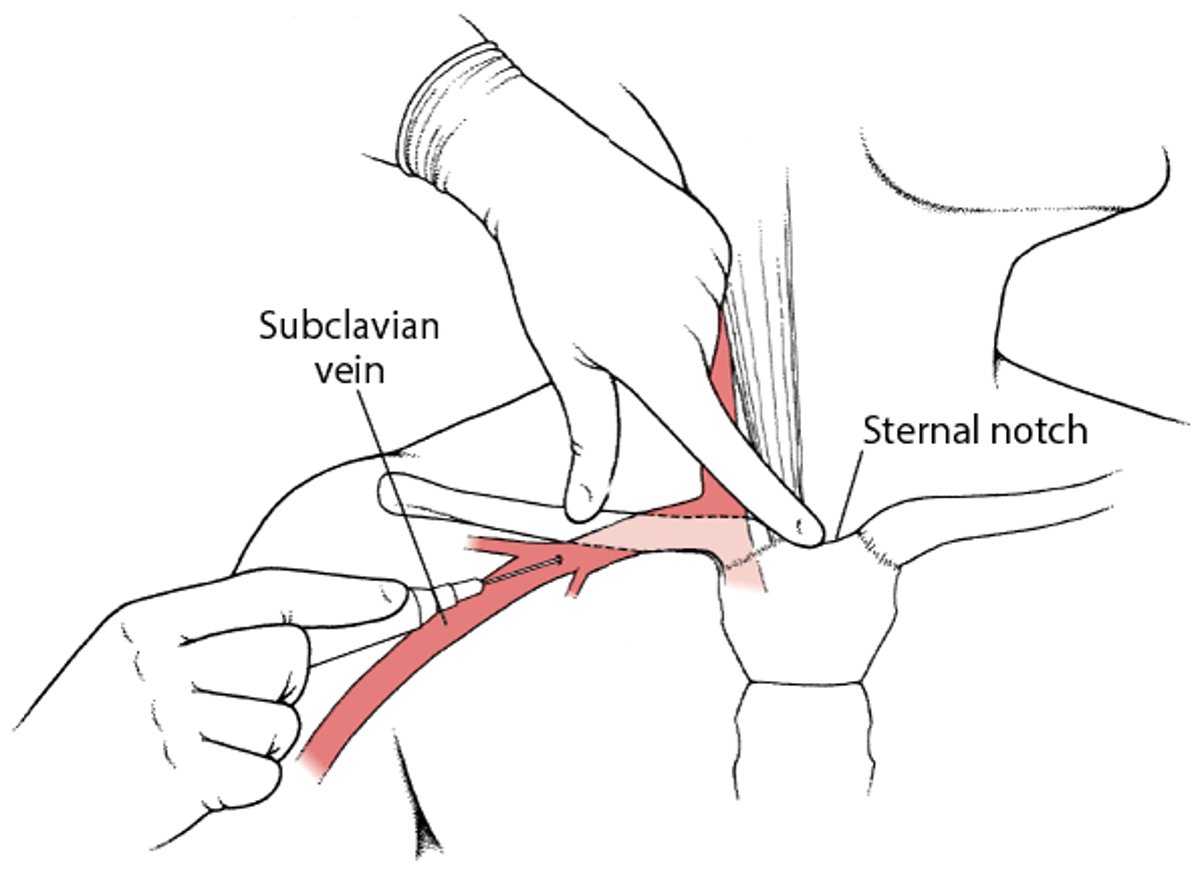
Тепер ми вставляємо голку інтродюсера під ключицю з голкою якомога паралельно підлозі. Ми помістили вказівний палець у виїмку грудини і за допомогою великого пальця руки без шприца направляли голку під ключицю, вставляючи її у напрямку до верхньої частини вказівного пальця та виїмки грудини, поки не побачимо цей спалах венозної крові. Потім просуваємо голку інтрод'юсера приблизно на два міліметри. Потім зніміть шприц, коли ми побачимо не [нерозбірливо] кров, тепер ми можемо просувати дріт через голку, поки ви не досягнете позначки 20 сантиметрів дроту.
Тепер голка видаляється над провідником з ретельним контролем провідника. Ми використовуємо скальпель для знеболення шкіри. Зараз ми просуваємо розширювач по провіднику для розширення тракту через шкіру, підшкірну тканину та в підключичну вену. Ми просуваємо розширювач крутними рухами, поки він не опиняється у втулці розширювача для розміщення підключичної лінії.
Тепер ми видаляємо розширювач і контролюємо провідник. Зараз ми вводимо катетер по провіднику. Провід виїде з коричневого порту катетера. Провідник захоплюється на дистальному кінці за межами коричневого порту, потім катетер просувається до відповідної глибини введення, яка у правій підключичній лінії становить приблизно 15 сантиметрів до рівня шкіри. Щодо лівої підключичної лінії — просувайте катетер до приблизно 17 сантиметрів на рівні шкіри.
Тепер ми витягуємо провідник з катетера безпосередньо в оболонку провідника. Таким чином, Ви маєте контроль над катетером, щоб переконатися, що катетер не витягується, коли Ви витягуєте провідник.
Тепер ми вставимо останній безголковий ковпачок у коричневий порт. Ми набираємо кров у коричневий порт, доки не побачите її в шприці, що містить стерильний фізіологічний розчин. Потім порт промивається фізіологічним розчином.
Тепер синій порт і білий порт будуть промивати, і вам потрібно буде просто видалити фізіологічний розчин, поки не побачите трохи крові в лінії як у синьому, так і в білому порті. Потім промийте катетер фізіологічним розчином, щоб видалити цю кров.
Тепер ми накладаємо білий і синій затискач центрального катетера приблизно за два сантиметри від місця введення — таким чином ми можемо закріпити центральний катетер на шкірі в чотирьох місцях. Ми використовуємо 1 % лідокаїн, щоб знеболити шкіру в цих чотирьох місцях.
Тепер ми накладаємо біонакладку, що являє собою пластир, просочений хлоргексидином, із синьою стороною накладки вгору до стелі над місцем введення. Це знижує ризик виникнення інфекцій кровотоку, пов’язаних із центральною лінією.
Ми використовуємо водій голки з вигнутою голкою для накладання на центральну лінію в цих чотирьох місцях. Тут для закріплення шва використовується хомут інструмента.
Після того, як всі чотири з цих ділянок будуть зашиті на місце, ми можемо накласти стерильну оклюзійну пов’язку з вікном, що має місце введення, включаючи біонакладку, на вигляд. Потім через цю насічку проходить стерильна оклюзійна пов'язка, через три порти центральної лінії.
Потім друга частина стерильної оклюзійної пов'язки містить ці крила, які підходитимуть під три порти центральної лінії, щоб повністю закріпити центральну лінію на місці. Після цього для встановлення ініціалів, дати та часу центральної лінії можна використовувати стерильний штифт.
Відео, створене консультантами з лікарняних процедур на сайті www.hospitalprodures.org.

Відео, створене консультантами з лікарняних процедур на сайті www.hospitalprodures.org.

Відео, створене консультантами з лікарняних процедур на сайті www.hospitalprodures.org.

Відео, створене консультантами з лікарняних процедур на сайті www.hospitalprodures.org.
Венепункція підключичної вени
На цьому рисунку показано положення руки під час венепункції (підключичний доступ). |

Ускладнення при встановленні центрального венозного катетера
ЦВК можуть викликати багато ускладнень (див. таблицю »). Ускладнення, такі як пневмоторакс, виникають приблизно у 1 % пацієнтів після введення ЦВК (1). Бактеріальна колонізація катетера без системної інфекції може виникнути, але інфекції кровотоку, пов'язані з катетером (CLABSI) виникають приблизно 4 на 1000 катетер-днів (1).
Також може виникати венозний тромбоз, пов’язаний із катетером, особливо у верхніх кінцівках.
Аритмії передсердь або шлуночків виникають під час введення катетера, але зазвичай вони є самообмеженими та зникають, коли провідник або катетер вилучені з внутрішніх камер серця.
У рідкісних випадках невідкладна катетеризація артерій вимагає хірургічного відновлення артерії.
Гідроторакс та гідромедіастінум можуть виникати, коли катетери розташовані поза межами судин.
У рідкісних випадках виникає пошкодження тристулкового клапана катетером, бактеріальний ендокардит, газова емболія та емболія катетера.
Щоб зменшити ризик венозного тромбозу та сепсису внаслідок катетеризації, клініцисти повинні якнайшвидше видалити ЦВК. Шкіру в місці введення катетера необхідно очищувати та щоденно оглядати для виявлення місцевої інфекції; якщо виникає місцева або системна інфекція, катетер необхідно замінити. Звичайна заміна ЦВК для запобігання CLABSI не рекомендується (2).
Ускладнення, пов’язані з центральними венозними катетерами
Ускладнення | Можливі наслідки |
|---|---|
Часто | |
Пошкодження сонної артерії | Кровотеча, порушення дихання, неврологічні ускладнення (наприклад, інсульт) |
Прокол плеври або легенів | |
Прокол вени, що призводить до протікання крові | Кровотеча, екстравазація рідини, гемодинамічні розлади |
Пошкодження підключичної, каротидної або стегнової артерії | Кровотеча, порушення судин кінцівки, гемоторакс, гемодинамічні розлади |
Тромбоз | Набряк кінцівок |
Менш поширені | |
Газова емболія | |
Аритмії | Зупинка серця |
Пошкодження плечового нервового сплетіння | Порушення функції кінцівки |
Ерозія катетера | Кровотеча, екстравазація рідини, гемодинамічні розлади |
Інфекція | |
Пошкодження ключиці, ребра або хребців | |
Пошкодження лімфатичних судин або вузлів | Хілоторакс |
Пошкодження клапанів серця | |
Довідкові матеріали щодо катетеризації центральних вен
1. Teja B, Bosch NA, Diep C, et al. Complication Rates of Central Venous Catheters: A Systematic Review and Meta-Analysis [published correction appears in JAMA Intern Med. 2024 Jun 1;184(6):707. doi: 10.1001/jamainternmed.2024.2175]. JAMA Intern Med. 2024;184(5):474-482. doi:10.1001/jamainternmed.2023.8232
2. Centers for Disease Control and Prevention: Інструкції з профілактики інтраваскулярних інфекцій, пов’язаних із катетером (BSI). 12 квітня 2024 року. Доступ здійснено 10 липня 2025 р.
Середня периферична катетеризація
Серединні катетери (СК) довжиною 8–20 см мають одинарний або подвійний просвіт і розміщуються периферично в недомінантній руці на 1,5 см вище або нижче ліктьової ямки, в підшкірній медіальній вені, підшкірній латеральній вені або плечовій венах. Незважаючи на те, що встановлення СК вимагає використання модифікованої техніки Сельдінгера та ультразвукового контролю контролю, СК не вважаються центральними венозними катетерами, оскільки кінчик розташований на пахвовій вені або нижче неї. Таким чином, немає необхідності в рентгенологічному підтвердженні правильного розміщення наконечника СК. СК може використовуватися замість ЦВК, якщо немає необхідності в моніторингу центральної венозної гемодинаміки. СК не слід використовувати для інфузії подразників або вазоактивних засобів; замість цього слід використовувати ЦВК.
Критерії використання СК (1):
Пацієнти, яким, як очікується, буде потрібна середньої тривалості або довготривала внутрішньовенна терапія (ймовірно, понад 6 днів)
Пацієнти з поганим венозним доступом, що вимагає декількох спроб проколу голкою або взяття крові
Пацієнти, які ймовірно потребуватимуть частого взяття крові для моніторингу їхнього стану
Було виявлено, що СК мають нижчі показники частоти флебіту, ніж периферичні катетери, і нижчі рівні інфекції, ніж центральні венозні катетери (2).
Довідкові матеріали щодо середньої периферичної катетеризації
1. Centers for Disease Control and Prevention: Інфекційний контроль: Короткий огляд рекомендацій: Інструкції з профілактики інтраваскулярних інфекцій, пов’язаних із катетером (2011 р.) 28 лютого 2024 року. Доступ здійснено 10 липня 2025 р.
2. Alexandrou E, Ramjan L, Spencer T, et al.: The use of midline catheters in the adult acute care setting – clinical implications and recommendations for practice. JAVA 16:35–41, 2011. doi: 10.2309/java.16-1-5
Катетеризація артерій
Використання автоматизованих неінвазивних пристроїв для вимірювання артеріального тиску зменшило використання артеріальних катетерів тільки з метою моніторингу тиску. Однак ці катетери є корисними для пацієнтів у нестабільному стані, які потребують щохвилинного вимірювання тиску, а також для тих, хто потребує частого забору зразків для визначення газів артеріальної крові. Показаннями є рефрактерний шок і дихальна недостатність. Показники артеріального тиску часто бувають трохи вищими при вимірюванні за допомогою артеріального катетера, ніж при сфігмоманометрії. Початковий поштовх, максимальний систолічний тиск і пульсовий тиск збільшуються, коли точка вимірювання розташована більш дистально, тоді як діастолічний і середній артеріальний тиск знижуються. Кальцифікація судин, атеросклероз, проксимальна оклюзія та положення кінцівок можуть впливати на результати вимірювань артеріального катетера.
Покроковий опис катетеризації артерій наведений у розділі Як виконувати катетеризацію променевої артерії та Як виконувати катетеризацію променевої артерії під контролем ультразвукового дослідження.

Відео, створене консультантами з лікарняних процедур на сайті www.hospitalprodures.org.

Тут ми готуємо тампон із хлоргексидином і стерильне простирадло для повного покриття потрібного місця. Зверніть увагу,
Відео, створене консультантами з лікарняних процедур на сайті www.hospitalprodures.org.

Відео, створене консультантами з лікарняних процедур на сайті www.hospitalprodures.org.

Відео, створене консультантами з лікарняних процедур на сайті www.hospitalprodures.org.

Тут ми готуємо тампон із хлоргексидином і стерильне простирадло для повного покриття потрібного місця. Зверніть увагу, що в цій процедурі є широке стерильне простирадло так само, як і при встановленні центрального катетера. Ось стерильна оболонка інтродюсера, який проходить над ультразвуковим зондом. Ультразвуковий зонд, на який заздалегідь зверху нанесено нестерильний ультразвуковий гель до того, як стерильну оболонку надінуть на інтродюсера. Ми набираємо одновідсотковий стерильний лідокаїн. Тут ми накладаємо стерильні гумові стрічки зверху оболонки зонда, щоб закріпити його, та наносимо стерильний ультразвуковий гель. Це 1 % розчин лідокаїну для місцевої анестезії.
Ми визначаємо променеву артерію, спочатку у поперечній площині, а коли вона знаходиться в центрі ультразвукового екрана, ми повільно повертаємо зонд у поздовжню площину, щоб тепер бачити променеву артерію у поздовжній площині. Під час візуалізації променевої артерії в поздовжній площині ми вводимо у променеву артерію голку, шлях якої до променевої артерії візуалізується на екрані, поки не побачимо сплеск крові. Зараз ми вставляємо провідник через голку та просуваємо катетер по провіднику обертальним рухом. Під катетером ми будемо використовувати марлю, а потім застосуємо стерильну марлю розміром 4 x 4 для захоплення трубки, що знаходиться біля артеріального катетера. Це потрібно для того, щоб не плутати стерильні рукавички. Ми прикручуємо артеріальну трубку до катетера.
Тепер ми беремо пряму голку, з'єднану з шовковим шовним матеріалом 2-0, щоб закріпити катетер на шкірі. Ми вставляємо голку через ділянку шкіри, суміжну з пазом у катетері. Після цього ми кілька разів проведемо тупий кінець голки від латеральної до медіальної позиції під пазом катетера, а потім прив’яжемо шов для закріплення катетера на шкірі. Тут ми забезпечуємо надійне закріплення шва на катетері. У цей час біопластир розташовують на місці введення катетера, його сторона синього кольору нахилена в напрямку стелі. Це просочений хлоргексидином пластир, щоб звести до мінімуму ризик пов’язаної з катетером бактеріємії. Тепер на біопластир та катетер накладається стерильна оклюзійна пов'язка. І процедуру завершено.
Відео, створене консультантами з лікарняних процедур на сайті www.hospitalprodures.org.

Відео, створене консультантами з лікарняних процедур на сайті www.hospitalprodures.org.
Ускладнення катетеризації артерій
У всіх місцях катетеризації артерій ускладнення включають кровотечу, інфекцію, тромбоз, розшарування інтими і дистальну емболію. Катетери слід видаляти за наявності ознак місцевої або системної інфекції.
Ускладнення з боку променевої артерії включають ішемію кисті руки та передпліччя внаслідок тромбозу або емболії, розшарування інтими або спазм у місці катетеризації. Ризик артеріального тромбозу вищий у малих артеріях (це пояснює більшу частоту у жінок) та у випадках більшої тривалості катетеризації. В артеріях із оклюзією після видалення катетера майже завжди виконують реканалізацію.
Ускладнення стегнових артерій включають атероемболію під час введення провідника. Частота тромбозу та дистальної ішемії значно нижча, ніж при катетеризації променевих артерій.
Ускладнення з боку пахвових артерій включають гематоми, які є нечастими, але можуть потребувати невідкладної допомоги, оскільки компресія плечового сплетіння може призвести до постійної периферичної нейропатії. Промивання пахвового артеріального катетера може спричинити потрапляння повітря або згустку. Щоб уникнути неврологічних наслідків таких емболізацій, клініцисти повинні вибрати ліву пахвову артерію для катетеризації (гілки лівої пахвової артерії розташовані дистальніше сонних артерій, ніж правої пахвової артерії).
Внутрішньокісткова інфузія
Будь-яку рідину або речовину, що зазвичай вводиться внутрішньовенно (включаючи продукти крові), можна вводити за допомогою внутрішньокісткової голки у медулярну порожнину окремих довгих кісток. Рідини досягають центральної циркуляції крові так само швидко, як і при внутрішньовенній інфузії. Ця методика використовується частіше у немовлят і дітей молодшого віку, оскільки їхня надкісниця є тонкою та через неї можна легко проникнути; до цього у дітей периферичний та центральний венозний доступ може бути досить складним, особливо у випадках шоку або при зупинці серця. Однак внутрішньокісткову інфузію можна застосовувати також у пацієнтів старшого віку в різних місцях (наприклад, грудина, проксимальна великогомілкова кістка, плечова кістка) за допомогою спеціальних пристроїв (наприклад, пристрою для проколювання під тиском, свердлильного пристрою).
Покроковий опис внутрішньокісткової катетеризації наведений у розділі Як виконувати внутрішньокісткову катетеризацію, вручну і з електросверлом.

Procedure demonstrated by Eric Sanders, MD, EM-2. Walter A. Schrading, MD, FACEP, faculty supervisor. WellSpan York Hospital Emergency Medicine Residency Program York, PA. Cadaver specimens provided by Maryland State Anatomy Board, DHMH. Filmed on location at School of Medicine, Anatomical Services Division, Univ. of Maryland.

© Elsevier Inc. Усі права захищено.
Це відео призначене для особистого використання. Користувачам заборонено копіювати, відтворювати, ліцензувати, передписувати, продавати, надавати в оренду або розповсюджувати це відео.

Procedure demonstrated by Eric Sanders, MD, EM-2. Walter A. Schrading, MD, FACEP, faculty supervisor. WellSpan York Hospital Emergency Medicine Residency Program York, PA. Cadaver specimens provided by Maryland State Anatomy Board, DHMH. Filmed on location at School of Medicine, Anatomical Services Division, Univ. of Maryland.

© Elsevier Inc. Усі права захищено.
Це відео призначене для особистого використання. Користувачам заборонено копіювати, відтворювати, ліцензувати, передписувати, продавати, надавати в оренду або розповсюджувати це відео.
Внутрішньокісткове введення (ВВ) голки
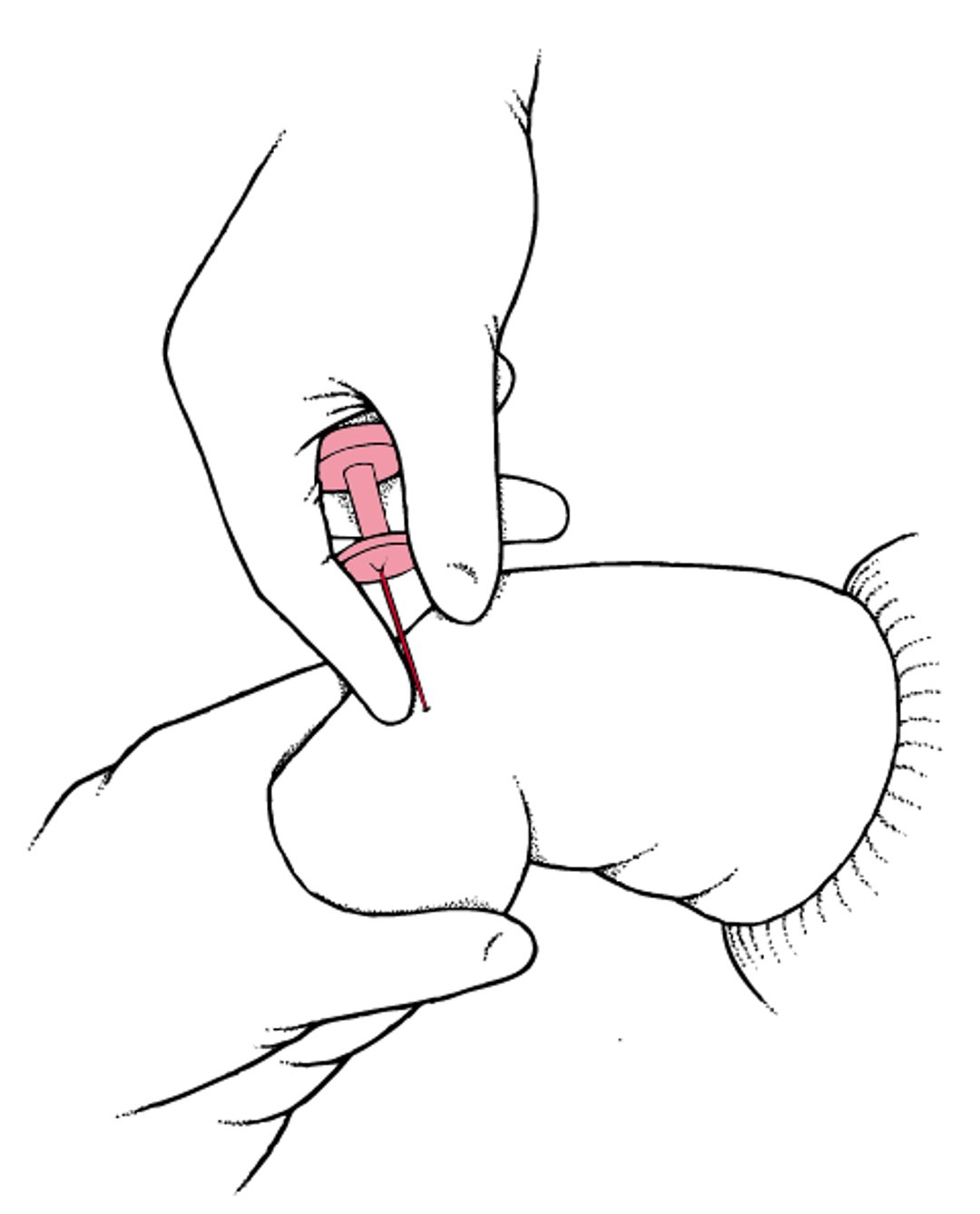
Пальці лікаря та великий палець охоплюють проксимальну частину великогомілкової кістки для її стабілізації; кисть руки не слід розміщувати безпосередньо за місцем введення (щоб уникнути проколювання руки лікаря). Замість цього ззаду коліна можна покласти рушник для підтримки. Лікар міцно тримає голку на долоні іншої руки, спрямовуючи наконечник трохи далі від суглобового простору та пластини для росту. Голка вставляється приблизно на 1-2 см нижче горбистості великогомілкової кістки з помірним тиском і поворотним рухом, зупиняючись, як тільки тріск указує на проникнення через кіркову речовину кістки. Деякі голки мають пластиковий рукав, який можна налаштувати таким чином, щоб запобігти їх занадто глибокому проштовхуванню в або через кістку. |