Konjunkitiviti (Conjunctivitis) ni kuvimba kwa utando (conjunctiva) unaofunika kope kwa ndani na sehemu nyeupe ya jicho.
Konjunktivaitisi inasababishwa na bakteria, virusi, au kemikali.
Dalili ni pamoja na macho kuwa mekundu, kuvimba, na kutoa majimaji au usaha.
Utambuzi hufanyika kwa kuangalia mwonekano wa macho na wakati mwingine kupima majimaji yanayotoka.
Antibiotiki, dawa za kuzuia virusi, au marashi hutolewa kama tiba.
Inaweza kuzuiwa kwa kuweka matone au marashi maalum machoni mwa mtoto mara tu baada ya kuzaliwa, na kwa kuwapima na kuwatibu wajawazito.
Mtazamo wa Ndani wa Jicho

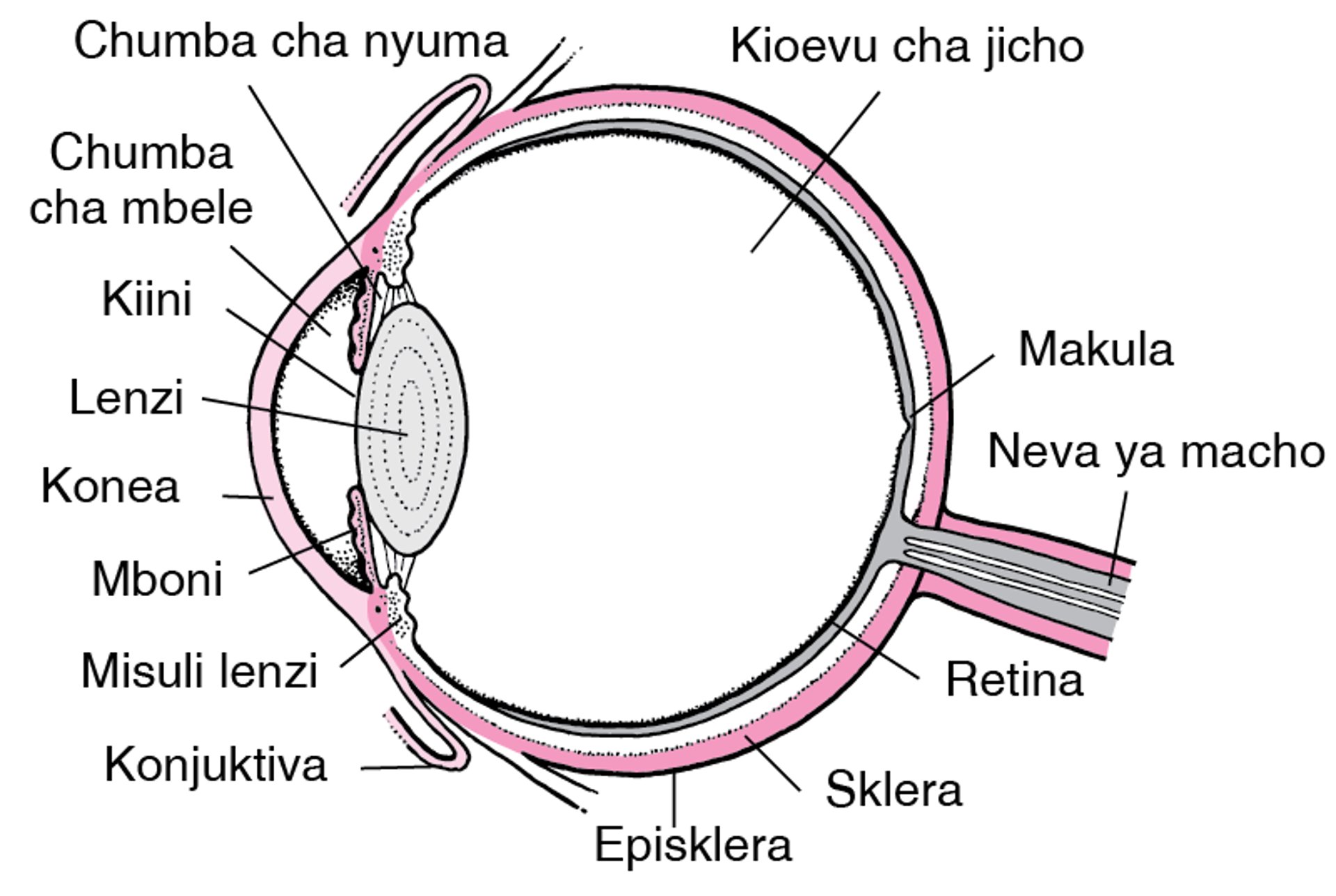
(Tazama pia Muhtasari wa Maambukizi kwa Watoto Wachanga na Konjunktivaitisi ya Maambukizi{4}.)
Sababu za Konjunktivaitisi kwa Watoto Waliozaliwa Karibuni
Konjunktivaitisi kwa watoto wachanga husababishwa zaidi na maambukizi. Maambukizi yanaewza kusababishwa na bakteria au virusi.
Ikiwa mama ana bakteria fulani ukeni, anaweza kumwambukiza mtoto wakati wa kujifungua. Bakteria kama hizi ni pamoja na Klamidia, Nimonia ya Streptokokasi, Haemophilus influenzae, Neisseria gonorrhoeae, na wengine.
Ikiwa mjamzito ana maambukizi ya virusi vya herpes simplex (HSV), anaweza kumwambukiza mtoto mchanga wakati wa uchungu wa uzazi na kujifungua (tazama pia Maambukizi ya HSV kwa Watoto Wachanga).
Konjunktivaitisi (macho kuwa mekundu na kuvimba) kwa watoto wachanga pia inaweza kusababishwa na mmenyuko wa matone ya macho au marashi ambayo watoto hupewa mara tu baada ya kuzaliwa ili kuzuia maambukizi. Mmenyuko huu unaitwa konjunktivaitisi ya kemikali (chemical conjunctivitis).
Dalili za Konjunktivaitisi kwa Watoto Wachanga
Dalili za konjunktivaitisi zinaweza kutofautiana kulingana na chanzo cha maambukizi.
Konjunkitiviti inayosababishwa na bakteria ya Klamidia kwa kawaida huanza siku 5 hadi 14 baada ya kujifungua. Watoto wachanga hupata kope zilizovimba na kutokwa na majimaji machoni ambayo huanza kama maji na kufuatiwa na kuongezeka kwa usaha. Maambukizi haya wakati mwingine yanaweza kuwa makali sana.
Konjunkitiviti inayosababishwa na bakteria ya Neisseria gonorrhoeae (kisonono) kwa kawaida huanza siku 2 hadi 5 baada ya kujifungua. Watoto wachanga hupata uvimbe mkali wa kope na kutokwa na usaha mwingi machoni. Bila matibabu, vidonda vinaweza kutokea kwenye konea na kusababisha upofu wa kudumu.


This image shows conjunctivitis in a newborn characterized by severe inflammation of the eyelids and by discharge of pus.
Konjunkitiviti inayosababishwa na bakteria wengine huanza kati ya siku 4 hadi wiki kadhaa baada ya kujifungua.
Konjunkitiviti inayosababishwa na virusi vya herpes simplex ni nadra sana, lakini inaweza kuwa hatari sana kwa afya ya jicho la mtoto.
Konjunkitiviti inayosababishwa na kemikali (kama vile muwasho kutoka kwenye matone ya dawa ya macho) kwa kawaida huanza ndani ya saa 6 hadi 8 baada ya kuwekwa na hupona yenyewe ndani ya siku 2 hadi 4.
Utambuzi wa Konjunktivaitisi kwa Watoto Waliozaliwa Karibuni
Upimaji wa majimaji (usaha au machozi) yanayotoka machoni.
Madaktari huchunguza dalili za mtoto mchanga na mwonekano wa macho yake kwa ujumla.
Sampuli za majimaji ya macho hutumwa maabara ili kutambua kimelea mahususi kinachosababisha maambukizi.
Matibabu ya Konjunktivaitisi kwa Waliozaliwa Karibuni
Dawa za antibiotiki au dawa za kuzuia virusi.
Kwa konjunkitiviti inayosababishwa na bakteria ya Klamidia, dawa ya antibiotiki aina ya erythromycin au azithromycin hutolewa kwa njia ya kunywa.
Kwa konjunkitiviti inayosababishwa na Neisseria gonorrhoeae (kisonono), watoto wachanga hulazwa hospitalini na kupewa antibiotiki aina ya ceftriaxone au cefotaxime kupitia mshipa wa damu au kwa sindano kwenye misuli. Madaktari huwafuatilia kwa karibu ili kuona ikiwa maambukizi yamesambaa katika sehemu nyingine za mwili wao.
Kwa konjunkitiviti inayosababishwa na bakteria wengine, marashi ya macho yenye polymyxin na bacitracin, erythromycin, au tetracycline hupakwa machoni.
Kwa konjunkitiviti inayosababishwa na virusi vya herpes simplex, watoto wachanga hupewa dawa ya kuzuia virusi ya acyclovir ya kunywa, pamoja na matone ya macho ya trifluridine au jeli ya macho ya ganciclovir.
Uzuiaji wa Konjunktivaitisi kwa Watoto Waliozaliwa Karibuni
Nchini Marekani na nchi nyingine nyingi, marashi ya erythromycin hupakwa mara kwa mara kwenye macho ya kila mtoto mchanga mara tu baada ya kuzaliwa ili kuzuia konjunkitiviti ya kisonono (Neisseria gonorrhoeae). Katika baadhi ya nchi nyingine, matone ya silver nitrate, tetracycline (matone au marashi), au povidone iodine yanaweza kutumika.
Matone ya povidone iodine yanaweza pia kusaidia kuzuia konjunkitiviti inayosababishwa na Klamidia.
Watoto waliozaliwa na akina mama wenye kisonono ambacho hakijatibiwa wanapaswa kupata sindano moja ya ceftriaxone mara tu baada ya kuzaliwa, hata kama hawaonyeshi dalili za kuugua. Tofauti na kisonono, watoto waliozaliwa na akina mama wenye klamidia hufuatiliwa tu na madaktari na kutibiwa kwa antibiotiki ikiwa wataanza kuonyesha dalili.
Wajawazito ambao wakati wa uchungu wa uzazi wana maambukizi ya wazi ya herpes simplex sehemu za siri (vidonda au malengelenge yanayoonekana), au wenye dalili za mwanzo (kama kuwashwa au kuhisi kuungua), wanaweza kujifungua kwa upasuaji (C-section) ili kuzuia kumwambukiza mtoto.
Wajawazito waliowahi kupata herpes sehemu za siri hapo awali wanaweza kupewa dawa za kuzuia virusi kuanzia wiki ya 36 ya ujauzito ili kuzuia kumuambukiza mtoto wakati wa kuzaliwa.
Kuchunguza na kutibu watu wajawazito
Kupima na kutibu kisonono na klamidia kwa wajawazito ndiyo njia bora zaidi ya kuzuia konjunkitiviti kwa watoto wachanga. Wajawazito wote hupimwa katika mahudhurio ya kwanza ya kliniki na kurudiwa tena katika miezi mitatu ya mwisho ya ujauzito ikiwa wako kwenye hatari kubwa. (Tazama pia Uchunguzi wa Klamidia na Uchunguzi wa Kisonono.)
Wajawazito hupewa antibiotiki sahihi mara tu maambukizi yanapogundulika.