Tatizo la mifupa kwa watoto linaweza kusababishwa na jeraha, maambukizi au saratani; linaweza kurithiwa; linaweza kutokea kama sehemu ya ukuaji wa mtoto; au linaweza kutokea bila sababu inayojulikana.
Baadhi ya matatizo ya mifupa yanaweza kusababisha maumivu na shida ya kutembea.
Madaktari wanakita utambuzi wa ugonjwa kwa kuchunguza kimwili kwa kina, dalili na eksirei, uchanganuzi wa tomografia ya kompyuta (CT) au upigaji picha kwa mwangwi wa sumaku (MRI).
Matibabu yanategemea tatizo lenyewe.
Mifupa ya watoto inaendelea kukua na kujitengeneza yenyewe kwa kina. Ukuaji unatoka kwenye sehemu dhaifu za mfupa zinazoitwa sahani ya ukuaji. Katika kurekebishwa, tishu za mifupa ya zamani hubadilishwa taratibu kwa tishu za mifupa mipya. Matatizo mengi ya mifupa yanatokana na mabadiliko yanayotokea kwenye mfumo wa mifupa na misuli wa mtoto. Matatizo haya yanaweza kupata nafuu au kuwa mabaya kadiri mtoto anavyokua. Matatizo mengine ya mifupa yanaweza kurithishwa au kutokea wakati wa utoto bila sababu yoyote inayojulikana.
Visahani vya ukuaji
Watoto wanafikiri kuhusu mifupa kama vitu vigumu. Lakini mifupa inapaswa kukua sambamba na mwili wa mtoto. Mifupa ya watoto hukua kutoka sehemu laini za tishu karibu na ncha za mifupa. Maeneo haya huitwa maeneo ya ukuaji. Watoto wanapomaliza kukua, sahani za ukuaji zinakuwa mfupa mgumu. Baada ya sahani za ukuaji kuwa ngumu, mifupa haiwezi kukua kwa urefu. Ndiyo maana watu hawawi warefu baada ya hatua fulani mwishoni mwa ubalehe. Ingawa mifupa hujirekebisha yenyewe, kama vile baada ya jeraha, ukarabati huo hauhusishi maeneo ya ukuaji.
Wakati wa utoto, majeraha ya sahani za ukuaji yanaweza kusababisha mfupa kukua isivyo kawaida.
Osteochondroses ni matatizo ya sahani za ukuaji yanayotokea mtoto anapokua kwa haraka.
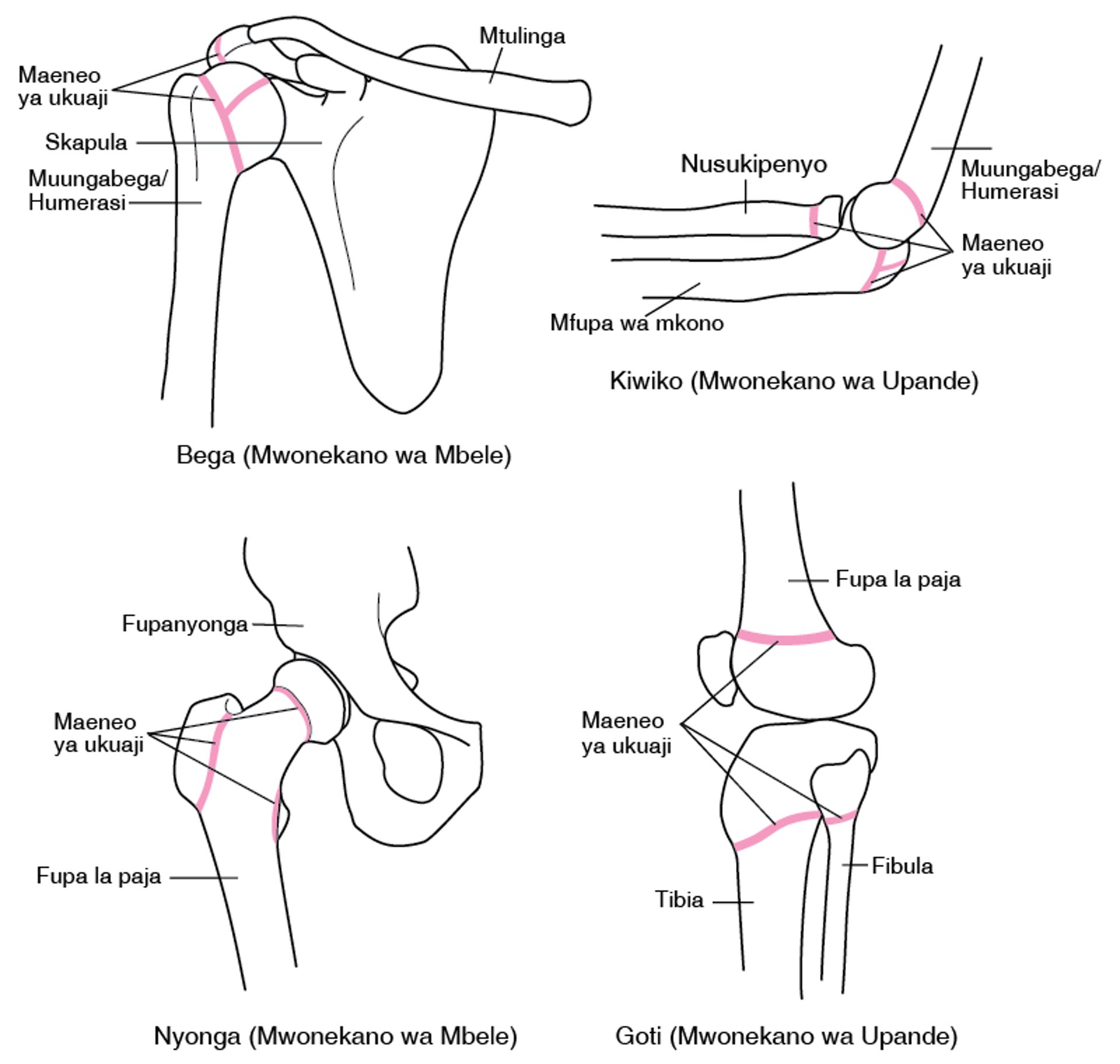
Kutafuta Maeneo ya Ukuaji
Maeneo ya ukuaji (yanayoonyeshwa na mistari ya rangi ya waridi) ni maeneo ya gegedu karibu na ncha za mifupa mirefu, kama vile mifupa ya mkono na mguu. Huwezesha mifupa kurefuka hadi watoto wafikie urefu wao kamili. Watoto wanapomaliza kukua, sahani za ukuaji zinakuwa mfupa mgumu. Baada ya sahani za ukuaji kuwa ngumu, mifupa haiwezi kukua kwa urefu. |

Uzito wa mfupa
Uzito wa mfupa ni kipimo cha madini katika tishu za mfupa. Uzito wa kawaida wa mfupa ni muhimu kwa ukuaji wa watoto na kwa afya ya jumla ya mifupa. Matatizo yanaweza kutokana na wepesi wa mfupa na uzito wa juu wa mifupa, hali inayoongeza hatari ya kuvunjika.
Matatizo ya uzito wa mifupa yanaweza kusababishwa na jeni zisizo za kawaida za kurithi au yanaweza kusababishwa na sababu kama vile lishe duni, kutokuwa na msawazo wa homoni au matatizo ya kiafya. Osteoporosis kwa watoto ni tatizo la wepesi wa mifupa.
Sababu za Matatizo ya Mifupa kwa Watoto
Matatizo ya mifupa kwa watoto yanaweza kutokana na sababu ambazo zinaathiri watu wa umri wote, ikiwa ni pamoja na majeraha, maambukizi (ostiomielitisi), au saratani. Sababu za matatizo ya mifupa ambayo yanaathiri hasa watoto kwa kawaida yanahusisha kutowiana kwa mifupa kwa taratibu, hali inayosababishwa na nguvu inayotolewa kwenye sahani za ukuaji kadiri watoto wanavyokua. Mtiririko mbaya wa damu unaweza pia kudhuru sahani ya ukuaji, kama ambavyo utengano unavyoweza kufanya kutoka kwenye mfupa mwingine au hata kutowiana kidogo. Uharibifu kwenye sahani ya ukuaji unakandamiza ukuaji wa mifupa, huharibu ungio na unaweza kusababisha uharibifu wa ungio wa muda mrefu (ugonjwa wa baridi yabisi).
Baadhi ya magonjwa ya nadra ya tishu unganishi yanaweza pia kuathiri mifupa. Yanajumuisha ugonjwa wa Marfan, osteogenesis imperfecta, na osteochondrodysplasias. Osteopetroses ni magonjwa mengine nadra ya kurithi ambayo yanaongeza uzito wa mifupa, husababisha mifupa kukua isivyo kawaida au yote mawili.
Dalili za Matatizo ya Mifupa kwa Watoto
Matatizo ya mifupa wakati mwingine husababisha ulamavu usio na maumivu. Ulemavu mwingine unaweza kuathiri uwezo wa mtoto kutembea au kutumia mikono na miguu yao.
Utambuzi wa Matatizo ya Mifupa kwa Watoto
Tathmini ya daktari
Vipimo vya picha
Wakati mwingine vipimo vya damu
Utambuzi wa ugonjwa wa mifupa kwa kawaida huhusisha uchunguzi wa kimwili wa kina na vipimo vya picha kama vile eksirei, uchukuaji picha kwa mawimbi ya sauti ya sumaku (MRI), na uchanganuzi wa tomogrefia ya kompyuta (CT). Wakati mwingine vipimo vya damu hufanywa.
Matibabu ya Matatizo ya Mifupa kwa Watoto
Hutegemea tatizo lenyewe
Matibabu ya matatizo ya mifupa hutofautiana kulingana na hali husika. Watoto wanaweza kukua kushinda baadhi ya matatizo. Hata hivyo, wengine wanaweza kuhitaji kufungwa au upasuaji.
Ikiwa sahani ya ukuaji inaharibiwa, upasuaji unaweza kusaidia. Kusahihisha miisho ya sahani ya ukuaji iliyotenganishwa kunaweza kurejesha ukuaji wa kawaida wa mifupa. Kwa kupunguza harara inayosababishwa na kutoana, upasuaji unaweza kusaidia kuzuia kutokea kwa baridi yabisi kwenye maungio.
Ikiwa tatizo la mifupa linasababisha ulemavu wa kuonekana, watoto wanaweza kuwa na wasiwasi au wenye msongo. Baadhi ya tiba za matatizo ya mifupa zinaweza pia kuwa vigumu kukubali kisaikolojia. Kwa mfano, vijana walio kwenye umri wa balehe wanaweza kuwa na ubishi kuvaa kiegemezi cha mgongo kwa ajili ya matibabu ya matibabu ya skoliosisi kwa sababu kufanya hivyo kunawafanya waonekane tofauti na wenzao. Ushauri wa kitaalamu unaweza kupunguza wasiwasi au msongo na unaweza pia kusaidia watoto kupitia matibabu magumu.