
Vifaa vya ndani ya uterasi (IUD) ni vifaa vidogo vya plastiki vyenye umbo la T vinavyoingizwa ndani ya uterasi.
Nchini Marekani, takriban 10% ya wanawake hutumia njia za kupanga uzazi zinazoweza kurekebishwa kwa muda mrefu (LARC). Vifaa vya ndani ya uterasi (IUDs) ndivyo LARC vinavyotumika sana. IUD ni maarufu kwa sababu ya faida zake kama njia ya uzazi wa mpango, ikiwa ni pamoja na kuwa na ufanisi mkubwa na kuwa na madhara madogo. Pia, IUD zinahitaji kubadilishwa kila baada ya miaka 3, 5, 8, au 10 pekee, na hivyo kuepuka hitaji la kutumia njia ya uzazi wa mpango ya kila siku, ya kila wiki, au ya kila mwezi.

IUD lazima ziingizwe na kuondolewa na daktari au mtaalamu mwingine wa afya. Kuingiza huchukua dakika chache tu. Kuingiza kunaweza kuleta maumivu, kwa hivyo dawa ya ganzi inaweza kudungwa kwenye njia ya kizazi kabla ya kuingiza IUD. Kuondolewa kwa kawaida husababisha usumbufu kidogo.
IUD huzuia kupata mimba kwa
Kuua au kuzuia mbegu za kiume kusogea
Kuzuia mbegu za kiume kurutubisha yai
Kuunda hali ya mwasho ndani ya uterasi ambayo ni sumu kwa mbegu za kiume
Kuelewa Vifaa Vinavyowekwa Ndani ya Uterasi
Vifaa vinavyowekwa ndani ya uterasi (IUD) huwekwa na daktari kwenye uterasi ya mwanamke kupitia sehemu ya uke. IUD hutengenezwa kwa plastiki iliyofinyangwa. Aina mbili za IUD hutoa progestin iitwayo levonorgestrel. Aina nyingine ina umbo la T na ina waya wa shaba uliofungwa kwenye sehemu ya chini kwenye mikono ya T. Uzi wa plastiki huunganishwa kwenye IUD. Uzi huo huwezesha mwanamke kuhakikisha kuwa kifaa bado kipo mahali kinapofaa na daktari anaweza kukiondoa kwa urahisi. |

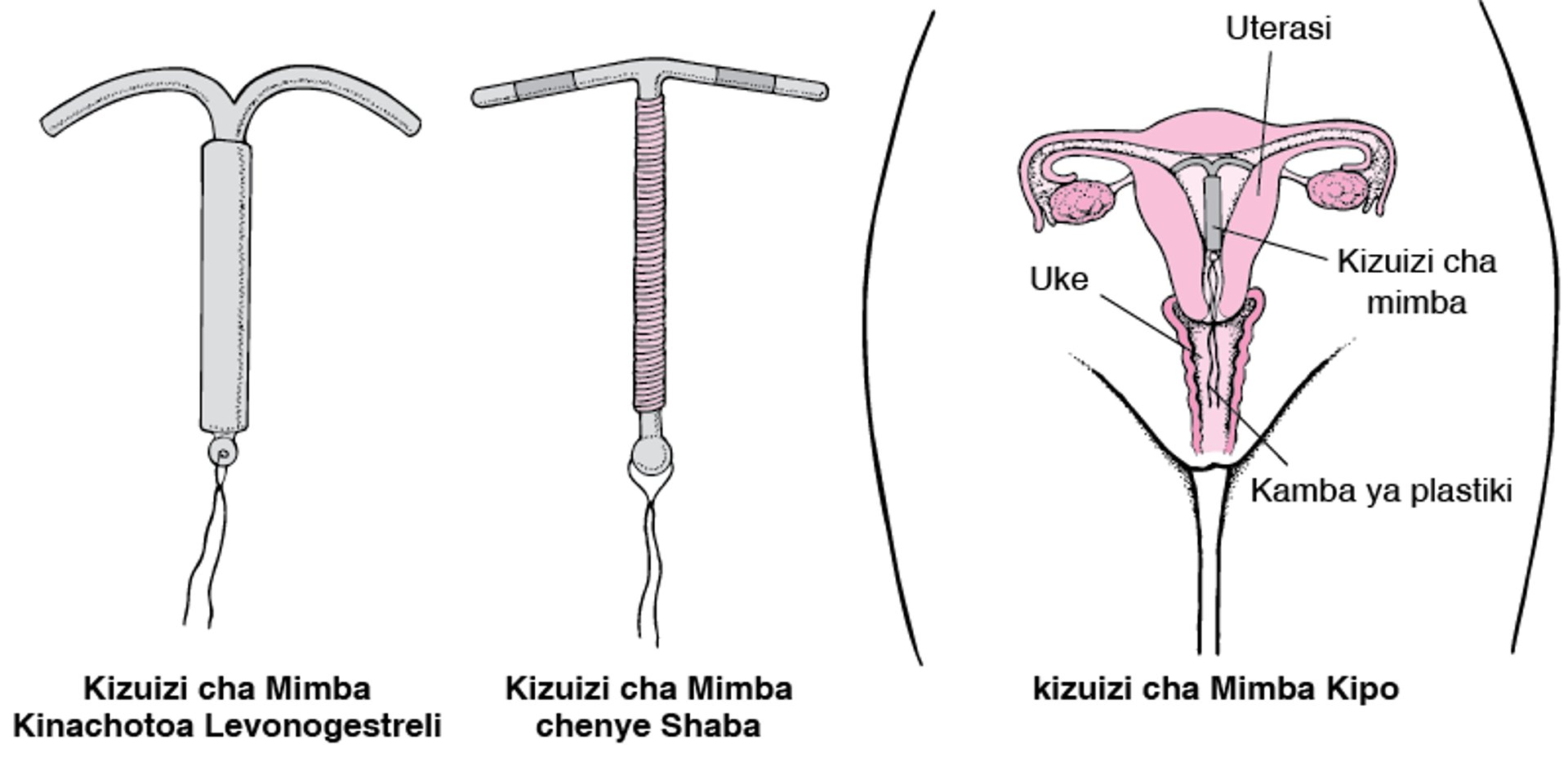
Nchini Marekani, IUD zinazopatikana ni pamoja na IUD zinazotoa levonorgestrel na IUD ya shaba.
IUD tofauti zinazotoa levonorgestrel zinadumu kwa kipindi cha muda tofauti: Miaka 3, 5, au 8. Kwa aina zote, mimba hutokea tu kwa chini ya asilimia 1.5 ya wanawake.
IUD ya shaba hufanya kazi kwa angalau miaka 10. Inapoachwa mahali pake kwa miaka 12, chini ya asilimia 2 ya wanawake hupata mimba.
Mwaka mmoja baada ya kuondolewa IUD, asilimia 80 hadi 90 ya wanawake wanaojaribu kupata mimba hufanya hivyo.
Wanawake wengi, wakiwemo wale ambao hawajapata watoto, na wasichana vijana, wanaweza kutumia IUD. Hata hivyo, IUD hazipaswi kutumika wakati kuna hali zifuatazo:
Maambukizi ya nyonga, kama vile maambukizi ya ngono au ugonjwa wa kufura wa fupanyonga
Kasoro ya kimuundo inayoharibu uterasi
Kutokwa na damu ukeni kusikoelezeka
Saratani ya mlango wa kizazi au saratani ya utando wa uterasi (endometriamu)
Ujauzito
Kwa IUD zinazotoa levonorgestrel, saratani ya matiti au mzio wa levonorgestrel
Kwa IUD za shaba, Ugonjwa wa Wilson au mzio wa shaba
Kuwa na maambukizi ya zinaa, ugonjwa wa kufura nyonga, au mimba iliyotungwa upande (ectopic) hapo awali, hakuwazuia wanawake kutumia IUD.
Kitanzi kinaweza kuwekwa wakati wowote wakati wa mzunguko wa hedhi, mradi tu mwanamke hajafanya ngono bila kinga tangu hedhi yake ya mwisho. Ikiwa ngono isiyo salama imefanyika, kipimo cha ujauzito kinahitajika kabla ya kuwekwa, na aina nyingine ya kupanga uzazi inapaswa kutumika hadi kipimo kitakapothibitisha kuwa hana mimba. Mimba lazima iondolewe kabla ya kuwekwa kwa IUD, isipokuwa wakati IUD ya shaba inatumika kwa kupanga uzazi wa dharura. Katika hali hiyo, kuingiza ndani ya siku 5 za ngono bila kinga kunafaa kwa karibu 100% katika kuzuia mimba, na kifaa hicho kinaweza kubaki mahali pake kwa ajili ya kupanga uzazi wa muda mrefu ikiwa kitahitajika. Vidonge vya Levonorgestrel vinavyotoa mimba bado havijaidhinishwa kwa ajili ya kupanga uzazi wa dharura na vinapaswa kuwekwa tu mara tu mimba inapoondolewa.
Kabla ya IUD kuwekwa, madaktari wanaweza kupendekeza upimaji wa magonjwa ya zinaa (STI) kulingana na viashiria vya hatari vya mwanamke. Hata hivyo, madaktari hawahitaji kusubiri matokeo ya vipimo vya magonjwa ya zinaa kabla ya kuingiza IUD. Ikiwa matokeo yataonyesha kuwa magonjwa yapo, magonjwa ya zinaa hutibiwa, na IUD huachwa mahali pake. Endapo madaktari wataona uchafu unaosababisha usaha kabla ya IUD kuwekwa, IUD haitawekwa. Katika hali hizo, upimaji wa magonjwa ya zinaa hufanywa, na antibiotiki huanzishwa mara moja, bila kusubiri matokeo ya kipimo. Kisha IUD huwekwa baada ya matibabu ya maambukizi kuisha.
IUD inaweza kuwekwa mara tu baada ya kuharibika kwa mimba au utoaji mimba unaotokea wakati wa kipindi cha 1 au cha 2 cha ujauzito na mara tu baada ya kondo la nyuma kutolewa baada ya kujifungua kwa upasuaji.

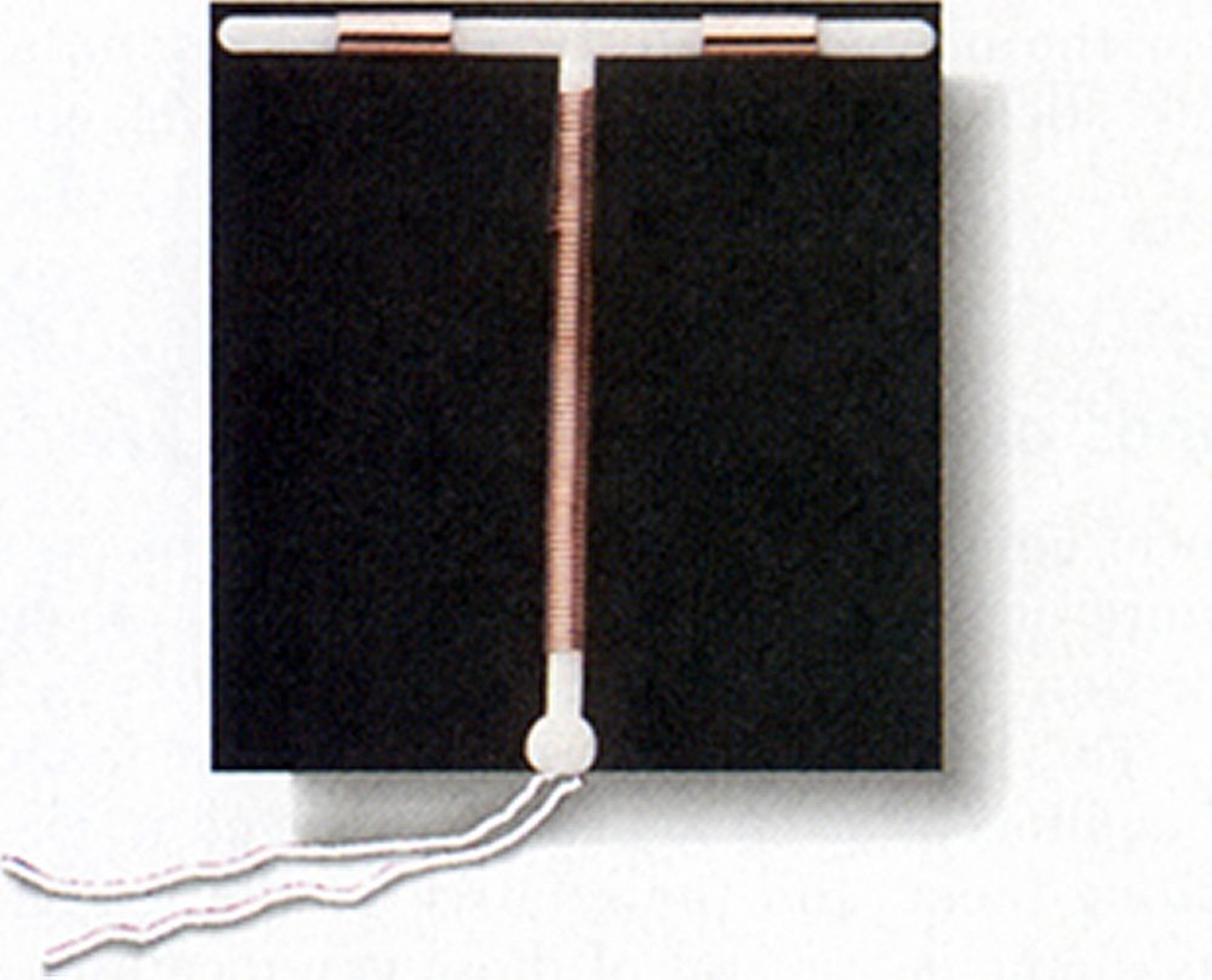
Intrauterine devices (IUDs) are inserted through the vagina into the uterus by a doctor. This IUD is a copper IUD.
Photograph © Hank Morgan/Photo Researchers Inc.
Uterasi hupata bakteria kidogo wakati wa kuingizwa, lakini maambukizi ni nadra hutokea. Nyuzi za IUD huzuia bakteria kufika. IUD huongeza hatari ya maambukizi ya nyonga katika kipindi cha mwezi wa kwanza wa matumizi pekee. Endapo maambukizi yatatokea, huwa yanatibiwa kwa antibiotiki. IUD inaweza kuachwa mahali pake isipokuwa maambukizi yakiendelea baada ya matibabu.
Ziara ya kawaida ya ufuatiliaji baada ya kuwekwa IUD si lazima. Hata hivyo, wanawake wanapaswa kumuona daktari wao ikiwa wana matatizo kama vile maumivu, kutokwa na damu nyingi, kutokwa na uchafu usio wa kawaida ukeni, au homa, ikiwa IUD imetoka, au ikiwa hawajaridhika na IUD.
Matatizo yanayowezekana
Kutokwa na damu na maumivu ndizo sababu kuu zinazowafanya wanawake watolewe IUD, zikichangia zaidi ya nusu ya matukio yote ya kutolewa kwa IUD kabla ya muda wa kawaida wa kubadilisha. IUD ya shaba huongeza kiwango cha kutokwa na damu wakati wa hedhi na kinaweza kusababisha maumivu ya tumbo. NSAID kwa kawaida zinaweza kupunguza maumivu ya tumbo. IUD zinazotoa levonorgestrel husababisha kutokwa na damu isivyo kawaida wakati wa miezi kadhaa ya kwanza baada ya kuwekwa. Lakini baada ya mwaka 1, kutokwa na damu wakati wa hedhi huacha kabisa kwa hadi asilimia 20 ya wanawake.
Kwa kawaida, IUD hutoka kwa chini ya asilimia 5 ya wanawake katika kipindi cha mwaka wa kwanza baada ya kuwekwa, mara nyingi wakati wa wiki chache za kwanza. Wakati mwingine mwanamke hagundui kuwa imetoka. Nyuzi za plastiki zimeunganishwa kwenye IUD ili mwanamke akitaka, aweze kuangalia mara kwa mara ili kuhakikisha kwamba IUD bado ipo mahali pake. Hata hivyo, mwanamke kwa kawaida hutoka damu au hupata maumivu ikiwa IUD imetoka au iko katika sehemu isiyo sahihi. Endapo IUD itaingizwa baada ya nyingine kutoka, kwa kawaida hubaki mahali pake. Endapo madaktari wanashuku kuwa IUD imetoka, wanawake lazima watumie aina nyingine ya uzazi wa mpango hadi tatizo litakapotatuliwa.
Nadra sana, uterasi hupasuka (kutoboka) wakati wa kuingiza. Kwa kawaida, kutoboka hakusababishi dalili. Hugunduliwa wakati mwanamke hawezi kupata nyuzi za plastiki na ultrasound au eksirei huonyesha IUD iliyoko nje ya uterasi. IUD inayotoboa uterasi na kuingia kwenye uwazi wa tumbo lazima iondolewe kwa upasuaji, kwa kawaida kwa kutumia laparoskopi, ili kuizuia isijeruhi na kusababisha makovu kwenye utumbo.
Ikiwa wanawake watachukua mimba wakiwa na IUD, kuna uwezekano mkubwa wa kupata mimba nje ya uterasi (ectopic). Hata hivyo, hatari ya jumla ya mimba ya nje ya uterasi ni ndogo sana kwa wanawake wanaotumia IUD kuliko wale ambao hawatumii njia ya uzazi wa mpango kwa sababu IUD huzuia mimba kwa ufanisi.
Kama ilivyo kwa njia nyingine za kupanga uzazi za homoni, kuna data zinazokinzana kuhusu kama IUD huongeza hatari ya saratani ya matiti kidogo.
Manufaa yawezekanayo
Mbali na kutoa njia bora za kupanga uzazi, IUD zinazotoa levonorgestrel zinaweza kupunguza hatari ya saratani ya uterasi (endometriamu) na saratani ya ovari.
Ikiwa mwanamke amefanya ngono bila kinga ndani ya siku 7 zilizopita, baadhi ya IUD zinaweza kutumika kama kupanga uzazi wa dharura.