Ticks, like mites, are closely related to spiders. These small creatures, sometimes carried as parasites on the bodies of humans and animals, may transmit disease to humans.
(See also Introduction to Bites and Stings.)
Ticks can carry many diseases. For example, deer ticks may carry the bacteria that cause Lyme disease or the protozoa that cause babesiosis. Other types of ticks may carry the bacteria that cause Rocky Mountain spotted fever, anaplasmosis, or ehrlichiosis, and Alpha-gal syndrome.

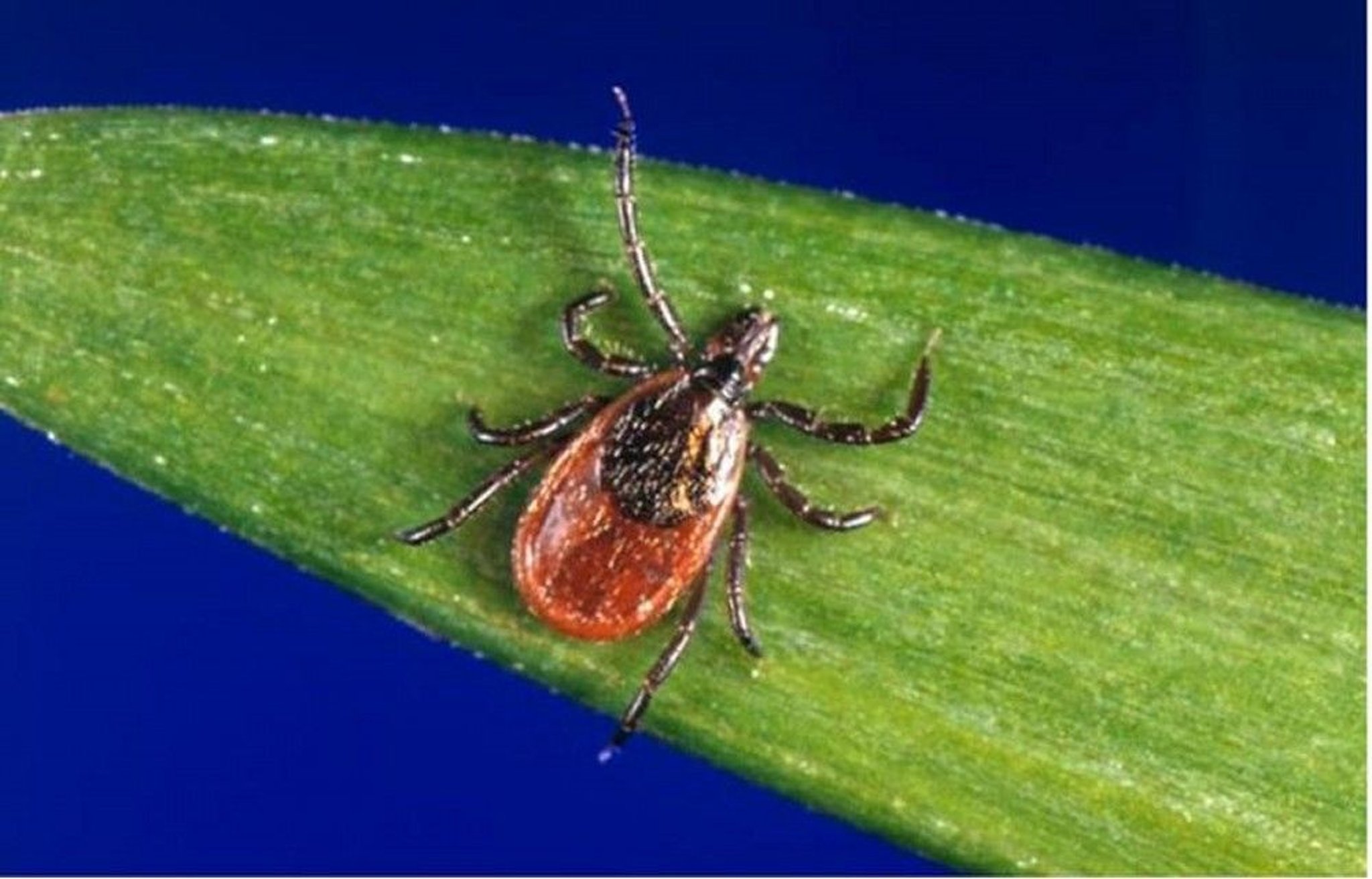
This image shows an adult deer tick, Ixodes scapularis, which transmits Borrelia burgdorferi bacteria, the cause of Lyme disease.
Image courtesy of James Gathany via the Public Health Image Library of the Centers for Disease Control and Prevention.
The bites of pajaroello ticks, which are present in Mexico and the southwestern United States, produce pus-filled blisters that break, leaving open sores that develop thick black scabs (eschars).

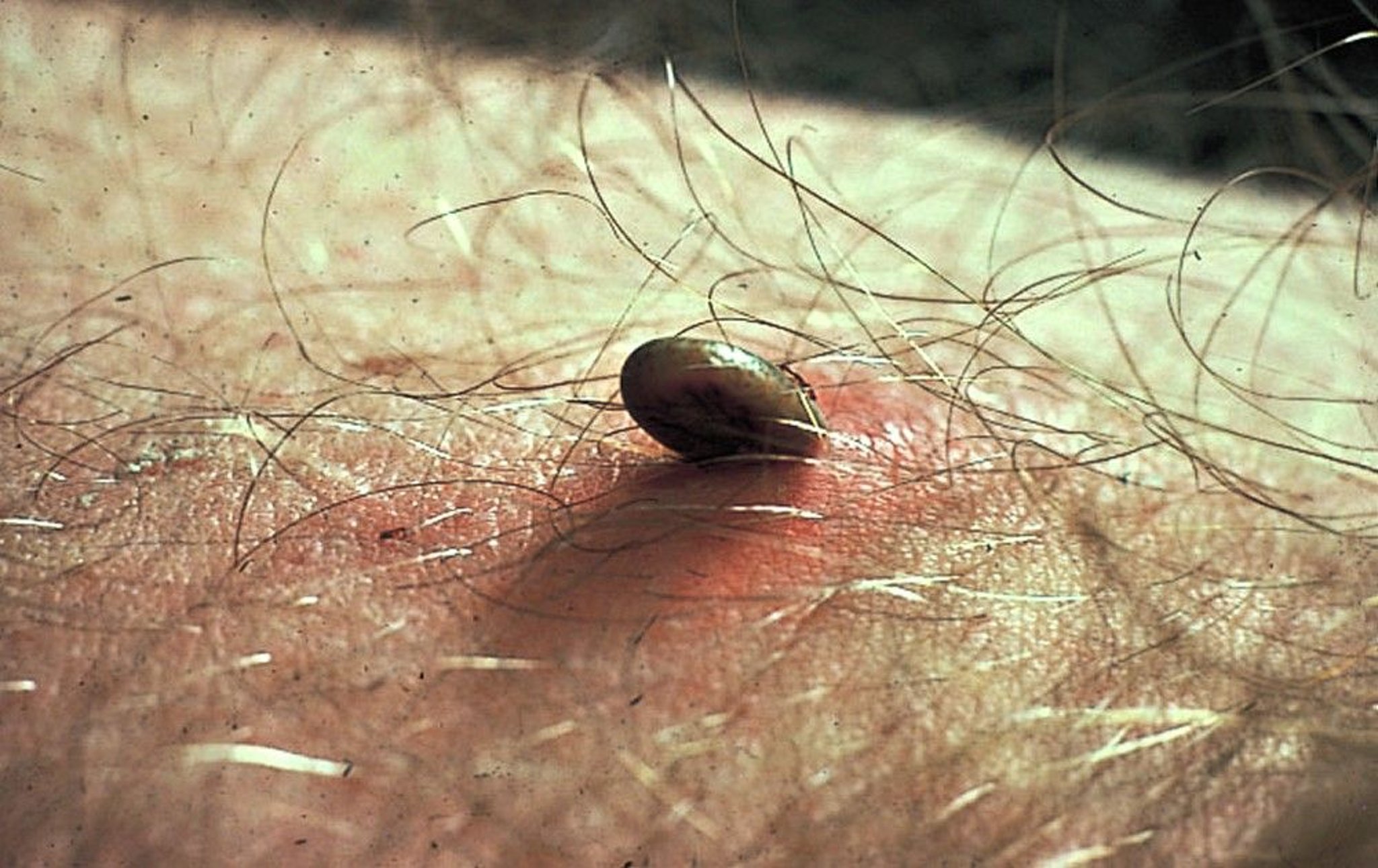
Kupe hii, ikiwa imejawa na damu, inakwama kwenye ngozi ya mtu.
© Springer Science+Business Media
Most tick bites do not transmit disease and are painless. However, they often cause a red bump and itching at the site of the bite and may cause allergic skin reactions in some people.
Kupooza kunaosababishwa na kupe
In North America, some tick species secrete a toxin in their saliva that causes tick paralysis. A person with tick paralysis feels weak and fatigued. Some people become restless, weak, and irritable. After a few days, a progressive paralysis develops, usually moving up from the legs. The muscles that control breathing also may become paralyzed.
Tick paralysis is cured rapidly by finding and removing the tick or ticks. If breathing is impaired, oxygen therapy or a mechanical ventilator may be needed to assist with breathing.
Matibabu ya Kuumwa na Kupe
Removal of tick
Application of antiseptic
Sometimes an antibiotic by mouth to prevent Lyme disease
Tick bites can sometimes be prevented by taking precautions in areas where ticks are common.
Kuzuia Kung'atwa na Kupe
People can reduce their chances of picking up or being bitten by a tick by doing the following:
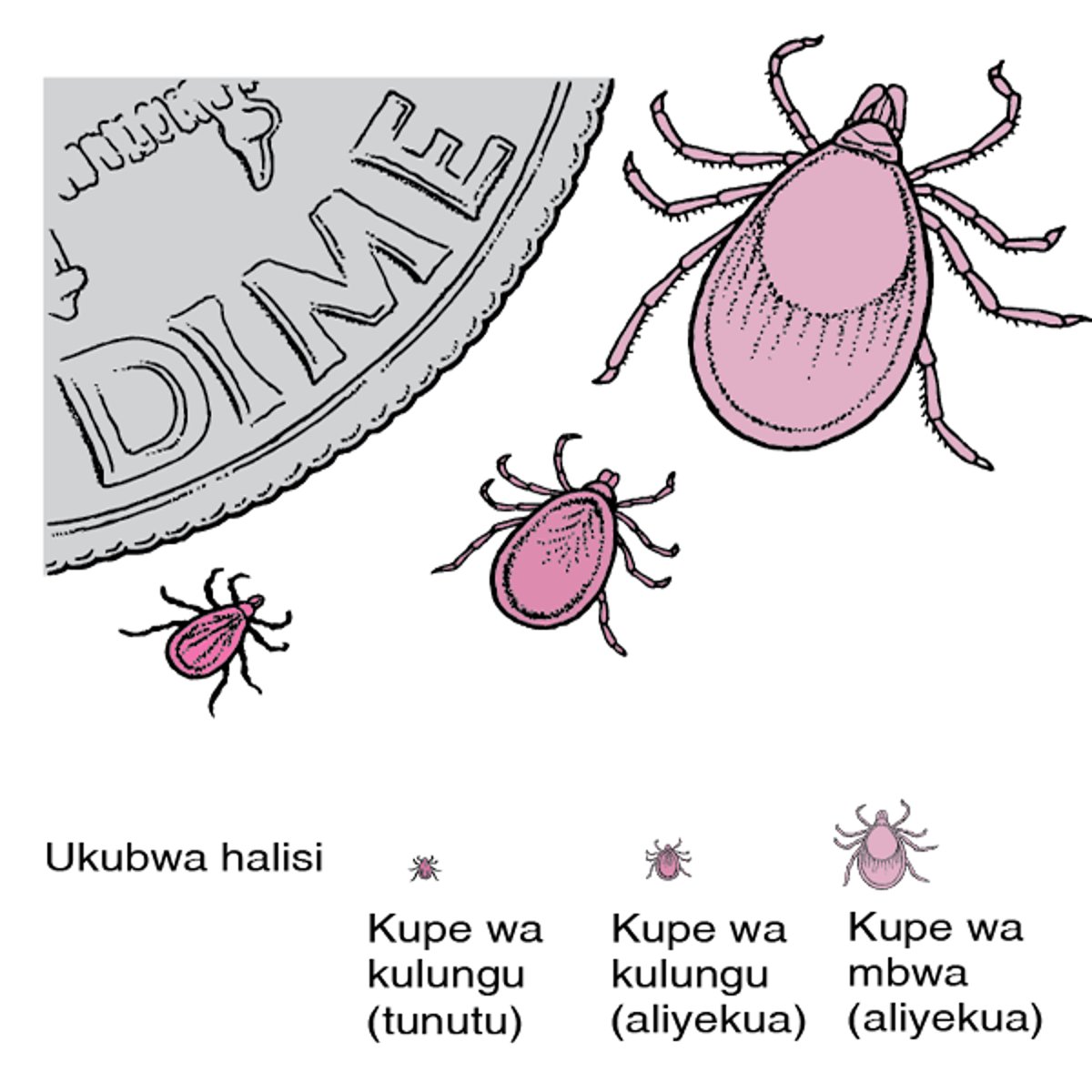
Usually, Lyme disease is transmitted by young deer ticks (nymphs), which are very small, much smaller than dog ticks. So people who may have been exposed to ticks should check the whole body very carefully, especially hairy areas, every day. Inspection is effective because ticks must be attached usually for more than a day and a half to transmit Lyme disease. To remove a tick, people should use fine-pointed tweezers to grasp the tick by the head or mouthparts right where it enters the skin and should gradually pull the tick straight off. The tick's body should not be grasped or squeezed. Petroleum jelly, alcohol, lit matches, or any other irritants should not be used. |

Tick removal should be done as soon as possible. Removal is best accomplished by grasping the tick with curved tweezers as close to the skin as possible and pulling it directly out. The tick’s head, which may not come out with the body, should be removed, because it can cause prolonged inflammation. Most of the folk methods of removing a tick, such as applying alcohol, fingernail polish, or petroleum jelly or using a hot match, are ineffective and may cause skin damage or cause the tick to expel infected saliva into the bite site.
Je, Ulijua...
|
After the tick is removed, an antiseptic should be applied. If swelling and discoloration are present, an oral antihistamine may be helpful. If the tick appears to have been attached for an extended period (the tick is very swollen) or Lyme disease is prevalent in the area, doctors may give an antibiotic to help prevent Lyme disease.
If a tick bite, such a pajaroello tick bite, causes significant skin damage, the doctor extensively cleans and removes any dead skin from the wound. The doctor may apply corticosteroids and antiseptics to the area to prevent further skin damage and infection.