Acute coronary syndromes result from a sudden blockage in a coronary artery. This blockage causes unstable angina or a heart attack (myocardial infarction), depending on the location and amount of blockage. Unstable angina refers to worsening angina symptoms with evidence on an electrocardiogram that heart tissue is being affected by the blockage but has not died yet. A heart attack is death of heart tissue due to lack of blood supply.
People who experience an acute coronary syndrome usually have chest pressure or ache, shortness of breath, and/or fatigue.
People who think they are experiencing an acute coronary syndrome should call for emergency help and then chew an aspirin tablet.
Doctors use electrocardiography and measure substances in the blood to determine whether a person is experiencing an acute coronary syndrome.
Treatment varies depending on the type of syndrome but usually includes attempts to increase blood flow to affected areas of the heart.
In the United States, about 800,000 heart attacks occur each year.
Causes of Acute Coronary Syndromes
The heart muscle needs a constant supply of oxygen-rich blood. The coronary arteries, which branch off the aorta just after it leaves the heart, deliver this blood. An acute coronary syndrome occurs when a sudden blockage in a coronary artery greatly reduces or cuts off the blood supply to an area of the heart muscle (myocardium). The lack of blood supply to any tissue is termed ischemia. If the blood supply is greatly reduced or cut off for more than a few minutes, heart tissue dies. A heart attack, also termed myocardial infarction (MI), is death of heart tissue due to ischemia.
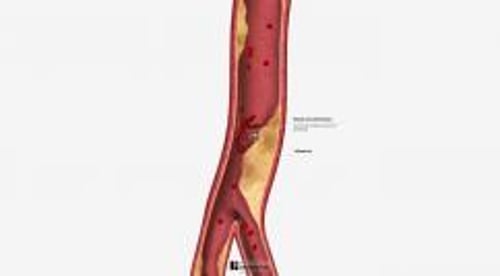
A blood clot is the most common cause of a blocked coronary artery (see also Overview of Coronary Artery Disease). Usually, the artery is already partially narrowed by a buildup of cholesterol and other fatty materials in the artery wall (atheroma). An atheroma may rupture or tear, which releases substances that make platelets stickier, encouraging clots to form. In some people, the blood clot dissolves on its own, typically within a day or so. However, by this time, some heart damage has usually occurred.
Uncommonly, a heart attack results when a clot forms in the heart itself, breaks away, and lodges in a coronary artery. Another uncommon cause is a spasm of a coronary artery that stops blood flow. Spasms may be caused by drugs such as cocaine. Sometimes the cause is unknown.
Classification
Doctors classify acute coronary syndromes based on:
Electrocardiography (ECG) results
The presence of a substance in the blood (cardiac troponin) released by damaged heart muscle cells
The classification is important because treatments differ depending on the specific acute coronary syndrome. The classification consists of unstable angina and two types of heart attack.
Unstable angina is a change in the pattern of angina symptoms (chest discomfort), including prolonged or worsening angina and new onset of severe angina symptoms. Heart muscle cells are under stress due to a lack of blood flow, but blood tests do not show that those cells have died.
Non–ST-segment elevation MI is a heart attack that doctors can identify by certain changes on an ECG and blood tests that indicate some damage to heart muscle cells.
ST-segment elevation MI is a heart attack that doctors can identify by blood tests and also produces specific changes on an ECG (ST-segment elevation) that indicate more severe damage to heart muscle cells.
Did You Know...
|
Symptoms of Acute Coronary Syndromes
Symptoms of the acute coronary syndromes are similar, and it is usually impossible to distinguish the syndromes based on symptoms alone.
Symptoms of unstable angina are the same as those of stable angina, but with an increase in intensity or frequency, or occurring at rest or a lower level of exercise than usual. People typically have intermittent pressure, or an ache beneath the breastbone (sternum). People often interpret the sensation as discomfort or heaviness rather than pain. Discomfort also may occur in either shoulder or down the inside of either arm, through the back, and in the throat, jaw, or teeth. People who have heart attacks may experience unstable angina, shortness of breath, or fatigue a few days or weeks beforehand. Such a change in the pattern of chest pain discomfort may culminate in a heart attack.
With a heart attack, the most recognizable symptom is usually pain in the middle of the chest that may spread to the back, jaw, or left arm. Less often, the pain spreads to the right arm. The pain may occur in one or more of these places and not in the chest at all. The pain of a heart attack is similar to the pain of angina but is generally more severe, lasts longer, and is not relieved by rest or nitroglycerin. Less often, pain is felt in the abdomen, where it may be mistaken for indigestion, especially because belching may bring partial or temporary relief.
For unknown reasons, women often have different symptoms, sometimes described as atypical chest pain, that are less likely to be accurately diagnosed as a heart problem.
Other symptoms include a feeling of faintness or actually fainting, sudden heavy sweating, nausea, shortness of breath, and a heavy pounding of the heart (palpitations).
During a heart attack, a person may become restless, sweaty, and anxious and may experience a sense of impending doom. The lips, hands, or feet may turn slightly blue or grayish.


Older adults may have unusual symptoms. In many, the most obvious symptom is breathlessness. Symptoms may resemble those of a stomach upset or a stroke. Older adults may become disoriented. Nonetheless, most older adults have chest pain, as do younger people. Older adults, especially women, often take longer than younger people to admit they are ill or to seek medical help.
Some people who have a heart attack do not have chest pain at all. This is common in people with diabetes mellitus. Despite all the possible symptoms, as many as 1 of 5 people who have a heart attack have only mild symptoms or none at all. Such a silent heart attack may be recognized only when ECG is routinely done some time afterward.
During the early hours of a heart attack, heart murmurs and other abnormal heart sounds may be heard through a stethoscope.
Complications
People who have unstable angina or a heart attack may also have complications that can be long-lasting. The complications depend on how much of the heart muscle is damaged, which is a direct result of where a coronary artery was blocked and how long this artery was blocked. If the blockage affects a large amount of heart muscle, the heart will not pump effectively and can become enlarged, possibly leading to heart failure. If the blockage shuts off blood flow to the electrical system of the heart, the heart rhythm may be affected, possibly leading to arrhythmia and sudden death (cardiac arrest).
Diagnosis of Acute Coronary Syndromes
Symptoms
Electrocardiography (ECG)
Blood tests
Whenever an adult reports chest pain, doctors usually consider the possibility of an acute coronary syndrome. But several other conditions can cause similar pain, such as pneumonia, a blood clot in the lung (pulmonary embolism), pericarditis, a rib fracture, spasm of the esophagus, indigestion, or chest muscle tenderness after injury or exertion.
ECG and certain blood tests can usually confirm the diagnosis within a few hours.
Electrocardiography
ECG is the most important initial diagnostic test when doctors suspect an acute coronary syndrome. This test provides a graphic representation of the electrical current producing each heartbeat. In many instances, it immediately shows that a person is having a heart attack. Abnormalities detected by ECG help doctors determine the type of treatment needed. The abnormalities on ECG also help show if and where the heart muscle was damaged. If a person has had previous heart problems, which can alter the ECG, the most recent damage may be harder for doctors to detect. Such people should carry a small copy of their ECG, so that if they have symptoms of an acute coronary syndrome, doctors can compare the previous ECG with the current ECG. If a few ECGs recorded over several hours are completely normal, doctors consider a heart attack unlikely.
Cardiac troponin
Measuring levels of a substance called cardiac troponin in the blood also helps doctors diagnose acute coronary syndromes. Troponin is normally found in heart muscle and is released into the blood when heart muscle cells are damaged or dead. Most commonly measured are heart muscle proteins called troponin I and troponin T. Levels in the blood are elevated within 6 hours of a heart attack and remain elevated for several days. Levels of cardiac troponin are usually measured when the person is admitted to the hospital and over the next 2 to 6 hours.


Coronary angiography
Coronary angiography involves taking x-ray movies of the coronary arteries during a cardiac catheterization. For people with acute coronary syndrome, this shows which arteries are blocked, and how severe the blockages are. This allows the team to plan the best treatment, usually percutaneous coronary intervention or coronary artery bypass grafting. Often, the percutaneous coronary intervention is performed during the same cardiac catheterization where the angiography is done.
Coronary angiography is recommended, when available, for all people with MI and many with unstable angina.
Other testing
For some people with unstable angina, a coronary CT angiogram or stress test may be performed initially to evaluate how well the heart is receiving blood from the coronary arteries while under stress. Stress testing is often combined with radionuclide imaging which is more accurate than a traditional stress electrocardiogram. Sometimes the heart is stressed with exercise, and sometimes with medications These tests can be an alternative to coronary angiography for some people, or they can help doctors decide if angiography is needed after all.
Echocardiography may show reduced motion in part of the wall of the left ventricle (the heart chamber that pumps blood to the body). This finding sometimes suggests damage due to a heart attack.
A person may have to wear a Holter monitor, which records the heart’s electrical activity for 24 hours or more. This test enables doctors to detect whether the person has abnormal heart rhythms (arrhythmias) or episodes of inadequate blood supply without symptoms (silent ischemia).
Treatment of Acute Coronary Syndromes
Medications
Reopening or bypassing blocked arteries
Lifestyle changes
Acute coronary syndromes are medical emergencies. Many deaths due to a heart attack occur in the first 3 or 4 hours after symptoms begin. The sooner treatment begins, the better the chances of survival. Anyone having symptoms that might indicate an acute coronary syndrome should obtain prompt medical attention. Prompt transportation to a hospital’s emergency department by an ambulance with trained personnel may save the person’s life. Trying to contact the person’s personal doctor, relatives, friends, or neighbors can waste precious time.
Did You Know...
|
People who may be having a heart attack are usually admitted to a hospital that has a cardiac care unit. Heart rhythm, blood pressure, and the amount of oxygen in the blood are closely monitored so that heart damage can be assessed. Nurses in these units are specially trained to care for people with heart problems and to handle heart emergencies.
Often, oxygen is given through nasal prongs or a face mask. Providing more oxygen to the heart can help keep heart tissue damage to a minimum.
If no complications occur during the first few days, most people can safely leave the hospital within a few more days. If complications such as abnormal heart rhythms develop or the heart can no longer pump adequately (heart failure), hospitalization can be prolonged.
Medications given initially
The most important issue in the early part of treatment of a heart attack is to get to medical attention quickly so doctors can attempt to restore blood flow in the affected artery. People who think they may be having a heart attack should chew an aspirin tablet immediately after calling an ambulance. If aspirin is not taken at home or given by emergency personnel, it is immediately given at the hospital. This therapy improves the chances of survival by reducing the size of the clot (if present) in the coronary artery. People with an allergy to aspirin may be given clopidogrel, ticlopidine, or ticagrelor instead.
Most people are given nitroglycerin, which relieves pain by reducing the workload of the heart and possibly by dilating arteries. Usually, it is first given under the tongue, then intravenously. Occasionally, when nitroglycerin cannot be used or is ineffective, doctors give morphine or fentanyl to reduce discomfort and anxiety.
Most people are also given an anticoagulant, such as heparin, to help prevent the formation of additional blood clots.
Opening the arteries
The decision on the timing and method of opening a blocked coronary artery depends on the type of acute coronary syndrome and on how quickly the person got to the hospital. There are several ways to open blocked coronary arteries:
Clot-dissolving medications
Bypass surgery (coronary artery bypass grafting)
In people who have an ST-segment elevation MI, immediately clearing the coronary artery blockage saves heart tissue and improves survival. Doctors try to clear the blockage within 90 minutes after the person arrives at the hospital. Because the sooner the artery is cleared the better the outcome, the method of clearing is probably not as important as the timing.
Percutaneous coronary interventions (PCI), such as angioplasty and stent placement, appear to be the best way to open blocked arteries during an ST-segment elevation MI if they can be done within 90 minutes of the time the person arrives at the hospital.
Clot-dissolving medications (also called thrombolytic or fibrinolytic medications, or "clot busters"—see table ) are given by vein (intravenously) to open the arteries if PCI procedures are not available within the 90-minute time frame. Thrombolytic medications include streptokinase, tenecteplase (TNK-tPA), alteplase, and reteplase. Although better if given immediately, these medications can work well within 3 hours and may be of some benefit for up to 12 hours after the person arrives at the hospital. In some areas, thrombolytic medications are given before hospital arrival by specially trained paramedics. Most people who are given a thrombolytic medication still need to have PCI before they leave the hospital.
Because thrombolytic medications can cause bleeding, they are not usually given to people who have bleeding in the digestive tract, severe high blood pressure, recently had a stroke, or had surgery during the month before the heart attack.
People who have a non–ST-segment elevation MI or unstable angina do not usually undergo PCI within the first day or two of hospitalization. If the person’s symptoms worsen or certain complications develop, doctors may do PCI earlier. Clot-dissolving medications do not help for non-ST-segment elevation MI or unstable angina
In some people, coronary artery bypass grafting (CABG) is done during an acute coronary syndrome instead of using PCI or a thrombolytic medication. For example, CABG may be used for people who cannot be given a thrombolytic medication (for example, because they have a bleeding disorder or have had a recent stroke or recent major surgery). CABG may also be used for people who cannot undergo PCI because of the complexity of their arterial disease (for example, because there are many areas of blockage or heart function is poor, especially if the person also has diabetes).

Medications given later
Some medications are given later in the hospitalization, after treatment, or just prior to discharge from the hospital. For people with no prior heart problems, many of these are new.
People are given two antiplatelet medications: aspirin and clopidogrel, ticlopidine, or ticagrelor for 3 to12 months after the acute coronary syndrome. Thereafter, aspirin or a single antiplatelet medication is continued. People with atrial fibrillation or a clot in their heart will also receive an oral anticoagulant along with the 2 antiplatelet medications, but they may be able to stop one of their antiplatelet medications as early as 1 week after the hospitalization
Because decreasing the heart’s workload also helps limit tissue damage, a beta-blocker is usually given to slow the heart rate. Slowing the rate enables the heart to work less hard and reduces the area of damaged tissue.
Angiotensin-converting enzyme (ACE) inhibitors or angiotensin II receptor blockers (ARBs) can increase the chance of survival for many people. Therefore, these medications are usually given in the first few days after a heart attack and prescribed indefinitely.
Statins have long been used to help prevent coronary artery disease, but doctors have found that they also have short-term benefit for people with an acute coronary syndrome. Doctors give a statin to people who are not already taking one, and may give other cholesterol-lowering medications if they are needed.
Other medications are given to certain groups of people, such as sodium–glucose co-transporter 2 (SGLT2) inhibitors for people with diabetes, and spironolactone or eplerenone for people with heart failure or diabetes.
More information on the medications used to treat heart attack can be found in the table .
General measures
Smoking is a major risk factor for coronary artery disease, so people who smoke are encouraged to stop smoking.
Stool softeners and gentle laxatives may be used to prevent constipation, so that the person does not have to strain. If the person cannot pass urine or if the doctors and nurses need to keep track of the precise amount of urine produced, a urinary catheter is used.
Severe anxiety or stress, which can stress the heart, should be treated by a health professional. To deal with mild depression and denial of illness, which are common after acute coronary syndromes, people are encouraged to talk about their feelings with doctors, nurses, social workers, and their family members and friends. Some people require an antidepressant.
Discharge
After about 1 to 3 days in the hospital, people who have had an uncomplicated heart attack and successful PCI are usually discharged. Other people may require a longer stay.
Rehabilitation
Cardiac rehabilitation, an important part of recovery, begins in the hospital. Remaining in bed for longer than 2 or 3 days leads to physical deconditioning and sometimes to depression and a sense of helplessness. Barring complications, people who have had a heart attack can usually progress to sitting in a chair, passive exercise, use of a commode chair, and reading on the first day. By the second or third day, people are encouraged to walk to the bathroom and engage in nonstressful activities, and they can do more activities each day. Many people benefit from a formal, structured cardiac rehabilitation program in addition to gradually resuming activities on their own. If everything goes well, people are usually back to their normal activities within about 6 weeks. Participation in a regular exercise program consistent with the person’s age and heart health is beneficial.
Prognosis for Acute Coronary Syndromes
Many people who have unstable angina go on to have a heart attack within a few months.
The most dangerous time for someone who is having a heart attack is during the first few hours, particularly before they arrive at the hospital. Thus, it is critical to seek medical attention immediately when people suspect they are having a heart attack. Most people who survive for a few days after a heart attack can expect a full recovery. Most deaths after a heart attack occur in the first few months, typically in people who continue to have angina, abnormal heart rhythms originating in the ventricles (ventricular arrhythmias), or heart failure. The prognosis is worse if the heart has enlarged after a heart attack.
Older adults are more likely to die after a heart attack and to have complications, such as heart failure. People with diabetes, kidney disease, and heart failure have a worse prognosis.
Did You Know...
|
Prevention of Acute Coronary Syndromes
For people who have had a heart attack, doctors recommend taking antiplatelet medications permanently. This could be aspirin (one baby aspirin, one-half of an adult aspirin, or one full adult aspirin daily), clopidogrel, or ticagrelor. Because these medications prevent platelets from forming clots, they reduce the risk of death and the risk of a second heart attack.
Aspirin is not generally recommended for prevention of acute coronary syndrome in people who have not already had a heart attack or a diagnosis of coronary artery disease.
Usually, doctors also prescribe a beta-blocker (such as metoprolol) for people who have had a heart attack because these medications reduce the risk of death. The more serious the heart attack, the more benefit beta-blockers provide. However, some people cannot tolerate the side effects (such as wheezing, tiredness, erectile dysfunction, and cold limbs), and not everyone benefits.
Taking lipid-lowering medications will reduce the risk of death after a heart attack.
ACE inhibitors or ARBs, such as captopril, enalapril, perindopril erbumine, trandolapril, lisinopril, and ramipril, are often prescribed after a heart attack. These medications help prevent death and the development of heart failure, particularly in people who have had a massive heart attack.
People should also be encouraged to make changes in their lifestyle. They should eat a low-fat diet and increase the amount of exercise they get. People who have high blood pressure or diabetes should try to keep those disorders under control. People who smoke should quit.
Drug Information for the Topic