Dialysis is an artificial process for removing waste products and excess fluids from the body, a process that is needed when the kidneys are not functioning properly.
Regulating Blood Pressure: The Renin-Angiotensin-Aldosterone System
The renin-angiotensin-aldosterone system is a series of reactions designed to help regulate blood pressure.
|

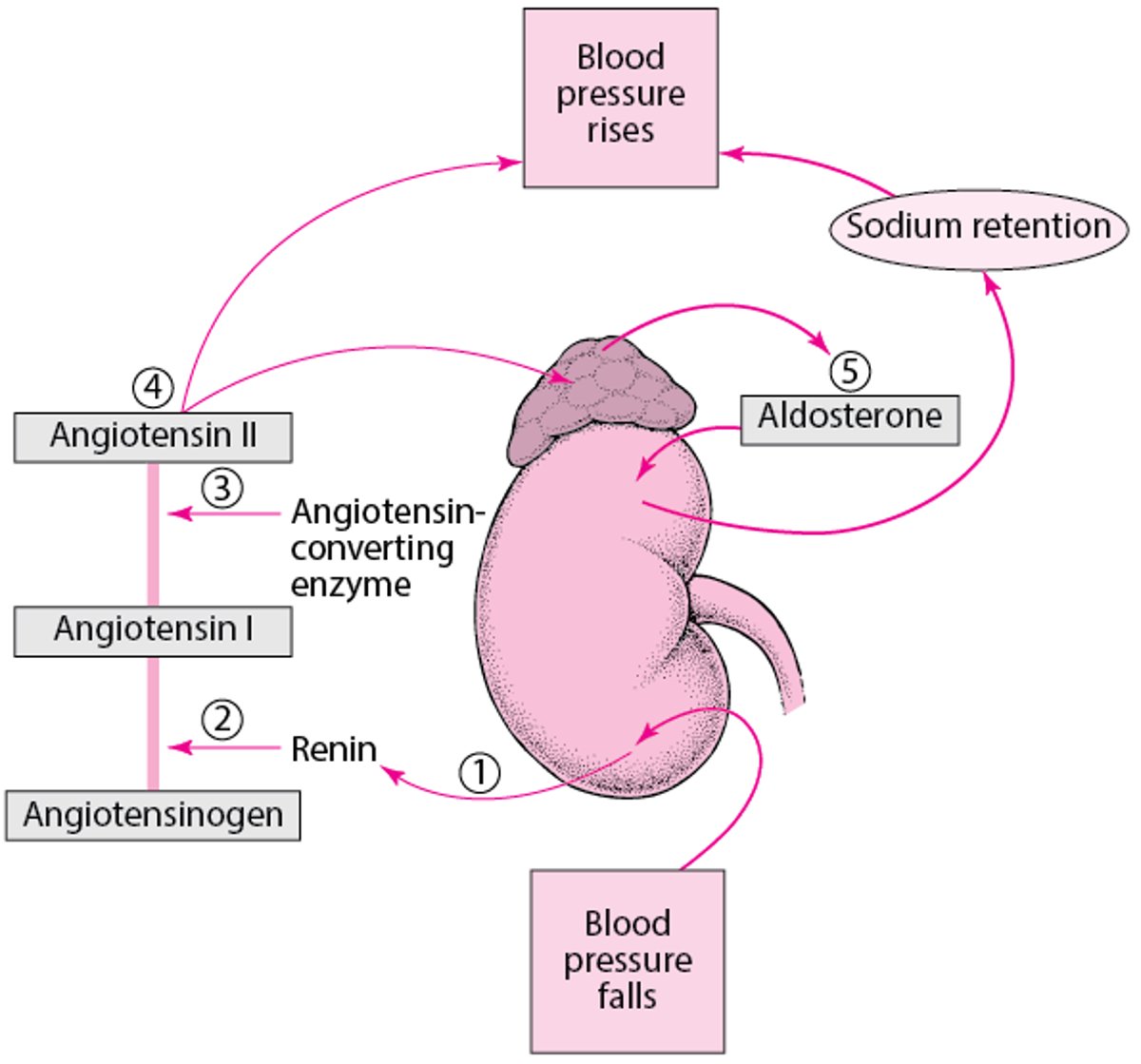
There are a number of reasons why people may need dialysis, but the inability of the kidneys to adequately filter waste products from the blood (kidney failure) is the most common. Kidney function may decline quickly (called acute kidney injury or acute kidney failure), or the kidneys may slowly lose their ability to filter waste products (called chronic kidney disease or chronic kidney failure). People with kidney failure or chronic kidney disease often also have high blood pressure.
In people with kidney failure, many doctors recommend dialysis when blood tests show that the kidneys can no longer filter waste products adequately and the accumulating waste products cause problems. For acute kidney injury, doctors continue dialysis until the person’s blood test results indicate that adequate kidney function has been restored. For people with chronic kidney disease, dialysis may be used as long-term therapy or as a temporary measure until the person can receive a kidney transplant. Short-term or urgent dialysis can also be used to remove fluids, certain medications, or poisons from the body.
Making the decision to begin long-term dialysis is not easy because it entails a major change in lifestyle, including a dependency on machines to maintain life and a special diet. However, for most people, a successful dialysis program results in an acceptable quality of life. Most people undergoing dialysis are able to eat a tolerable diet and have normal blood pressure.
Dialysis usually requires the effort of a team of people:
A doctor helps the person decide if and when dialysis is necessary, establishes a dialysis prescription, manages complications, and provides the medical care.
A nurse monitors the person’s general well-being, educates the person about dialysis and what needs to be done to maintain the best possible health, oversees the dialysis procedure, administers dialysis-related medications, and supervises the dialysis technicians.
Often, a social worker assesses mental health, arranges transportation for those who need it, arranges for dialysis in other locations if the person is traveling, and arranges home assistance when needed.
A dietitian recommends an appropriate diet and monitors the person’s response to dietary changes.
A transplant surgeon is also part of the dialysis team when dialysis is intended to be used temporarily until a kidney can be transplanted.
A technician assists in getting the procedure started and monitors the dialysis equipment.
A doctors such as a vascular surgeon or interventional radiologist prepares the blood vessels so that blood can be easily withdrawn from the body and cycled through the dialysis machine (when a dialysis machine is being used).
Occasionally, a similar technique called hemofiltration or hemoperfusion is used to temporarily filter the blood and accomplish what dialysis would. These techniques are most often used if dialysis cannot be done, to remove the poisons from the blood, or to remove large amounts of fluid in some people who have acute kidney injury.
Types of Dialysis
There are 2 main types of dialysis:
Hemodialysis
Peritoneal dialysis
Hemodialysis
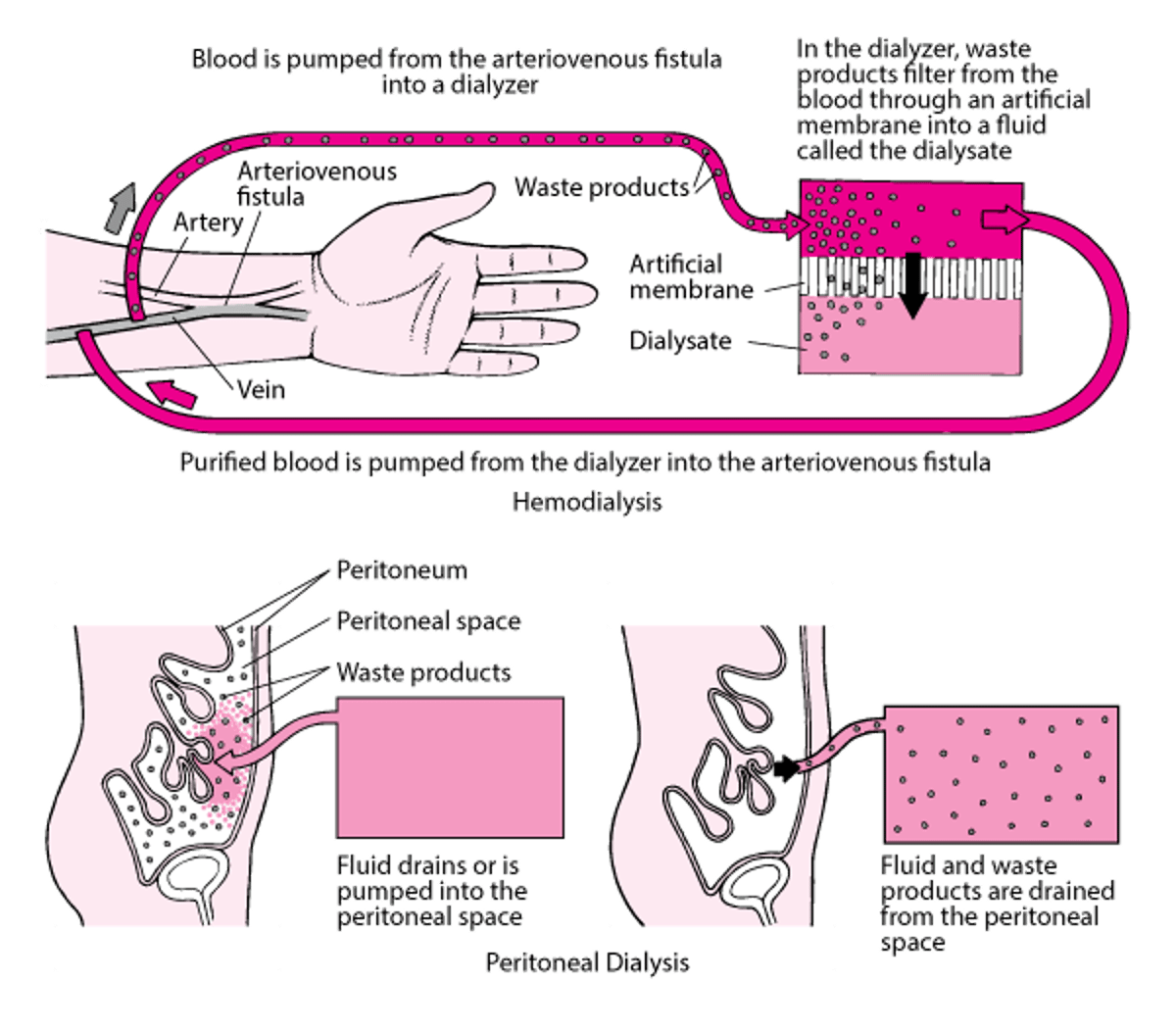
In hemodialysis, blood is removed from the body and pumped by a machine outside the body into a dialyzer (artificial kidney). The dialyzer filters metabolic waste products from the blood and then returns the purified blood to the person. The total amount of fluid returned can be adjusted, in particular the excess fluid that builds up during kidney failure can be removed.
Hemodialysis requires repeated access to the bloodstream. Although doctors can achieve temporary access by inserting a large intravenous catheter in a big vein, usually an artificial connection between an artery and a vein (an arteriovenous fistula) is surgically created to make long-term access easier. In this procedure, typically the radial artery in the forearm is joined with the cephalic vein in the forearm. As a result, the cephalic vein subsequently enlarges and blood flow through the vein increases, making the vein suitable for repeated puncture with a needle. Fistulas are created by vascular surgeons and interventional radiologists.


When a fistula cannot be created, an artery and a vein may be surgically connected to each other using a synthetic connector (graft). Grafts are often placed in the person's arm. In hemodialysis, a technician places needles into the person's fistula or graft to allow the blood to be removed for cleaning.
A medication that prevents clotting, such as heparin, is given during hemodialysis to prevent blood from clotting in the dialyzer. Inside the dialyzer, a porous artificial membrane separates the blood from a fluid (the dialysate). Fluid, waste products, and electrolytes in the blood filter through the membrane into the dialysate. Blood cells and large proteins are unable to filter through the small pores of the membrane and so remain in the blood. The dialyzed (purified) blood is then returned to the person’s body.
Dialyzers have different sizes and degrees of efficiency. Dialysis treatment time is usually about 3 to 5 hours. Most people who have chronic kidney disease need hemodialysis 3 times a week, although various schedules are used depending upon a person's individual needs.
The most common complication of hemodialysis is low blood pressure during or shortly after dialysis. Blood pressure usually increases during the period between treatments. People, particularly when starting hemodialysis, may have muscle cramps, itching, nausea and vomiting, headache, restless legs syndrome, and pain in the chest and back. Less often, they can have confusion, restlessness, blurred vision, and/or seizures.
Complications of hemodialysis
Complications can also involve the graft or fistula, such as infection, blood clots, bleeding, and bulging (aneurysm formation). People should promptly notify their doctors if any of the following occurs:
Pain
Redness or warmth
Breaks in nearby skin
Bruising
Prolonged bleeding from the fistula site
Rapidly enlarging (over a few days or less) bulge over the graft or fistula
Loss of the pulse or vibratory feeling that the graft or fistula site normally has
Swelling (edema)
Doctors and dialysis nurses will also monitor the fistula periodically.
Some Complications of Hemodialysis
Complication | Usual Cause |
|---|---|
Bacteria or fever-causing substances (pyrogens) in the bloodstream Overheated dialysate | |
Life-threatening allergic reaction (anaphylaxis) | Allergy to a substance in the dialyzer or the tubing that carries blood or to medications given during dialysis Rare but serious |
Removal of too much fluid | |
Abnormal levels of potassium and other substances in the blood Low blood pressure | |
Air entering the tubing that carries blood | |
Bleeding in the intestines, brain, eyes, or abdomen | Use of too much heparin to prevent clotting in the dialyzer |
Bacteria entering the bloodstream through a needle inserted into veins for hemodialysis access | |
Possibly rapid changes in the amount or distribution of body fluids or salts |
Peritoneal dialysis
The abdominal organs, such as the stomach and intestines, are inside a large hollow space called the abdominal cavity. The peritoneum is a membrane that lines the abdominal cavity and covers the abdominal organs. In peritoneal dialysis, that membrane acts as a filter. This membrane has a large surface area and a rich network of blood vessels. Substances from the blood can easily pass through the peritoneum into the abdominal (peritoneal) cavity. A fluid (dialysate) is infused through a catheter inserted through the abdominal wall into the peritoneal space within the abdomen. The dialysate must be left in the abdomen for a sufficient time to allow waste products from the bloodstream to pass slowly into it. Then the dialysate is drained out, discarded, and replaced with fresh dialysate.
A soft silicone rubber or porous polyurethane catheter allows the dialysate to flow smoothly and is unlikely to cause damage. A catheter can be put in place temporarily at the person’s bedside, or it may be surgically put in place permanently. One type of permanent catheter eventually forms a seal with the skin and can be capped when not in use.


This photo shows a peritoneal dialysis catheter entering the lower abdomen of a young child.
BURGER/PHANIE/SCIENCE PHOTO LIBRARY
Peritoneal dialysis can be done using a machine (called automated peritoneal dialysis) or without one (using manual techniques).
Manual peritoneal dialysis, generally done using continuous ambulatory (as an outpatient, not confined to bed) peritoneal dialysis, techniques are the simplest. No machine is used. The dialysate is usually drained and replenished 4 or 5 times per day.
Automated peritoneal dialysis uses an automated device to perform multiple exchanges, usually during the night while the person sleeps. Automated peritoneal dialysis techniques are further divided into 3 subcategories:
Continuous cyclic peritoneal dialysis uses a long (12- to 15-hour) daytime dwell period and 3 to 6 nighttime exchanges done with an automated cycler.
Nocturnal intermittent peritoneal dialysis uses exchanges done with a cycler at night while the person's peritoneal cavity is left without dialysate fluid during the day.
Tidal peritoneal dialysis is a modification in which some of the dialysate fluid is left in the peritoneal cavity from one exchange to the next. This technique may be more comfortable for the person. Tidal peritoneal dialysis may be done with or without a daytime dwell period.
Some people require a combination of manual and automated techniques to achieve adequate removal of waste products from their blood.
Complications of peritoneal dialysis
The most common and troublesome complications of peritoneal dialysis are infection of the peritoneal fluid (causing inflammation of the peritoneum, called peritonitis) and infection of the area where the catheter enters the skin (insertion site). Peritonitis may cause constant, sharp, severe pain throughout the abdomen, but sometimes causes little pain. Infection at the insertion site causes redness of the skin and pain at the insertion site. Such infections can be treated with antibiotics and careful wound care.
Some Common Complications of Peritoneal Dialysis
Complication | Cause |
|---|---|
Loss of too much fluid and salt during dialysis | |
Bleeding | Unintentional perforation of an internal organ during placement of the catheter Removal of the catheter from the body Irritation and inflammation of the membrane that lines the abdomen (peritoneum) or the area around the insertion site (when the catheter does not seal to the abdominal wall) |
Infection | Unsterile techniques during dialysis |
Low level of albumin (a protein) in the blood | Loss of protein in fluid removed during dialysis along with inadequate protein in diet |
Scarring of the peritoneum* | Inflammation and infection Electrolytes in the dialysis fluid Use of certain medications |
A high sugar (glucose) level in the blood | Use of a peritoneal dialysate that has a high concentration of glucose (used to remove water and sodium during dialysis) |
Increased pressure within the abdomen caused by continued exposure to high fluid levels, which weaken the barriers that normally prevent excessive movement of organs and other structures | |
Intake of inadequate fiber or use of calcium salts to treat high phosphate levels in the blood, causing the intestine to widen, which possibly interferes with dialysate flow in and out of the abdomen | |
* The peritoneum acts as a filter in peritoneal dialysis. When the peritoneum is scarred, fluids and waste products can no longer readily pass through it to be removed. | |
Choice of dialysis technique
Many factors, including lifestyle, must be considered in determining which type of dialysis is best for a person. Doctors recommend hemodialysis for people with recent abdominal wounds or abdominal surgery or defects in the abdominal wall that make peritoneal dialysis difficult. Peritoneal dialysis is better tolerated than hemodialysis in people whose blood pressure fluctuates frequently between periods of high or normal pressure and periods of low blood pressure.
People typically undergo hemodialysis at a dialysis center, which is usually outside a hospital. Hemodialysis is often given 3 times a week for 3 to 5 hours at a time. The main advantage of in-center dialysis is that the dialysis staff manages the treatment.
In-center nocturnal (nighttime) hemodialysis is a good choice for people who experience certain difficulties (for example, high fluid gains, low blood pressure, or difficult-to-control phosphorus levels). Although this variation of dialysis is also done 3 times a week, the sessions are longer, lasting from 6 to 8 hours each.
Home hemodialysis is usually done 4 to 6 times per week but can also be done on a conventional schedule (3 times per week during the daytime) or at night. Most home hemodialysis programs require a care partner who is able to help with the treatments if needed. People treated with home dialysis may have longer lives and better quality of life than people treated with conventional hemodialysis.
Peritoneal dialysis can also be done at home, eliminating the need for travel to a hemodialysis center.
Comparing Hemodialysis With Peritoneal Dialysis
When the kidneys fail, waste products and excess water can be removed from the blood by hemodialysis or peritoneal dialysis. In hemodialysis, blood is removed from the body into a dialyzer (called an artificial kidney), which filters the blood. An artificial connection between an artery and a vein (arteriovenous fistula) is made to facilitate the removal of blood. In peritoneal dialysis, the peritoneum is used as a filter. The peritoneum is a membrane that lines the abdomen and covers the abdominal organs, creating a space within the abdomen called the peritoneal space or abdominal cavity. |

Special Considerations for Dialysis
Diet
People undergoing dialysis need a special diet. In people undergoing peritoneal dialysis, appetite is generally poor, and protein is lost during dialysis. The diet should have enough calories (about 11 to 16 calories per pound of ideal body weight, more in children and infants) and be relatively high in protein (about ½ gram of protein per pound of ideal body weight) per day. Salt, both the usual table salt, which contains sodium, and the salt containing potassium, is restricted.
For people undergoing hemodialysis, daily consumption of sodium and potassium is even more restricted. Foods high in phosphorus also may have to be limited. Daily fluid intake is limited for people who have very little urine output or a persistently low or decreasing sodium concentration in the blood. Daily weighing is important to monitor weight gain. Excessive weight gain between hemodialysis treatments indicates that the person is consuming excessive fluid. Usually, excessive fluid intake is the result of excessive sodium intake, which makes a person thirsty.
Multivitamin supplements are needed to replace the nutrients lost through hemodialysis or peritoneal dialysis. Vitamin supplements should be discussed with a doctor or nutritionist.
Medical considerations
Because people with chronic kidney disease develop anemia, erythropoietin, darbepoetin, or methoxy polyethylene glycol-epoetin beta may be given to stimulate the production of red blood cells. Iron may also be needed to help the body produce new red blood cells.
People who are undergoing dialysis often have risk factors for atherosclerosis (including coronary artery disease), including high blood pressure, high levels of lipids (fats) in the blood, and diabetes. People need to take special care to lower their risk of coronary artery disease.
Phosphate binders, most often those such as calcium carbonate or calcium acetate (for example, in antacids), or sevelamer, are used to remove excess dietary phosphate.
Normally the body’s bone tissue is continually replaced, helping bones remain strong and dense. The kidneys convert vitamin D to its active form (calcitriol), which helps regulate the amount of calcium in the blood and the amount used to produce bone tissue. In people with kidney failure, the kidneys are not able to convert enough vitamin D to its active form, so parathyroid hormone levels may increase. High parathyroid hormone levels can weaken bones by decreasing their density, a bone condition called renal osteodystrophy. To correct this problem, the active form of vitamin D or a similar substance is given to lower high parathyroid hormone levels.
High levels of aluminum in the blood (aluminum toxicity) may occur in people who take phosphate binders that contain aluminum. Another potential source of aluminum is the water used to make the dialysate. Because many phosphate binders are available that do not have aluminum and because aluminum is effectively removed during preparation of the ultra pure water used in dialysate today, aluminum toxicity is now uncommon. Aluminum toxicity can cause weak bones, anemia, and dementia. Deferoxamine can be given through the peritoneal catheter or through a vein to help eliminate aluminum from the body.
Calciphylaxis is a rare disorder in which arteries harden, causing a reduction in blood flow to the skin of the trunk, buttocks, and legs. It is caused in part by high levels of calcium and phosphorus in the blood. It causes painful skin bumps and ulcers that often become infected. Severe infection can affect the entire body and be fatal. Treatment aims to relieve complications of calciphylaxis. For example, infection is treated with antibiotics, and pain is treated with analgesics. Medications may be given to lower levels of calcium and phosphorus in the blood. Wounds are treated with careful skin care.


This photo shows skin bumps and open sores (ulcers) on the trunk of a person who has calciphylaxis.
Karen McKoy, MD.
Constipation may occur in people undergoing dialysis, which may hamper peritoneal dialysis. If too much stool fills the intestine, the extra volume can partly block the catheter that drains dialysis fluid. People may need to take laxatives, but they are usually given bulking agents (such as psyllium) or sorbitol, not laxatives that contain phosphate or magnesium.
Psychosocial considerations
People undergoing dialysis may experience losses in every aspect of their life. The potential loss of independence can be especially distressing. Coping with disruptions in lifestyle can be difficult. People undergoing dialysis may become depressed or anxious. Psychological and social counseling is often helpful to families as well as to those undergoing dialysis. Many dialysis centers provide psychological and social support. Dealing with a loss of independence is helped when people are encouraged to pursue their previous interests. People undergoing hemodialysis need to arrange for transportation to and from dialysis centers on a regular basis. Dialysis sessions may interfere with work, school, or leisure activities.
Many people on long-term dialysis are 60 years of age or older. Older adults often are better able to adapt to long-term dialysis and the loss of independence than are younger people. However, older adults undergoing dialysis may become more dependent on their grown children or may not be able to continue living alone. Older adults are more likely to experience fatigue from treatments. Often, family roles and responsibilities must be modified to fit the dialysis routine, creating stress and feelings of guilt and inadequacy.
Considerations in children
Children whose growth has been stunted due to chronic kidney disease may feel isolated and different from their peers. Young adults and adolescents coping with identity, independence, and body image issues may find these issues further complicated by dialysis. Diet is an important issue for children undergoing dialysis because children must receive enough nutrients to support their growth.
More Information
The following English-language resource may be useful. Please note that The Manual is not responsible for the content of this resource.
National Kidney Foundation: Hemodialysis and Your Diet
Drug Information for the Topic