Type 2 diabetes mellitus is a disorder of insulin resistance or inadequate insulin secretion.
Resistance to the effects of insulin often occurs before symptoms, and is often related to obesity or the metabolic syndrome.
Early symptoms are related to hyperglycemia (high blood glucose level) and include excessive thirst, excessive hunger, excessive urination, and blurred vision.
Doctors diagnose diabetes by measuring blood sugar levels.
Diabetes can damage blood vessels and increase the risk of heart attack, stroke, chronic kidney disease, and vision loss.
Diabetes can damage nerves and cause problems with the sense of touch.
People with type 2 diabetes need to follow a healthy diet that is low in refined carbohydrates (including sugar), saturated fat, and processed foods. They also need to exercise and maintain a healthy weight. Most also need to take medication to lower their blood glucose levels.
About 90% of adults with diabetes have type 2 diabetes.
Causes of Type 2 Diabetes Mellitus
Type 2 diabetes is caused by resistance to insulin.
In type 2 diabetes mellitus, insulin secretion is inadequate because people have developed resistance to insulin.Insulin resistance leads to an inability to suppress glucose production by the liver and impairs glucose uptake. This combination gives rise to high levels of glucose in the blood (hyperglycemia). Often insulin levels are very high, especially early in the disease. Later in the course of the disease, insulin production may fall, further exacerbating hyperglycemia.
Obesity and weight gain are important determinants of insulin resistance in type 2 diabetes. Obesity and weight gain have some genetic determinants but are also influenced by diet, exercise, and lifestyle.
The disease generally develops in adults and becomes more common with increasing age; in the United States, approximately 30% of adults aged 18 to 44 years have impaired fasting glucose regulation or impaired glucose tolerance, while nearly 50% of adults older than 65 years do. In older adults, plasma glucose levels reach higher levels after eating than in younger adults, especially after meals with high carbohydrate loads. Glucose levels also take longer to return to normal, in part because of increased accumulation of visceral and abdominal fat and decreased muscle mass.
Both environmental and genetic factors contribute to type 2 diabetes. Many people with type 2 diabetes have relatives who are also affected, but no one causative gene has been identified.
Screening and Prevention of Type 2 Diabetes Mellitus
Screening
It is important to do screening tests in people at risk of type 2 diabetes, including those who:
Are 35 years or older
Have overweight or obesity
Have a sedentary lifestyle
Have a family history of diabetes
Have prediabetes
Have had diabetes during pregnancy or had a baby who weighed more than about 9 pounds (4.1 kilograms) at birth
Have high blood pressure
Have a lipid disorder such as high cholesterol
Have cardiovascular disease
Have racial or ethnic ancestry that is associated with high risk (African, Spanish, Latin American, Asian, American Indian)
Have steatotic liver disease (previously called fatty liver disease)
Have HIV infection
People with these risk factors should be screened for diabetes at least once every 3 years. The screening tests used include a fasting blood glucose level, a hemoglobin A1C test, or an oral glucose tolerance test (see Overview of Diabetes Mellitus - Diagnosis for more information on these tests). If the test results are on the border between normal and abnormal, doctors do the screening tests more often, at least once a year.
Obesity is the chief risk factor for developing type 2 diabetes, and most of people with type 2 diabetes have overweight or obesity. Because obesity causes insulin resistance, people with obesity may need large amounts of insulin to maintain normal blood glucose levels.
Diabetes risk can also be estimated using a risk calculators from the American Diabetes Association.
Prevention
Type 2 diabetes can be prevented with lifestyle changes. People who have overweight and lose as little as 7 percent of their body weight and who increase physical activity (for example, walking 30 minutes per day) can decrease their risk of diabetes mellitus by more than 50%. Metformin, glucagon-like peptide (GLP-1) receptor agonists (including liraglutide, semaglutide, and tirzepatide), and other medications that are used to treat diabetes, may reduce the risk of diabetes in people with impaired glucose regulation.
Symptoms of type 2 Diabetes Mellitus
People with type 2 diabetes may not have any symptoms for years or decades before they are diagnosed. Many people with type 2 diabetes are diagnosed by routine blood glucose testing before they develop such severely high blood glucose levels. Symptoms may be subtle. Increased urination and thirst are mild at first and gradually worsen over weeks or months. Eventually, people feel extremely fatigued, are likely to develop blurred vision, and may become dehydrated.
Some people may also experience excessive hunger, weight loss, nausea, vomiting, and/or infections. Sometimes the first sign of type 2 diabetes is a complication such as kidney disease, eye disease, or problems with the sense of touch (neuropathy).
In addition to symptoms , individuals with type 2 diabetes frequently have overweight or obesity. They may have dark patches on the skin of their neck and other places (acanthosis nigricans), or skin tags.


In people with acanthosis nigricans, the folds of skin may become dark and thick because of type 2 diabetes.
In people with acanthosis nigricans, the folds of skin may become dark and thick because of type 2 diabetes.
RICHARD USATINE MD / SCIENCE PHOTO LIBRARY

In people with acanthosis nigricans, the skin on the neck may become dark and thick and multiple skin tags may develop because of type 2 diabetes.
In people with acanthosis nigricans, the skin on the neck may become dark and thick and multiple skin tags may develop
RICHARD USATINE MD / SCIENCE PHOTO LIBRARY

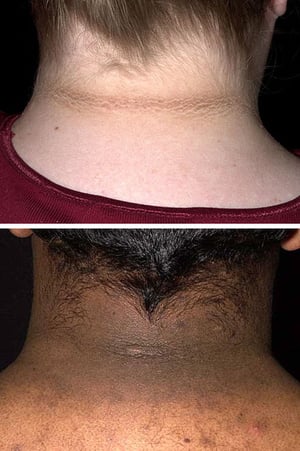
Acanthosis nigricans is darkening and thickening of skin caused by insulin resistance. It is often seen on the back of the neck and in the armpits of children and adolescents with type 2 diabetes.
Acanthosis nigricans is darkening and thickening of skin caused by insulin resistance. It is often seen on the back of
Photos provided by Thomas Habif, MD.
In people with acanthosis nigricans, the folds of skin may become dark and thick because of type 2 diabetes.
In people with acanthosis nigricans, the folds of skin may become dark and thick because of type 2 diabetes.
RICHARD USATINE MD / SCIENCE PHOTO LIBRARY
In people with acanthosis nigricans, the skin on the neck may become dark and thick and multiple skin tags may develop because of type 2 diabetes.
In people with acanthosis nigricans, the skin on the neck may become dark and thick and multiple skin tags may develop
RICHARD USATINE MD / SCIENCE PHOTO LIBRARY
Acanthosis nigricans is darkening and thickening of skin caused by insulin resistance. It is often seen on the back of the neck and in the armpits of children and adolescents with type 2 diabetes.
Acanthosis nigricans is darkening and thickening of skin caused by insulin resistance. It is often seen on the back of
Photos provided by Thomas Habif, MD.
Diagnosis of Type 2 Diabetes Mellitus


The diagnosis of diabetes mellitus itself is made based on an abnormal fasting plasma glucose, glycosylated hemoglobin (HbA1C), oral glucose tolerance test, or random glucose in the presence of certain symptoms. (See Overview of Diabetes Mellitus - Diagnosis .)
Once diabetes is diagnosed, it may be classified as type 2 diabetes based several features. The person's age and the presence of overweight or obesity may suggest that the person has type 2 diabetes. Typically diabetes in adults over 30 years old is more often type 2 diabetes. Note, however, that children can and do develop type 2 diabetes, so age alone is not a reliable differentiator. People with type 2 diabetes are more likely to have associated overweight or obesity than those with type 1 diabetes. The presence of skin features associated with insulin resistance (acanthosis nigricans, skin tags) suggests type 2 diabetes. Finally, if doctors test for, but do not find, evidence for an autoimmune cause of diabetes, the person is more likely to have type 2 diabetes
Prediabetes is diagnosed when measures of glucose are between the normal range and the range diagnostic for diabetes. It is sometimes considered a precursor or transitional state prior to the development of type 2 diabetes. Prediabetes is a significant risk factor for diabetes and may be present for many years before onset of diabetes.

Did You Know...
|
Treatment of Type 2 Diabetes Mellitus
Dietary changes
Exercise
Weight loss
Education
Often oral or injectable medications, including metformin, sodium-glucose cotransporter 2 (SGLT2) inhibitors, and glucagon-like peptide-1 (GLP1) receptor agonists
Sometimes insulin
Medications to prevent complications
Diet, exercise, and education are the cornerstones of treatment of type 2 diabetes. Weight loss is important if people are overweight.
Because complications are less likely to develop if people with diabetes strictly control their blood glucose levels, the goal of diabetes treatment is to keep blood glucose levels as close to the normal range as possible.
It is helpful for people with diabetes to carry or wear medical identification (such as a bracelet or tag) to alert health care professionals to the presence of diabetes. This information allows health care professionals to start life-saving treatment quickly, especially in the case of injury or change in mental status.
Diabetic ketoacidosis and hyperosmolar hyperglycemic state are medical emergencies because they can cause coma and death. Treatment is similar for both and centers around giving intravenous fluids and insulin.
General treatment of type 2 diabetes
People with diabetes benefit greatly from learning about the disorder, understanding how diet and exercise affect their blood glucose levels, and knowing how to avoid complications. A nurse or other clinician trained in diabetes education can provide information about managing diet, exercising, monitoring blood glucose levels, and taking medication.
People with diabetes should stop smoking and consume only moderate amounts of alcohol (up to one drink per day for women and two for men).
Diet for people with diabetes
Diet management is very important for people with either type of diabetes mellitus. Doctors recommend a healthy, balanced diet and efforts to maintain a healthy weight. People with diabetes should meet with a dietitian or a diabetes educator to develop an optimal eating plan. Such a plan includes:
Consuming whole foods
Avoiding simple sugars and processed foods
Increasing dietary fiber
Limiting portions of carbohydrate-rich and fatty foods (especially saturated fats)
Ensuring adequate vitamin and mineral intake
Limiting sodium, especially if the person also has high blood pressure
Although protein and fat in the diet contribute to the number of calories a person eats, only the number of carbohydrates has a direct effect on blood glucose levels. The American Diabetes Association has many helpful tips on diet, including recipes. Even when people follow a proper diet, cholesterol-lowering medication is needed to decrease the risk of heart disease. Some experts have advised use of the glycemic index (a measure of the impact of an ingested carbohydrate-containing food on the blood glucose level) to delineate between rapid and slowly metabolized carbohydrates.
People who are taking insulin should avoid long periods between meals to prevent hypoglycemia.
Exercise for people with diabetes
Exercise, in appropriate amounts (at least 150 minutes a week spread out over at least 3 days), can also help people control their weight and improve blood glucose levels. Because blood glucose levels go down during exercise, people must be alert for symptoms of hypoglycemia. Some people need to eat a small snack during prolonged exercise, decrease their insulin dose, or both.
Some people, such as those with heart disease, will undergo formal exercise stress testing prior to beginning an exercise program.
Weight loss for people with diabetes
Most people with type 2 diabetes have overweight or obesity. Some people with type 2 diabetes may be able to avoid or delay the need to take medications by achieving and maintaining a healthy weight. Weight loss is also important in these people because excess weight contributes to complications of diabetes. When people with obesity and diabetes have trouble losing weight with diet and exercise alone, doctors may give a weight-loss medication or recommend bariatric surgery (surgery to cause weight loss). Certain diabetes medications can induce weight loss, especially GLP-1 receptor agonist medications. Sometimes, when patients lose weight rapidly from surgery or medication treatment, doctors will prescribe extra protein, vitamins, and strength training to make sure they maintain muscle mass and do not become malnourished.
Did You Know...
|
Medication treatment of diabetes

There are many medications used to treat diabetes. Although some people with type 2 diabetes can control their blood glucose levels with diet and exercise, most people with type 2 diabetes require medications by mouth or injection to lower blood glucose levels. These medications can include insulin, metformin, sulfonylureas (glipizide, glyburide, and glimepiride), GLP-1 receptor agonists (or a related medication, tirzepatide), SGLT-2 inhibitors, and others. The choice of medication is guided by what other medical conditions the person has, how well their blood sugar is controlled, their own preferences, and cost. Some people also require insulin. Many people will need more than one medication.

Other medications
Certain blood pressure medications (angiotensin-converting enzyme inhibitors or angiotensin II receptor blockers) are given to people with diabetes and high blood pressure or chronic kidney disease.
Statins are given to many adults with diabetes, depending on their age and risk factors for atherosclerosis and coronary artery disease.
Foot care

Foot care is critical for people with diabetes (see Foot Care). The feet should be protected from injury, and the skin should be kept moist with a good moisturizer. Shoes should fit properly and not cause areas of irritation. Shoes should have appropriate cushioning to spread out the pressure caused by standing. Going barefoot is ill advised. Regular care from a podiatrist (a doctor specializing in foot care), such as having toenails cut and calluses removed, may also be helpful. Also, sensation and blood flow to the feet should be regularly evaluated by doctors.
Vaccination for people with diabetes
All people with diabetes, including type 2 diabetes, should be receive recommended vaccines, including those against Streptococcus pneumoniae, influenza, hepatitis B, varicella, respiratory syncytial virus, and COVID-19.
Monitoring Type 2 Diabetes Mellitus

Because the risk of complications increases with higher blood glucose levels, it is important that people carefully monitor blood glucose levels to make sure their treatment is working effectively. In all people who have difficulty controlling blood glucose, doctors look for other disorders that might be causing the problem and also give people additional education on how to monitor diabetes and take their medications.
Blood glucose is usually monitored using the hemoglobin A1C test in people with type 2 diabetes. This is typically checked 2 to 4 times per year, and for most people the goal level is less than 7%. In some people who are at a higher risk of low blood sugar, the goal level is between 7.5% and 8.5%.
For people with type 2 diabetes who take insulin, continuous glucose monitoring and/or fingerstick blood glucose levels are checked frequently. Even in people who do not take insulin, continuous glucose monitoring may help a person understand the impact of dietary choices and exercise on glucose levels.
Please see Type 1 Diabetes - Monitoring for a more detailed discussion of different ways to monitor blood sugar.
Complications of Type 2 Diabetes Mellitus
Preventing, identifying, and treating the complications of diabetes is one of the main goals of diabetes care.
People with diabetes mellitus have many serious long-term complications that affect many areas of the body, particularly the blood vessels, nerves, eyes, and kidneys. People with type 2 diabetes are likely to have complications as a result of the elevated glucose level. However, because type 2 diabetes may be present for some time before it is diagnosed, complications in type 2 diabetes may be more serious or more advanced when they are discovered.
The acute (immediate) complications of type 2 diabetes and its treatment include diabetic ketoacidosis, hyperosmolar hyperglycemic state, and hypoglycemia.
Please see Long-Term Complications of Diabetes Mellitus for a more detailed discussion of specific complications.

Long-term complications of type 2 diabetes
Most complications of all types of diabetes, including type 2 diabetes, are the result of problems with blood vessels. Glucose levels that remain high over a long time cause both microscopic and larger blood vessels to narrow for 2 reasons:
Complex sugar-based substances build up in the walls of microscopic blood vessels, causing them to thicken and leak.
Poor control of blood glucose levels causes the levels of fatty substances in the blood to rise, resulting in atherosclerosis and decreased blood flow in the larger blood vessels.
The thickening and narrowing reduces blood flow to many parts of the body, leading to problems, including eye problems, kidney disease, nerve problems, foot ulcers, atherosclerosis, stroke, and peripheral artery disease.
Many, if not most, adults with type 2 diabetes also have metabolic dysfunction-associated steatotic liver disease (MASLD), placing them at risk for the development of metabolic dysfunction-associated steatohepatitis (MASH) and cirrhosis.
Screening for complications of type 2 diabetes
At the time of diagnosis and then at least yearly, people with type 2 diabetes are monitored for the presence of diabetes complications, such as kidney, eye, and nerve damage. Typical screening tests include the following:
Foot examination to test sensation and look for signs of poor circulation (ulcers, hair loss)
Eye examination (done by an eye specialist)
Urine and blood tests of kidney function
Blood pressure measurement
Blood tests to evaluate for liver disease
Blood tests for cholesterol levels
Sometimes an electrocardiogram or other cardiac testing
More Information
The following English-language resources may be useful. Please note that The Manual is not responsible for the content of the resources.
American Diabetes Association: Comprehensive information on diabetes, including resources for living with diabetes
National Institute of Diabetes and Digestive and Kidney Diseases: General information on diabetes, including on the latest research and community outreach programs
Drug Information for the Topic