Tinea vasikola ni nini?
Tinea vasikola ni maambukizi ya chachu kiasi kwenye ngozi. Chachu ni aina ya kuvu.
Tinea vasikola husababisha madoa yenye magamba kwenye ngozi yako ambayo ni ya hudhurungi, kahawia, waridi, au meupe
Tinea vasikola haina madhara na haimbukizwi kutoka mtu mmoja kwenda kwa mtu mwingine
Madaktari wanaweza kutibu tinea vasikola kwa kutumia bidhaa za ngozi, shampuu, na wakati mwingine dawa
Mara nyingi maambukizi hurejea baada ya matibabu
Je, nini husababisha tinea vasikola?
Tinea vasikola husababishwa na maambukizi ya chachu. Ni tofauti na maambukizi ya chachu yanayoitwa kandidiasi (kuvimba ndani kwa ndani).
Una uwezekano mkubwa wa kupata tinea vasikola ikiwa:
Unaelekea kwenye utu uzima
Uko mahali penye joto na unyevunyevu
Zipi ni dalili za tinea vasikola?
Mara nyingi tinea vasikola husababisha madoa ya ngozi yenye magamba ambayo ni ya hudhurungi, kahawia, waridi, au meupe. Madoa hayabadiliki kuwa ya hudhurungi, hivyo yanaonekana kwa uwazi wakati wa majira ya joto.
Kwa kawaida madoa yanakuwa kwenye:
Kifua
Mgongo wako
Shingo
Tumbo
Mara nyingine, usoni mwako

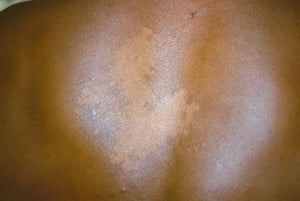
This photo shows lighter patches of skin caused by tinea versicolor.
This photo shows lighter patches of skin caused by tinea versicolor.
Image courtesy of Karen McKoy, MD.

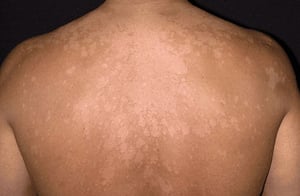
This photo shows multiple pink, scaly patches on the back. These patches are typical of tinea versicolor.
This photo shows multiple pink, scaly patches on the back. These patches are typical of tinea versicolor.
Image provided by Thomas Habif, MD.

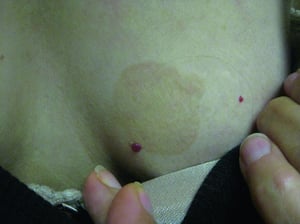
This photo shows a tan patch on the chest that is typical of tinea versicolor.
This photo shows a tan patch on the chest that is typical of tinea versicolor.
© Springer Science+Business Media


© Springer Science+Business Media

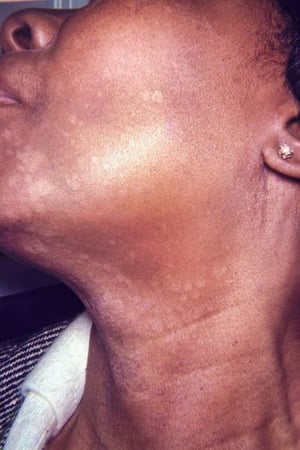
In this photo, the light areas on the face and neck are caused by tinea versicolor.
In this photo, the light areas on the face and neck are caused by tinea versicolor.
Image courtesy of Karen McKoy, MD.
This photo shows lighter patches of skin caused by tinea versicolor.
This photo shows lighter patches of skin caused by tinea versicolor.
Image courtesy of Karen McKoy, MD.
This photo shows multiple pink, scaly patches on the back. These patches are typical of tinea versicolor.
This photo shows multiple pink, scaly patches on the back. These patches are typical of tinea versicolor.
Image provided by Thomas Habif, MD.
This photo shows a tan patch on the chest that is typical of tinea versicolor.
This photo shows a tan patch on the chest that is typical of tinea versicolor.
© Springer Science+Business Media
© Springer Science+Business Media
In this photo, the light areas on the face and neck are caused by tinea versicolor.
In this photo, the light areas on the face and neck are caused by tinea versicolor.
Image courtesy of Karen McKoy, MD.
Madaktari wanawezaje kujua ikiwa nina tinea vasikola?
Madaktari wanaweza kufahamu kwa kutazama madoa. Ili kufahamu kwa hakika, wanaweza kutumia mwanga usioonekana kwa jicho la binadamu (UV) kutazama ngozi yako. Tinea hung'aa chini ya mwanga wa UV wakati upele mwingine haufanyi hivyo. Wakati mwignine madaktari hubandua vipande vidogo kutoka kwenye ngozi yako ili wavitazame kwenye hadubini.
Je, madaktari wanatibu vipi tinea versicolor?
Madaktari wanaweza kutibu tinea versicolor kwa kutumia:
Malai ya dawa ya kuvu ya kupaka kwenye madoa yako
Shampuu maalumu, ikiwa una madoa kwenye ngozi ya kichwa
Kumeza dawa, ikiwa una madoa kwenye mwili wako wote au unapata tinea vasikola mara kwa amra
Mwili wako unaweza usirejee katika rangi yake ya kawaida kwa kipindi cha miezi au miaka baada ya matibabu.
Mara nyingi maambukizi hurejea baada ya matibabu. Ili kuzuia isirejee, madaktari wanaweza kutumia sabuni maalumu au kukupaka malai ya dawa ya kuvu mara moja kwa mwezi.