Aina fulani za mnyoo bapa husababisha maambukizi kwenye utumbo.
Minyoo bapa ni minyoo yenye vimelea. Kuna aina nyingi za mnyoo bapa. Aina tofauti huwa zinaambukiza sehemu tofauti za mwili. Minyoo bapa inayoambukiza utumbo ni pamoja na
Fasciolopsis buski, ambayo husababisha ugonjwa wa fasciolopsiasis.
Heterofi heterofi, ambayo husababisha ugonjwa wa heterofiasisi
(Angalia pia Muhtasari wa Maambukizi ya Vimelea.)
Maambukizi ya mnyoo bapa kwenye utumbo kwa kawaida hutokea nchini Misri, Mashariki ya Kati, na sehemu za Asia na bara ndogo la India.
Mzunguko wa maisha ya minyoo bapa ni tatanishi. Watu hupata maambukizi ya mnyoo bapa kwenye utumbo wanapokunywa maji machafu au kula mimea ya majini (kama vile chestnuts za maji) au samaki wa maji safi ambaye hajapikwa, ambaye hajaiva vizuri, au waliohifadhiwa kwa chumvi ambao wana uvimbe wa majimaji unaojumuisha mabuu ya mnyoo bapa.

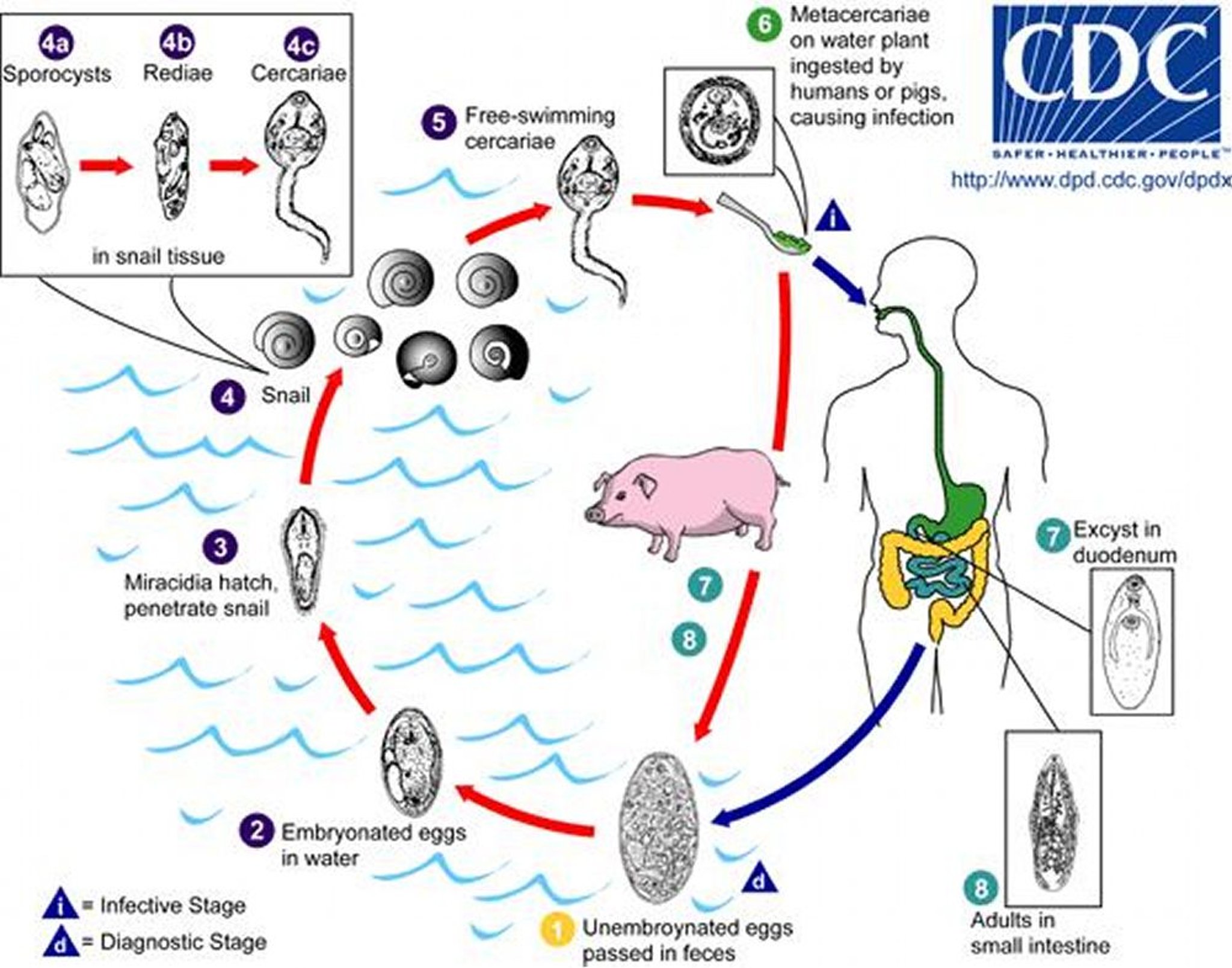
1. In infected people, the adult flukes produce eggs, which pass out of the body in stool (feces).
2–3. In water, the eggs hatch and release immature larvae (called miracidia). The miracidia enter a snail.
4. In the snail, the miracidia go through two stages, then develop into a form that has a tail and can swim in water (called cercariae).
5. The cercariae are released from the snail into the water.
6. They form cysts on aquatic plants. People (or other mammals such as pigs) become infected if they drink contaminated water or eat plants that contain the cysts.
7. In the small intestine, fluke larvae leave the cysts and attach to the wall of the small intestine.
8. There, the larvae develop into adult flukes in about 3 months.
Image from the Centers for Disease Control and Prevention Image Library.

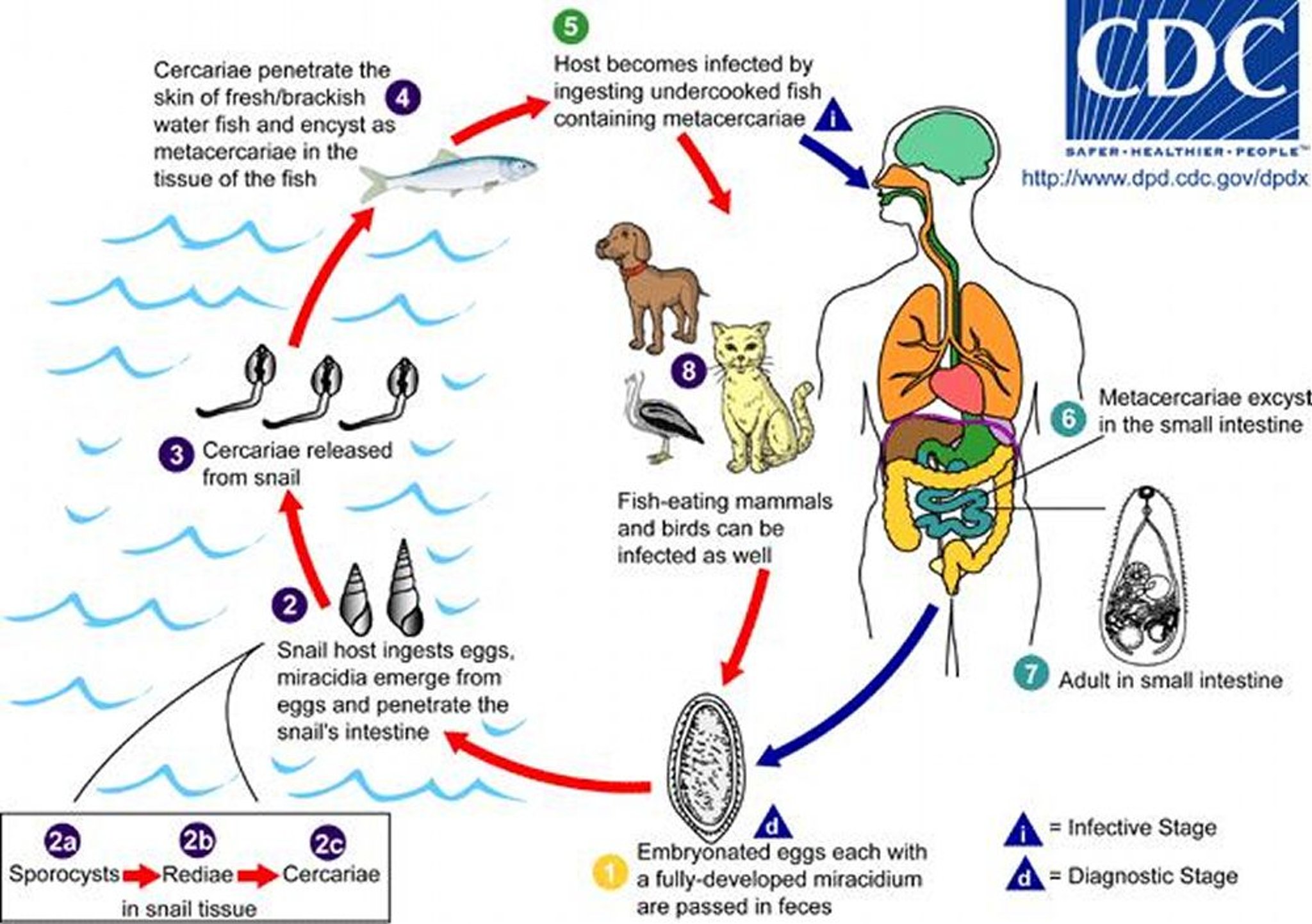
1. In infected people, the adult fluke produces eggs, which pass out of the body in stool (feces).
2. The eggs are eaten by a snail. Inside the snail, the eggs hatch and release larvae (called miracidia), which enter the snail's intestine. The miracidia go through two stages, then develop into a form that has a tail and can swim in water (called cercariae).
3. The cercariae are released from the snail into the water.
4. The cercariae penetrate the skin of a freshwater or brackish-water fish and form cysts in the tissues of the fish.
5. People become infected if they eat raw, undercooked, or salt-cured fish that contain the cysts.
6. In the small intestine, the fluke larvae leave the cyst and attach to the wall of the small intestine.
7. There, they mature into adult flukes.
8. In addition to people, various mammals (such as cats and dogs) and birds that eat fish can be infected by Heterophyes heterophyes.
Image from the Centers for Disease Control and Prevention Image Library.
Kwa kawaida, maambukizi ya minyoo bapa kwenye utumbo hayasababishi dalili zozote au husababisha dalili za kawaida tu, kama vile kushindwa kumeng'enya chakula tumboni na kichefuchefu. Lakini ikiwa maambukizi ni makali, watu wanaweza kupata maumivu ya tumbo, kuhara, na homa. Wakati mwingine mnyoo bapa huzuia vyakula kufyonzwa kikawaida (inayoitwa hali ya kushindwa kunyonya virutubishi) au huziba utumbo (hali inayoitwa kuzuia utumbo).
Madaktari hugundua maambukizi ya mnyoo bapa kwenye utumbo wanapoona mayai au wakati mwingine minyoo bapa iliyokomaa kwenye kinyesi cha mtu (kinyesi). Wakati mwingine madaktari hufanya vipimo vya damu au vipimo vya picha ili kuchunguza matatizo ya maambukizi.
Maambukizi haya ya mnyoo bapa hutibiwa kutumia dawa ya praziquantel.
Tazama pia taarifa ya Vituo vya Kudhibiti na Kuzuia Magonjwa (CDC) kuhusu fasciolopsiasis.