Swallowing disorders can cause trouble moving food from the upper part of the throat into the esophagus (the hollow tube that leads from the throat [pharynx] to the stomach). People usually notice they have difficulty swallowing (dysphagia). Also, people with a swallowing disorder often regurgitate food through the back of the nose or inhale it into the windpipe (trachea), which causes them to cough.
Swallowing disorders occur most often in people who have disorders of the throat muscles or the nerves that serve them.
Some people feel as if they have a lump or mass in their throat when no mass is actually there. If this sensation is unrelated to swallowing, it is called globus sensation.
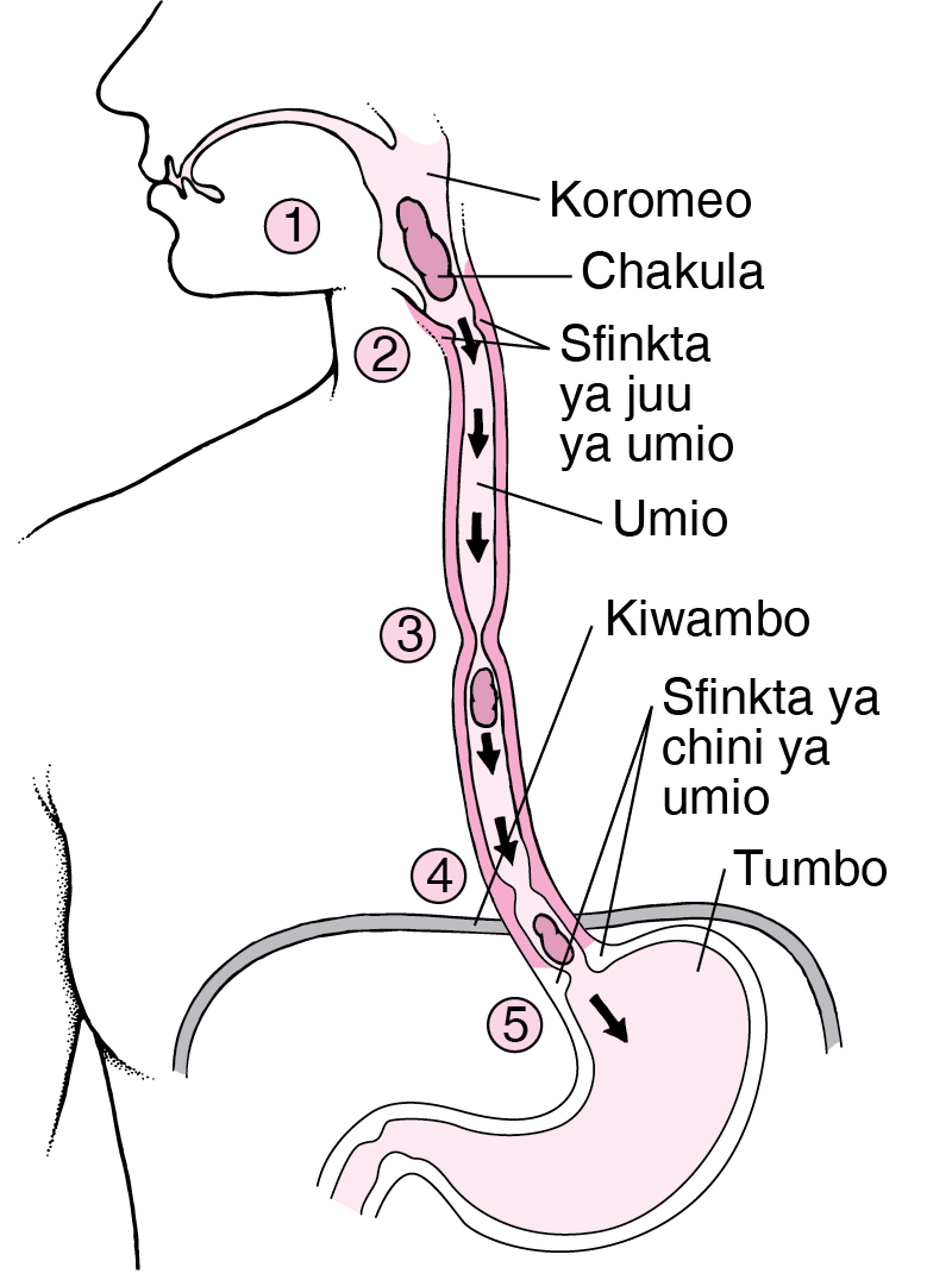
Jinsi Umio Inavyofanya Kazi
As a person swallows, food moves from the mouth to the throat, also called the pharynx (1). The upper esophageal sphincter opens (2) so that food can enter the esophagus, where waves of muscular contractions, called peristalsis, propel the food downward (3). The food then passes through the diaphragm (4) and lower esophageal sphincter (5) and moves into the stomach. |

The most common cause of disorders of the muscles or nerves of the throat is:
Other disorders that can affect the throat muscles or nerves include dermatomyositis, systemic sclerosis, myasthenia gravis, muscular dystrophy, polio, pseudobulbar palsy, Parkinson disease, and amyotrophic lateral sclerosis (Lou Gehrig disease). A class of medications called phenothiazines, which are used to treat certain severe forms of mental illness, can impair the normal function of the throat muscles and cause difficulty swallowing.
In cricopharyngeal incoordination, the upper esophageal sphincter (cricopharyngeal muscle) remains closed when swallowing, or it opens in an uncoordinated way. An abnormally functioning sphincter may allow food to repeatedly enter the windpipe and lungs, which may lead to recurring lung infections and eventually to chronic lung disease. A surgeon can cut the sphincter so that it is permanently relaxed. If left untreated, the condition may lead to the formation of a Zenker diverticulum, a pouch that is formed when the lining of the esophagus pushes outward and backward through the cricopharyngeal muscle.
Treatment depends on the cause of the specific swallowing abnormality. People may also need the assistance of a rehabilitation specialist. Sometimes people benefit from changing head position while eating, retraining the swallowing muscles, doing exercises that improve the ability to accommodate food in the mouth, or doing strength and coordination exercises for the tongue. Some people with severe difficulty swallowing may require a gastrostomy tube. People with propulsion disorders also may benefit from referrals to specialists in prosthetic dentistry, rehabilitative medicine, speech pathology, and otolaryngology.