Opisthorchiasis is infection with Opisthorchis viverrini (Southeast Asian liver fluke) or O. felineus (cat liver fluke), which are acquired by eating infected raw or undercooked fish that contains infectious metacercariae (encysted stage).

Flukes are parasitic flatworms that infect various parts of the body (eg, blood vessels, gastrointestinal tract, lungs, liver) depending on the species.
Opisthorchis species are found in Thailand, Laos, Cambodia, Vietnam, China, Myanmar, Germany, Italy, Belarus, Russia, Kazakhstan, and Ukraine (1).
The life cycle of Opisthorchis requires snails as the first intermediate host and fish as the second intermediate host. Snails in the genera Bithynia and Cordiella may serve as a first intermediate host for Opisthorchis species (2). Dogs, cats, and other fish-eating mammals are also definitive hosts. Infection may occur by eating raw, frozen, dried, pickled, or undercooked freshwater fish, which can contain larvae. After ingestion, metacercariae excyst and ascend through the ampulla of Vater into the biliary ducts, where they attach to the mucosa and mature. Adult flukes grow to 5 to 10 mm by 1 to 2 mm (O. viverrini) or 7 to 12 mm by 2 to 3 mm (O. felineus).

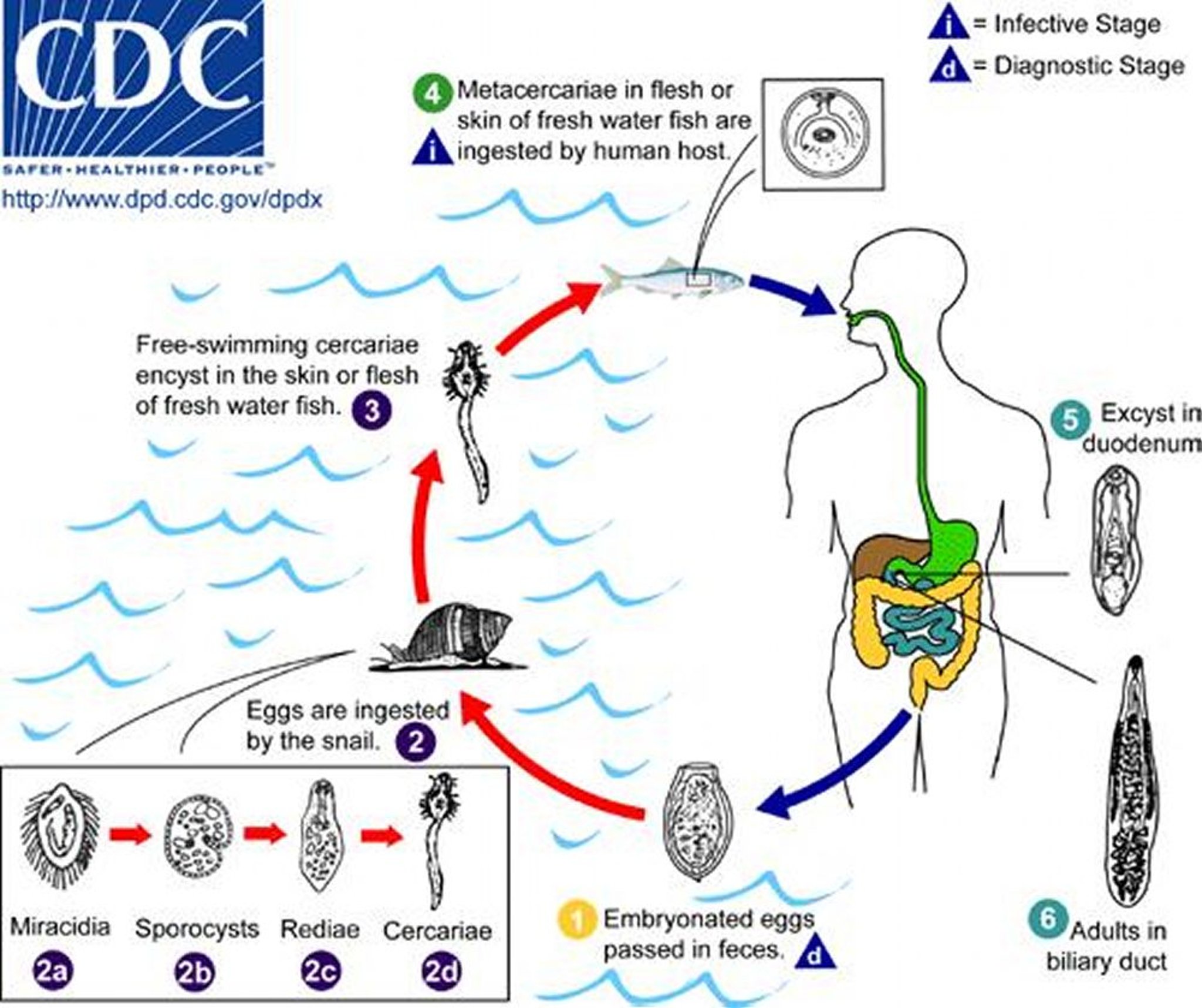
1. In the human host, the adult fluke releases embryonated eggs that are passed in feces.
2. After ingestion by a snail (first intermediate host), eggs release miracidia, which develop into sporocysts, then rediae, and then cercariae.
3. Cercariae are released from the snail and penetrate freshwater fish (second intermediate host).
4. The cercariae encyst as metacercariae in muscles or under the scales of the fish. The mammalian primary (definitive) host (cats, dogs, various fish-eating mammals including humans) becomes infected by ingesting undercooked fish containing metacercariae.
5. After ingestion, the metacercariae excyst in the duodenum.
6. They ascend through the ampulla of Vater into the biliary ducts, where they attach and develop into adults. They lay eggs after 3 to 4 weeks.
Image from the Centers for Disease Control and Prevention Image Library.
Opisthorchiasis resembles clonorchiasis, and the development of symptoms depends on worm burden and duration of infection. Most O. viverrini infections remain asymptomatic, with about 5 to 10% of patients presenting with symptoms that include right upper quadrant abdominal pain, indigestion, diarrhea, flatulence, and fatigue. Acute symptoms are more common with O. felineus infection and may resemble some presentations of acute schistosomiasis. Acute symptoms include high-grade fever, anorexia, nausea, vomiting, abdominal pain, malaise, myalgia, arthralgia, and urticaria. Symptoms typically begin 10 to 26 days after exposure.
In chronic infection, symptoms may be more severe; hepatomegaly and undernutrition may be present. Rare complications include cholecystitis, cholelithiasis, cholangitis, and cholangiocarcinoma (bile duct cancer) (3). U. S. Vietnam veterans who develop cholangiocarcinoma may have been infected with Opisthorchis viverrini or Clonorchis sinensis while they served in Southeast Asia (4).
Diagnosis of opisthorchiasis is based on detecting eggs in the feces. Serologic, antigen-based, or molecular testing for speciation is not widely available, particularly in the United States. Ultrasound, CT, MRI, cholangiography, or endoscopic retrograde cholangiopancreatography (ERCP) may show biliary tract abnormalities.

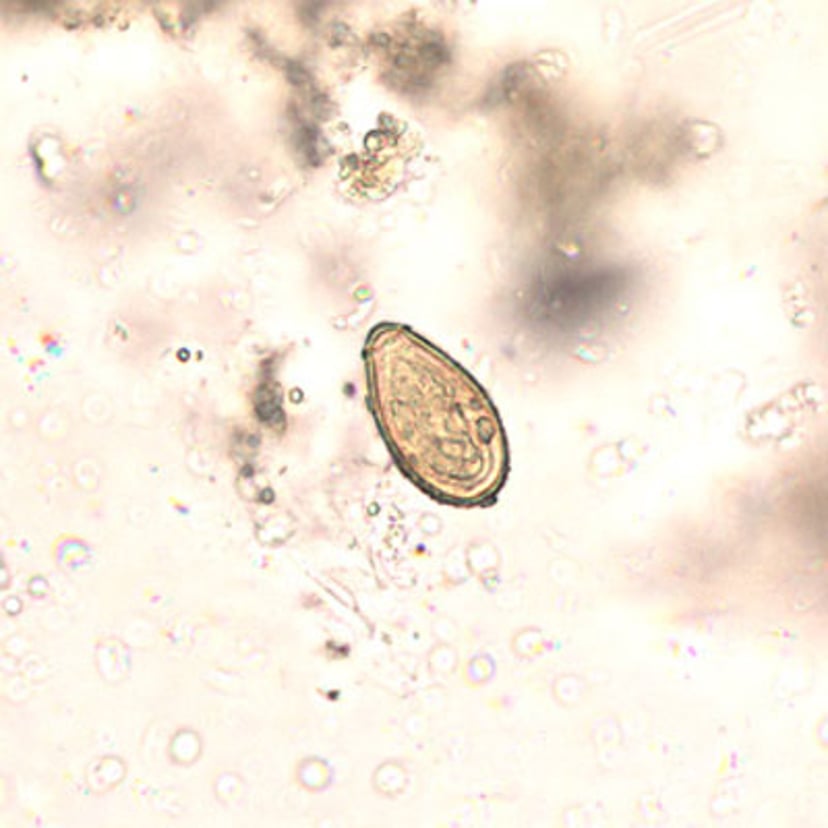
Eggs of Opisthorchis species are 19 to 30 micrometers long by 10 to 20 micrometers wide. They are often indistinguishable from Clonorchis sinensis eggs. Opisthorchis eggs are operculated and have prominent opercular "shoulders" and an abopercular knob. The eggs are embryonated when passed in feces.
CDC/DPDx
The treatment of choice for opisthorchiasis is one of the following:
Praziquantel orally 3 times a day for 2 to 3 days
Albendazole orally once a day for 7 days
Praziquantel is the only agent recommended by the WHO (5).
Infection can be prevented by thoroughly cooking or freezing freshwater fish (1). Improving hand hygiene and preventing exposure to contaminated water helps to prevent the spread of infection.
References
1. Centers for Disease Control and Prevention: Liver flukes: About Opisthorchis. February 14, 2024. Accessed July 2, 2025.
2. Centers for Disease Control and Prevention: DPDx–Laboratory Identification of Parasites of Public Health Concern: Opisthorchiasis. February 20, 2018. Accessed July 2, 2025.
3. Xia J, Jiang SC, Peng HJ: Association between liver fluke infection and hepatobiliary pathological changes: A systematic review and meta-analysis. PLoS One 10 (7):e0132673, 2015. doi: 10.1371/journal.pone.0132673
4. Psevdos G, Ford FM, Hong S-T: Screening US Vietnam veterans for liver fluke exposure 5 decades after the end of the war. Infectious Diseases in Clinical Practice 26(4):208–210, 2018. doi: 10.1097/IPC.0000000000000611
5. World Health Organization: Neglected tropical diseases: Opisthorchiasis. July 28, 2020. Accessed July 2, 2025.
Drug Information for the Topic