Tonsillopharyngitis is acute infection of the pharynx, palatine tonsils, or both. Symptoms may include sore throat, odynophagia, cervical lymphadenopathy, and fever. Diagnosis is clinical, supplemented by culture or rapid antigen test. Treatment depends on symptoms and, in the case of group A beta-hemolytic streptococcus, involves antibiotics.
The tonsils participate in systemic immune surveillance. In addition, local tonsillar defenses include a lining of antigen-processing squamous epithelium that involves B- and T-cell responses.
Tonsillopharyngitis of all varieties is a very common cause of all office visits to primary care physicians. In the United States, nonstreptococcal acute tonsillitis accounts for 0.2%, nonstreptococcal acute pharyngitis for 0.4%, and streptococcal acute tonsillopharyngitis for 0.2% of all outpatient visits (1).
Streptococcal pharyngitis is a well-recognized trigger for the postinfectious syndromes of poststreptococcal glomerulonephritis and acute rheumatic fever (2).
(See also Streptococcal Infections.)
General references
Santo L, Okeyode T, Schappert S. National Ambulatory Medical Care Survey–Community Health Centers: 2020 National Summary Tables Published June 29, 2022. Accessed March 23, 2026.
2. Wessels MR. Clinical practice. Streptococcal pharyngitis. N Engl J Med. 2011;364(7):648-655. doi:10.1056/NEJMcp1009126
Etiology of Tonsillopharyngitis
Tonsillopharyngitis is usually viral, most often caused by the common cold viruses (adenovirus, rhinovirus, influenza, coronavirus, and respiratory syncytial virus), but occasionally by Epstein-Barr virus, herpes simplex virus, cytomegalovirus, or HIV.
In approximately 30% of patients, the cause is bacterial (1). Group A beta-hemolytic streptococcus (GABHS) is the most common bacterial cause (see Streptococcal Infections), but Staphylococcus aureus, Streptococcus pneumoniae, Mycoplasma pneumoniae, and Chlamydia pneumoniae are sometimes involved. Rare causes include pertussis, Fusobacterium, diphtheria, syphilis, and gonorrhea.
GABHS causes approximately 15% to 30% of sore throats in children and 5% to 15% in adults (2). It occurs most commonly between ages 5 and 15 and is uncommon before age 3; it is also uncommon in older adults.
Etiology references
1. Pichichero ME. Group A streptococcal tonsillopharyngitis: cost-effective diagnosis and treatment. Ann Emerg Med. 1995;25(3):390–403. doi: 10.1016/s0196-0644(95)70300-4
2. Kalra MG, Higgins KE, Perez ED. Common Questions About Streptococcal Pharyngitis. Am Fam Physician. 2016;94(1):24-31.
Symptoms and Signs of Tonsillopharyngitis
Pain when swallowing is the hallmark of tonsillopharyngitis and is often referred to the ears. Very young children who are not able to complain of sore throat often refuse to eat. High fever, malaise, headache, and gastrointestinal upset are common, as are halitosis and a muffled voice. The tonsils are swollen and red and often have purulent exudates. Tender cervical lymphadenopathy may be present. Fever, adenopathy, palatal petechiae, and exudates are more common with Group A beta-hemolytic streptococcus (GABHS) than with viral tonsillopharyngitis, but there is much overlap; both tonsillopharyngitis and GABHS can cause petechiae. With GABHS, a scarlatiniform rash (scarlet fever) may be present.

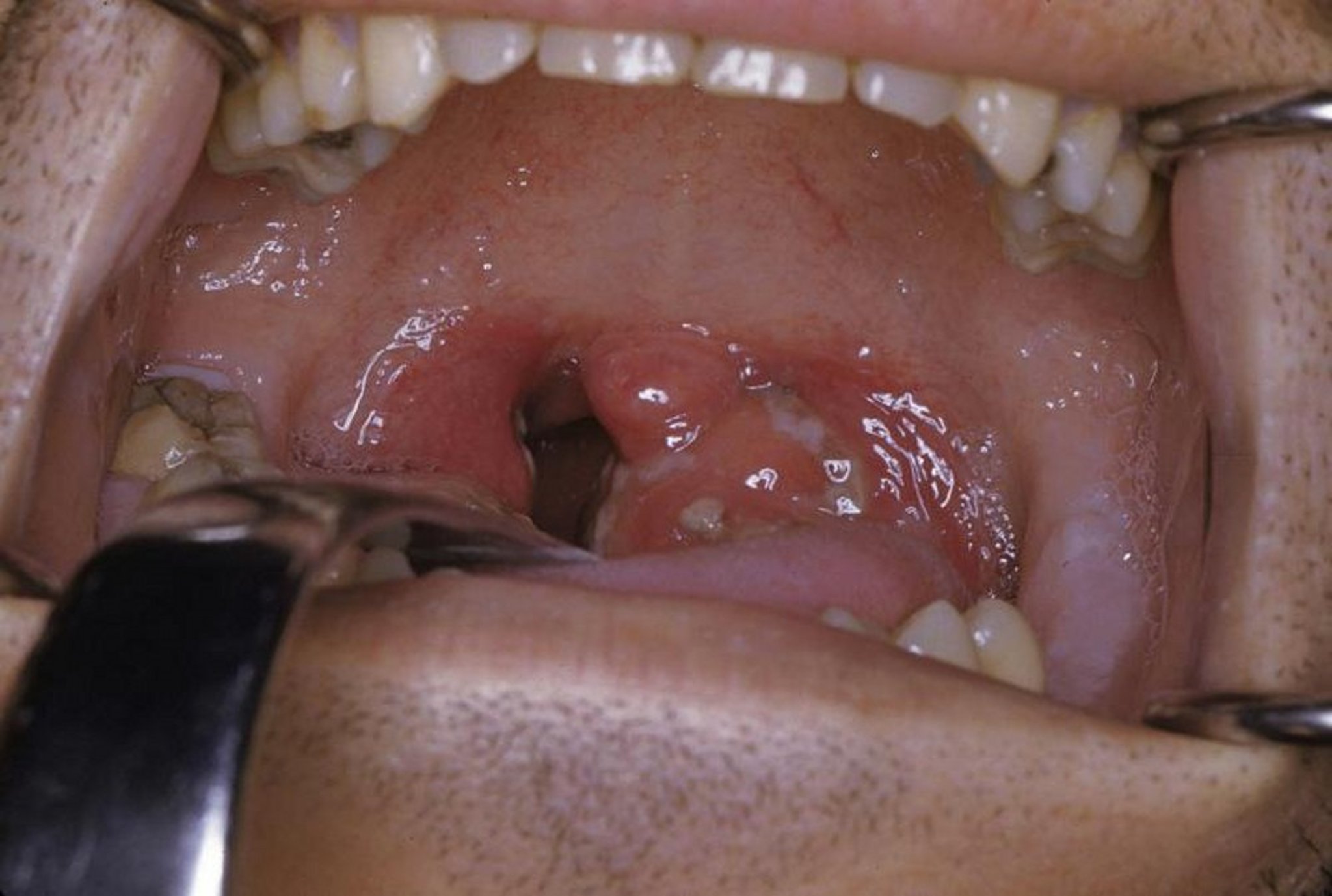
This photo shows acute tonsillitis with exudate and erythema.
Photo provided by Clarence T. Sasaki, MD.

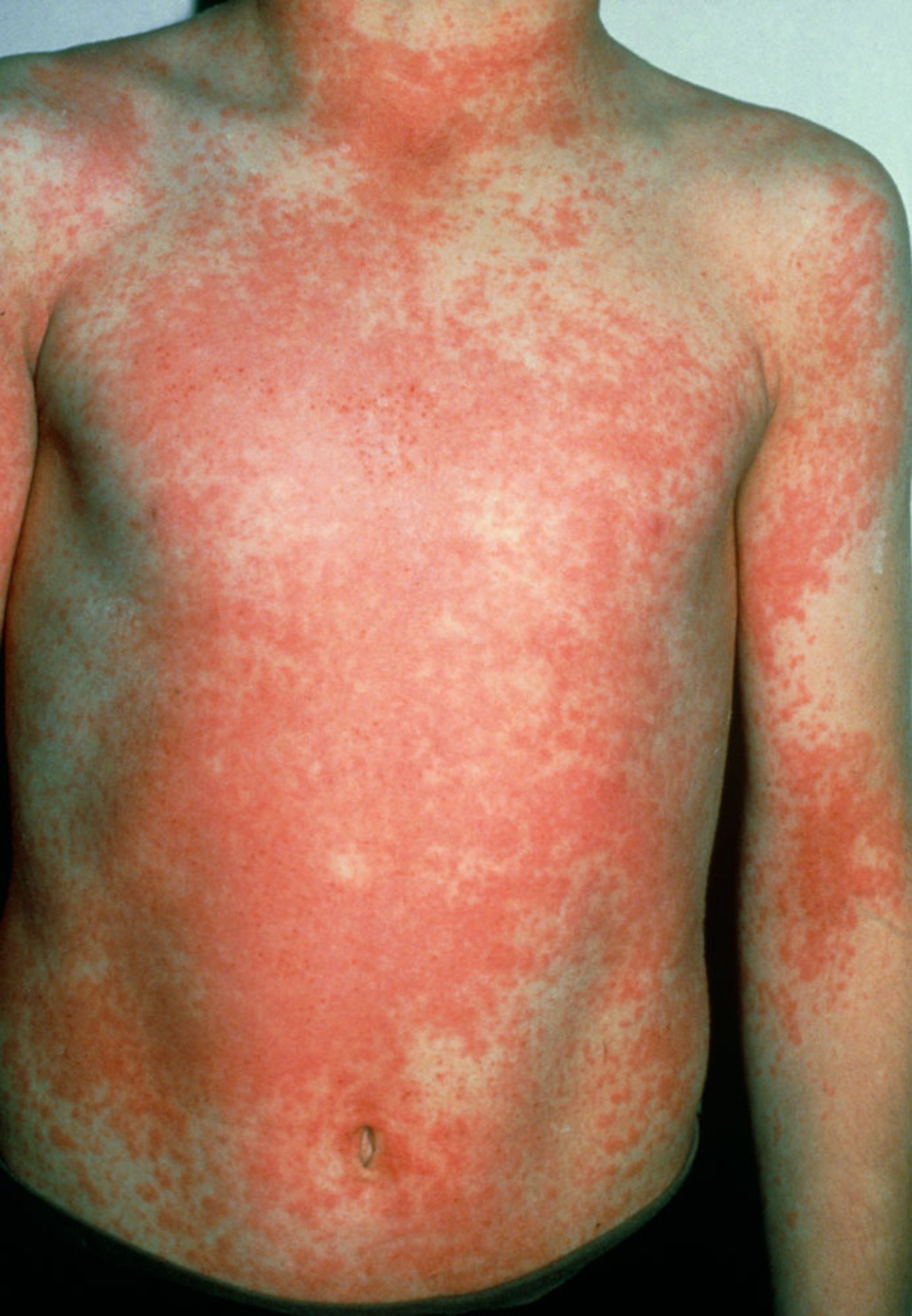
This photo shows extensive scarlet fever maculopapular rash (scarlatina) on a child's abdomen.
BIOPHOTO ASSOCIATES/SCIENCE PHOTO LIBRARY
GABHS usually resolves within 7 days, with or without antibiotics. Untreated GABHS may lead to local suppurative complications (eg, peritonsillar abscess or cellulitis) and sometimes leads to rheumatic fever or glomerulonephritis.
Diagnosis of Tonsillopharyngitis
History and physical examination
Centor scoring
Group A beta-hemolytic streptococcus (GABHS) ruled out by rapid antigen test, culture, or both, routinely or selectively
The diagnosis of tonsillopharyngitis relies on clinical assessment using validated scoring systems combined with laboratory testing to differentiate bacterial (particularly GABHS) from viral etiologies, as physical examination alone is insufficient for a definitive diagnosis (ie, the causative organism) (1).Rhinorrhea and cough usually indicate a viral cause. Infectious mononucleosis is suggested by posterior cervical or generalized adenopathy, hepatosplenomegaly, fatigue, and malaise for > 1 week; a full neck with petechiae of the soft palate; and thick tonsillar exudates. A dirty gray, thick, tough membrane (also called a pseudomembrane) that bleeds if peeled away indicates diphtheria; however, this is rare in the United States.
Because GABHS requires antibiotics, it must be diagnosed early. The diagnostic accuracy of a clinical scoring system for its usefulness to predict when to initiate antibiotics is comparable or superior to clinical assessment alone (2). Many authorities recommend testing with a rapid antigen test or culture for all children. Rapid antigen tests are specific but not sensitive and may need to be followed by a throat culture, which is the reference standard when performed properly (3, 4).


In adults, many authorities (eg, American College of Physicians, the Centers for Disease Control and Prevention, American Academy of Family Physicians) recommend using the following 4 criteria of the modified Centor score (5, 6, 7):
History of fever
Tonsillar exudates
Absence of cough
Tender anterior cervical lymphadenopathy
Patients who meet 1 or no criteria are unlikely to have GABHS and should not be tested. Patients who meet 2 criteria can be tested. Patients who meet 3 or 4 criteria can be tested or treated empirically for GABHS.
Additional testing may be required (eg, titers of antistreptolysin O, anti-DNase B) if there is clinical suspicion of acute rheumatic fever or glomerulonephritis. See also Diagnosis of Rheumatic Fever and Diagnosis of Postinfectious Glomerulonephritis.
Diagnosis references
1. Smith KL, Hughes R, Myrex P. Tonsillitis and Tonsilloliths: Diagnosis and Management. Am Fam Physician. 2023;107(1):35-41.
2. Linder JA, Watson ME, Wessels MR, et al. 2025 Clinical Practice Guideline Update by the Infectious Diseases Society of America on Group A Streptococcal (GAS) Pharyngitis: Risk assessment using clinical scoring systems in children and adults. Clin Infect Dis. Published online December 4, 2025. doi:10.1093/cid/ciaf668
3. Lean WL, Arnup S, Danchin M, et al. Rapid diagnostic tests for group A streptococcal pharyngitis: a meta-analysis. Pediatrics. 2014;134(4):771-781. doi:10.1542/peds.2014-1094
4. Miller JM, Binnicker MJ, Campbell S, et al. Guide to Utilization of the Microbiology Laboratory for Diagnosis of Infectious Diseases: 2024 Update by the Infectious Diseases Society of America (IDSA) and the American Society for Microbiology (ASM). Clin Infect Dis. Published online March 5, 2024. doi:10.1093/cid/ciae104
5. Harris AM, Hicks LA, Qaseem A; High Value Care Task Force of the American College of Physicians and for the Centers for Disease Control and Prevention. Appropriate Antibiotic Use for Acute Respiratory Tract Infection in Adults: Advice for High-Value Care From the American College of Physicians and the Centers for Disease Control and Prevention. Ann Intern Med. 2016;164(6):425-434. doi:10.7326/M15-1840
6. Sur DKC, Plesa ML. Antibiotic Use in Acute Upper Respiratory Tract Infections. Am Fam Physician. 2022;106(6):628-636.
7. Fine AM, Nizet V, Mandl KD. Large-scale validation of the Centor and McIsaac scores to predict group A streptococcal pharyngitis. Arch Intern Med. 2012;172(11):847–852. doi: 10.1001/archinternmed.2012.950
Treatment of Tonsillopharyngitis
Symptomatic treatment
Antibiotics for GABHS
Tonsillectomy considered for recurrent GABHS
The treatment of tonsillopharyngitis involves a multifaceted approach that includes supportive care, antibiotics, and in selected patients, surgical tonsil removal. In particular, the timely administration of antibiotic therapy for appropriate durations reduces the likelihood of prolonged symptoms and associated complications (eg, postinfectious glomerulonephritis, rheumatic fever) (1).
Supportive treatments for tonsillopharyngitis include analgesia, hydration, and rest. Analgesics may be systemic or topical. Nonsteroidal anti-inflammatory drugs (NSAIDs) are usually effective systemic analgesics. Some clinicians also give a single dose of a glucocorticoid (eg, dexamethasone 10 mg IM), which may help shorten symptom duration without affecting rates of relapse or adverse effects (2). Glucocorticoids are commonly used to treat tonsillopharyngitis because they can help relieve pain and increase consumption of food. Some clinicians do not use glucocorticoids because of their adverse effects.
Topical analgesics are available as lozenges and sprays; ingredients include benzocaine, phenol, lidocaine, and other substances. These topical analgesics can reduce pain but have to be used repeatedly and often affect taste. Benzocaine used for pharyngitis has rarely caused methemoglobinemia. Doses of topical analgesics must sometimes be limited.
Antibiotic therapy is generally with beta-lactams, which are highly effective and considered first-line therapy against group A beta-hemolytic streptococcus (GABHS) (2). For example, penicillin V is often considered the medication of choice for GABHS tonsillopharyngitis; the dose is 250 mg orally 2 times a day for 10 days for patients < 27 kg and 500 mg 2 times a day for 10 days for those > 27 kg. Amoxicillin is also effective and more palatable if a liquid preparation is required. If adherence is a concern, a single dose of benzathine penicillin 1.2 million units IM (600,000 units for children ≤ 27 kg) is effective (3). Other oral antibiotics include macrolides for patients allergic to penicillin, a first-generation cephalosporin, or clindamycin. Diluting over-the-counter hydrogen peroxide with water in a 1:1 mixture and gargling with it will promote debridement and improve oropharyngeal hygiene.
Treatment may be started immediately or delayed until culture results are known. If treatment is started presumptively, it should be stopped if cultures are negative. Follow-up throat cultures (for test of cure) are not performed routinely. They are useful in patients with multiple GABHS recurrences or if pharyngitis spreads to close contacts at home or school.
Tonsillectomy
Tonsillectomy is recommended if GABHS tonsillitis recurs repeatedly (> 6 episodes/year, > 4 episodes/year for 2 years, or > 3 episodes/year for 3 years) or if acute infection is severe and persistent despite antibiotics. Other criteria for tonsillectomy include obstructive sleep apnea, recurrent peritonsillar abscess, and suspicion of cancer (4). Decisions should be individualized, based on patient age, multiple risk factors, and response to infection recurrences (5).
Numerous effective surgical techniques are used to perform tonsillectomy; they include electrocautery dissection, microdebridement, radiofrequency coblation, and sharp dissection. Postoperative IV rehydration is necessary in ≤ 3% of patients, possibly in fewer patients who have had optimal preoperative hydration, perioperative antibiotics, analgesics, and glucocorticoids. Significant intraoperative or postoperative bleeding occurs in < 2% of patients, usually within 24 hours of surgery or after 7 days, when the eschar detaches. Patients with bleeding should go to the hospital. If bleeding continues on arrival, patients are usually examined in the operating room, and hemostasis is obtained. Any clot present in the tonsillar fossa is removed, and patients are observed for 24 hours.
Postoperative airway obstruction occurs most frequently in children < 2 years who have preexisting severe obstructive sleep disorders and in patients with morbid obesity or neurologic disorders, craniofacial anomalies, or significant preoperative obstructive sleep apnea. In adult patients undergoing tonsillectomy, complications are generally common (20% of cases) and can occasionally be severe (6)
Accumulating evidence suggests that tonsillotomy (partial intracapsular removal of tonsil tissue), when performed to treat various disorders is as efficacious as traditional tonsillectomy and preferable because of better outcomes related to pain, postoperative complications, and patient satisfaction (7, 8).
Treatment references
1. Harris AM, Hicks LA, Qaseem A; High Value Care Task Force of the American College of Physicians and for the Centers for Disease Control and Prevention. Appropriate Antibiotic Use for Acute Respiratory Tract Infection in Adults: Advice for High-Value Care From the American College of Physicians and the Centers for Disease Control and Prevention. Ann Intern Med. 2016;164(6):425-434. doi:10.7326/M15-1840
2. Hayward G, Thompson MJ, Perera R, et al. Corticosteroids as standalone or add-on treatment for sore throat. Cochrane Database Syst Rev. 2012;10:CD008268. Published 2012 Oct 17. doi: 10.1002/14651858.CD008268.pub2
3. Shulman ST, Bisno AL, Clegg HW, et al. Clinical practice guideline for the diagnosis and management of group A streptococcal pharyngitis: 2012 update by the Infectious Diseases Society of America. Clin Infect Dis. 2012;15;55(10):e86-102. doi: 10.1093/cid/cis629 Epub 2012 Sep 9.
4. Mitchell RB, Archer SM, Ishman SL, et al. Clinical Practice Guideline: Tonsillectomy in Children (Update). Otolaryngol Head Neck Surg. 2019;160(1_suppl):S1-S42. doi:10.1177/0194599818801757
5. Ruben RJ. Randomized controlled studies and the treatment of middle-ear effusions and tonsillar pharyngitis: how random are the studies and what are their limitations? Otolaryngol Head Neck Surg. 2008;139(3):333-9. doi: 10.1016
6. Seshamani M, Vogtmann E, Gatwood J, et al. Prevalence of complications from adult tonsillectomy and impact on health care expenditures. Otolaryngol Head Neck Surg. 2014;150(4):574-581. doi:10.1177/0194599813519972
7. Wong Chung JERE, van Benthem PPG, Blom HM. Tonsillotomy versus tonsillectomy in adults suffering from tonsil-related afflictions: a systematic review. Acta Otolaryngol. 2018;138(5):492-501. doi: 10.1080/00016489.2017.1412500
8. Blackshaw H, Springford LR, Zhang L-Y, et al. Tonsillectomy versus tonsillotomy for obstructive sleep-disordered breathing in children. Cochrane Database Syst Rev. 2020;4(4):CD011365. doi: 10.1002/14651858.CD011365.pub2
Key Points
Pharyngitis itself is easily recognized clinically; however, in some cases, testing is likely to be required to determine whether the infection is a streptococcal infection (ie, strep throat).
Clinical criteria (modified Centor score) can help select patients for further testing or empiric antibiotic treatment, although some authorities recommend testing all children using a rapid antigen test and sometimes culture.
The absence of cough very often indicates a bacterial etiology and the need for further testing and initiation of antibiotics.
Penicillin remains the medication of choice for streptococcal pharyngitis; cephalosporins or macrolides are alternatives for patients allergic to penicillin.
Drug Information for the Topic