Pneumonia is an infection of the small air sacs of the lungs (alveoli) and the tissues around them.
Pneumonia is one of the most common causes of death worldwide.
The most common symptom of pneumonia is a cough that produces sputum (thick or discolored mucus).
Pneumonia is usually diagnosed with a chest x-ray.
Antibiotics are often given to treat pneumonia.
Often, pneumonia is the final illness that causes death in people who have other serious, chronic diseases.
Some types of pneumonia can be prevented by immunization.
In the United States, millions of people develop pneumonia each year (excluding pneumonia caused by COVID-19). The Centers for Disease Control and Prevention (CDC) reported that in the United State, in 2023, more than 41,000 people died of pneumonia. Pneumonia is the most common cause of death among infections that develop while people are hospitalized and is the most common overall cause of death in medically underserved countries. Children younger than 5 years of age, adults older than 70 years, and adults with a weakened immune system are at the highest risk of death due to pneumonia.
Causes of Pneumonia
Pneumonia is caused by different microorganisms—including bacteria (including mycobacteria), viruses, fungi, and parasites. Bacterial and viral pneumonias are much more common than mycobacterial, fungal, or parasitic pneumonias. The specific organisms vary depending on the person's age, health, location, and other factors. More than one microorganism may be involved. For example, influenza (a viral infection) is often complicated by bacterial pneumonia.
Inside the Lungs and Airways

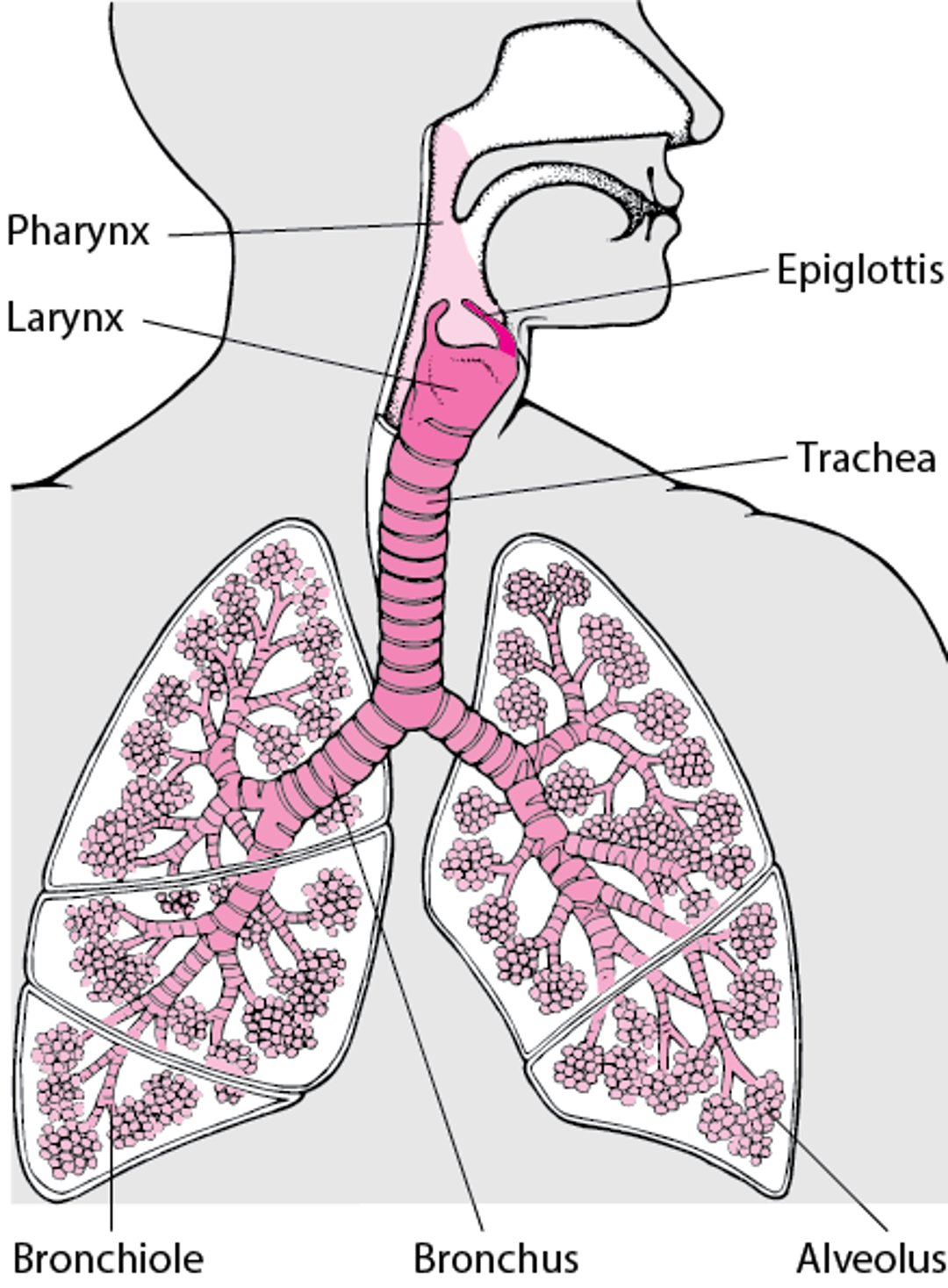
The airways and small air sacs of the lungs are constantly exposed to microorganisms. The nose and throat are full of bacteria and sometimes viruses, and people regularly inhale from the air or aspirate from the digestive tract, mouth, or throat small amounts of these organisms. Normally these organisms are readily dealt with by the lungs' defense mechanisms, which include:
The cough reflex, which helps expel mucus and foreign substances
The cells lining the lung passageways, which prevent microorganisms from invading the lungs and which push mucus and foreign substances upward so that they can be coughed out
Proteins made by lung cells, which attack microorganisms
White blood cells within the lungs, which are part of the normal immune system and which also attack microorganisms
Pneumonia develops when:
Defense mechanisms are not functioning correctly.
A large amount of bacteria is inhaled and overwhelms normal defenses.
A particularly infective organism is introduced.
Usually pneumonia starts after microorganisms are inhaled (aspirated) from the upper airways into the lungs, but sometimes the infection is caused by microorganisms that are inhaled from the air, carried to the lungs by the bloodstream, or invade the lungs directly from a nearby site of infection.
Categories of pneumonia
Where people are when pneumonia develops is important because different organisms tend to be present in different settings. In some settings, such as hospitals, organisms are typically more dangerous and more commonly resistant to antibiotics than organisms present in other settings. People in some settings are also more likely to have disorders that make them more likely to develop pneumonia. Some categories of pneumonia include:
Community-acquired pneumonia, which develops in people living in the community
Hospital-acquired pneumonia, which is an infection acquired in the hospital. A subgroup of this type of pneumonia is ventilator-associated pneumonia, which develops in persons on a breathing machine (ventilator)
Other categories of pneumonia include:
Aspiration pneumonia, which occurs when larger volumes or particles (for example, saliva, food, or vomit) are inhaled and are not cleared from the lungs. Aspiration pneumonia can occur in people with swallowing difficulties, such as people who have had strokes, and in people with decreased level of consciousness due to sedating medications or illicit drugs, alcohol, or other reasons.
Obstructive pneumonia, which occurs when a blockage of the air passages in the lungs (such as caused by a tumor) causes bacteria to accumulate behind the blockage
"Walking" pneumonia is a nonmedical term sometimes used to describe a mild case of community-acquired pneumonia that does not require bedrest or hospitalization. Some people might even feel well enough to go to work and participate in other daily activities.
Aspiration pneumonitis, also called chemical pneumonitis, refers to a chemically induced inflammation of the lungs that is largely not caused by an infectious organism. In some people, bacterial infection can occur after the chemical inflammation.
Risk factors for pneumonia
A critical feature is whether the pneumonia occurs in a healthy person or in someone who has an impaired immune system. A person who has an impaired immune system is far more likely to contract pneumonia, including pneumonia caused by unusual bacteria and viruses and even fungi or parasites. Also, a person whose immune system is impaired may not respond as well to treatment as someone whose immune system is healthy. People who may have an impaired immune system include those who:
Are being treated with certain medications (such as steroids [sometimes called glucocorticoids or corticosteroids] or chemotherapy agents)
Have certain diseases, such as human immunodeficiency virus (HIV) or various types of cancer
Have an undeveloped immune system, as is the case of infants and toddlers
Have an immune system that is impaired by severe illness
Pneumonia may occur after surgery, particularly abdominal surgery, or after an injury (trauma), particularly a chest injury, because the pain of those conditions keeps people from breathing deeply and from coughing. If people do not breathe deeply and cough, microorganisms are more likely to remain in the lungs and cause infection. Other people who do not breathe deeply and cough include those who are debilitated, bedridden, paralyzed, or unconscious. Such people are also at risk of pneumonia.
Other conditions that predispose people to pneumonia include alcohol use disorder, cigarette smoking and vaping, diabetes, heart failure, older age (for example, older than 70 years), and chronic obstructive pulmonary disease (COPD) because these disorders can weaken the lungs' defense mechanisms or the immune system.
Symptoms of Pneumonia
The most common symptom of pneumonia is:
Cough that produces sputum (thick or discolored mucus)
Other common pneumonia symptoms include:
Chest pain
Chills
Fever
Shortness of breath
These symptoms may vary, however, depending on how much of the lungs are infected and which organism is causing the infection.
Sometimes people who have pneumonia have digestive symptoms such as nausea, diarrhea, and loss of appetite (anorexia).
Symptoms vary even more in infants and older adults. Fever may not occur. Chest pain may not occur, or people may not be able to communicate that they have chest pain. Sometimes the only symptom is rapid breathing or a sudden refusal to eat. In infants and young children, the cough may not produce sputum. Sometimes sudden confusion may be the only sign of pneumonia in an older adult.
Complications of pneumonia
Common complications include:
Low oxygen levels in the bloodstream
Life-threatening low blood pressure
Severe lung injury (acute respiratory distress syndrome [ARDS])
Severe pneumonia can prevent oxygen from getting to the bloodstream, causing people to feel short of breath. Low levels of oxygen can be life threatening.
The microorganism causing the pneumonia can enter the bloodstream, or the body's response to the infection can be excessive, resulting in decreased blood pressure that can be life threatening, a condition called sepsis.
Some pneumonias can lead to lung abscess or empyema. An abscess is a pocket of pus. A lung abscess forms when a small area of the lung dies and a collection of pus forms in its place. An empyema is a collection of pus in the space between the lung and the chest wall.
An overwhelming infection or excessive inflammation in response to the infection can cause severe injury to the lungs, which can manifest as ARDS. ARDS causes shortness of breath, usually with rapid, shallow breathing. People who have ARDS usually require breathing support with a mechanical ventilator for an extended amount of time.
Diagnosis of Pneumonia
Usually a chest x-ray, but sometimes a computed tomography (CT) scan of the chest
Sometimes testing to identify the microorganism causing the pneumonia
A doctor checks for pneumonia by listening to the chest with a stethoscope. Pneumonia usually produces distinctive sounds. These abnormal sounds are caused by narrowing or closing of the airways or filling of the normally air-filled parts of the lungs with inflammatory cells and fluid, a process called consolidation. In most cases, the diagnosis of pneumonia is confirmed with a chest x-ray but sometimes a CT scan of the chest is done. In mild cases, doctors may decide to treat based on the symptoms and the results of the physical examination without confirming the diagnosis.
In people who are sick enough to require hospitalization, doctors often test specimens of sputum, blood, and urine in an attempt to identify the organism causing pneumonia. In very sick people, in people with a known problem of the immune system, or when looking for certain unusual organisms, doctors sometimes will obtain sputum samples by giving a vapor treatment that causes the person to cough deeply (inducing sputum production) or insert a bronchoscope (a small flexible tube equipped with a camera) into the airways. Airway samples obtained with a bronchoscope are less likely to contain saliva and are more accurate than sputum samples in identifying the organism causing pneumonia.
It is particularly important for doctors to identify the organism that is causing pneumonia when people are severely ill, do not have a normal immune system, or are not responding well to treatment. However, despite these tests, the precise organism cannot be identified conclusively in most people who have pneumonia.
Treatment of Pneumonia
Antibiotics and sometimes antiviral, antifungal, or antiparasitic medications
Treatments to support breathing
People with pneumonia need to remove mucus and secretions from the lungs and may benefit from deep-breathing exercises. People with pneumonia who are short of breath or have low levels of oxygen in their blood are given oxygen, usually by a small plastic tube in the nostrils (nasal cannula). Although rest is an important part of treatment, complete bed rest can be harmful, and people are encouraged to move often and get out of bed and into a chair.
Usually antibiotics are started whenever bacterial pneumonia is suspected, even before the organism is identified. The prompt use of antibiotics reduces the severity of pneumonia and the chance of developing complications, some of which can lead to death.
Sometimes a bacterial pneumonia can develop after a viral infection. In this case, doctors give affected people antibiotics.
Antibiotics
When choosing an antibiotic, doctors consider which organism is likely to be the cause. Several factors may give clues to the organism causing pneumonia:
Type of pneumonia (community-acquired pneumonia, hospital-acquired or ventilator-associated pneumonia, obstructive pneumonia, aspiration pneumonia)
The person's age
Whether the person's immune system is functioning correctly
Whether the person has other lung diseases
Severity of the pneumonia
Whether the person has been given antibiotics by vein within the last 90 days
Information about what organisms are common in the local area and which antibiotics are able to kill them
Any available information from diagnostic testing, such as the identification of specific bacteria
In general, a doctor chooses an antibiotic that has "broader" activity, meaning that the antibiotic is effective against a wide range of microorganisms, even microorganisms that are resistant to some antibiotics, in the following circumstances:
When pneumonia is severe
When the person's immune system is not working correctly
When the person has hospital-acquired pneumonia, or other risk factors for developing pneumonia caused by a microorganism that is resistant to some antibiotics
After the organism has been identified and its susceptibility to various antibiotics is known, doctors may give a different antibiotic which often is specific to the organism.
Of note, a "broad" antibiotic also kills the normal bacteria that live in the intestine and can result in a severe diarrhea. Therefore, a "broad" antibiotic is used only when necessary. In comparison, for people with less severe pneumonia and for those in general good health, a "narrower" antibiotic is chosen that is usually appropriate for the most common microorganisms that cause pneumonia. Though these antibiotics also cause diarrhea, it happens less frequently.
Antiviral and antifungal medications
Antibiotics are not helpful for viral pneumonias. However, specific antiviral medications are sometimes given if certain viral infections, such as influenza, respiratory syncytial virus (RSV), or chickenpox, are suspected. For influenza, specific antiviral medications (such as oseltamivir or zanamivir) can reduce the duration and severity of illness if people begin taking the medications within 48 hours of when symptoms start. However, once a person has developed influenza pneumonia, doctors are not sure whether the antiviral medications will help, but they still usually give them.
In rare cases, a fungus or parasite is the cause of the pneumonia, and an antifungal or antiparasitic medication is given.
Home versus hospital care
Often, people who have pneumonia but are not very sick can stay at home and take antibiotics by mouth. Older adults, infants, and those who are short of breath, are very sick, have compromised immunity, or have preexisting heart or lung disease are usually hospitalized and given intravenous antibiotics, antivirals, or antifungals to start. Intravenous antibiotics are usually switched to oral ones after a few days if doctors deem that people have sufficiently improved. People who need to be hospitalized may also need supplemental oxygen and intravenous fluids. People who are very sick may need to be temporarily put on a breathing machine (mechanical ventilator) that pushes air in and out of the lungs via a tube inserted in the throat.
Prevention of Pneumonia
The most effective way to prevent pneumonia is to stop smoking.
Deep-breathing exercises and therapy to remove mucus and secretions from the lungs help prevent pneumonia in people at high risk, such as those who have had chest or abdominal surgery and those who are debilitated.
Vaccines can help prevent certain pneumonias. Sometimes when an unvaccinated person has contact with a person known to have a virus that can cause pneumonia (such as influenza), doctors will prescribe certain antiviral medications to try to prevent infection and pneumonia.
Vaccines to prevent pneumonia
Vaccines are available that offer partial protection against pneumonia caused by:
The bacterium Streptococcus pneumoniae
Haemophilus influenzae type b (only in children)
Chickenpox (varicella)
Spotlight on Aging: Pneumonia
Pneumonia occurs more commonly in older adults than in younger adults, and it also tends to be more serious. In many older adults, the infection spreads beyond the lungs. Older adults have weakened defenses against infection. The mechanisms that clear microorganisms from the airways are not as effective in older adults as they are in younger adults. Weakness may make coughing less vigorous. Aging also weakens the immune system. Older adults at greater risk of developing pneumonia include those:
Infection with some of the microorganisms that cause pneumonia can be prevented with vaccinations. Doctors usually recommend that older adults and others who are at high risk of pneumonia receive the pneumococcal vaccine, COVID-19 vaccination, respiratory syncytial virus (RSV) vaccination, and an annual influenza vaccine . Most older adults who get pneumonia are treated in the hospital with intravenous antibiotics. Pneumonia can cause older adults to get very sick very quickly, and older adults tend to respond less well to oral antibiotics. |
More Information
The following English-language resource may be useful. Please note that The Manual is not responsible for the content of this resource.
Drug Information for the Topic