Primary biliary cholangitis (PBC) is inflammation with progressive scarring of the bile ducts in the liver. Eventually, the ducts are blocked, the liver becomes scarred, and cirrhosis and liver failure develop.
Primary biliary cholangitis (PBC) probably results from an autoimmune reaction.
This disorder commonly causes itchiness, fatigue, dry mouth and eyes, and jaundice, but some people have no symptoms.
A blood test to measure certain antibodies can usually confirm the diagnosis.
Treatment includes relieving symptoms, slowing liver damage, treating complications, and sometimes a liver transplant.
(See also Cirrhosis of the Liver.)
Primary biliary cholangitis (PBC) is most common among women aged 40 to 70, although it can occur in men and women of any age. It tends to occur in families.
The liver produces bile, a greenish yellow, thick, sticky fluid that aids digestion. Bile also helps eliminate certain waste products (mainly bilirubin and excess cholesterol) and by-products of medications from the body. Bile ducts are small tubes that carry bile from the liver to the gallbladder and then to the small intestine. Primary biliary cholangitis affects only the small bile ducts inside the liver and the liver cells near these bile ducts. (Another inflammatory bile duct disorder, primary sclerosing cholangitis, affects bile ducts inside and outside the liver.)
Primary biliary cholangitis begins with inflammation of the bile ducts. The inflammation blocks the flow of bile out of the liver. The bile that remains in the liver cells causes inflammation. If damage from the inflammation is mild, the liver repairs itself by making new liver cells and attaching them to the web of connective tissue (internal structure) that is left when liver cells die. As inflammation spreads, however, a latticework of scar tissue (fibrosis) develops throughout the liver. The scar tissue performs no function, and it can distort the liver's internal structure. When the scarring and distortion become widespread, cirrhosis develops.
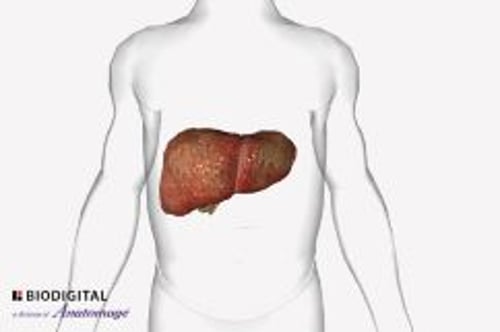
Causes of PBC
The cause is not clear but is probably an autoimmune reaction (in which the immune system attacks the body’s own tissues). Primary biliary cholangitis often occurs in people with other autoimmune disorders, such as rheumatoid arthritis, scleroderma, Sjögren syndrome, or autoimmune thyroiditis.
An autoimmune cause is also thought possible because 90 to 95% of people with PBC have certain abnormal antibodies in their blood. These antibodies attack mitochondria (tiny structures that produce energy in cells). However, these antibodies are not involved in the destruction of the bile ducts themselves. Other immune cells attack the bile ducts. What triggers this attack is unknown, but it may be exposure to a virus or a toxic substance.
Symptoms of PBC
Usually, PBC starts very gradually. About half of people have no symptoms at first.
The first symptoms often include:
Itchiness
Fatigue
Dry mouth and eyes
Difficulty concentrating
Brain fog
Eventually, most people experience itching and fatigue. Other problems may not occur until months or years later:
The skin may become dark or nerves may be damaged (called neuropathy).
People may feel discomfort in the upper abdomen.
Fat sometimes accumulates in small yellow bumps in the skin (xanthoma) or eyelids (xanthelasma).
Jaundice (yellowish discoloration of the skin and whites of the eyes) may develop.
Fluid can accumulate within the abdomen (called ascites) or in other parts of the body, such as the ankles and feet (called edema).
Eventually, any of the symptoms and complications of cirrhosis can develop. Fats, including fat-soluble vitamins (A, D, E, and K), are often poorly absorbed. Poor absorption of vitamin D results in osteoporosis, and poor absorption of vitamin K contributes to easy bruising and bleeding. If the body cannot absorb fats, stools may be light-colored, soft, bulky, oily-looking, and unusually foul-smelling (called steatorrhea).
The liver and spleen may enlarge. But as scarring progresses, the liver shrinks.
Diagnosis of PBC
Physical examination
Abnormal liver tests
Antibodies to mitochondria
Imaging tests
Sometimes biopsy
A doctor may suspect this disorder in middle-aged women who have typical symptoms such as fatigue and itchiness. However, in many people, the disorder is discovered long before symptoms appear because routine blood tests to evaluate the liver are abnormal.
During the physical examination, the doctor may feel an enlarged, firm liver or an enlarged spleen.
If PBC is suspected, doctors do liver tests, imaging tests, and blood tests to check for antibodies to mitochondria.
Imaging tests are done to check for abnormalities or blockages in bile ducts outside the liver. These tests include magnetic resonance imaging (MRI) of the bile duct system (called magnetic resonance cholangiopancreatography, or MRCP) and often ultrasound. If results of these tests are not clear, endoscopic retrograde cholangiopancreatography (ERCP) may be done. For this procedure, an x-ray is taken after a substance that can be seen on x-rays (contrast agent) is injected through a viewing tube (endoscope) inserted through the mouth and a catheter inserted into the bile ducts. Finding no blockages outside the liver means that the liver is the site of the problem and thus supports the diagnosis of PBC.
A liver biopsy (removal of a tissue sample for examination under a microscope) is done to confirm the diagnosis, especially when antibodies to mitochondria are not present. Biopsy also helps doctors determine how advanced the disorder is (the stage).
Treatment of PBC
There is no known cure. Treatment includes:
Ursodeoxycholic acid to slow the progression of liver damage
Medications to relieve symptoms, primarily itching
Prevention of further liver damage by stopping alcohol intake (and other substances or medications that might damage the liver)
Treatment of complications
Eventually liver transplantation
No alcohol should be consumed. Medications that may damage the liver are stopped.
Cholestyramine may control itchiness, as may rifampin, naltrexone (an opioid), sertraline, or ursodeoxycholic acid plus ultraviolet light. Artificial tears, pilocarpine, cevimeline, or other medications may help with dry eyes. Saliva substitutes, pilocarpine, or cevimeline may help with dry mouth. Cholestyramine may control itchiness, as may rifampin, naltrexone (an opioid), sertraline, or ursodeoxycholic acid plus ultraviolet light. Artificial tears, pilocarpine, cevimeline, or other medications may help with dry eyes. Saliva substitutes, pilocarpine, or cevimeline may help with dry mouth.
Ursodeoxycholic acid, particularly if used before the disorder is advanced, reduces liver damage, prolongs life, and delays the need for liver transplantation. Doctors may give peroxisome proliferator-activated receptor (PPAR) agonists like seladelpar or elafibranor for patients who do not respond to ursodeoxycholic acid. These medications are used either in combination with ursodeoxycholic acid, or, for people who cannot tolerate ursodeoxycholic acid, alone. For people who do not respond adequately to ursodeoxycholic acid and do not have access to seladelpar or elafibranor, a fibrate such as bezafibrate or fenofibrate (other PPARs) may be used in combination with ursodeoxycholic acid.Ursodeoxycholic acid, particularly if used before the disorder is advanced, reduces liver damage, prolongs life, and delays the need for liver transplantation. Doctors may give peroxisome proliferator-activated receptor (PPAR) agonists like seladelpar or elafibranor for patients who do not respond to ursodeoxycholic acid. These medications are used either in combination with ursodeoxycholic acid, or, for people who cannot tolerate ursodeoxycholic acid, alone. For people who do not respond adequately to ursodeoxycholic acid and do not have access to seladelpar or elafibranor, a fibrate such as bezafibrate or fenofibrate (other PPARs) may be used in combination with ursodeoxycholic acid.
Supplements of calcium and vitamin D are needed to help prevent Supplements of calcium and vitamin D are needed to help preventosteoporosis or slow its progression. Weight-bearing exercises, bisphosphonates, or raloxifene may also help prevent or slow osteoporosis. Vitamin A, vitamin D, vitamin E, and vitamin K supplements may be needed to correct vitamin deficiencies. Vitamins A, D, and E can be taken by mouth. Vitamin K is given by mouth or injection.or slow its progression. Weight-bearing exercises, bisphosphonates, or raloxifene may also help prevent or slow osteoporosis. Vitamin A, vitamin D, vitamin E, and vitamin K supplements may be needed to correct vitamin deficiencies. Vitamins A, D, and E can be taken by mouth. Vitamin K is given by mouth or injection.
Liver transplantation is the best treatment when the disorder is advanced. It can prolong life. After transplantation, PBC recurs in some people, but it rarely becomes severe.
Prognosis for PBC
Primary biliary cholangitis usually progresses slowly, although how fast it progresses varies greatly. Symptoms may not appear for 2 to 4 years or for up to 10 to 15 years. Once symptoms develop, life expectancy is about 10 years. Certain characteristics suggest that the disorder will progress quickly:
Rapidly worsening symptoms
Older age
Accumulation of fluid and other symptoms of cirrhosis
Presence of an autoimmune disorder, such as rheumatoid arthritis
Certain abnormal liver test results
The prognosis is poor when itching disappears, xanthomas (small yellow bumps in the skin) shrink, jaundice develops, and blood cholesterol decreases.
More Information
The following English-language resources may be useful. Please note that The Manual is not responsible for the content of these resources.
Drug Information for the Topic