In pharyngitis (tonsillopharyngitis), testing of throat swabs may be done to identify infection with beta-hemolytic streptococci of groups A, C, and G; Neisseria gonorrhea; SARS-CoV-2; and HSV-1 viruses.
Testing may involve traditional culture on sheep blood agar (group A beta-hemolytic streptococci [GABHS]) or Thayer-Martin medium (gonorrhea), rapid antigen testing (GABHS), or nucleic acid amplification testing (NAAT) (gonorrhea, COVID-19). Rapid antigen testing may yield false negatives; thus, confirmation with culture or NAAT is always performed, especially in children (1). All three tests are done using throat swabs.
(See also Streptococcal Infections.)
Indications for Swabbing a Throat
In patients with tonsillopharyngitis, a throat swab may be needed primarily to diagnose:
Group A beta-hemolytic streptococci (GABHS) infection
Gonococcal infection
Gonococcal pharyngitis may be suspected in patients with known or possible exposure to gonorrhea (eg, recent oral-genital contact).
Criteria suggestive of need for testing for GABHS pharyngitis include the presence of ≥ 2 of the following:
Tonsillar exudate
Tender lymphadenopathy
Fever (on examination or by history)
Absence of cough
Threshold for GABHS testing may be lower in patients at increased risk because of diabetes or immunocompromise.
Throat swabs are also sometimes tested if COVID-19 is suspected. Throat swabs may also be useful for diagnosing rarer causes of pharyngitis, including Fusobacterium necrophorum (Lemierre syndrome), Arcanobacterium haemolyticum, and Corynebacterium diphtheria.
Contraindications to Swabbing a Throat
None
Caution is advised when swabbing the throats of patients with known bleeding diathesis, as forceful swabbing may precipitate bleeding.
Complications of Swabbing a Throat
None
The swab may cause brief, minor gagging.
Equipment for Swabbing a Throat
Sterile swab
Tongue depressor
Light source; flexible lamp or head-mounted light (optional)
Use swabs supplied with the specific test kit being used or by the facility's laboratory. If none are supplied, use a swab with a plastic or wire shaft and a rayon, Dacron, or calcium alginate tip. Avoid swabs with wooden shafts and/or cotton tips because these materials may interfere with certain tests.
Relevant Anatomy for Swabbing a Throat
The tonsils are located along the sides of the posterior oropharynx. They lie between the anterior and posterior pillars of the throat.
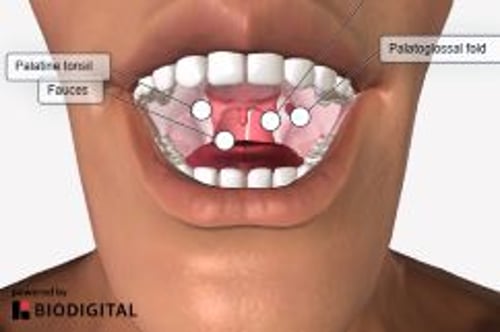
Positioning for Swabbing a Throat
Sitting position with the head tilted back slightly.
Step-by-Step Description of Swabbing a Throat
Explain the procedure to the patient, including that they may gag briefly.
Wear gloves and eye protection, and if COVID-19 (or any other airborne infection) is under consideration, gown, N95 respirator, and face shield.
Position the patient and light source to illuminate the posterior oropharynx.
Have the patient open the mouth and relax the tongue by saying "aaaah."
Press the tongue down using a tongue depressor.
Gently rub the swab against both tonsils and the posterior pharynx.
Place the swab in the culture medium, transport medium, or sterile test tube.
Aftercare for Swabbing a Throat
Follow-up on test results.
Warnings and Common Errors for Swabbing a Throat
Touching the swab to the tongue or oral mucosa (sides of the mouth)
Not swabbing all 3 sites in the pharynx
Tips and Tricks for Swabbing a Throat
Proceed swiftly because the patient will likely gag.
Having the patient stick out the tongue actually stiffens it and can make it harder to see the pharynx.
Довідковий матеріал
1. Miller JM, Binnicker MJ, Campbell S, et al. A Guide to Utilization of the Microbiology Laboratory for Diagnosis of Infectious Diseases: 2018 Update by the Infectious Diseases Society of America and the American Society for Microbiology. Clin Infect Dis. 2018;67(6):e1-e94. doi:10.1093/cid/ciy381