





Moyo Kushindwa Kufanya Kazi: Matatizo ya Kusukuma na Kujaza
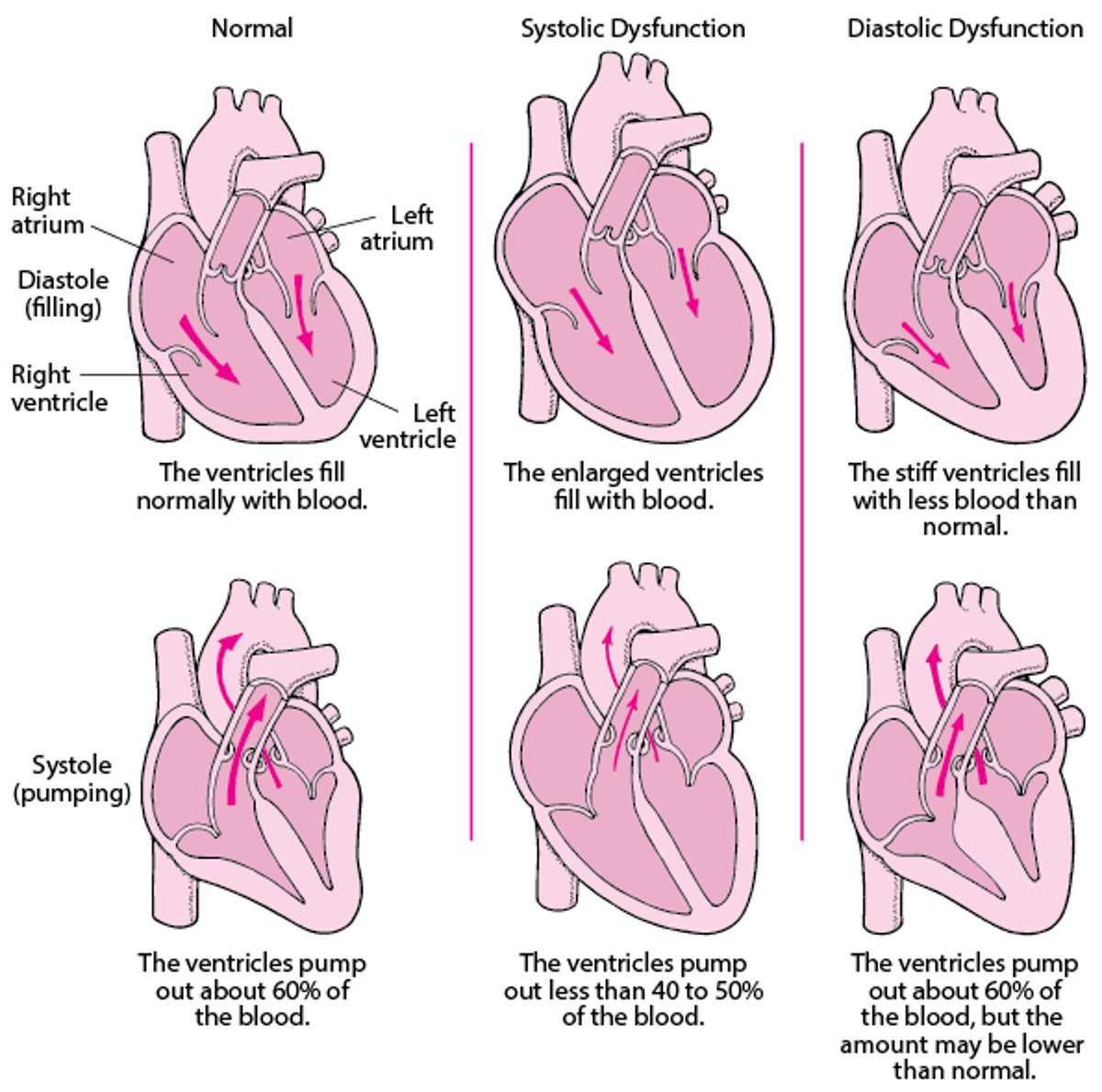
Normally, the heart stretches as it fills with blood (during diastole), then contracts to pump out the blood (during systole). The main pumping chambers in the heart are the ventricles.
Systolic heart failure (with reduced ejection fraction) usually develops because the heart cannot contract normally. It may fill with blood, but the heart cannot pump out as much of the blood it contains because the muscle is weaker or because a heart valve malfunctions. As a result, the amount of blood pumped to the body and to the lungs is reduced, and the ventricle usually enlarges.
Diastolic heart failure (preserved ejection fraction) develops because the heart muscle stiffens (particularly the left ventricle) and may thicken so that the heart cannot fill normally with blood. Consequently, blood backs up in the left atrium and lung (pulmonary) blood vessels and causes congestion. With diastolic dysfunction, the heart may be able to pump out a normal percentage of the blood it receives, but the total amount pumped out may be less because it has not filled normally.
The heart chambers always contain some blood, but different amounts of blood may enter or leave the chambers with each heartbeat as indicated by the thickness of the arrows.