Diffuse axonal injury is widespread injury to axons, a part of the nerve cells, in the brain that can occur from a head injury.
Nerve impulses leave nerve cells through a part of the nerve cell called the axon. In diffuse axonal injury, axons throughout the brain are damaged.
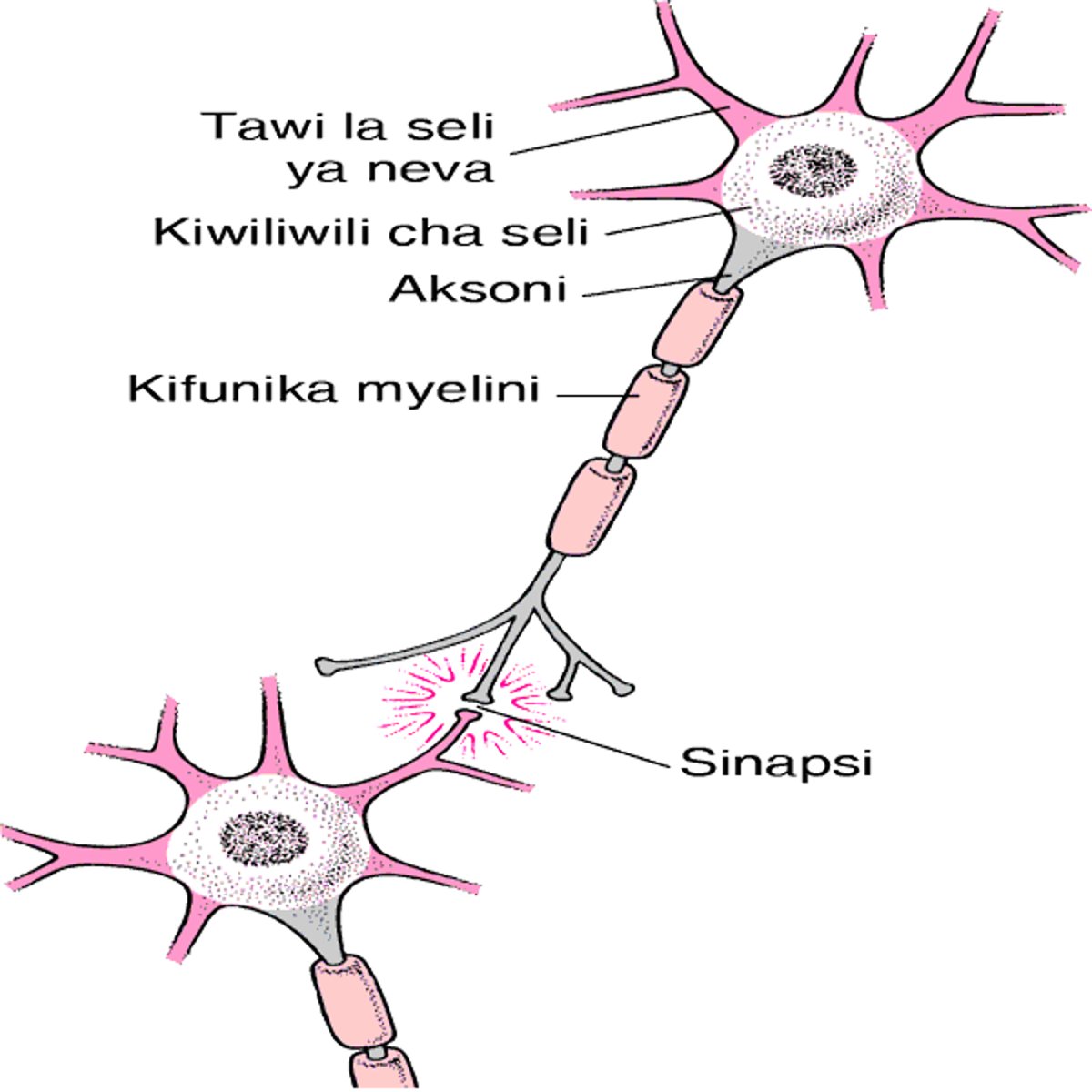
Muundo wa Kawaida wa Seli ya Neva
A nerve cell (neuron) consists of a large cell body and nerve fibers—one elongated extension (axon) for sending impulses and usually multiple branches (dendrites) for receiving impulses. Impulses from the axon of 1 nerve cell cross a synapse (the junction between 2 nerve cells) to the dendrite of another cell. Each large axon is surrounded by oligodendrocytes in the brain and spinal cord and by Schwann cells in the peripheral nervous system. The membranes of these cells consist of a fat (lipoprotein) called myelin. The membranes are wrapped tightly around the axon, forming a multilayered sheath. This myelin sheath resembles insulation, such as that around an electrical wire. Nerve impulses travel much faster in nerves with a myelin sheath than in those without one. |

The usual causes of diffuse axonal injury include falls and motor vehicle crashes. Diffuse axonal injury can occur in the abusive head trauma (shaken baby syndrome), in which violent shaking or throwing of a baby causes brain injury. As a result of diffuse axonal injury, brain cells may die, causing brain swelling, increasing pressure within the skull (intracranial pressure). Increased pressure may compound the injury by decreasing the blood supply to the brain.
Diffuse axonal injury typically causes loss of consciousness that lasts for more than 6 and less than 8 hours. Sometimes the person has other symptoms of brain damage. Increased pressure within the skull may cause coma.
Computed tomography (CT) usually does not show signs of bleeding in the brain, so magnetic resonance imaging (MRI) is usually done to detect diffuse axonal injury.
Treatment of diffuse axonal injury is similar to treatment of other head injuries. For example, doctors make sure that breathing and blood pressure are adequate and take steps to keep pressure within the skull from increasing too much.
Surgery is not helpful.
(See also Overview of Head Injuries.)