Neuroendocrine tumors of the lungs are rare, slow-growing tumors of the lining of the airways (bronchi). Approximately half of the patients are asymptomatic. Symptomatic patients most commonly have cough with or without blood, wheezing, shortness of breath, chest pain, and recurrent pneumonia. Diagnosis is made by imaging of the chest. Treatment is based on surgery with or without additional chemotherapy and radiation.
Neuroendocrine tumors (formerly called carcinoid tumors) usually originate in hormone-producing cells that line the small intestine or other parts of the digestive tract, but they can also occur in the passageways in the lungs (bronchi) and in other organs. Neuroendocrine tumors of the lungs are more likely to be malignant than neuroendocrine tumors in most other organs but are less likely to actively produce hormones (see Carcinoid Syndrome).
Neuroendocrine tumors of the lungs most often affect people ages 40 to 60 years.
Ndani ya Mapafu na Mkondo wa Hewa

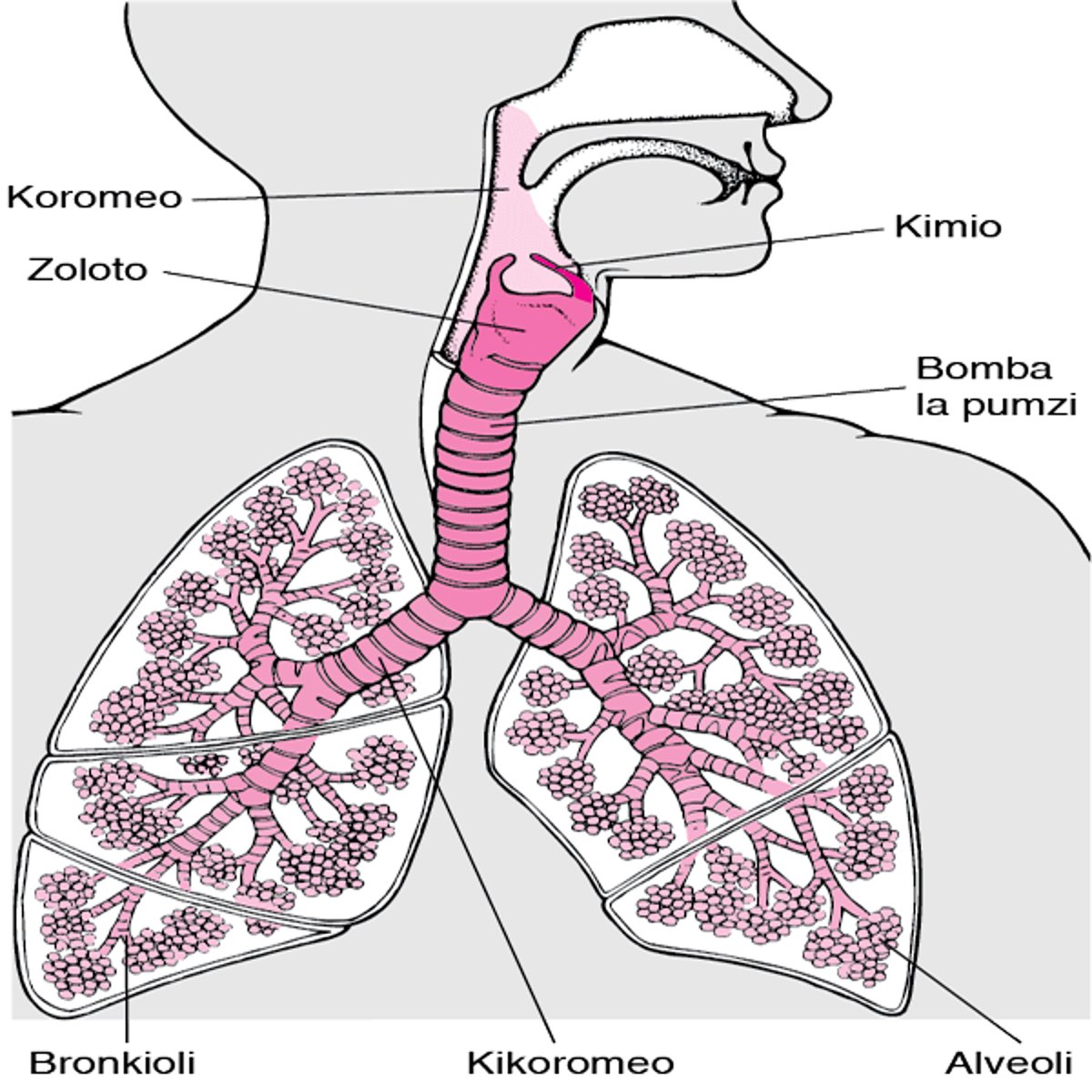
Dalili za Uvimbe wa Neuroendocrine ya Mapafu
As many as half of people with lung neuroendocrine tumors have no symptoms. Other people have symptoms related to the blockage of the airways. Such symptoms include shortness of breath, wheezing, and cough. Recurrent pneumonia, coughing up blood, and chest pain are also common.
Neuroendocrine tumors, including lung neuroendocrine tumors, are among the cancers that cause paraneoplastic syndromes. Paraneoplastic (accompanying cancer) syndromes occur when a cancer causes unusual symptoms due to substances that it makes and secretes into the bloodstream. Symptoms arise from various tissues and organs distant from the tumor. Lung neuroendocrine tumors most typically cause the following:
Cushing syndrome due to adrenocorticotropic hormone (the hormone most often produced by bronchial carcinoids)
Acromegaly due to growth hormone–releasing factor
Gastrinoma (Zollinger-Ellison syndrome) due to gastrin production
Carcinoid syndrome occurs in 2 to 12% of people with lung neuroendocrine tumors.
A left-sided heart murmur (due to serotonin-induced damage of the mitral valve) occurs rarely in people with lung neuroendocrine tumors.
Utambuzi wa Uvimbe wa Neuroendocrine ya Mapafu
Bronchoscopy
Lung neuroendocrine tumors are often discovered when an imaging test is done for another reason, because many people have no symptoms.
Diagnosis of lung neuroendocrine tumors is based on bronchoscopy, but chest computed tomography (CT) and radionuclide scanning may be done to determine whether the tumor has spread.
Matibabu ya Uvimbe wa Neuroendocrine ya Mapafu
Surgery
Sometimes chemotherapy or radiation therapy
Treatment of lung neuroendocrine tumors is with surgical removal with or without chemotherapy and/or radiation therapy.
Prognosis depends on tumor type.
Taarifa Zaidi
The following English language resources may be helpful. Please note The Manual is not responsible for the content of these resources.
Cancer Nation formerly National Coalition for Cancer Survivorship