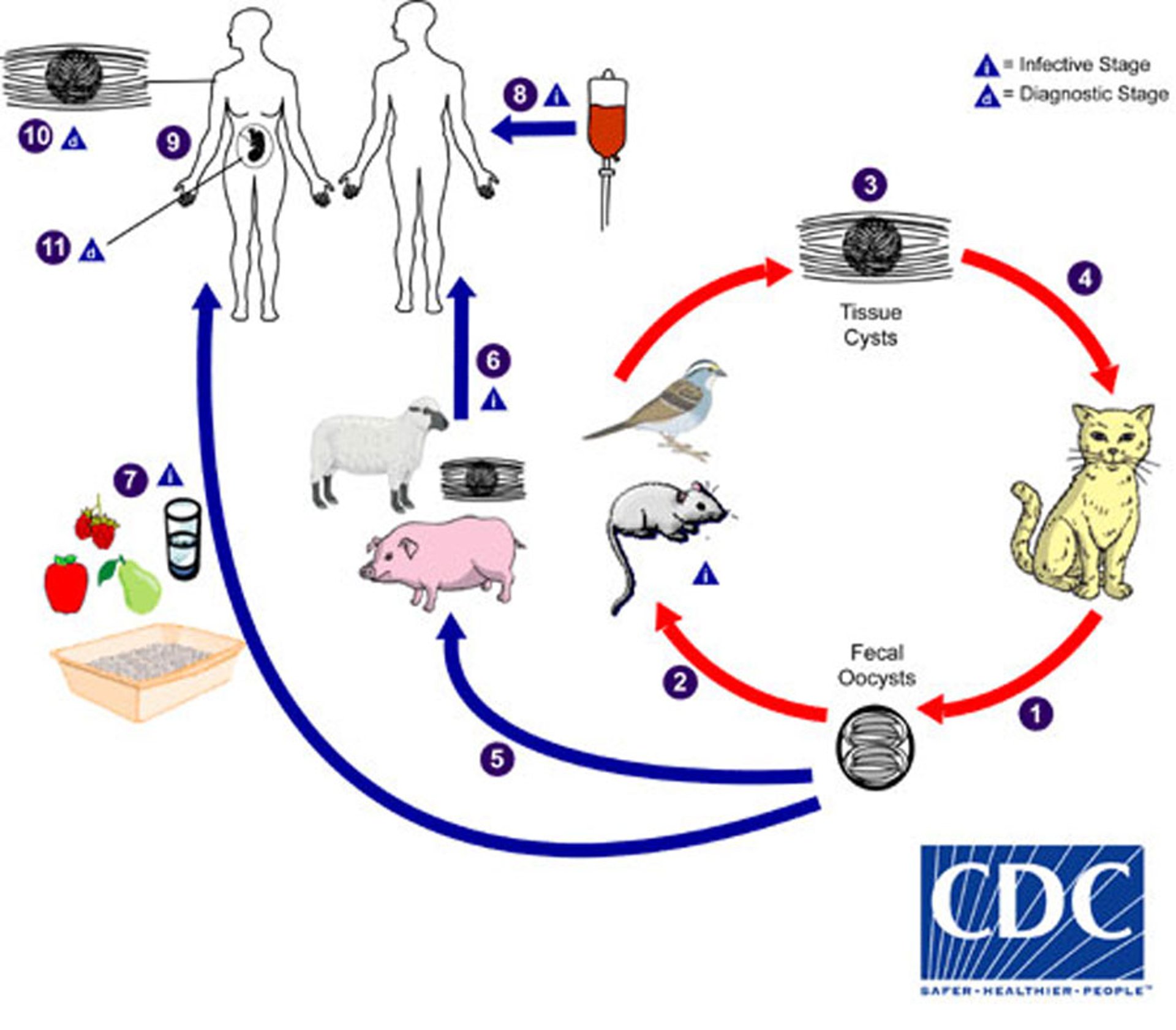
Toxoplasma gondii Life Cycle
1. Oocysts are shed in the cat’s feces. Large numbers are shed but usually only for 1–2 weeks. Oocysts take 1–5 days to sporulate and become infective. Cats become reinfected by ingesting sporulated oocysts.
2. Soil, water, plant material, or cat litter can become contaminated with oocysts. Intermediate hosts in nature (eg, birds, rodents, wild game, animals bred for human consumption) can also become infected after ingesting infective materials.
3. Oocysts develop into tachyzoites shortly after ingestion. Tachyzoites spread throughout the body and form tissue cysts in nerve, eye, and muscle tissue.
4. Cats become infected after consuming intermediate hosts containing tissue cysts. Cats may also become infected directly by ingestion of sporulated oocysts.
5. Animals bred for human consumption and wild game may also become infected with tissue cysts after ingestion of sporulated oocysts in the environment.
6. Humans can become infected by ingesting undercooked meat containing tissue cysts.
7. Humans can become infected by ingesting food or water contaminated with cat feces or other feces-contaminated materials (eg, soil) or contact with a pet cat’s litter.
8. Rarely, human infection results from blood transfusion or organ transplantation.
9. Rarely, transplacental transmission from mother to fetus occurs.
10. In the human host, parasites form tissue cysts, most commonly in skeletal muscle, cardiac muscle, the brain, and the eyes; these cysts may remain dormant throughout the life of the host and can reactivate if the host becomes immunocompromised.
11. Diagnosis of congenital toxoplasmosis can be made by detecting T. gondii DNA in amniotic fluid using molecular methods such as PCR.
Image from the Centers for Disease Control and Prevention, Global Health, Division of Parasitic Diseases and Malaria.