Ehrlichiosis and anaplasmosis are vector-borne zoonotic diseases caused by rickettsial-like bacteria. Ehrlichiosis is caused mainly by Ehrlichia chaffeensis, and deer are the animal reservoir. Anaplasmosis is caused by Anaplasma phagocytophilum, and rodents are the reservoir. Both are transmitted to humans by ticks. Symptoms resemble those of Rocky Mountain spotted fever, with the exception that rash is much less common. Onset of illness, with fever, chills, headache, and malaise, is abrupt. Diagnosis is with polymerase chain reaction testing; serologic tests can confirm infection, but are not useful in the acute setting. Immunohistochemistry of biopsied tissue is an adjunctive test. Treatment is with doxycycline., and rodents are the reservoir. Both are transmitted to humans by ticks. Symptoms resemble those of Rocky Mountain spotted fever, with the exception that rash is much less common. Onset of illness, with fever, chills, headache, and malaise, is abrupt. Diagnosis is with polymerase chain reaction testing; serologic tests can confirm infection, but are not useful in the acute setting. Immunohistochemistry of biopsied tissue is an adjunctive test. Treatment is with doxycycline.
Ehrlichiosis and anaplasmosis are vector-borne zoonotic diseases. Like rickettsial diseases, they are within the order Rickettsiales; however, they are in the family Anaplasmataceae (rather than Rickettsiaceae, the family for rickettsial diseases).
Ehrlichia and Anaplasma are both obligate intracellular bacteria that invade, replicate within, and eventually destroy their target host cells. The difference in the primary target cell for these diseases (in ehrlichiosis, monocytes; in anaplasmosis, granulocytes) results in only minor differences in clinical manifestations.
Ehrlichiosis chaffeensis causes human monocytic ehrlichiosis. In the United States, most cases of monocytic ehrlichiosis have been identified in the southeastern and south central regions, where its arthropod vector Amblyomma americanum (the lone star tick) is endemic (see also Amblyomma spp of Ticks). The mean incidence of ehrlichiosis is 0.08 cases/million people; Missouri and Arkansas have the highest reported case counts. Incidence has increased more than 10-fold since the year 2000, with decreases in 2020 and 2021 attributable to the COVID-19 pandemic (1). In 2023, 1907 cases were reported (1). Incidence is less well characterized outside North America (2).
Anaplasma phagocytophilum causes human granulocytic anaplasmosis. In the United States, this disease occurs in the Northeast, mid-Atlantic, upper Midwest, and West Coast regions where its arthropod vector (ixodid ticks) is endemic. The majority of Anaplasma infections occur in North America; however, cases have been reported in all continents, including Antarctica (3). Lyme disease, babesiosis, and Powassan virus have the same tick vector and endemic area, and occasionally patients acquire coinfections after a bite by a tick carrying more than one type of organism. Several cases of anaplasmosis have been reported after blood transfusions from asymptomatic or acutely infected donors. The incidence of anaplasmosis has increased annually in the United States since 1999, when mandatory reporting was instituted, except for a decline in 2020 that was attributed to the COVID-19 pandemic. In 2023, 7280 cases were reported (4).
Both infections are most likely to develop between spring and late fall, when ticks are most active.
Ehrlichiosis and anaplasmosis are more severe and have a higher mortality rate in immunocompromised patients (2).
Ehrlichiosis and anaplasmosis are both nationally notifiable diseases in the United States (5, 6).
Pearls & Pitfalls
|
For related veterinary disease caused by Ehrlichia and Anaplasma species, see Ehrlichiosis in Dogs, Potomac Horse Fever, Equine Granulocytic Anaplasmosis, and Anaplasmosis in Ruminants.

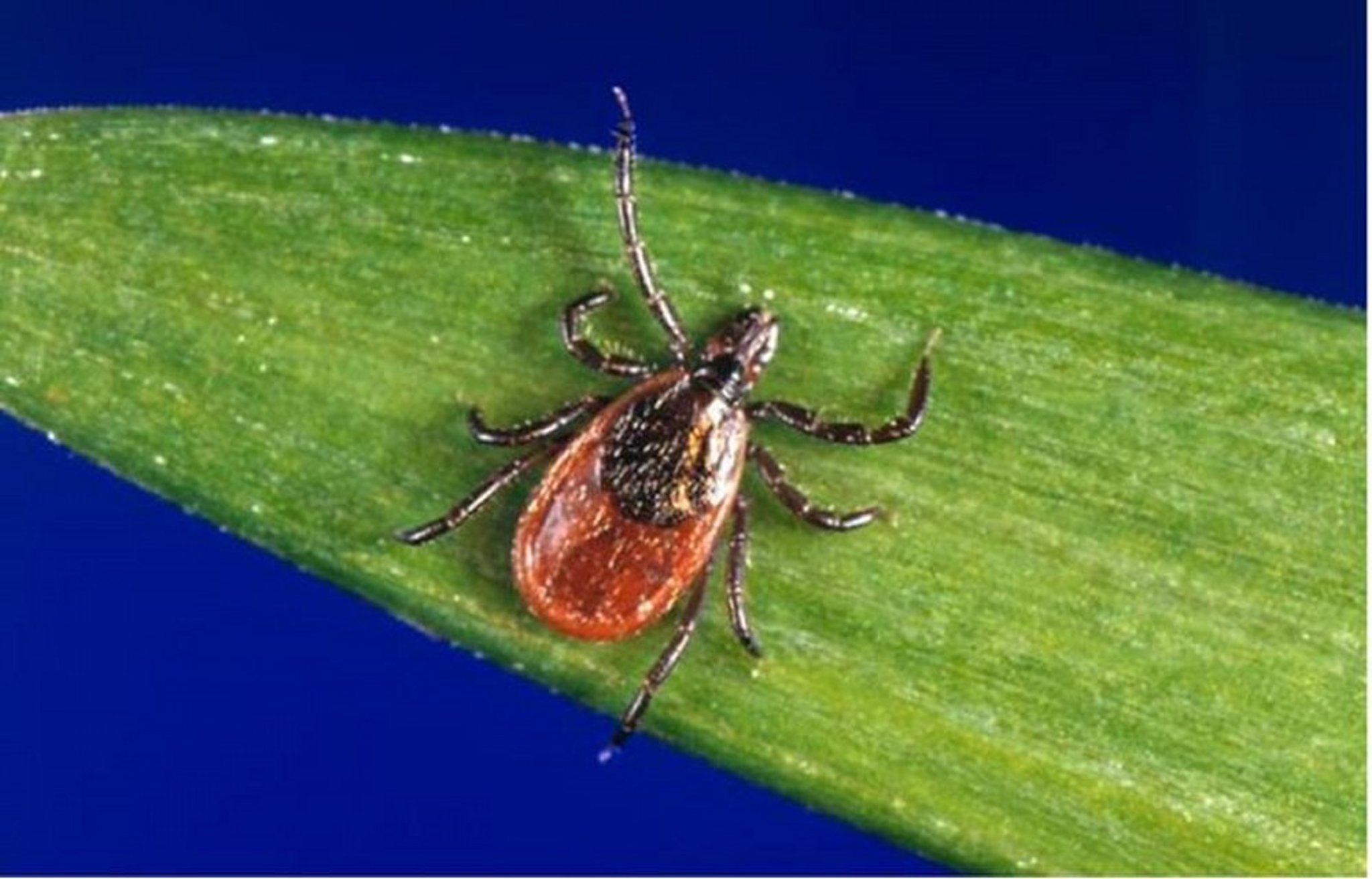
This image shows an adult deer tick, Ixodes scapularis, which transmits Babesia microti, the causative agent of babesiosis, and Borrelia burgdorferi, a causative agent of Lyme disease.
Image courtesy of James Gathany via the Public Health Image Library of the Centers for Disease Control and Prevention.


The lone star tick (A. americanum) is so named because the adult female is distinguished by a white dot or “lone star” on its back.
This tick transmits Ehrlichia chaffeensis, a causative agent of ehrlichiosis, and Francisella tularensis, the causative agent of tularemia. It also transmits the carbohydrate moiety alpha-gal in its saliva, leading to alpha-gal syndrome and subsequent red meat allergy.
CDC/ Lauren Bishop
General references
1. CDC. Ehrlichiosis Epidemiology and Statistics. February 12, 2025. Accessed January 2, 2026.
2. Gygax L, Schudel S, Kositz C, Kuenzli E, Neumayr A. Human monocytotropic ehrlichiosis-A systematic review and analysis of the literature. PLoS Negl Trop Dis. 2024;18(8):e0012377. Published 2024 Aug 2. doi:10.1371/journal.pntd.0012377
3. Schudel S, Gygax L, Kositz C, Kuenzli E, Neumayr A. Human granulocytotropic anaplasmosis-A systematic review and analysis of the literature. PLoS Negl Trop Dis. 2024;18(8):e0012313. Published 2024 Aug 5. doi:10.1371/journal.pntd.0012313
4. CDC. Epidemiology and Statistics. March 3, 2025. Accessed January 5, 2026.
5. CDC. Ehrlichiosis: Information for Public Health Officials. May 15, 2024. Accessed January 5, 2026.
6. CDC. Anaplasmosis: Information for Public Health Officials. May 15, 2024. Accessed January 5, 2026.
Symptoms and Signs of Ehrlichiosis and Anaplasmosis
Clinical features of ehrlichiosis and anaplasmosis are generally similar. Although some infections are asymptomatic, most cause abrupt onset of a nonspecific febrile illness with fever, chills, myalgias, weakness, nausea, vomiting, cough, headache, and malaise, usually beginning approximately 9 days (range 5 to 14 days) after the tick bite (1).
Rash is uncommon in anaplasmosis. Some patients infected with E. chaffeensis develop a maculopapular or petechial rash on the trunk and extremities. Eschar is typically absent in both infections, in contrast to rickettsial diseases.
Central nervous system and gastrointestinal manifestations are less frequent in anaplasmosis (1).
Ehrlichiosis and anaplasmosis may result in disseminated intravascular coagulation, multiorgan failure, seizures, and coma. Central nervous system involvement is more common in ehrlichiosis.
Symptoms and signs reference
1. Biggs HM, Behravesh CB, Bradley KK, et al. Diagnosis and Management of Tickborne Rickettsial Diseases: Rocky Mountain Spotted Fever and Other Spotted Fever Group Rickettsioses, Ehrlichioses, and Anaplasmosis - United States. MMWR Recomm Rep. 2016;65(2):1-44. Published 2016 May 13. doi:10.15585/mmwr.rr6502a1
Diagnosis of Ehrlichiosis and Anaplasmosis
Molecular diagnostic testing (polymerase chain reaction [PCR]) of a blood sample
Sometimes serologic tests
Sometimes immunohistochemistry
Laboratory tests to assess for systemic effects (eg, complete blood count, comprehensive metabolic panel)
PCR testing of whole blood for pathogen-specific DNA is sensitive and specific for the detection of both E. chaffeensis and A. phagocytophilum and can result in rapid diagnosis (1, 2).
Serologic tests are available but require comparison of serial titers over time, thus confirmation of infection can be time-consuming. Serology is frequently negative in the first 10 days of illness and is therefore not useful in the acute setting (1).
Peripheral blood smear microscopic examination may reveal cytoplasmic inclusions in monocytes (ehrlichiosis) or in neutrophils (anaplasmosis). Cytoplasmic inclusions are more commonly seen in anaplasmosis.
Immunohistochemistry of biopsied skin, tissue, or bone marrow may also aid in diagnosis (1).
Blood and liver tests may detect hematologic and hepatic abnormalities, such as anemia, leukopenia, thrombocytopenia, and elevated aminotransferase levels.
(See also the CDC's video Rickettsial Disease Diagnostic Testing and Interpretation for Healthcare Providers.)


This immunohistochemical stain shows E. chaffeensis morulae (red) within monocytes in the kidney of a patient with ehrlichiosis.
Morulae are microcolonies of Ehrlichia in the cytoplasm of white blood cells (arrows). If these morulae are identified, ehrlichiosis should be strongly suspected. Morulae may also be identified in a peripheral blood smear.
CDC
Diagnosis references
1. CDC. Tickborne Diseases of the United States: A Reference Manual for Healthcare Providers. Sixth edition, 2022.
2. Miller JM, Binnicker MJ, Campbell S, et al. A Guide to Utilization of the Microbiology Laboratory for Diagnosis of Infectious Diseases: 2018 Update by the Infectious Diseases Society of America and the American Society for Microbiology. Clin Infect Dis. 2018;67(6):e1-e94. doi:10.1093/cid/ciy381
Treatment of Ehrlichiosis and Anaplasmosis
DoxycyclineDoxycycline
For patients with characteristic symptoms and signs in endemic areas, particularly those with a known recent tick bite, empiric treatment of ehrlichiosis and anaplasmosis is best initiated before laboratory results return. When treatment is started early, patients generally respond rapidly and well.
Doxycycline is the first-line treatment for both ehrlichiosis and anaplasmosis in patients of all ages, including children. Treatment with this medication is administered until improvement is noted and the patient has been afebrile for 24 to 48 hours. Duration of therapy is 5 to 7 days for ehrlichiosis; for anaplasmosis, the United States Centers for Disease Control and Prevention (CDC) recommends 10 to 14 days of treatment to cover possible coinfection with Doxycycline is the first-line treatment for both ehrlichiosis and anaplasmosis in patients of all ages, including children. Treatment with this medication is administered until improvement is noted and the patient has been afebrile for 24 to 48 hours. Duration of therapy is 5 to 7 days for ehrlichiosis; for anaplasmosis, the United States Centers for Disease Control and Prevention (CDC) recommends 10 to 14 days of treatment to cover possible coinfection withBorrelia burgdorferi (a causative agent of Lyme disease) (1, 2).
For patients who cannot tolerate doxycycline, desensitization is recommended (3). Chloramphenicol is ineffective and not an acceptable alternative for the treatment of either ehrlichiosis or anaplasmosis.
Although some tetracyclines can cause tooth staining in children < 8 years of age, the CDC advises that a course of doxycycline is warranted (Although some tetracyclines can cause tooth staining in children doxycycline is warranted (1, 2). Research indicates that short courses of doxycycline (5 to 10 days, as used for rickettsial disease) can be used in children without causing tooth staining or weakening of tooth enamel (4).
Some patients continue to have headache, weakness, and malaise for weeks after adequate treatment.
With treatment, the case fatality rate for patients with anaplasmosis is approximately < 1% and for patients with ehrlichiosis is approximately 3% (3). A delay in treatment may lead to serious complications, including viral and fungal superinfections and a significantly increased risk of death.
Treatment references
1. Centers for Disease Control and Prevention (CDC). Clinical Care of Ehrlichiosis. May 15, 2024. Accessed January 5, 2026.
2. CDC. Clinical Care of Anaplasmosis. January 30, 2025. Accessed January 5, 2026.
3. Biggs HM, Behravesh CB, Bradley KK, et al. Diagnosis and Management of Tickborne Rickettsial Diseases: Rocky Mountain Spotted Fever and Other Spotted Fever Group Rickettsioses, Ehrlichioses, and Anaplasmosis - United States. MMWR Recomm Rep. 2016;65(2):1-44. Published 2016 May 13. doi:10.15585/mmwr.rr6502a1
4. CDC. Research: Doxycycline and Tooth Staining. May 15, 2024. Accessed January 2, 2026.
Prevention of Ehrlichiosis and Anaplasmosis
No vaccine is available to prevent ehrlichiosis or anaplasmosis.
Measures can be taken to prevent tick bites (1).
Pearls & Pitfalls
|
Preventing Tick Bites
Preventing tick access to skin includes:
To avoid potential toxicity, DEET should not be used in infants under 2 months of age, and DEET concentrations ≤ 10% should be used in children under 12 years of age (2). OLE and PMD should not be used in children under 3 years of age (3). Permethrin on clothing effectively kills ticks. Frequent searches for ticks, particularly in hairy areas and on children, are essential in endemic areas.). Permethrin on clothing effectively kills ticks. Frequent searches for ticks, particularly in hairy areas and on children, are essential in endemic areas. Engorged ticks should be removed with care and not crushed between the fingers because crushing the tick may result in disease transmission. The tick’s body should not be grasped or squeezed. Gradual traction on the head with a small forceps dislodges the tick. The point of attachment and the person's hands should be disinfected with soap and water, rubbing alcohol, or hand sanitizer. Petroleum jelly, lit matches, and other irritants are not effective ways to remove ticks and should not be used. Complete elimination of tick populations is often not practically possible over large areas, but they may be reduced in certain zones (eg, residential) within endemic areas. To create a tick-safe residential environment, it is necessary to eliminate tick habitats and restrict host entry by clearing brush, tall grasses, and accumulated debris from around homes and lawn edges (1). Regular lawn maintenance, including frequent mowing and the installation of a 3-foot wide barrier of wood chips or gravel between lawns and wooded areas, is recommended to restrict tick migration into recreational zones. To reduce the presence of disease-carrying rodents (eg, rats, mice) and wildlife (eg, deer, raccoons), firewood may be stacked in dry, elevated areas. Physical fencing can also be installed. Recreational equipment and outdoor seating should be removed from shaded yard edges as should accumulated yard clutter to eliminate the potential for tick harborage. |


Prevention references
1. Centers for Disease Control and Prevention (CDC). Preventing Tick Bites. August 28, 2024. Accessed January 5, 2026.
2. Ho BM, Davis HE, Forrester JD, et al. Wilderness Medical Society Clinical Practice Guidelines for the Prevention and Management of Tick-Borne Illness in the United States. Wilderness Environ Med. 2021;32(4):474-494. doi:10.1016/j.wem.2021.09.001
3. CDC. Mosquitoes, Ticks, and Other Arthropods. April 23, 2025. Accessed March 5, 2026.
Key Points
Ehrlichiosis and anaplasmosis are tick-borne infections related to rickettsial diseases.
Clinical features of ehrlichiosis and anaplasmosis are similar, usually with abrupt onset of a nonspecific febrile- illness; rash and central nervous system manifestations are less common in anaplasmosis.
Ehrlichiosis and anaplasmosis may result in disseminated intravascular coagulation, multiorgan failure, seizures, and coma.
Perform PCR testing of blood, which is more sensitive and specific than serologic tests and can result in an early diagnosis.
Treat empirically with doxycycline, which is best initiated before laboratory results return.Treat empirically with doxycycline, which is best initiated before laboratory results return.
Drug Information for the Topic