Hepatitis B is caused by a DNA virus that is often parenterally transmitted. It causes typical symptoms of viral hepatitis, including anorexia, malaise, and jaundice. Acute liver failure and death may occur. Chronic infection can lead to cirrhosis and/or hepatocellular carcinoma. Diagnosis is by serologic testing. Treatment for acute hepatitis B is generally supportive. Treatment for chronic hepatitis B includes antiviral medications (nucleoside/nucleotide analogues) or transplantation for acute liver failure. Vaccination is protective and postexposure use of hepatitis B immune globulin may prevent or attenuate clinical disease.
(See also Causes of Hepatitis, Overview of Acute Viral Hepatitis, and Chronic Hepatitis B.)
Hepatitis B virus (HBV) is a thoroughly characterized and complex hepatitis virus. The infective particle consists of a viral core plus an outer surface coat. The core contains circular double-stranded DNA and DNA polymerase, and it replicates within the nuclei of infected hepatocytes. A surface coat is added in the cytoplasm and, for unknown reasons, is produced in great excess.


This illustration shows the hepatitis B viral capsid enclosing double-stranded DNA.
Destina/stock.adobe.com
HBV is the second most common cause of acute viral hepatitis after hepatitis A (1). Prior unrecognized infection is common but is much less widespread than that with hepatitis A virus. In the United States, 2214 cases of acute hepatitis B infection were reported in 2023, a marked decrease from the approximately 26,000 cases reported in 1985 prior to widespread vaccination (2). However, because many cases are not recognized or not reported, the U.S. Centers for Disease Control and Prevention (CDC) estimates that the actual number of acute hepatitis B infections was approximately 14,400 in 2023 (3).
HBV is sometimes associated with several primarily extrahepatic disorders, including polyarteritis nodosa, Immunoglobulin A-associated vasculitis, membranous glomerulonephritis, and essential mixed cryoglobulinemia. Extrahepatic manifestations are likely related to deposition of immune complexes (4).
Occasionally, coinfection with hepatitis D occurs. Hepatitis D virus can also superinfect patients with existing hepatitis B.
Transmission of hepatitis B
HBV is often transmitted parenterally, typically via contaminated blood or blood products. Routine screening of donor blood for hepatitis B surface antigen (HBsAg) has nearly eliminated the previously common posttransfusion transmission (5, 6), but transmission through needles shared by illicit drug users remains common (7). Risk of HBV is increased for patients on dialysis and in oncology units, and for hospital personnel in contact with blood (8, 9, 10).
Infants born to infected mothers have a 70 to 90% risk of acquiring hepatitis B during delivery (see Neonatal Hepatitis B Virus Infection) (11), unless they are treated with hepatitis B immune globulin (HBIG) and are vaccinated immediately after delivery. Earlier transplacental transmission can occur but is rare. The risk of vertical transmission of HBV is also mitigated by treating actively infected pregnant patients with high viral loads in their third trimester with tenofovir (12).
The virus may be spread through mucosal contact with other body fluids (eg, between sex partners, both heterosexual and homosexual; in closed institutions, such as mental health institutions and prisons), but infectivity is far lower than that of hepatitis A virus, and the means of transmission is often unknown.
Many cases of acute hepatitis B occur sporadically without a known source.
Chronic HBV carriers provide a worldwide reservoir of infection. Prevalence varies widely according to several factors, including geography (eg, < 0.5% in North America and northern Europe, > 10% in some regions of the Far East and Africa).
General references
1. Ouyang G, Pan G, Guan L, et al. Incidence trends of acute viral hepatitis caused by four viral etiologies between 1990 and 2019 at the global, regional and national levels. Liver Int. 2022;42(12):2662-2673. doi:10.1111/liv.15452
2. Weng MK, Doshani M, Khan MA, et al. Universal Hepatitis B Vaccination in Adults Aged 19-59 Years: Updated Recommendations of the Advisory Committee on Immunization Practices - United States, 2022. MMWR Morb Mortal Wkly Rep. 2022;71(13):477-483. Published 2022 Apr 1. doi:10.15585/mmwr.mm7113a1
3. U.S. Centers for Disease Control and Prevention (CDC): 2023 Viral Hepatitis Surveillance Report. Accessed April 28, 2026
4. Trépo C, Chan HL, Lok A. Hepatitis B virus infection. Lancet. 2014;384(9959):2053-2063. doi:10.1016/S0140-6736(14)60220-8
5. Tanaka A, Yamagishi N, Hasegawa T, et al. Marked reduction in the incidence of transfusion-transmitted hepatitis B virus infection after the introduction of antibody to hepatitis B core antigen and individual donation nucleic acid amplification screening in Japan. Transfusion. 2023;63(11):2083-2097. doi:10.1111/trf.17546
6.Lelie N, Busch M, Kleinman S. Efficacy of Different Testing Scenarios in Reducing Transfusion-Transmitted Hepatitis B Virus (TT-HBV) Infection Risk. Viruses. 2022;14(10):2263. Published 2022 Oct 15. doi:10.3390/v14102263
7. Assoumou SA, Alexander RN, Miller SE. Viral Infections Associated With Injection Drug Use. JAMA. 2025;334(15):1386-1387. doi:10.1001/jama.2025.13287
8. Khalesi Z, Razizadeh MH, Javadi M, et al. Global epidemiology of HBV infection among hemodialysis patients: A systematic review and meta-analysis. Microb Pathog. 2023;179:106080. doi:10.1016/j.micpath.2023.106080
9. Hwang JP, Feld JJ, Hammond SP, et al. Hepatitis B Virus Screening and Management for Patients With Cancer Prior to Therapy: ASCO Provisional Clinical Opinion Update. J Clin Oncol. 2020;38(31):3698-3715. doi:10.1200/JCO.20.01757
10. Jeng WJ, Yip TC, Lok AS. Hepatitis B: A Review. JAMA. 2026;335(21):1879-1892. doi:10.1001/jama.2026.6070
11. Wong F, Pai R, Van Schalkwyk J, et al. Hepatitis B in pregnancy: a concise review of neonatal vertical transmission and antiviral prophylaxis. Ann Hepatol. 2014;13(2):187-195.
12. Kothari S, Afshar Y, Friedman LS, et al. AGA Clinical Practice Update on Pregnancy-Related Gastrointestinal and Liver Disease: Expert Review. Gastroenterology. 2024;167(5):1033-1045. doi:10.1053/j.gastro.2024.06.014
Symptoms and Signs of Acute Hepatitis B
Hepatitis B infection causes a wide spectrum of liver diseases, from a subclinical carrier state to severe hepatitis or acute liver failure (acute liver failure).
Most patients have typical manifestations of viral hepatitis, including anorexia, malaise, fever, nausea, and vomiting, followed by jaundice. Symptoms persist from a few weeks up to 6 months.

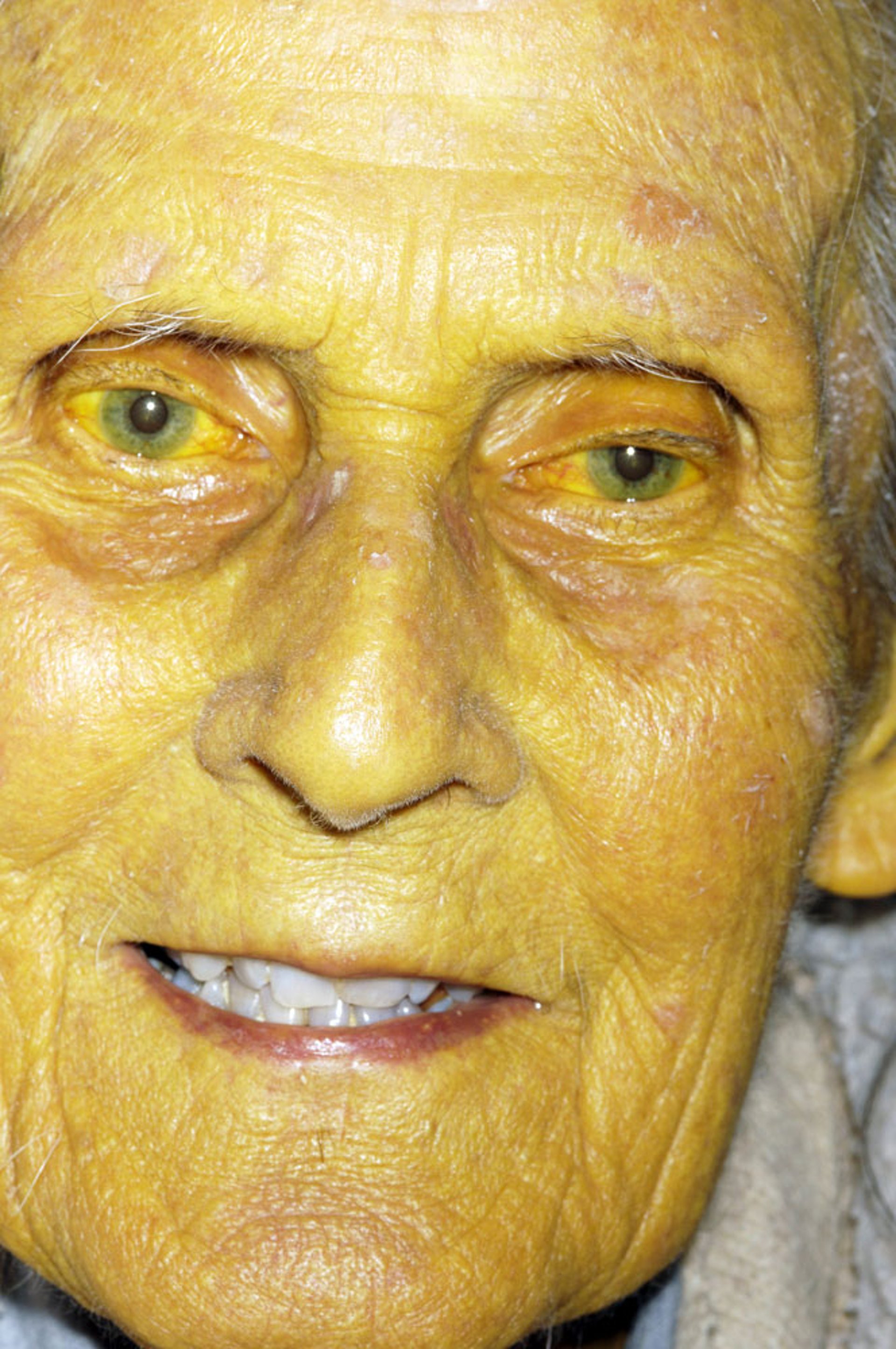
This photo shows yellowing of the sclera of the eyes and the skin on the face.
DR P. MARAZZI/SCIENCE PHOTO LIBRARY


This photo shows icterus, or jaundice, of the conjunctivae and facial skin, caused by the hepatitis A virus.
CDC
One to 12% of all patients with acute hepatitis B virus (HBV) infection develop chronic hepatitis B (1). The younger the age that acute hepatitis B occurs, the higher the risk of developing chronic hepatitis B. For immunocompetent people, risk of developing chronic hepatitis B infection is as follows:
For infants: 80 to 90%
For children aged 1 to 5 years: 30%
For adults: 1 to 12%
If hepatitis B becomes chronic, cirrhosis can develop, and hepatocellular carcinoma can ultimately develop, even without being preceded by cirrhosis.
Symptoms and signs reference
1. Schillie S, Vellozzi C, Reingold A, et al. Prevention of Hepatitis B Virus Infection in the United States: Recommendations of the Advisory Committee on Immunization Practices. MMWR Recomm Rep. 2018;67(1):1-31. Published 2018 Jan 12. doi:10.15585/mmwr.rr6701a1
Diagnosis of Acute Hepatitis B
Serologic and nucleic acid amplification (NAAT) testing
In the initial diagnosis of acute hepatitis, viral hepatitis should be differentiated from other disorders causing jaundice (see figure Simplified Diagnostic Approach to Possible Acute Viral Hepatitis).
If acute viral hepatitis is suspected, the following tests are performed to test for hepatitis viruses A, B, and C:
Hepatitis A virus: IgM antibody to HAV (IgM anti-HAV) (acute infection); total anti-HAV (immunity)
Hepatitis B virus: Hepatitis B surface antigen (HBsAg) and IgM antibody to hepatitis B core antigen (IgM anti-HBc)
Hepatitis C virus: Antibody to hepatitis C virus (anti-HCV) and hepatitis C RNA polymerase chain reaction (HCV-RNA PCR)
Hepatitis E virus (selected patients): IgM anti-HEV and HEV-RNA PCR
If any of the initial hepatitis B tests are positive, further serologic testing may be necessary to differentiate acute from past or chronic infection (see table ). If serology suggests hepatitis B, testing for hepatitis B e antigen (HBeAg) and antibody to hepatitis B e antigen (anti-HBe) is usually performed to help determine the prognosis and to guide antiviral therapy. If serologically confirmed HBV infection is severe, antibody to hepatitis D virus (anti-HDV) is also measured.
Hepatitis B has at least 3 distinct antigen-antibody systems that can be tested:
Hepatitis B surface antigen (HBsAg)
Hepatitis B core antibody (HBcAb)
Hepatitis B e-antigen (HBeAg)
HBsAg characteristically appears during the incubation period, usually 1 to 6 weeks before clinical or biochemical illness develops, and implies infectivity of the blood. It disappears during convalescence. However, HBsAg is occasionally transient. The corresponding protective antibody (anti-HBs) appears weeks or months later, after clinical recovery, and usually persists for life; thus, its detection indicates past HBV infection and relative immunity. Patients who develop chronic hepatitis B fail to mount an antibody response to HBsAg.
HBcAb reflects antibody to the viral core. Hepatitis B core antigen (HBcAg) is detectable in infected liver cells but not in serum except by special techniques. Antibody to HBcAg (anti-HBc, or HBcAb) usually appears at the onset of clinical illness; thereafter, titers gradually diminish, usually over years or life. Its presence with anti-HBs indicates recovery from previous HBV infection. Anti-HBc is also present in chronic HBsAg carriers, who do not mount an anti-HBs response. In acute infection, anti-HBc is mainly of the IgM class, whereas in chronic infection, IgG anti-HBc predominates. IgM anti-HBc is a sensitive marker of acute HBV infection and occasionally is the only marker of recent infection, reflecting a window between disappearance of HBsAg and appearance of anti-HBs.
HBeAg is a protein derived from the viral core (not to be confused with hepatitis E virus). Present only in HBsAg-positive serum, HBeAg tends to suggest more active viral replication and greater infectivity. In contrast, presence of the corresponding antibody (anti-HBe) suggests lower infectivity. Thus, e antigen markers are more helpful in prognosis than in diagnosis. Chronic liver disease develops more often among patients with HBeAg and less often among patients with anti-HBe (1, 2).
HBV-DNA can be detected in the serum of patients with active HBV infection.
Hepatitis B Serology*
Marker | Acute HBV Infection | Chronic HBV Infection | Prior HBV Infection† | Prior HBV Vaccination |
|---|---|---|---|---|
HBsAg | + | + | − | - |
Anti-HBs | − | − | +/-‡ | + |
IgM anti-HBc | + | − | − | - |
IgG anti-HBc | − | + | ± | - |
HBeAg | ± | ± | − | - |
Anti-HBe | − | ± | ± | - |
HBV-DNA | + | + | − | - |
* Antibody to hepatitis D virus (anti-HDV) levels should be measured if serologic tests confirm HBV and infection is severe. | ||||
† Patients have had HBV infection and recovered. | ||||
‡ Anti-HBs is the only positive serologic marker after HBV vaccination. | ||||
Anti-HBc = antibody to hepatitis B core; anti-HBe = antibody to HBeAg; anti-HBs = antibody to HBsAg; HBeAg = hepatitis B e antigen; HBsAg = hepatitis B surface antigen; HBV = hepatitis B virus. | ||||
Other tests
Liver tests are needed if they were not previously performed; they include serum alanine aminotransferase (ALT), aspartate aminotransferase (AST), and alkaline phosphatase.
Other tests should be performed to evaluate liver function; they include serum albumin, bilirubin, and prothrombin time/international normalized ratio (PT/INR).
Diagnosis references
1. Jeng WJ, Papatheodoridis GV, Lok ASF. Hepatitis B. Lancet. 2023;401(10381):1039-1052. doi:10.1016/S0140-6736(22)01468-4
2. Terrault NA, Bzowej NH, Chang KM, et al. AASLD guidelines for treatment of chronic hepatitis B. Hepatology. 2016;63(1):261-283. doi:10.1002/hep.28156
Treatment of Acute Hepatitis B
Supportive care for acute hepatitis B
Antiviral medications for chronic hepatitis B
Liver transplantation for fulminant hepatitis B
Acute hepatitis B is managed with supportive care. Alcohol and hepatotoxic medications should be avoided because they can increase liver damage. Restrictions on diet or activity, including commonly prescribed bed rest, have no scientific basis.
See also Treatment of Chronic Hepatitis B and Treatment of Acute Liver Failure.
Acute hepatitis B should be reported to the local or state health department.
Prevention of Acute Hepatitis B
Patients should be advised to avoid high-risk behavior (eg, sharing needles to inject illicit drugs, having multiple sex partners).
Blood and other body fluids (eg, saliva, semen) are considered infectious. Spills should be cleaned up using dilute bleach. Barrier protection is recommended, but isolation of patients is of no value.
Posttransfusion infection is minimized by avoiding unnecessary transfusions and screening all donors for hepatitis B and C. Screening has decreased the incidence of posttransfusion hepatitis B and hepatitis C, which are now extremely rare in the United States.
Vaccination
(See also Hepatitis B [HepB] vaccine.)
Hepatitis B vaccination in endemic areas has dramatically reduced local prevalence.
Preexposure immunization has long been recommended for people at high risk. However, selective vaccination of high-risk groups in the United States and other nonendemic areas has not substantially decreased the incidence of HBV infection (1); thus, routine vaccination for hepatitis B is recommended in the United States for all children and adults through age 59 years, and for older adults at high risk or who request vaccination. See Hepatitis B (HepB) Vaccine. Worldwide, almost all countries and expert organizations recommend universal infant HBV vaccination, but actual coverage remains suboptimal (2).
For adults ≥ 60 years old, high-risk groups include (3):
Men who have sex with men
People with a sexually transmitted infection
People who are sexually active but not in a mutually monogamous relationship
Health care and public safety workers potentially exposed to blood or other infectious body fluids
People who currently or have recently injected illicit drugs
People with end-stage kidney disease who receive dialysis or have HIV infection, chronic liver disease, or hepatitis C
Household contacts and sex partners of people who are HBsAg-positive
Clients and staff members of institutions and nonresidential day care facilities for people with developmental disabilities
People in correctional facilities or facilities providing services to those who use illicit injection-drugs
International travelers to regions with high or intermediate HBV endemicity
For people 60 years of age and older with diabetes, the decision to receive the HepB vaccine should be based on shared clinical decision-making.
Postexposure prophylaxis
Hepatitis B postexposure immunoprophylaxis combines vaccination with hepatitis B immune globulin (HBIG), a product with high titers of anti-HBs. Efficacy of postexposure HBIG is approximately 75% (4).
For recommendations regarding infants born to mothers with positive or unknown hepatitis B status, see Neonatal Hepatitis B Virus Infection.
For anyone having sexual contact with an HBsAg-positive person or percutaneous or mucous membrane exposure to HBsAg-positive blood, 0.06 mL/kg of HBIG is given IM within days, along with vaccine (5). Any previously vaccinated patient sustaining a percutaneous HBsAg-positive exposure is tested for anti-HBs; if titers are < 10 mIU/mL, a booster dose of vaccine is given (4).
Prevention references
1. Weng MK, Doshani M, Khan MA, et al. Universal Hepatitis B Vaccination in Adults Aged 19-59 Years: Updated Recommendations of the Advisory Committee on Immunization Practices - United States, 2022. MMWR Morb Mortal Wkly Rep. 2022;71(13):477-483. Published 2022 Apr 1. doi:10.15585/mmwr.mm7113a1
2. Jeng WJ, Papatheodoridis GV, Lok ASF. Hepatitis B. Lancet. 2023;401(10381):1039-1052. doi:10.1016/S0140-6736(22)01468-4
3. U.S. Centers for Disease Control and Prevention. Hepatitis B. Vaccination. Accessed May 13, 2026.
4. Schillie S, Vellozzi C, Reingold A, et al. Prevention of Hepatitis B Virus Infection in the United States: Recommendations of the Advisory Committee on Immunization Practices. MMWR Recomm Rep. 2018;67(1):1-31. Published 2018 Jan 12. doi:10.15585/mmwr.rr6701a1
5. Workowski KA, Bachmann LH, Chan PA, et al. Sexually Transmitted Infections Treatment Guidelines, 2021. MMWR Recomm Rep. 2021;70(4):1-187. Published 2021 Jul 23. doi:10.15585/mmwr.rr7004a1
Key Points
Hepatitis B is often transmitted by parenteral contact with contaminated blood but can result from mucosal contact with other body fluids.
Diagnose by testing for hepatitis B surface antigen and other serologic markers.
Treat supportively.
Chronic infection develops in the minority of patients with acute hepatitis B and often leads to cirrhosis and/or hepatocellular carcinoma.
Routine vaccination beginning at birth is recommended for all.
Postexposure prophylaxis consists of hepatitis B immune globulin (HBIG) and vaccine.
Drug Information for the Topic