Hemoglobin C disease is a hemoglobinopathy that causes symptoms of a hemolytic anemia.
(See also Overview of Hemolytic Anemia.)
Patients who are heterozygous are asymptomatic. Those who are homozygous usually have a mild chronic hemolytic anemia, mild microcytosis, splenomegaly, and symptoms consistent with anemia. Cholelithiasis is the most common complication. There may be an increased risk of venous thrombosis (1).
Hemoglobin C disease is suspected in all patients with a family history and evidence of a hemolytic anemia, particularly in adults with splenomegaly. The anemia is usually mild but can be severe.
The peripheral smear is microcytic, with frequent target cells, spherocytes, and, rarely, crystal-containing red blood cells (RBCs). Nucleated RBCs may be present. The RBCs do not sickle. On electrophoresis, the hemoglobin is type C. In heterozygotes, the only laboratory abnormality is centrally targeted RBCs.

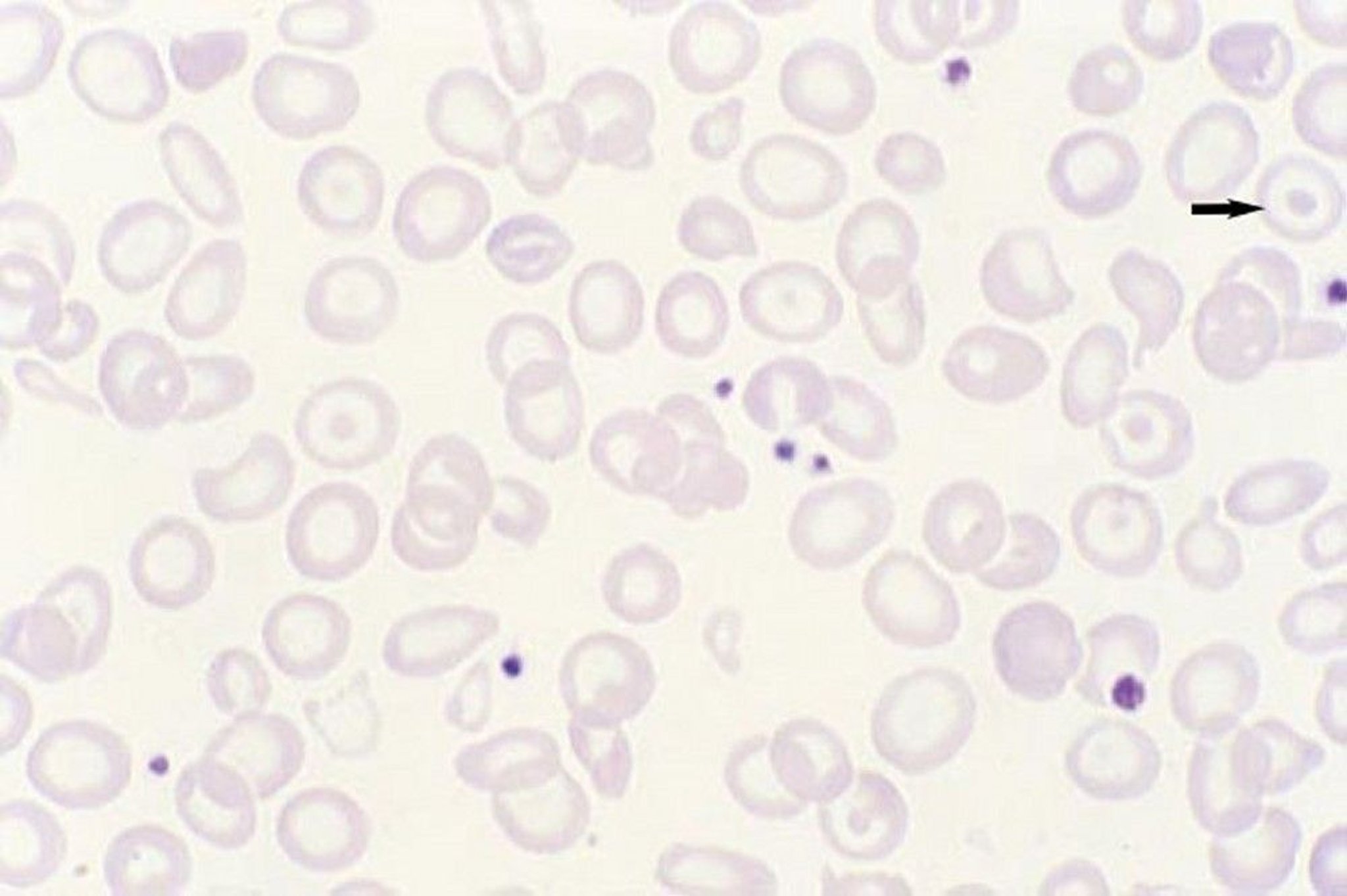
Target cells (thin RBCs with a central dot of hemoglobin; arrow) are due to an imbalance between the volume of the cell and its hemoglobin content and characterize thalassemia, other hemoglobinopathies (eg, hemoglobin C disease and hemoglobin S-C disease) but may also occur after splenectomy and in liver disease.
By permission of the publisher. From Tefferi A, Li C. In Atlas of Clinical Hematology. Edited by JO Armitage. Philadelphia, Current Medicine, 2004.
No specific treatment is recommended. Anemia usually is not severe enough to require blood transfusion.
Reference
1. Jacobs JW, Sharma D, Stephens LD, et al. Thrombosis risk with haemoglobin C trait and haemoglobin C disease: A systematic review. Br J Haematol. 2024;204(4):1500-1506. doi:10.1111/bjh.19313