Secondary adrenal insufficiency is adrenal hypofunction due to a lack of adrenocorticotropic hormone (ACTH). Symptoms are the same as for primary adrenal insufficiency (Addison disease) and include fatigue, weakness, weight loss, nausea, vomiting, and diarrhea, but there is usually less hypovolemia. Diagnosis is clinical and by laboratory findings, including low plasma ACTH with low plasma cortisol. Treatment depends on the cause but generally includes hydrocortisone.
(See also Overview of Adrenal Function.)
Secondary adrenal insufficiency may occur in:
Panhypopituitarism
Isolated failure of adrenocorticotropic hormone (ACTH) production
Patients receiving glucocorticoids (by any route, including high doses of inhaled, intra-articular, or topical glucocorticoids)
Patients who have stopped taking glucocorticoids

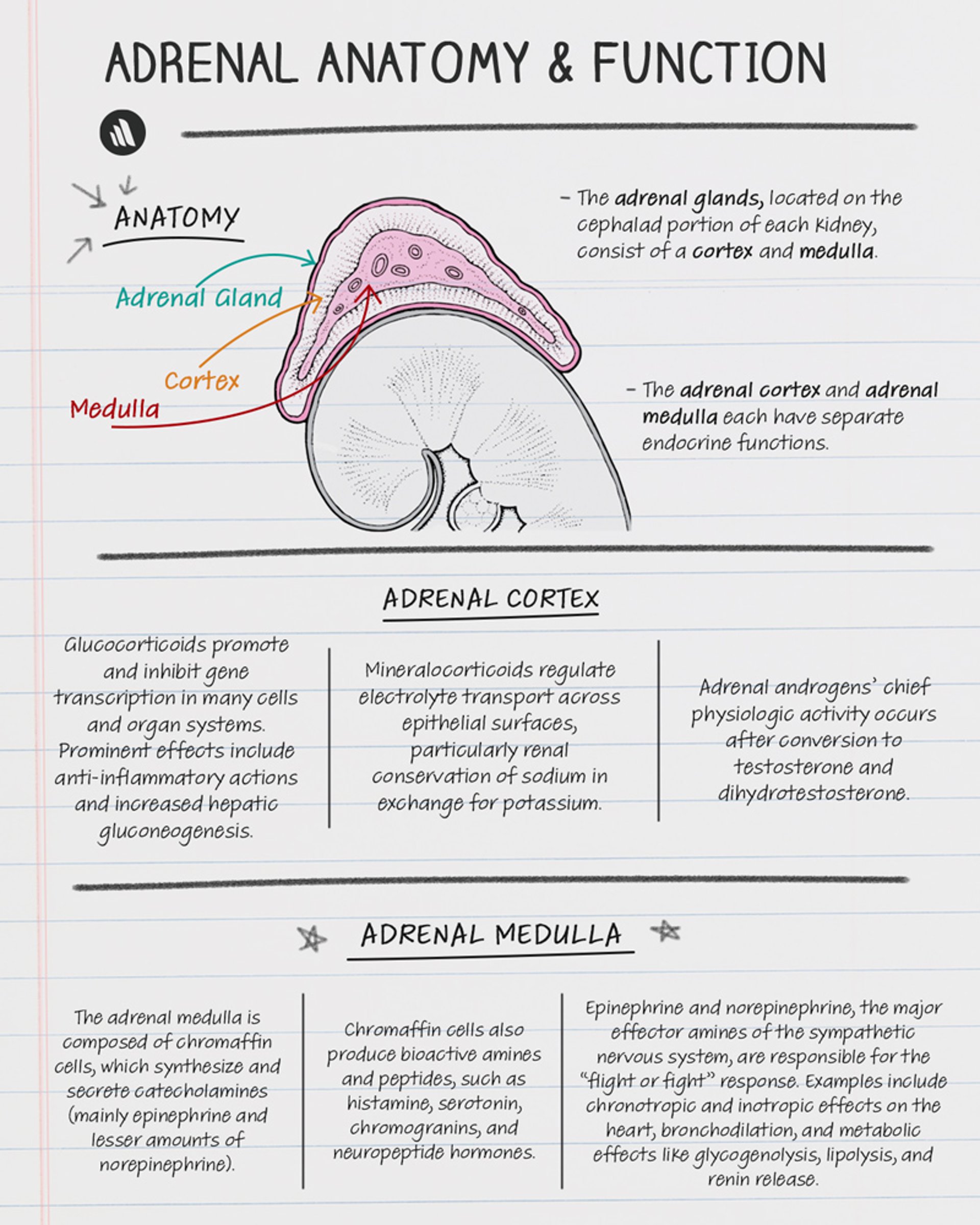
Copyright © 2023 Merck & Co., Inc., Rahway, NJ, USA and its affiliates. All rights reserved.
Inadequate ACTH can also result from failure of the hypothalamus to stimulate pituitary ACTH production, which is sometimes called tertiary adrenal insufficiency.
Panhypopituitarism may occur secondary to pituitary tumors, various other tumors, granulomas, and, rarely, infection or trauma that destroys pituitary tissue. Especially in children and adolescents, but also in adults, panhypopituitarism may occur secondary to a craniopharyngioma.
Patients receiving glucocorticoids for > 4 weeks may have insufficient ACTH secretion during metabolic stress to stimulate the adrenal glands to produce adequate quantities of glucocorticoids, or they may have atrophic adrenals that are unresponsive to ACTH. These problems may persist for up to 1 year after glucocorticoids treatment is stopped when the indication for their use is past, and may require reinstitution of treatment during periods of stress for an indeterminate period of time.
Symptoms and Signs of Secondary Adrenal Insufficiency
Symptoms and signs are similar to those of primary adrenal insufficiency (Addison disease) and include fatigue, weakness, weight loss, nausea, vomiting, and diarrhea. Differentiating clinical or general laboratory features include the absence of hyperpigmentation and relatively normal electrolyte and blood urea nitrogen (BUN) levels. Hyponatremia, if it occurs, is usually dilutional due to vasopressin hypersecretion.
Patients with panhypopituitarism have depressed thyroid and gonadal function and sometimes hypoglycemia. Coma may supervene when symptomatic secondary adrenal insufficiency occurs.
Adrenal crisis is especially likely if a patient is treated for a single endocrine gland problem, particularly with levothyroxine, without hydrocortisone replacement.
Diagnosis of Secondary Adrenal Insufficiency
Serum cortisol
Serum adrenocorticotropic hormone (ACTH)
ACTH stimulation testing
Central nervous system imaging
Adequacy of the hypothalamic-pituitary-adrenal axis can be evaluated with an ACTH stimulation test in which cosyntropin (synthetic ACTH) 250 mcg IV or IM is administered. Patients taking glucocorticoids or spironolactone should not take them on the day of the test. The patient's serum cortisol levels are measured at baseline and 30 and 60 minutes after administration of cosyntropin. If peak cortisol levels are <18 μg/dL (500 nmol/L) at 30 or 60 minutes, adrenal insufficiency is likely (the exact threshold value is assay-dependent) (1). If there is a normal rise in serum cortisol levels, adrenal insufficiency is excluded. This test and others to differentiate between primary and secondary adrenal insufficiency are discussed in more detail separately, see Primary Adrenal Insufficiency
An insulin tolerance test to induce hypoglycemia and a rise in cortisol is the standard for testing integrity of the hypothalamic-pituitary-adrenal axis in many centers, but careful monitoring is required to avoid severe prolonged hypoglycemia. The test is contraindicated in patients with known or possible seizures or ischemic heart disease, and it is not recommended in patients with suspected severe adrenal insufficiency; if it is essential in this situation, temporary replacement should be given and omitted on the day of the test. If the insulin test is contraindicated, glucagon stimulation may be used, although the test is less reliable, lasts longer, and can induce nausea and vomiting.
Patients with confirmed secondary adrenal insufficiency (see table ) should have CT or MRI of the brain to exclude a pituitary tumor or pituitary atrophy.
Confirmatory Serum Testing for Secondary Adrenal Insufficiency
Test | Result |
|---|---|
ACTH | Low (< 5 pg/mL [1.10 pmol/L]) |
Cortisol | Low (< 5 mcg/dL [138 nmol/L]) |
ACTH stimulation test | Normal or subnormal (ie, 30-minute cortisol should be < 15–18 mcg/dL [< 414–497 nmol/L], according to the assay) |
Prolonged (24-hour) ACTH stimulation test | Cortisol should continue to rise for 24 hours |
ACTH = adrenocorticotropic hormone. | |
Diagnosis reference
1. Bornstein SR, Allolio B, Arlt W, et al. Diagnosis and Treatment of Primary Adrenal Insufficiency: An Endocrine Society Clinical Practice Guideline. J Clin Endocrinol Metab. 2016;101(2):364-389. doi:10.1210/jc.2015-1710
Treatment of Secondary Adrenal Insufficiency
Hydrocortisone or prednisone/prednisolone
Dose increase during intercurrent illness
Glucocorticoid replacement is similar to that described for primary adrenal insufficiency. Each case varies regarding the type and degree of specific hormone deficiencies. Normally, cortisol is secreted maximally in the early morning and minimally at night. Thus, hydrocortisone (identical to cortisol) is given in 2 or 3 divided doses with a typical total daily dose of 15 to 20 mg. One regimen gives half the total in the morning, and the remaining half split between lunchtime and early evening (eg, 10 mg, 5 mg, 5 mg). Others give two-thirds in the morning and one-third in the evening. Doses immediately before bed should generally be avoided because they may cause insomnia. Longer-acting once daily preparations are also available and may be better tolerated.
Alternatively, prednisone or prednisolone 4 to 5 mg orally in the morning and possibly an additional 2.5 mg orally in the evening may be used.
During acute febrile illness or after trauma, patients receiving glucocorticoids for nonendocrine disorders may require supplemental doses to augment their endogenous cortisol production.
Fludrocortisone is not required because the intact adrenals produce aldosterone.
In panhypopituitarism, other pituitary deficiencies should be treated appropriately.
Key Points
Secondary adrenal insufficiency involves adrenocorticotropic hormone (ACTH) deficiency due to pituitary or, less often, hypothalamic causes (including suppression by long-term glucocorticoid use).
Other endocrine deficiencies (eg, hypothyroidism, growth hormone deficiency) may coexist.
Unlike in primary adrenal insufficiency, hyperpigmentation does not occur, and serum sodium and potassium levels are relatively normal.
ACTH and cortisol levels both are low.
Glucocorticoid replacement is required, but mineralocorticoids (eg, fludrocortisone) are not necessary.
Drug Information for the Topic