Intertrigo is skin maceration in intertriginous areas caused by moisture and/or infection. Diagnosis is typically based on clinical appearance. Treatment includes drying agents and sometimes topical antibacterial or antifungal medications.
Intertrigo refers to skin-fold lesions that develop when friction and trapped moisture cause skin maceration and inflammation that lead to the formation of patches or plaques. Secondary infection by bacteria or yeast is also common. The presence of a high body mass index (BMI), diabetes mellitus, and being dependent on care (due to lack of ability to maintain personal hygiene) are risk factors for intertrigo (1).
Typical locations are the inframammary, infrapannicular, interdigital, axillary, infragluteal, and genitocrural folds.

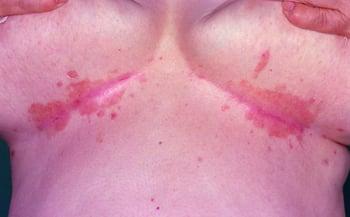
An erythematous rash in the inframammary skin folds is seen in this patient with intertrigo.
General reference
1. Kottner J, Everink I, van Haastregt J, et al. Prevalence of intertrigo and associated factors: A secondary data analysis of four annual multicentre prevalence studies in the Netherlands. Int J Nurs Stud. 2020;104:103437. doi:10.1016/j.ijnurstu.2019.103437
Diagnosis of Intertrigo
Primarily physical examination
The diagnosis of intertrigo is based on clinical appearance; potassium hydroxide wet mounts and cultures can also help diagnose and guide treatment.
The differential diagnosis of intertrigo includes:
Tinea cruris (for inguinal intertrigo)
Candidal intertrigo
Inverse psoriasis (psoriasis of intertriginous areas)
Occasionally allergic contact dermatitis (resulting from use of wipes after toileting or axillary application of antiperspirants/deodorants)
Treatment of Intertrigo
Drying agents
Sometimes topical antibacterial lotions or antifungal creams
If no bacteria or yeast are detected, drying measures and agents are often therapeutic. Effective options include over-the-counter antiperspirants containing 20% aluminum chloride and Burow solution compresses.
If bacteria or yeast are present, topical antibacterial lotions or antifungal creams are given in addition to drying agents (1) (see table ).
Treatment reference
1. Romanelli M, Voegeli D, Colboc H, et al. The diagnosis, management and prevention of intertrigo in adults: a review. J Wound Care. 2023;32(7):411-420. doi:10.12968/jowc.2023.32.7.411
Drug Information for the Topic