Achilles tendon enthesopathy is pain at the insertion of the Achilles tendon at the posterosuperior aspect of the calcaneus. Diagnosis is clinical. Radiographs in the lateral view may show enthesophytes (osseous spurs). Treatment is with stretching, splinting, and heel lifts.
(See also Overview of Foot and Ankle Disorders.)
The cause of Achilles tendon enthesopathy is chronic traction of the Achilles tendon on the calcaneus. Contracted or shortened calf muscles (resulting from a sedentary lifestyle and obesity) and athletic overuse are factors. Enthesopathy may be caused by a spondyloarthropathy.
Pain at the posterior heel below the top of the shoe counter during ambulation is characteristic. Pain on palpation of the tendon at its insertion in a patient with these symptoms is diagnostic. Manual dorsiflexion of the ankle during palpation usually exacerbates the pain. Recurrent and especially multifocal enthesitis should prompt evaluation (history and examination) for a spondyloarthropathy (eg, ankylosing spondylitis, psoriatic arthritis). A lateral radiograph may show enthesophyte formation (osseous spurs at the tendon insertion).

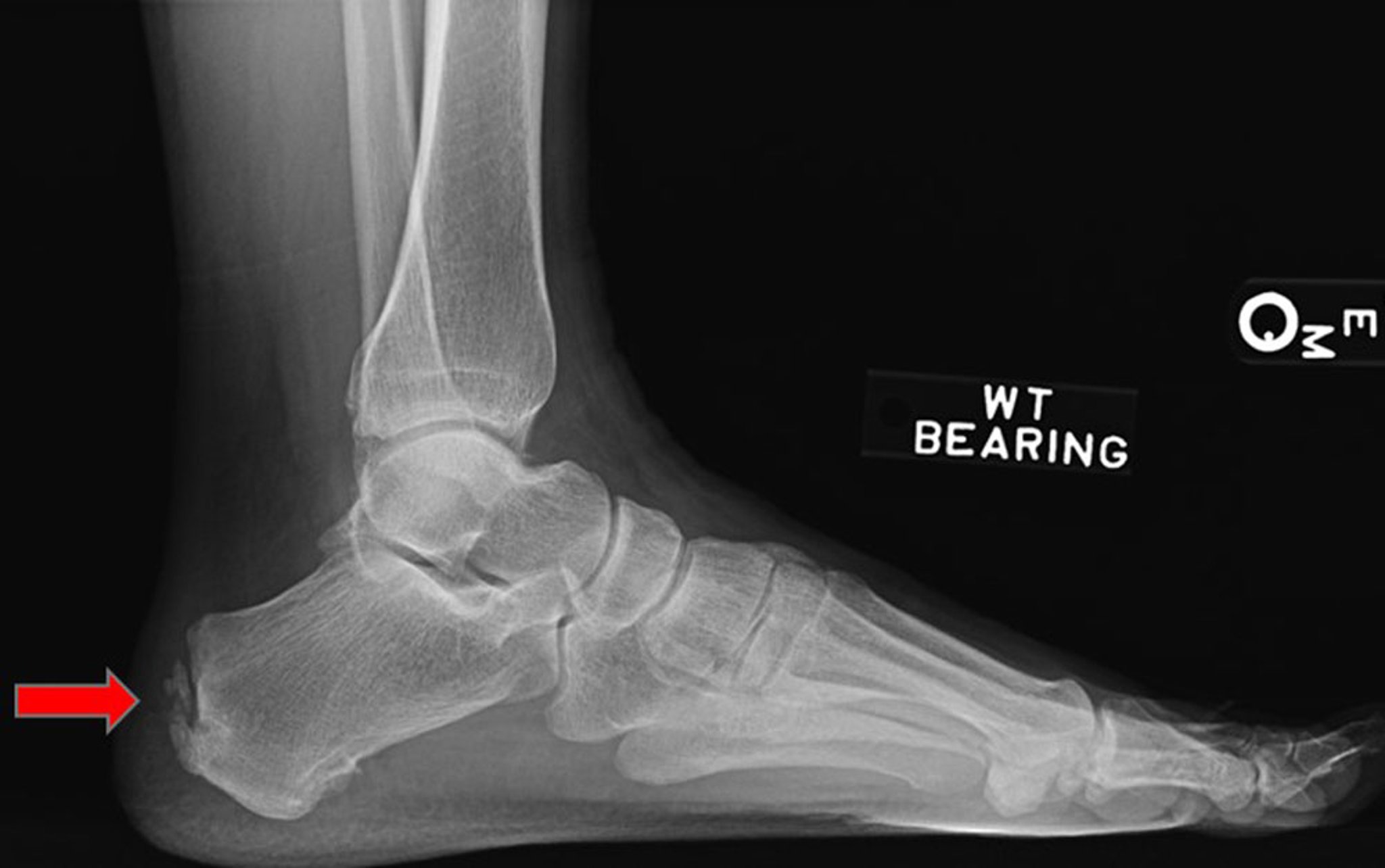
This lateral radiograph shows Achilles tendon enthesopathy (arrow).
Image courtesy of James C. Connors, DPM.

Treatment of Achilles Tendon Enthesopathy
Stretching, splinting, and heel lifts
If present, treatment of spondyloarthropathy
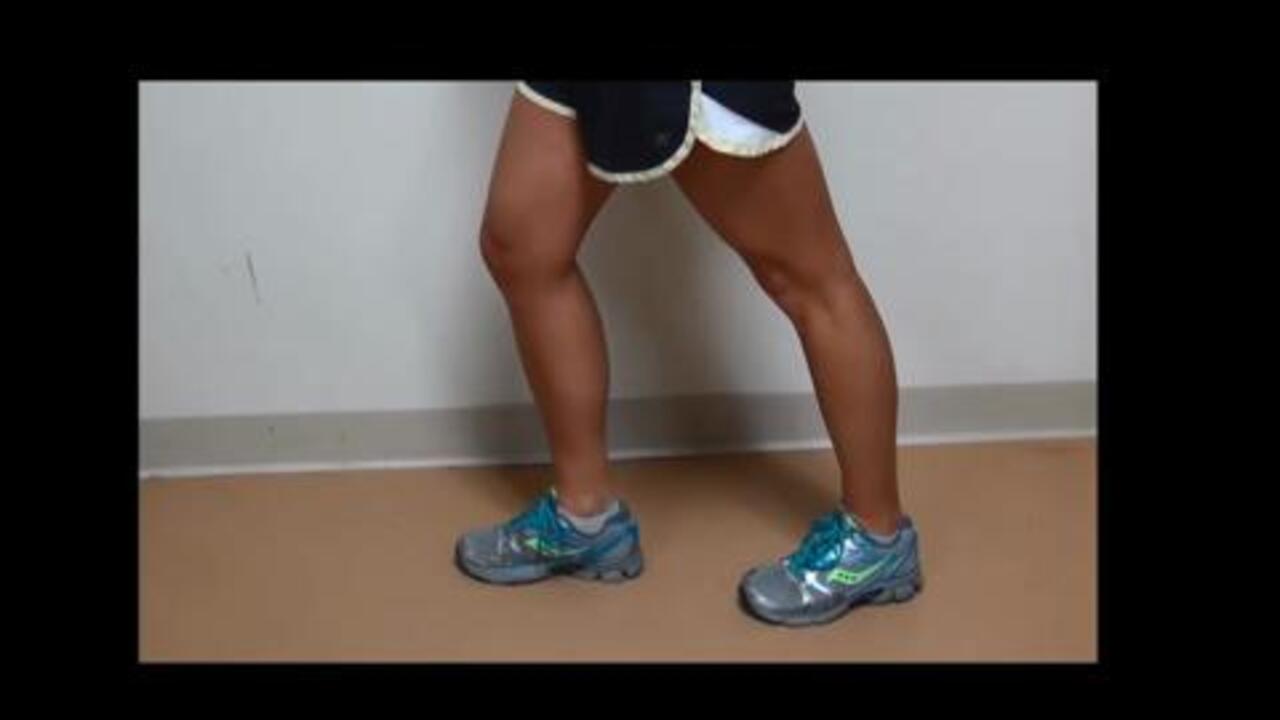
Physical therapy is essential for designing an individualized home exercise program aimed at calf muscle–stretching techniques, which should be done for about 10 minutes 2 to 3 times a day. The patient can exert pressure posteriorly to stretch the calf muscle while facing a wall at arms’ length, with knees extended and foot dorsiflexed by the patient's body weight (standing gastrocnemius stretch). To minimize stress to the Achilles tendon with weight bearing, the patient should move the foot and ankle actively through their range of motion for about 1 minute when rising after extended periods of rest. Passive stretching of the Achilles tendon using an elastic band placed at the ball of the foot while dorsiflexing the ankle provides relief in both knee flexion and extension. Night splints may also be prescribed to maintain passive stretch during sleep and help prevent contractures of the tendon.
Heel lifts should be used temporarily to decrease tendon stress during weight bearing and relieve pain. Even if the pain is only in one heel, heel lifts should be used bilaterally to prevent gait disturbance and possible secondary (compensatory) hip and or low back pain.
For patients with Achilles tendon enthesopathy related to an underlying spondyloarthropathy, treatment with a nonsteroidal anti-inflammatory drug (NSAID) or a biologic agent (eg, tumor necrosis factor inhibitor) may be beneficial.
For more recalcitrant forms of Achilles tendon enthesopathy, extracorporeal pulse activation therapy (EPAT), also known as extracorporeal shockwave therapy (ESWT), may be considered. In EPAT, low-frequency pulse waves are delivered locally using a handheld applicator. The pulsed pressure wave is a safe, noninvasive technique that is thought to stimulate metabolism and enhance blood circulation, which in turn may help regenerate damaged tissue and accelerate healing. Some data have shown improvement in symptoms and functional outcomes with EPAT (1); however, additional high-quality evidence is needed to determine duration and frequency of treatments (2).
Surgical excision of the spur should be considered in patients who have persistent symptoms despite an adequate trial of conservative care. The patient is positioned prone on the operating table and a midline Achilles tendon incision is performed. The tendon is exposed and temporarily freed from the calcaneus. The spur is resected by surgical saw, and the tendon is debrided of nodules as well as calcified enthesiophytes. The Achilles is then reattached to the calcaneus using soft-tissue anchors into the bone. The patient is placed in a neutral position splint for approximately 6 weeks, and subsequently begins a dedicated physical therapy routine.
Treatment references
1. Rompe JD, Furia J, Maffulli N: Eccentric loading compared with shock wave treatment for chronic insertional Achilles tendinopathy. A randomized, controlled trial. J Bone Joint Surg Am 90(1):52-61, 2008. doi:10.2106/JBJS.F.01494
2. Fan Y, Feng Z, Cao J, Fu W: Efficacy of extracorporeal shock wave therapy for Achilles tendinopathy: a meta-analysis. Orthop J Sports Med 8(2):2325967120903430, 2020. Published 2020 Feb 27. doi:10.1177/2325967120903430