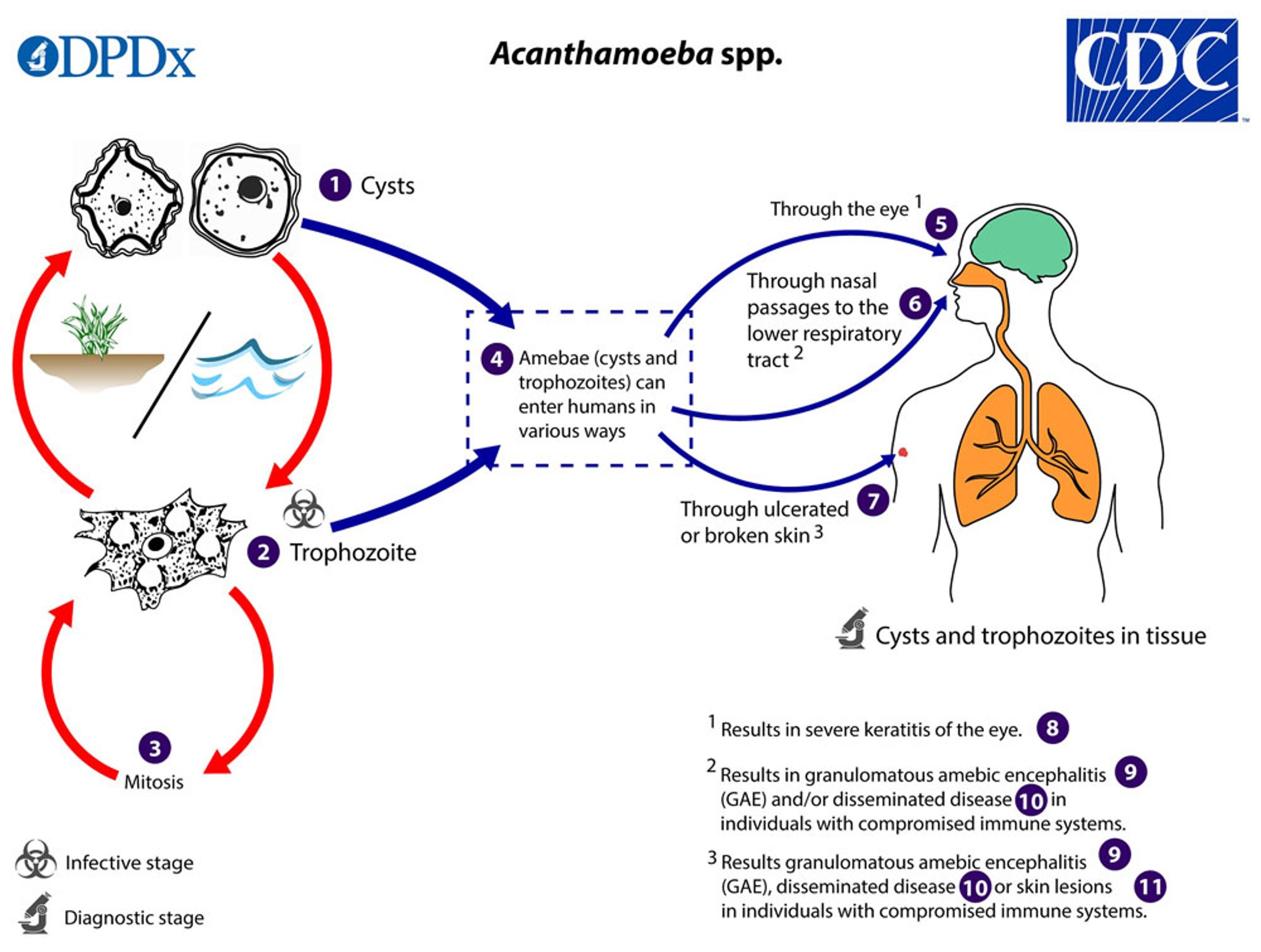
Acanthamoeba Life Cycle
1–2. The Acanthamoeba life cycle has 2 stages: cysts and trophozoites. It lacks a flagellate stage.
3. The trophozoites replicate by mitosis (the nuclear membrane does not remain intact).
4–7. The trophozoites are the infective form, but both cysts and trophozoites can enter the body (4) through the eye (5), through the nasal passages to the lower respiratory tract (6), or through ulcerated or broken skin (7).
8. When Acanthamoeba enter through the eye, they can cause severe keratitis in otherwise healthy people, particularly contact lens wearers.
9–11. When Acanthamoeba enter through the respiratory system or through the skin, they can invade the central nervous system by hematogenous dissemination causing granulomatous amebic encephalitis (9) or disseminated disease (10), or skin lesions (11) in people with immunocompromise. Acanthamoeba cysts and trophozoites may disseminate widely and can be found in tissue (eg, skin, cerebrospinal fluid).
Image from the Centers for Disease Control and Prevention, Global Health, Division of Parasitic Diseases and Malaria.