Optic neuritis is inflammation of the optic nerve. Symptoms are usually unilateral, with eye pain and partial or complete vision loss. Diagnosis is by clinical examination and MRI. Treatment is directed at the underlying condition; many cases resolve spontaneously.
Etiology of Optic Neuritis
Optic neuritis is the most common optic neuropathy in patients younger than 50 (1). Most cases result from demyelinating disease, particularly multiple sclerosis, in which case there may be recurrences. Optic neuritis is often the presenting manifestation of multiple sclerosis. Other causes include (2)
Neuromyelitis optica (NMO) (3)
Myelin oligodendrocyte glycoprotein (MOG) antibody–associated disease (MOGAD) (4)
Infectious diseases (eg, viral encephalitis [particularly in children], sinusitis, meningitis, tuberculosis [TB], syphilis, human immunodeficiency virus [HIV])

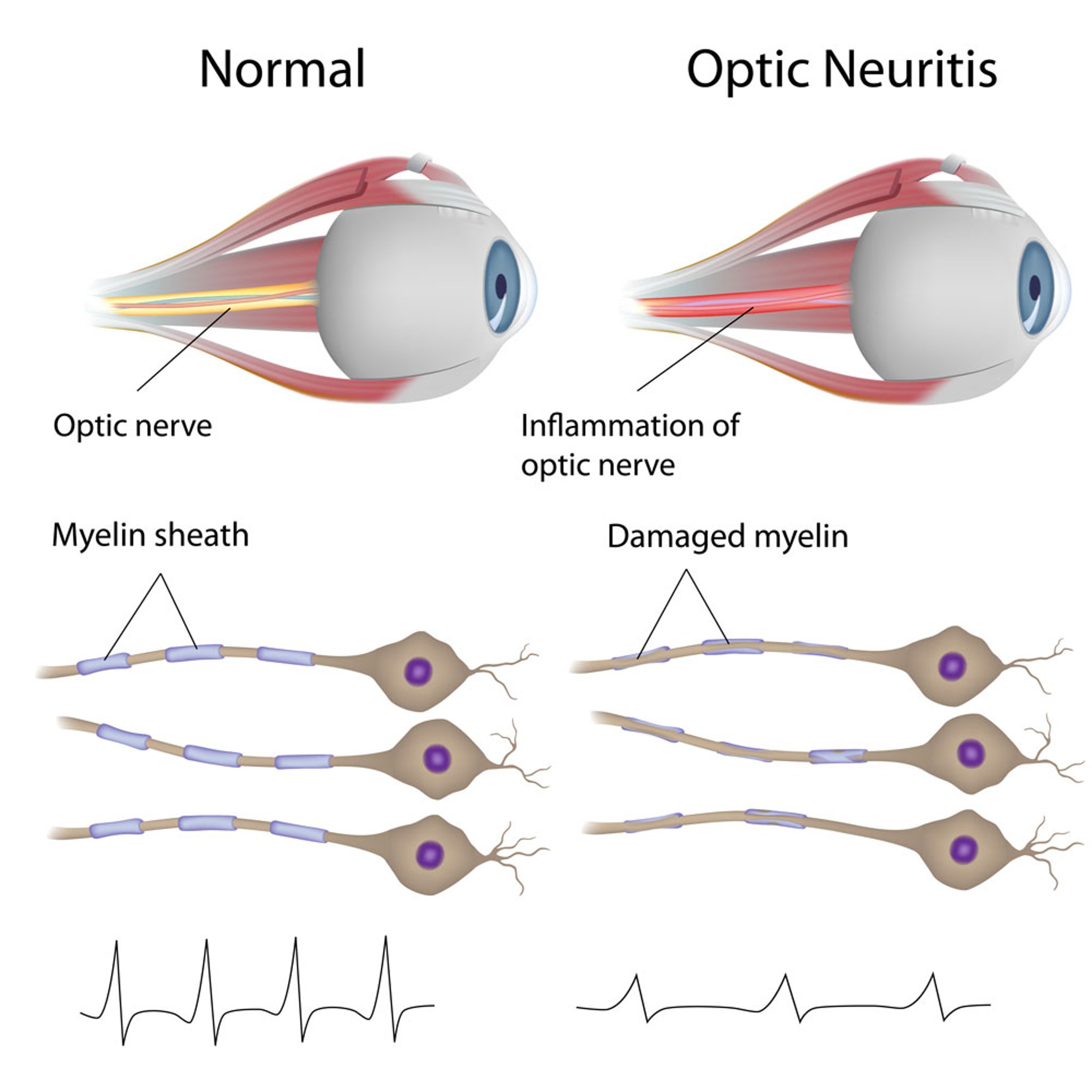
In this illustration, the images in the left column show a healthy optic nerve and healthy myelin sheaths.
The images in the right column show an inflamed optic nerve and damaged myelin.
The bottom line graphics show visual evoked potentials (VEP). VEPs measure how quickly and strongly visual signals travel from the eye to the brain. In optic neuritis, VEPs often show delayed latency (slower signal) and lower amplitude (weaker signal).
Alila Medical Media/stock.adobe.com
Chemicals, medications, and drugs, such as lead, methanol, quinine, arsenic, ethambutol, and antibiotics, cause optic neuropathies rather than true optic neuritis. TNF-alpha inhibitors and immune checkpoint inhibitors can cause optic neuritis.Chemicals, medications, and drugs, such as lead, methanol, quinine, arsenic, ethambutol, and antibiotics, cause optic neuropathies rather than true optic neuritis. TNF-alpha inhibitors and immune checkpoint inhibitors can cause optic neuritis.
Often, the cause remains idiopathic despite thorough evaluation.
Etiology references
1. Stunkel L, Kung NH, Wilson B, et al. Incidence and causes of overdiagnosis of optic neuritis. JAMA Ophthalmol. 2018;136(1):76-81. doi: 10.1001/jamaophthalmol.2017.5470
2. Hassan MB, Stern C, Flanagan EP, et al. Population-based incidence of optic neuritis in the era of aquaporin-4 and myelin oligodendrocyte glycoprotein antibodies. Am J Ophthalmol. 2020;220:110-114. doi: 10.1016/j.ajo.2020.07.014
3. Chen JJ, Pittock SJ, Flanagan EP, et al: Optic neuritis in the era of biomarkers. Surv Ophthalmol 2020;65(1):12-17. doi: 10.1016/j.survophthal.2019.08.001
4. Chen JJ, Bhatti MT. Clinical phenotype, radiological features, and treatment of myelin oligodendrocyte glycoprotein-immunoglobulin G (MOG-IgG) optic neuritis. Curr Opin Neurol. 2020;33(1):47-54. doi: 10.1097/WCO.0000000000000766
Symptoms and Signs of Optic Neuritis
The main symptom of optic neuritis is subacute vision loss, frequently maximal within several days and varying from a small central or paracentral scotoma to complete blindness. Most patients have eye pain, which often intensifies with eye movement.
Characteristic findings include reduced visual acuity, a visual field deficit, and disturbed color vision (often out of proportion to loss of visual acuity). An afferent pupillary defect is usually detectable if the contralateral eye is unaffected or involved to a lesser degree. Testing of color vision is a useful adjunct, although 10% of males have congenital color blindness, producing false-positive results. In approximately two-thirds of patients, inflammation is entirely retrobulbar, causing no visible changes to the optic nerve head (1). In the rest, disc hyperemia and edema are visible.
Symptoms and signs reference
1. Toosy AT, Mason DF, Miller DH. Optic neuritis. Lancet Neurol. 2014;13(1):83-99. doi:10.1016/S1474-4422(13)70259-X
Diagnosis of Optic Neuritis
Ophthalmologic and neurologic examination
MRI
Optic neuritis is suspected in patients with characteristic pain and vision loss, particularly if they are young.
Optic neuritis is a clinical diagnosis with documentation of many of the findings discussed above. Neuroimaging, preferably with gadolinium-enhanced MRI of the brain and orbits, is recommended to confirm the diagnosis and usually shows enhancement of the optic nerve (1). MRI may also help diagnose multiple sclerosis, myelin oligodendrocyte glycoprotein antibody–associated disease (MOGAD), and neuromyelitis optica (NMO). There is usually more extensive enhancement of the optic nerve(s) in NMO and MOGAD. Fluid attenuating inversion recovery (FLAIR) MRI sequences may show typical demyelinating lesions in a periventricular location if optic neuritis is related to multiple sclerosis.
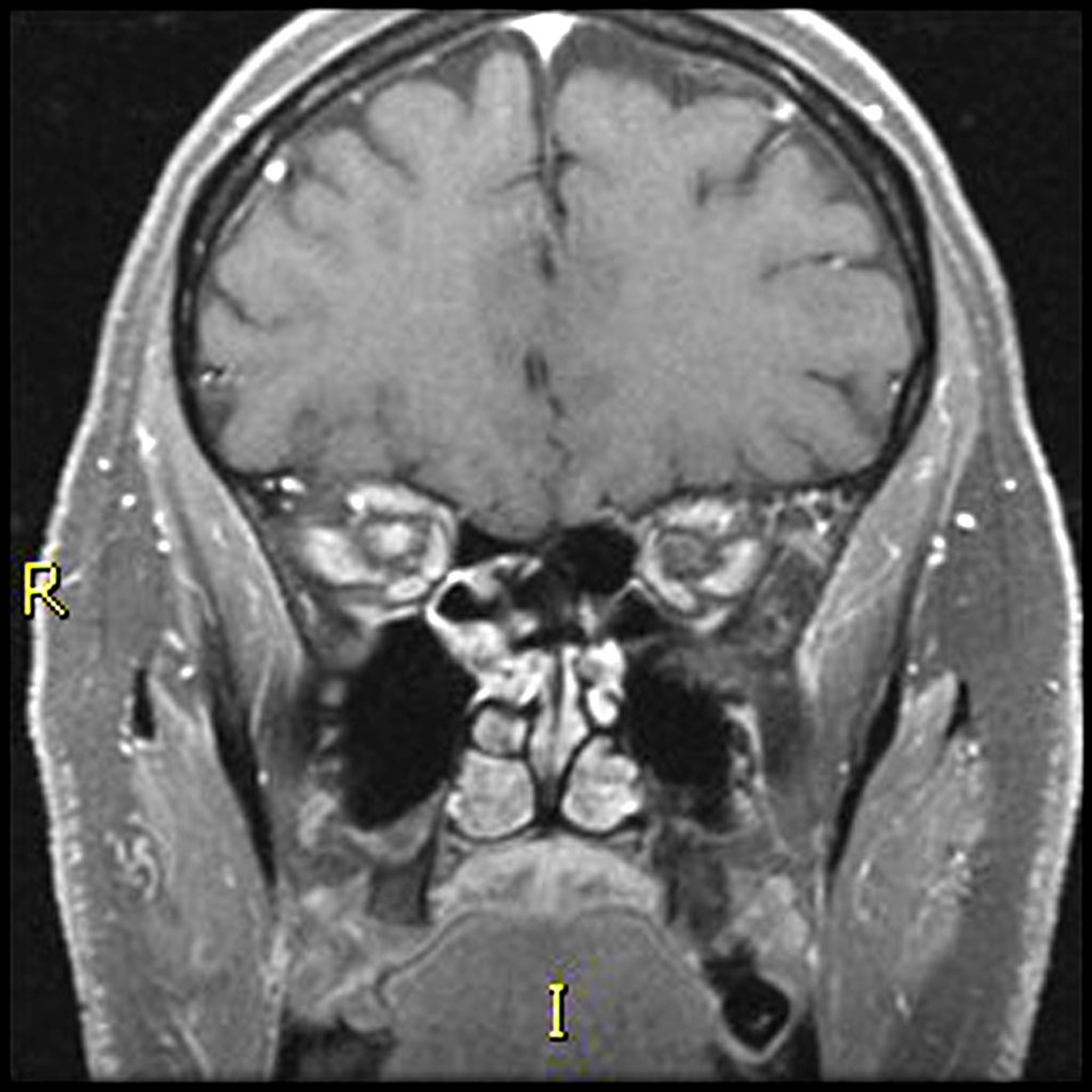
This contrast-enhanced axial T1-weighted MR image of the orbits shows prominent asymmetric enhancement (looks white) of the right optic nerve compared with the left. The enhancement is the result of optic neuritis.
Living Art Enterprises/SCIENCE PHOTO LIBRARY
Spinal cord involvement can be seen in any of the demyelinating diseases but is usually more extensive in NMO and MOGAD. Spinal cord MRI should be performed in patients with symptoms suggesting spinal cord involvement. Unless classic features of multiple sclerosis are present, patients with optic neuritis should be tested for NMO and MOG antibodies.
Pearls & Pitfalls
|
Diagnosis reference
1. NANOS Practice Support Committee: North American Neuro-Ophthalmology Society (NANOS) Statement on the Justification for MRI Orbits With and Without Contrast in Addition to MRI Brain With and Without Contrast in Optic Neuritis. 2021 edition. Accessed March 18, 2026.
Treatment of Optic Neuritis
Glucocorticoids
High-dose glucocorticoids are typically given for optic neuritis, especially if severe. Treatment with intravenous methylprednisolone or high dose oral prednisone may speed recovery, but ultimate vision results are no different from those with observation alone in multiple sclerosis or idiopathic optic neuritis (High-dose glucocorticoids are typically given for optic neuritis, especially if severe. Treatment with intravenous methylprednisolone or high dose oral prednisone may speed recovery, but ultimate vision results are no different from those with observation alone in multiple sclerosis or idiopathic optic neuritis (1). Early high-dose glucocorticoids may improve outcomes in atypical causes of optic neuritis, such as NMO or MOGAD (2). Plasma exchange is often used for NMO attacks and is sometimes used for severe optic neuritis from other causes if the optic neuritis does not recover after high-dose glucocorticoids (3). Treatment with low-dose oral prednisone alone does not improve vision outcome and may increase the rate of recurrent episodes (). Treatment with low-dose oral prednisone alone does not improve vision outcome and may increase the rate of recurrent episodes (4).
Low-vision aids (eg, magnifiers, large-print devices, talking watches) may be helpful. Multiple sclerosis disease-modifying treatments should be given to patients with multiple sclerosis, and NMO-specific treatments should be used in patients with NMO. Patients who have MOGAD with relapsing disease may need chronic immunotherapy. It is important to note that patients with NMO and MOGAD should not be given certain multiple sclerosis disease-modifying agents, which may be ineffective or even worsen the outcome.
Treatment references
1. Morrow SA, Fraser JA, Day C, et al. Effect of treating acute optic neuritis with bioequivalent oral vs intravenous corticosteroids: A randomized clinical trial. JAMA Neurol 2018;75(6): 690-696. doi: 10.1001/jamaneurol.2018.0024
2. Chen JJ, Pittock SJ, Flanagan EP, et al. Optic neuritis in the era of biomarkers. Surv Ophthalmol. 2020;65(1):12-17, 2020. doi: 10.1016/j.survophthal.2019.08.001
3. Chen JJ, Flanagan EP, Pittock SJ, et al. Visual outcomes following plasma exchange for optic neuritis: An international multicenter retrospective analysis of 395 optic neuritis attacks. Am J Ophthalmol. 2023;252:213-224. doi: 10.1016/j.ajo.2023.02.013
4. Beck RW, Cleary PA, Anderson MM, et al. A randomized, controlled trial of corticosteroids in the treatment of acute optic neuritis. N Engl J Med. 1992:326(9):581-588. doi: 10.1056/NEJM19920227326090
Prognosis for Optic Neuritis
Prognosis depends on the underlying condition. Most episodes of typical optic neuritis improve spontaneously with significant recovery of vision in 2 to 3 months. The recurrence rate is variable and depends on the etiology. Patients with an underlying disease, such as NMO or MOGAD, have higher rates of recurrence in the same eye or in the other eye, and recovery of vision can be worse, especially for NMO (1). MRI is used to determine future risk of demyelinating disease, especially multiple sclerosis (2).
Prognosis references
1. Beck RW, Cleary PA, Backlund JYC, Optic Neuritis Study Group. The course of visual recovery after optic neuritis: Experience of the optic neuritis treatment trial. Ophthalmology. 2020;127(4S):S174-S181. doi: 10.1016/j.ophtha.2020.01.027
2. Optic Neuritis Study Group. Multiple sclerosis risk after optic neuritis: Final optic neuritis treatment trial follow-up. Arch Neurol. 2008;65(6):727-732. doi: 10.1001/archneur.65.6.727
Key Points
Optic neuritis is the most common optic neuropathy in patients under 50 years.
The most common causes are demyelinating diseases, particularly multiple sclerosis, neuromyelitis optica (NMO), and myelin oligodendrocyte glycoprotein (MOG) antibody-associated disease (MOGAD), but infections, medications, drugs, and toxins are other possible causes.
Findings include pain with eye movement, visual disturbances (particularly disproportionate loss of color vision), and afferent pupillary defect.
Perform gadolinium-enhanced MRI of the brain and orbits. Perform MRI of the spinal cord if multiple sclerosis or other demyelinating disease is suspected. Aquaporin (AQP4) and MOG antibodies should be checked for all optic neuritis cases unless very classic for multiple sclerosis.
Glucocorticoids and other treatments can be given, particularly if demyelinating disease is suspected. Plasma exchange is often given for NMO attacks or severe attacks that are unresponsive to high-dose glucocorticoids.