Panniculitis is inflammation of the subcutaneous fat that can result from multiple causes. Diagnosis is by clinical evaluation and biopsy. Treatment depends on the cause.
(See also Erythema Nodosum.)
Panniculitis is an inflammatory condition affecting the subcutaneous fat. It can be classified into lobular or septal subtypes depending on the principal site of the inflammation within the fat. Either subtype may be associated with vasculitis (1).
General reference
1. Wick MR. Panniculitis: A summary. Semin Diagn Pathol. 2017;34(3):261-272. doi:10.1053/j.semdp.2016.12.004
Etiology of Panniculitis
There are multiple causes of panniculitis, including:
Infections
Inflammatory disorders (eg, erythema nodosum, lipodermatosclerosis, polyarteritis nodosa)
Physical factors (eg, cold, trauma)
Lymphoproliferative disorders (eg, T-cell lymphoma)
Systemic rheumatic disorders (eg, systemic lupus erythematosus, systemic sclerosis)
Pancreatic disorders (eg, acute and chronic pancreatitis, pancreatic carcinoma)
Symptoms and Signs of Panniculitis
Panniculitis is characterized by tender and erythematous to violaceous subcutaneous nodules located over the extremities and sometimes over the posterior thorax, abdomen, breasts, face, or buttocks. Rarely, nodules can occur internally, including in the mesentery, lungs, scrotum, and cranium.
Signs of systemic inflammation, such as fever and malaise, can accompany panniculitis.

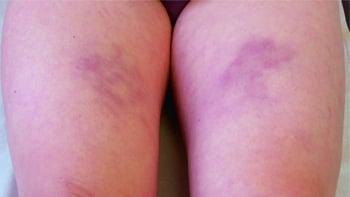
This photo shows violaceous infiltrated plaques of the anterior-medial part of the thighs.

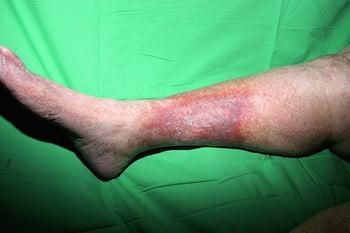
This photo shows painful inflammation of the subcutaneous fat in the lower extremity resulting from lipodermatosclerosis, which can be confused with cellulitis.
Diagnosis of Panniculitis
History and physical examination
Excisional or incisional biopsy
The diagnosis of panniculitis is usually by clinical appearance including tender, erythematous subcutaneous nodules over the extremities, and can be confirmed by biopsy when needed.
Treatment of Panniculitis
Supportive care
Anti-inflammatory medications
Immunosuppressants
There is no single definitive treatment for panniculitis; management depends on the underlying cause (1).
Several strategies have been used with modest results, including nonsteroidal anti-inflammatory drugs, antimalarials, dapsone, and thalidomide.
Glucocorticoids (1 to 2 mg/kg orally or IV once a day) and other immunosuppressive or chemotherapeutic agents (eg, methotrexate, azathioprine) have been used to treat patients with progressive symptoms, vasculitis,or signs of systemic involvement (1).
Treatment reference
1. Maniam GB, Limmer EE, Gibson LE, et al. Panniculitis: a narrative review. Arch Dermatol Res. 2025;317(1):373. Published 2025 Feb 8. doi:10.1007/s00403-025-03816-9
Key Points
The causes of panniculitis can vary widely.
Diagnosis of panniculitis is by history and physical examination (including presence of tender, erythematous, subcutaneous nodules) and confirmation with excisional or incisional biopsy.
Treatment of panniculitis is supportive; anti-inflammatory or immunosuppressive pharmacotherapy may be considered, particularly if manifestations are severe or progressive.
Drug Information for the Topic