Malignant melanoma arises from melanocytes in a pigmented area (eg, skin, mucous membranes, eyes, or central nervous system). Metastasis is correlated with depth of dermal invasion. With metastasis, prognosis is poor. Diagnosis is by biopsy. Wide surgical excision is the rule for operable tumors. Metastatic disease requires systemic therapy but is difficult to cure.
(See also Overview of Skin Cancer.)
In 2025, approximately 104,960 new cases of melanoma are anticipated to occur in the United States, causing an estimated 8,430 deaths (1). The lifetime risk is approximately 3% for White people, 0.1% for Black people, and 0.5% for Hispanic people. Melanoma accounts for < 2% of total skin cancers diagnosed in the United States but causes most skin cancer deaths.
Melanomas occur mainly on the skin but can also develop on the mucosa of the oral, genital, and rectal regions and conjunctiva. Melanomas may also develop in the choroid layer of the eye, in the leptomeninges (pia or arachnoid mater), and in the nail beds.

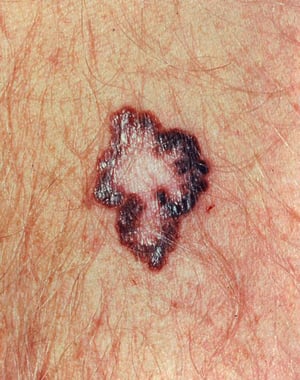
This photo shows an asymmetrical, dark brown and red pigmented lesion of melanoma. The lesion is characterized by irregular borders; a hypomelanotic central region surrounded by a heterogeneous red- and dark brown-colored border; and a large diameter.
This photo shows an asymmetrical, dark brown and red pigmented lesion of melanoma. The lesion is characterized by irreg
National Cancer Institute (NCI); www.cancer.gov


This photo shows an asymmetrical, dark brown, pigmented lesion of melanoma. The lesion is characterized by heterogeneous, mottled pigmentation ranging from pinkish red to dark brown/black; asymmetry; and a highly irregular border.
This photo shows an asymmetrical, dark brown, pigmented lesion of melanoma. The lesion is characterized by heterogeneou
National Cancer Institute (NCI); www.cancer.gov
This photo shows an asymmetrical, dark brown and red pigmented lesion of melanoma. The lesion is characterized by irregular borders; a hypomelanotic central region surrounded by a heterogeneous red- and dark brown-colored border; and a large diameter.
This photo shows an asymmetrical, dark brown and red pigmented lesion of melanoma. The lesion is characterized by irreg
National Cancer Institute (NCI); www.cancer.gov
This photo shows an asymmetrical, dark brown, pigmented lesion of melanoma. The lesion is characterized by heterogeneous, mottled pigmentation ranging from pinkish red to dark brown/black; asymmetry; and a highly irregular border.
This photo shows an asymmetrical, dark brown, pigmented lesion of melanoma. The lesion is characterized by heterogeneou
National Cancer Institute (NCI); www.cancer.gov

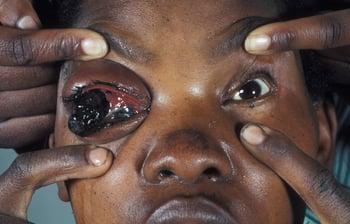
This photo shows a patient with a malignant melanoma of the right eye. A melanoma of the eye is a type of cancer that comes from the choroid layer of the eye.
Melanomas vary in size, shape, and color (usually pigmented) and in their propensity to invade and metastasize. Metastasis occurs via lymphatics and blood vessels. Local metastasis results in the formation of nearby satellite papules or nodules that may or may not be pigmented. Metastasis to skin or internal organs may occur, and, occasionally, metastatic nodules or enlarged lymph nodes are discovered before the primary lesion is identified.

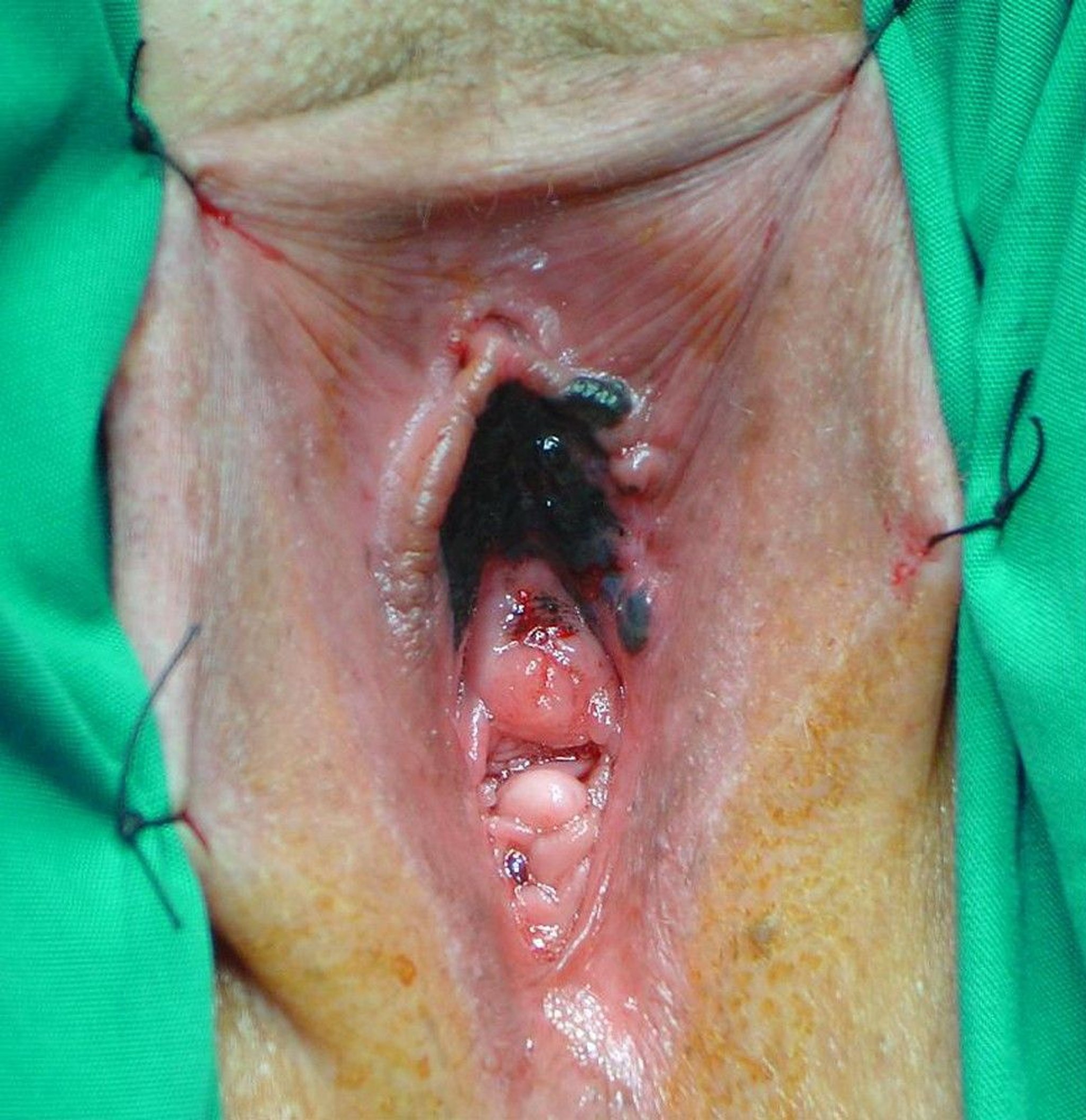
This photo shows malignant melanoma of the vulva with focal extension to the urethral orifice.
© Springer Science+Business Media
General reference
1. American Cancer Society: Key Statistics for Melanoma Skin Cancer. January 16, 2025. Accessed November 10, 2025.
Risk Factors for Melanoma
Risk factors for melanoma include:
Sun exposure, particularly repeated blistering sunburns (particularly in childhood or adolescence)
Repeated tanning with ultraviolet A (UVA) or psoralen plus UVA (PUVA) treatments
Nonmelanoma skin cancer
Family and personal history of melanoma
Family history of breast, ovarian, or pancreatic cancer
Light skin, freckling, red or blond hair
Atypical moles, particularly > 5
Increased numbers of melanocytic nevi (> 50)
Immunosuppression (especially in the post-transplant setting)
Lentigo maligna
Congenital melanocytic nevus > 20 cm (giant congenital nevi)
Atypical mole syndrome (dysplastic nevus syndrome)
Familial atypical mole–melanoma syndrome
Germline mutations in oncogenes, including BRCA2, CDK4
Germline mutations in anti-oncogenes (tumor-suppressor genes), including CDKN2A (p16), BAP1, and CHEK2 (1)
Advanced age

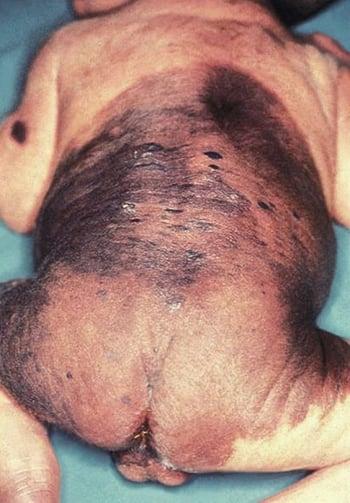
Congenital melanocytic nevus (giant congenital nevus) is a risk factor for malignant melanoma. Note the large size (> 20 cm), irregular border, and heterogeneous color.
Patients with a personal history of melanoma have an increased risk of additional melanomas. People who have 1 or more first-degree relatives with a history of melanoma have an increased risk (up to 6 or 8 times) over those without a family history. The familial risk of melanoma is also significantly elevated by CDKN2A (p16) mutations (2), the presence of which also increases the risk of other cancers (eg, lung, breast, pancreas). BRCA2 mutations also increase the risk, albeit to a lesser extent than CDKN2A, particularly when occurring in the context of family histories of ovarian, breast, or pancreatic cancer (3).
Atypical mole syndrome is the presence of large numbers of moles (eg,> 50), at least one of which is atypical and at least one of which is > 8 mm in diameter.
The risks conferred by personal and familial histories of melanoma on the development of future melanoma are cumulative (4). Familial atypical mole–melanoma syndrome is the presence of multiple atypical moles and melanoma in 2 or more first-degree relatives; such people are at markedly increased risk (25 times or greater) of melanoma.
Melanoma is less common among people with dark skin; when it occurs in people with dark skin, the nail beds, palms, and soles are more often affected.
Approximately 30% of melanomas develop from moles (approximately half each from typical and atypical moles); almost all the rest arise de novo from melanocytes in normal skin (5). Atypical moles (dysplastic nevi) may be precursors to melanoma.
Although melanomas occur during pregnancy, pregnancy itself does not increase the likelihood that a mole will become a melanoma; moles frequently change in size and darken uniformly during pregnancy.
The very rare melanomas of childhood almost always arise in the leptomeninges or from giant congenital nevi.
In all people, lesions that have certain characteristics of concern, such as size, irregular borders, recent enlargement, darkening, ulceration, or bleeding, should be evaluated (see diagnosis of melanoma).

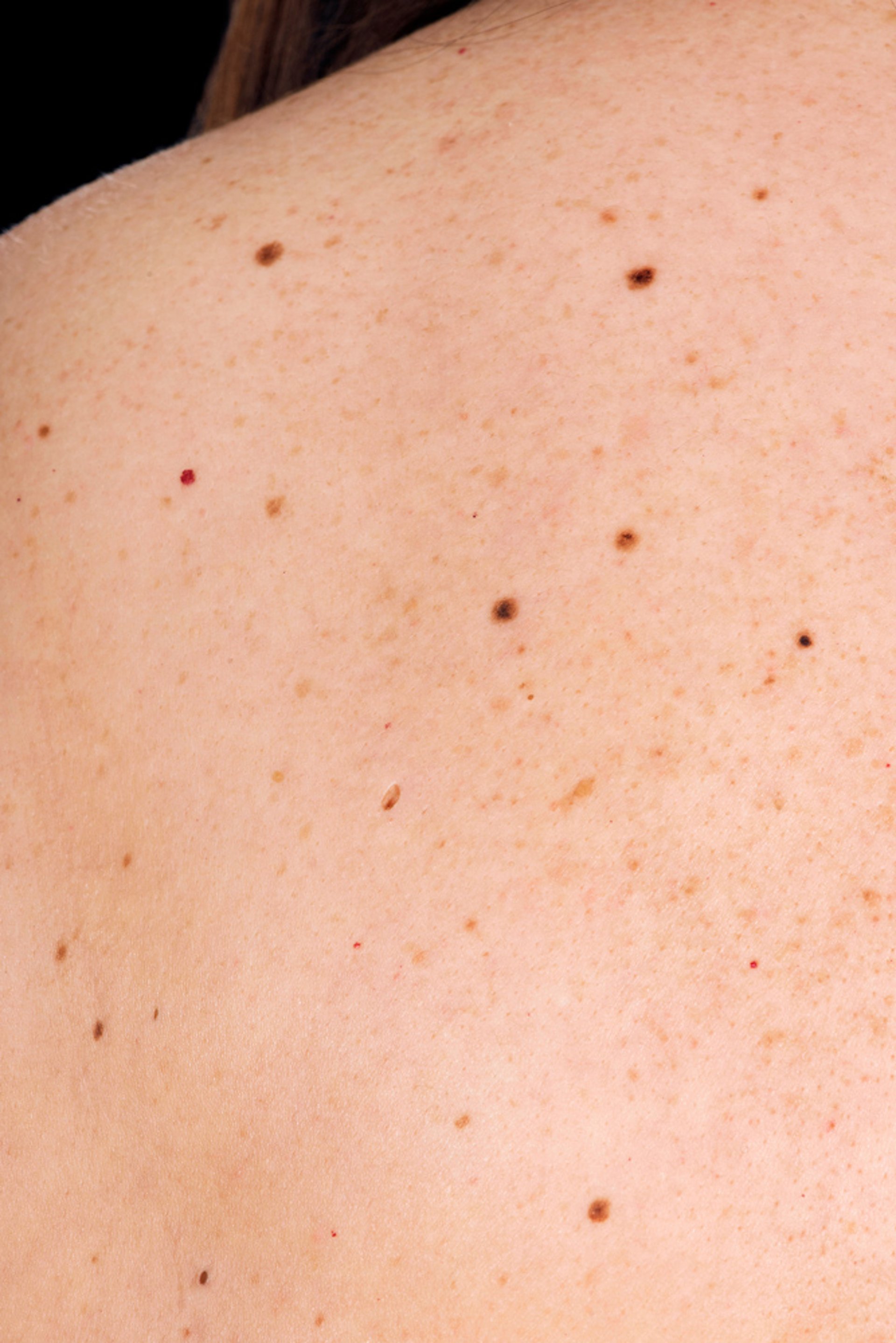
This photo shows the back of a patient with numerous pigmented atypical moles.
MID ESSEX HOSPITAL SERVICES NHS TRUST / SCIENCE PHOTO LIBRARY
Risk factors references
1. National Comprehensive Cancer Network. NCCN Clinical Practice Guidelines in Oncology (NCCN Guidelines). Melanoma: Cutaneous, version 2:2025. https://www.nccn.org/professionals/physician_gls/pdf/cutaneous_melanoma.pdf. Accessed November 13, 2025.
2. Potrony M, Puig-Butillé JA, Aguilera P, et al. Increased prevalence of lung, breast, and pancreatic cancers in addition to melanoma risk in families bearing the cyclin-dependent kinase inhibitor 2A mutation: implications for genetic counseling. J Am Acad Dermatol.2014;71(5):888-895. doi:10.1016/j.jaad.2014.06.036
3. Gumaste PV, Penn LA, Cymerman RM, et al. Skin cancer risk in BRCA1/2 mutation carriers. Br J Dermatol. 2015;172(6):1498-1506. doi:10.1111/bjd.13626
4. Naeyaert JM, Brochez L. Clinical practice. Dysplastic nevi. N Engl J Med. 2003 Dec 4;349(23):2233-40. doi: 10.1056/NEJMcp023017. PMID: 14657431.
5. Pampena R, Kyrgidis A, Lallas A, et al. A meta-analysis of nevus-associated melanoma: Prevalence and practical implications. J Am Acad Dermatol. 2017 Nov;77(5):938-945.e4. doi: 10.1016/j.jaad.2017.06.149. Epub 2017 Aug 29. PMID: 28864306.
Symptoms and Signs of Melanoma
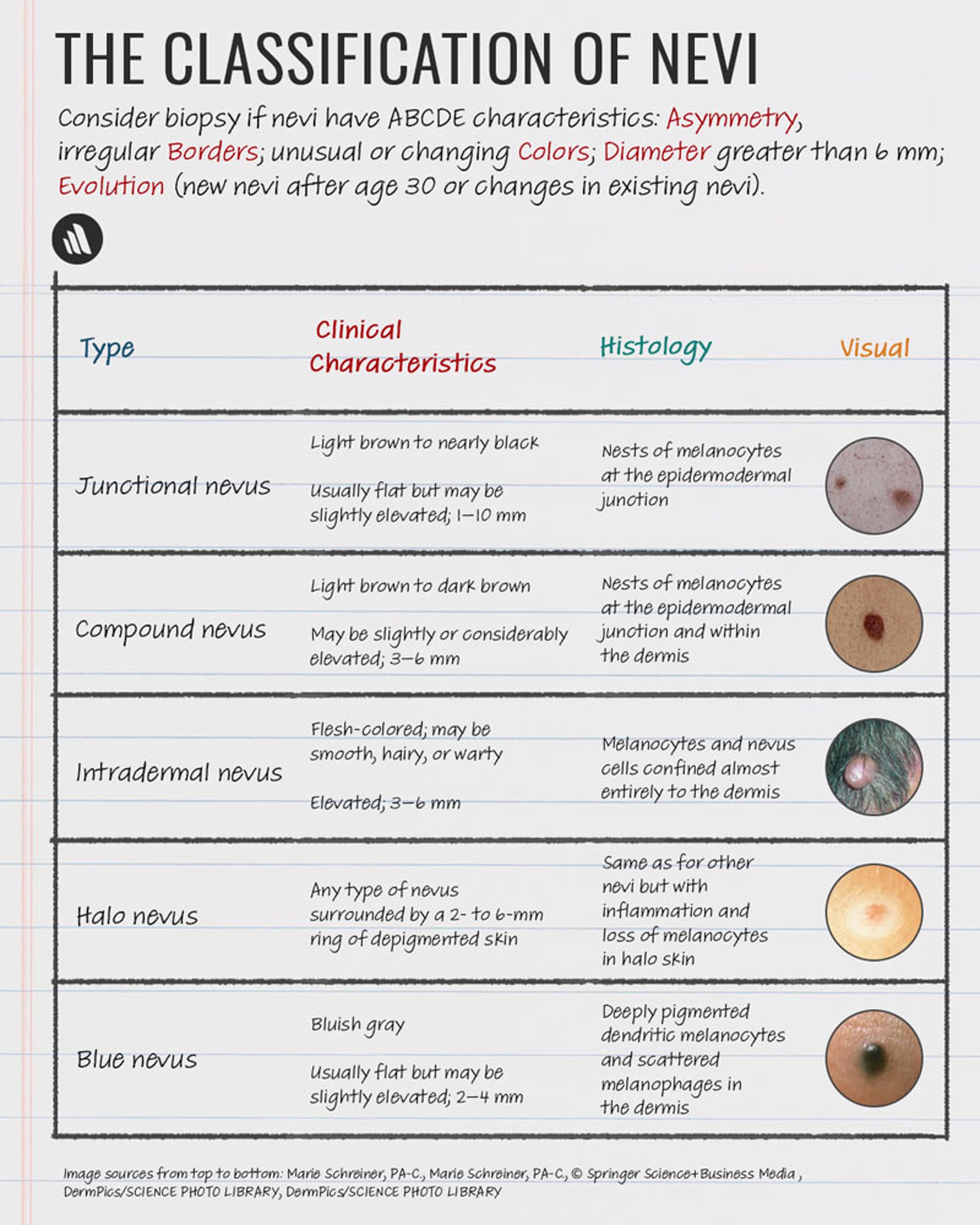
The following characteristics should raise clinical suspicion (known as the ABCDEs of melanoma) (1):
A: Asymmetry—asymmetric appearance
B: Borders—irregular borders (ie, not round or oval)
C: Color—color variation within the mole, unusual colors, or a color significantly different or darker than the patient's other moles
D: Diameter—> 6 mm
E: Evolution—a new mole in a patient > 30 years of age or a changing mole
Patients at risk can be taught self-examination to detect changes in existing moles and to recognize features suggesting melanoma. See Prevention of Atypical Nevi.
Other red flags include:
Recent enlargement or change in shape
Change in surface characteristics or consistency
Signs of inflammation in surrounding skin, with possible bleeding, ulceration, itching, or tenderness
Symptoms and signs reference
1. Rigel DS, Friedman RJ, Kopf AW, et al. ABCDE--an evolving concept in the early detection of melanoma. Arch Dermatol. 2005 Aug;141(8):1032-4. doi: 10.1001/archderm.141.8.1032. PMID: 16103334.
Classification of melanoma
There are 4 main types of melanoma and a few minor subtypes (1).
Superficial spreading melanoma
This type accounts for 70% of melanomas (2). Typically asymptomatic, it occurs most commonly on intermittently sun-exposed skin of young adults (eg, women’s legs and men’s torsos).
It often arises from a precursor nevus. The lesion is usually a flat plaque with irregular, raised, indurated, and tan or brown areas, which often have variegated pigmentation (red, white, black, and blue spots or small, sometimes protuberant blue-black nodules). Small notchlike indentations of the margins may be noted, along with enlargement or color change.
Histologically, atypical melanocytes characteristically invade the dermis and epidermis. This type of melanoma most commonly has activating mutations in the BRAF gene at V600.

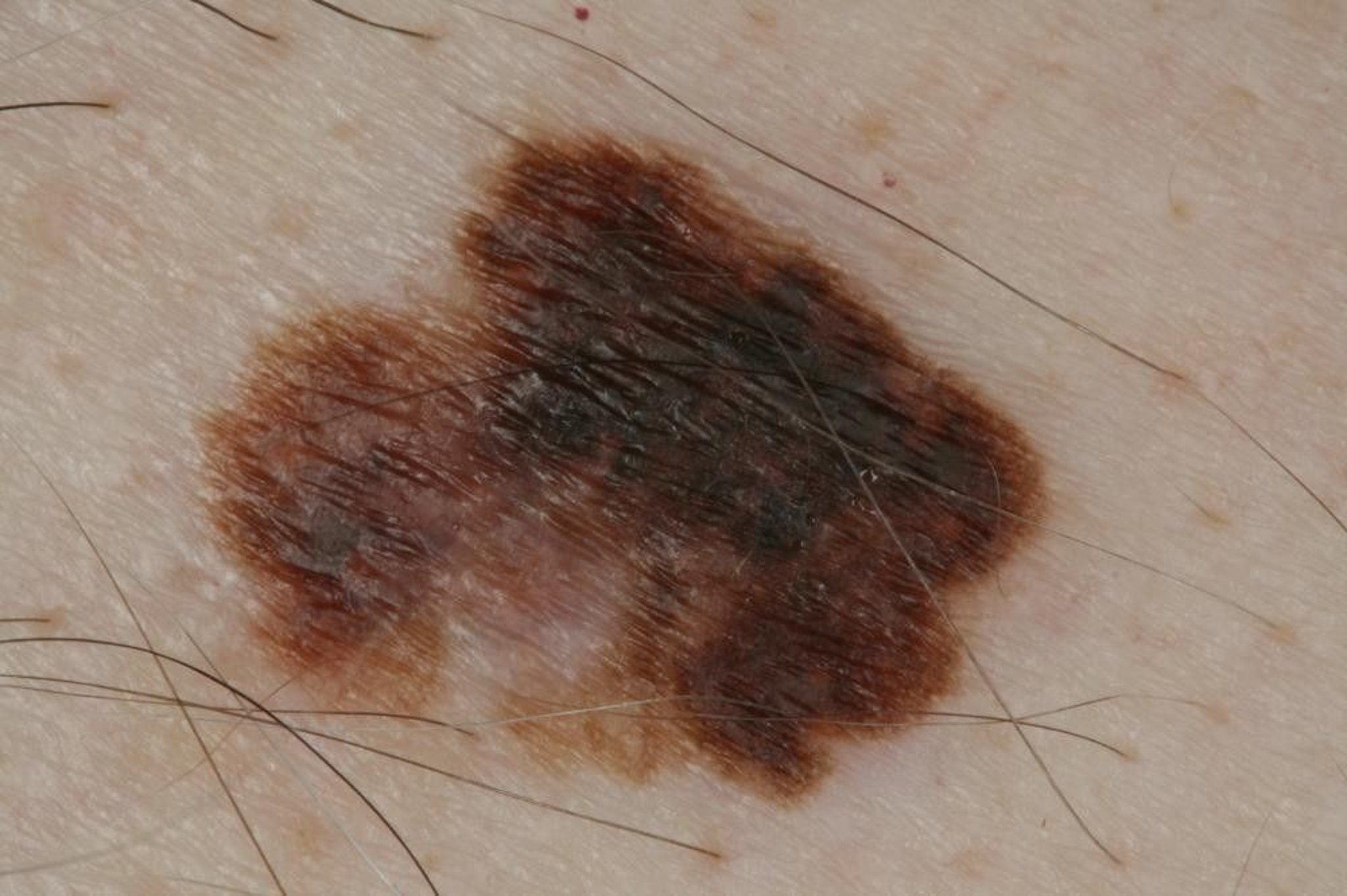
This photo shows a superficial spreading melanoma with features of asymmetry, irregular borders, multiple colors, and raised, darker regions with black and blue spots.
Photo courtesy of Gregory L. Wells, MD.


This photo shows a darkly pigmented, raised plaque, situated adjacent to a raised, smooth red nodule. The plaque is superficial spreading melanoma, and the nodule is a pink (amelanotic) nodule.
National Cancer Institute (NCI); www.cancer.gov
Lentigo maligna melanoma
This type accounts for 15% of melanomas (2). It tends to occur in older adults. It arises from lentigo maligna (Hutchinson freckle or malignant melanoma in situ—a frecklelike tan or brown macule).
Lentigo maligna usually occurs on the face or other areas of chronic sun exposure as an asymptomatic, flat, tan or brown, irregularly shaped macule or patch with darker brown or black spots scattered irregularly on its surface. In lentigo maligna, both normal and malignant melanocytes are confined to the epidermis.
When malignant melanocytes invade the dermis, the lesion is called lentigo maligna melanoma, and the cancer may metastasize.
This type of melanoma most commonly has mutations in the C-kit gene.

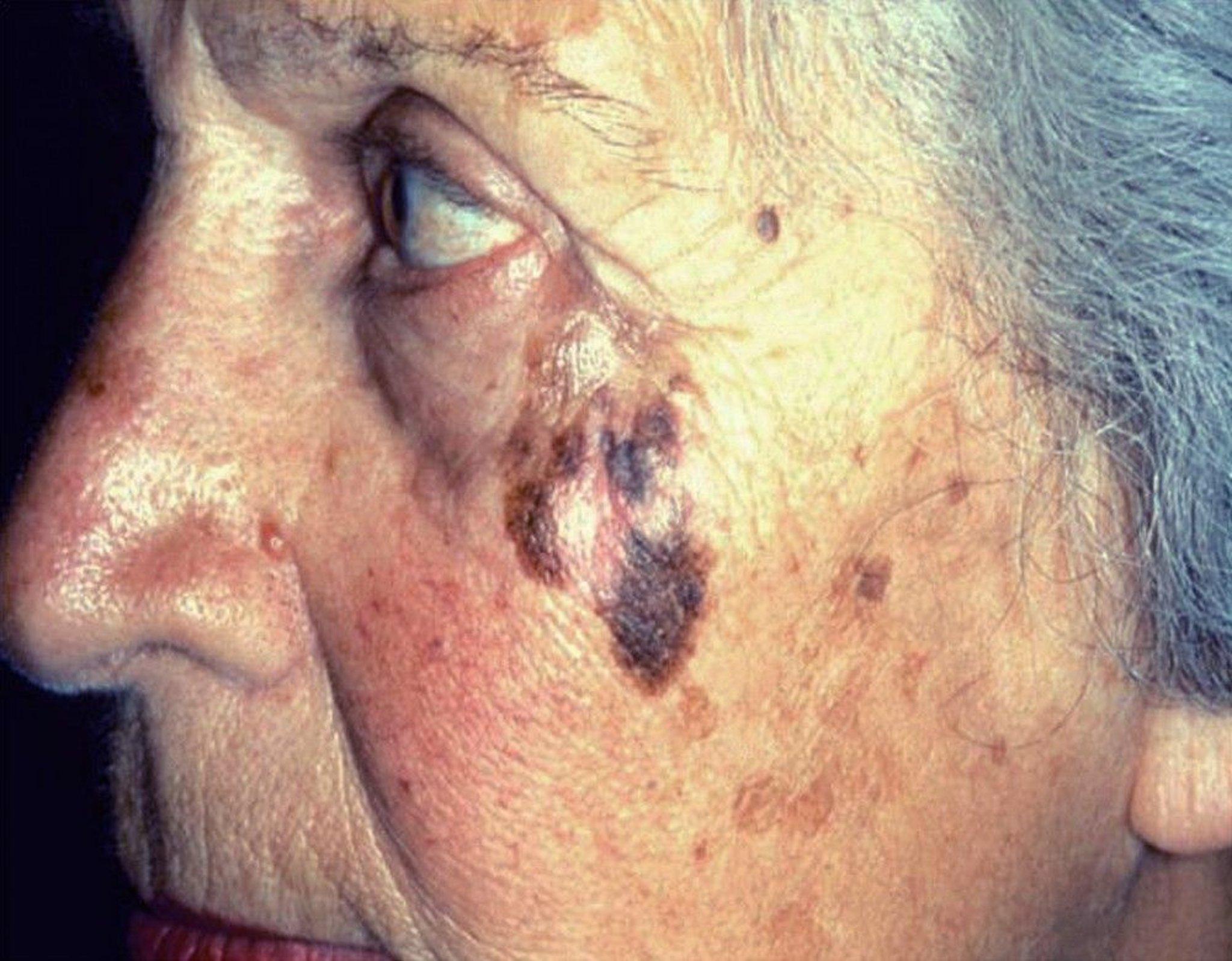
This photo shows lentigo maligna melanoma of the left malar region characterized by multiple macules with irregular borders and heterogeneous color.
CDC/ Carl Washington, M.D., Emory Univ. School of Medicine; Mona Saraiya, MD, MPH

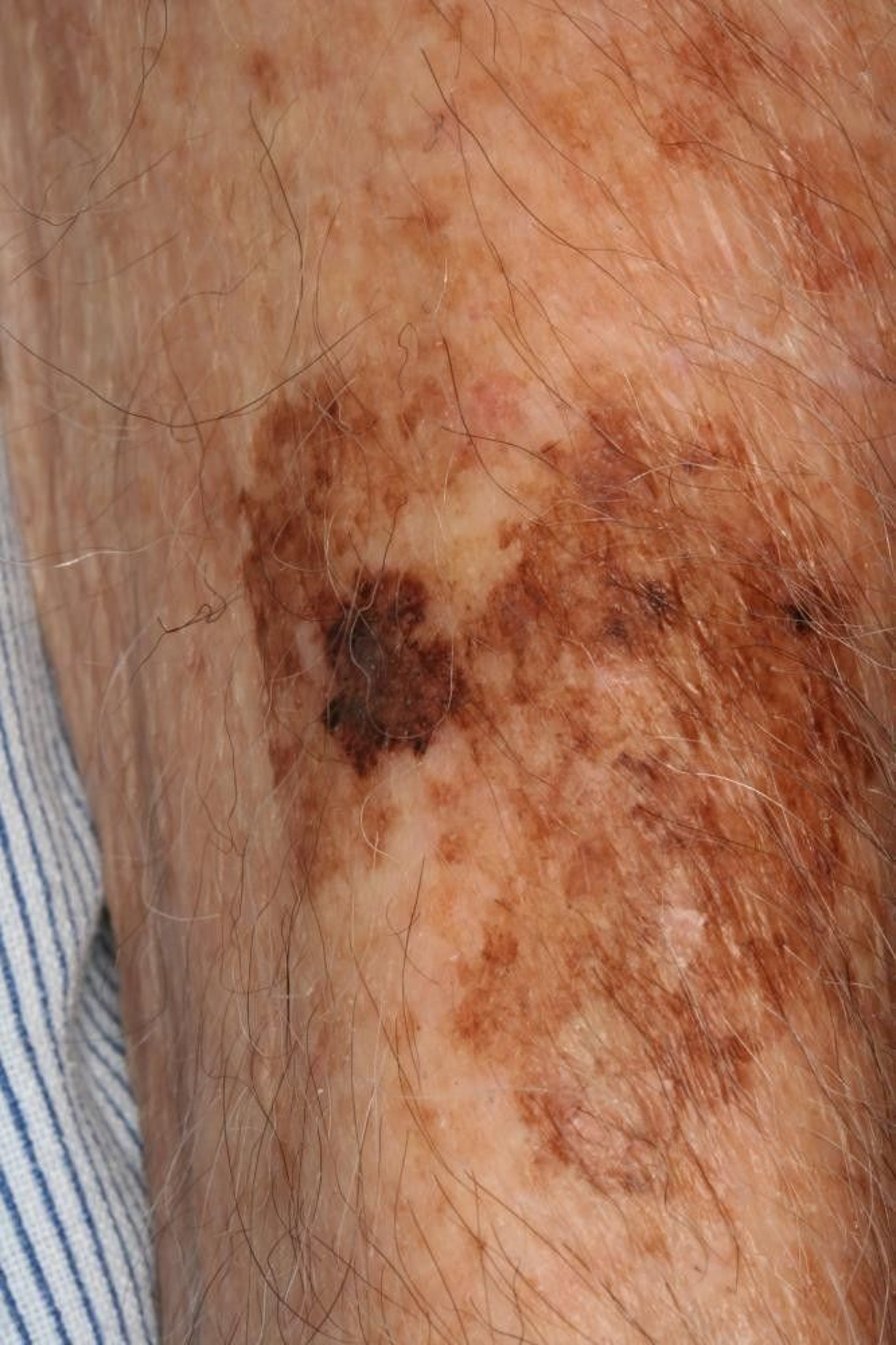
The lesion in this photo is a lentigo maligna melanoma. Characteristic features seen in this lesion are an irregularly shaped flat lesion (macule or patch) and brown or black spots (some darker) that are scattered irregularly.
Photo courtesy of Gregory L. Wells, MD.
Nodular melanoma
This type accounts for approximately 5% of melanomas (2). It may occur anywhere on the body as a dark, protuberant papule or a plaque that varies from pearl to gray to black. Occasionally, a lesion contains little if any pigment or may look like a vascular tumor.
Unless it ulcerates, nodular melanoma is typically asymptomatic. Patients may present because the lesion enlarges rapidly.

The protuberance of this lesion is characteristic of nodular melanoma, which usually appears gray to black.
Photo courtesy of Gregory L. Wells, MD.

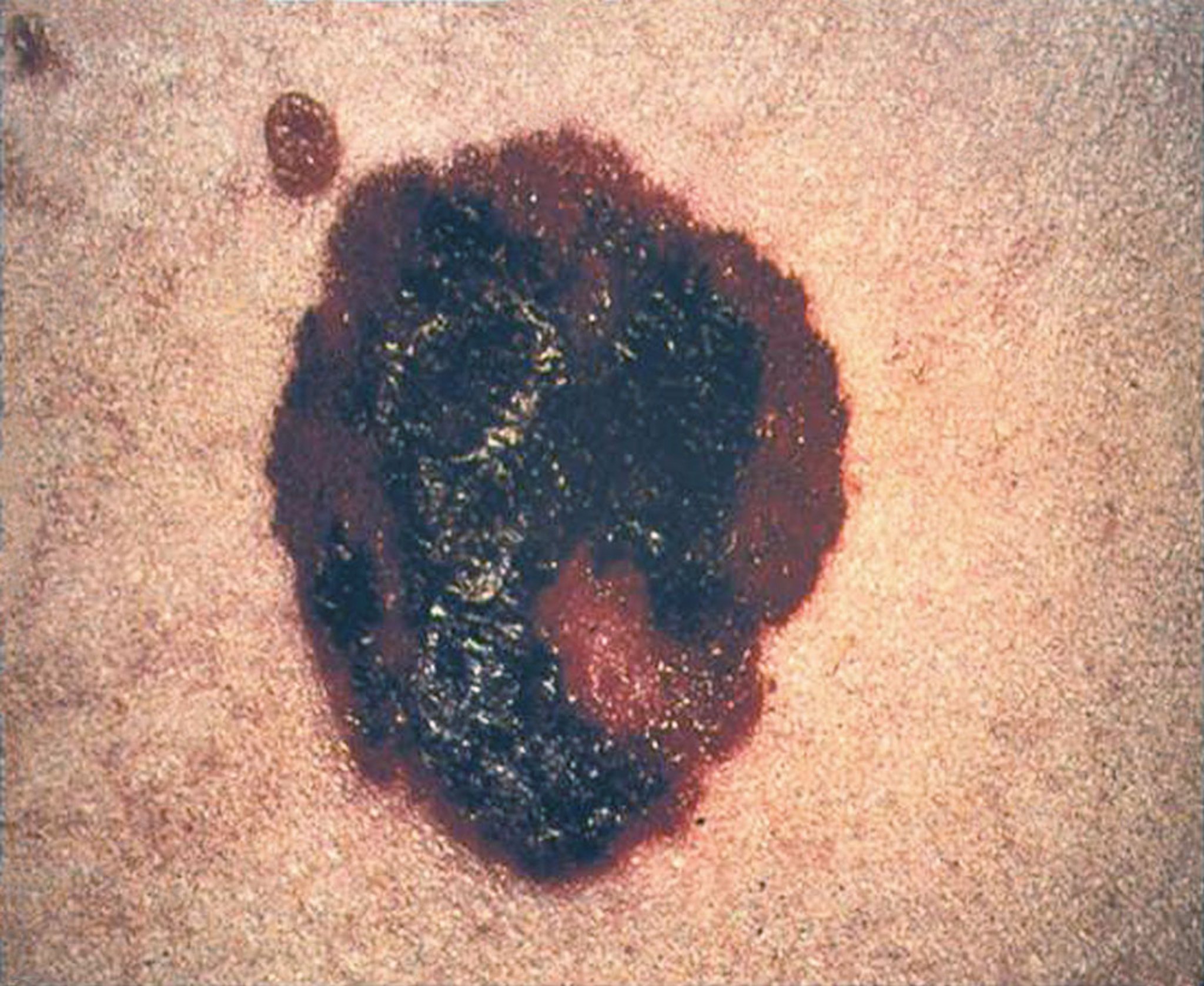
This photo shows the gross appearance of a pigmented nodular melanoma lesion. The lesion is characterized by dark, reddish brown to black discoloration; raised nodular texture; and amorphic, irregular borders.
CDC/ Carl Washington, M.D., Emory Univ. School of Medicine; Mona Saraiya, MD, MPH
Acral-lentiginous melanoma
This type accounts for only 1% of melanomas (2). Its incidence is similar across different skin pigmentations (3). However, people with dark skin infrequently develop melanoma overall. Thus, acral-lentiginous melanoma is the most common type among them.
Acral-lentiginous melanoma arises on palmar, plantar, and subungual skin and has a characteristic histologic picture similar to that of lentigo maligna melanoma.
This type of melanoma often has mutations in the C-kit gene.


This photo shows longitudinal pigmentation of the nail (melanonychia striata; blue arrow) and hyperpigmentation extending across the lunula to the proximal nail fold (Hutchinson sign; red arrow) of the middle finger. This patient was diagnosed with acral-lentiginous melanoma (a form of malignant melanoma) which often occurs on palmar, plantar, or subungual skin. (The dark area on the thumbnail is a subungual hematoma.)
CDC/ Carl Washington, M.D., Emory Univ. School of Medicine; Mona Saraiya, MD, MPH

This photo shows acral-lentiginous melanoma on the great toe. This melanoma occurs on palmar, plantar, or subungual skin.
Photo courtesy of Gregory L. Wells, MD.

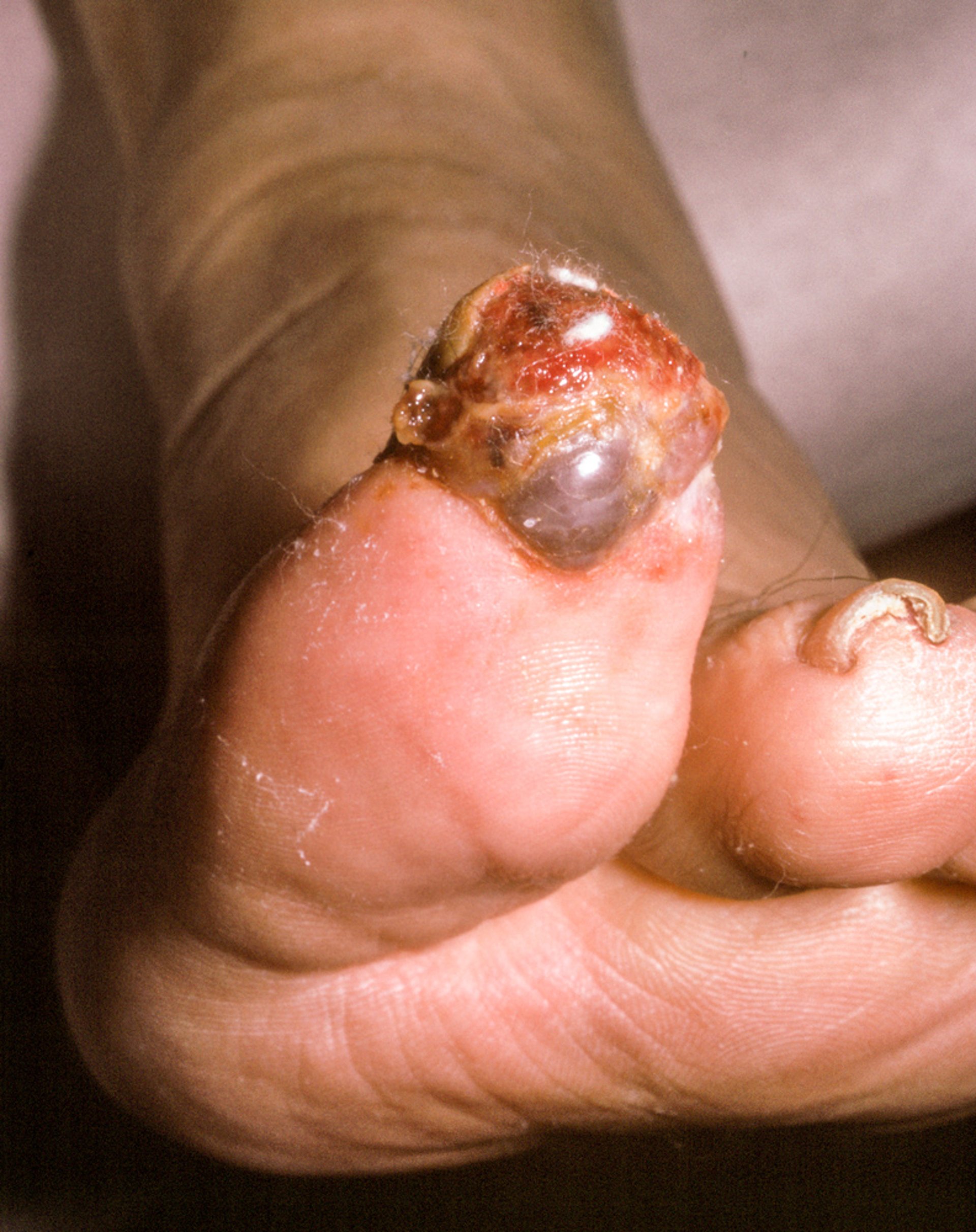
This photo shows a subungual melanoma manifesting as a large, variegated, exophytic, ulcerating nodule.
Photo courtesy of Karen McKoy, MD.
Amelanotic melanoma
Amelanotic melanoma is a rare type of melanoma that does not produce pigment. Any of the 4 main types can also be amelanotic. However, amelanotic melanoma is most often grouped with the minor categories of melanoma such as spitzoid melanoma, desmoplastic melanoma, neurotropic melanoma, and others.
Accounting for 2 to 8% of melanomas (2), amelanotic melanomas may be pink, red, or slightly light brown and may have well-defined borders. Their appearance may suggest benign lesions, or a form of nonmelanoma skin cancer, and thereby leads to delays in diagnosis and treatment, and possibly a worse prognosis.

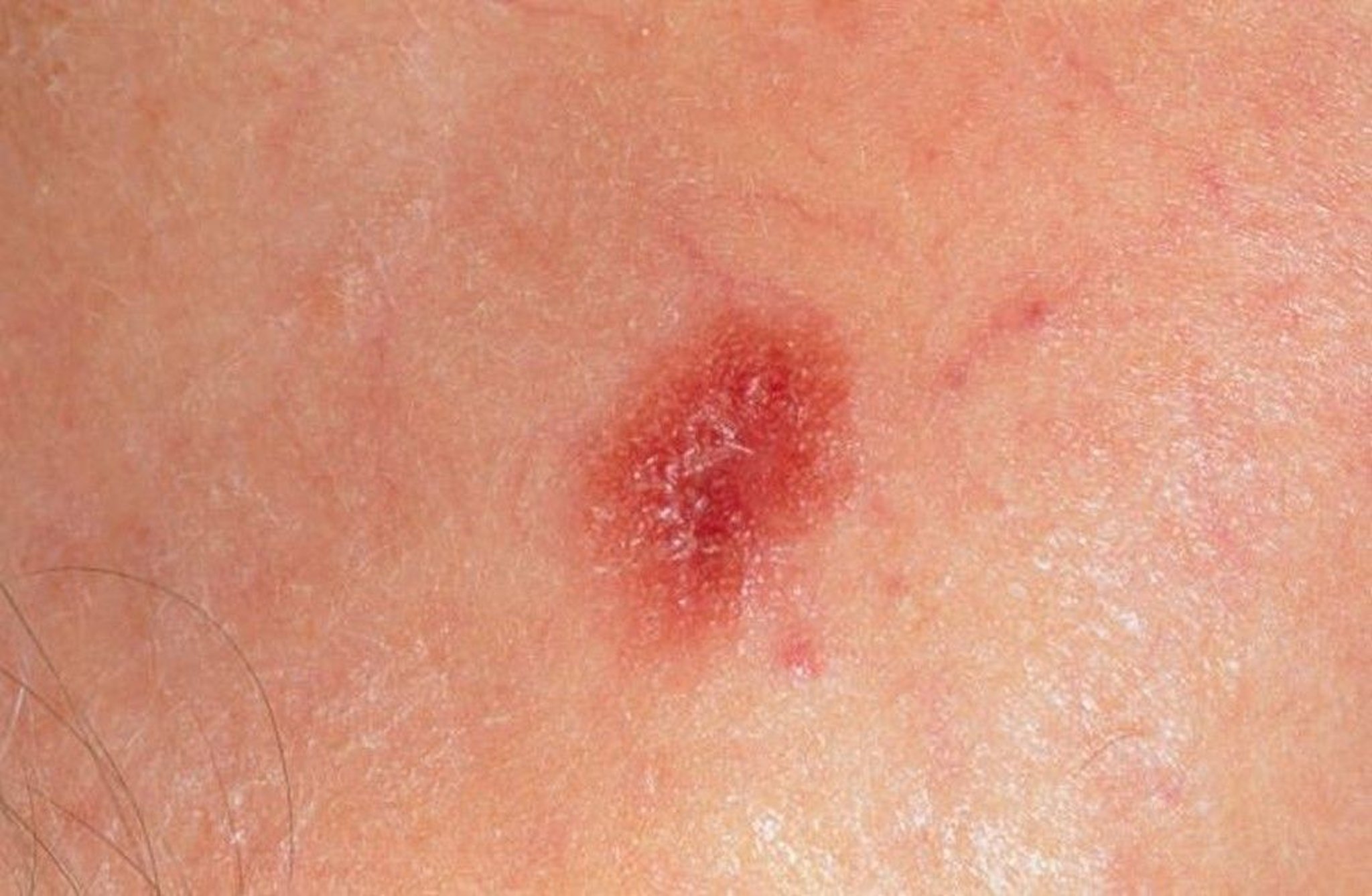
This melanoma is amelanotic.
DR P. MARAZZI/SCIENCE PHOTO LIBRARY
Classification references
1. WHO Classification of Tumours Editorial Board. Skin Tumours: WHO Classification of Tumours. 5th Edition. International Agency for Research on Cancer; 2025.
2. Joshi UM, Kashani-Sabet M, Kirkwood JM. Cutaneous Melanoma: A Review. JAMA. 2025 Aug 25. doi: 10.1001/jama.2025.13074. Epub ahead of print. PMID: 40853557.
3. Holman DM, King JB, White A, et al. Acral lentiginous melanoma incidence by sex, race, ethnicity, and stage in the United States, 2010-2019. Prev Med. 2023;175:107692. doi:10.1016/j.ypmed.2023.107692
Diagnosis of Melanoma
For diagnosis:
History and physical examination (ie, clinical suspicion)
Dermoscopy
Biopsy and histopathological examination
For staging:
Laboratory tests (eg, complete blood count, lactate dehydrogenase, liver tests)
Imaging (chest radiography, CT, and positron emission tomography [PET])

Copyright © 2025 Merck & Co., Inc., Rahway, NJ, USA and its affiliates. All rights reserved.
The diagnosis of melanoma is suspected when a clinically suspicious lesion is identified on history and physical examination (1). Clinical risk factors that increase the risk of melanoma should also be taken into consideration. A comprehensive, complete skin and lymph node examination is essential. The diagnosis is established by histopathologic examination of a skin biopsy from a clinically suspicious lesion, with excisional biopsy preferred when feasible (2).
Dermoscopy is a helpful tool for identifying atypical skin lesions. Polarized light and immersion contact dermoscopy may be useful for distinguishing melanomas from benign lesions. Dermoscopy allows a dermatologist to examine structures not typically visible to the naked eye. It can reveal certain high-risk characteristics suggestive of melanoma (eg, blue-white veil, irregular dots and globules, atypical pigment network, reverse network).
To confirm the diagnosis, a biopsy with histopathological examination is required. Biopsies should include the full depth of the dermis and extend slightly beyond the edges of the lesion. Because early diagnosis can be lifesaving and features of melanoma can be variable, even slightly suspect lesions should be biopsied. Early diagnosis of melanoma is possible if biopsy specimens can be obtained from lesions having variegated colors (eg, brown or black with shades of red, gray, or blue), irregular elevations that are visible or palpable, and borders with angular indentations or notches.
Biopsy should be excisional for most lesions except those on anatomically sensitive or cosmetically prominent areas; in these cases, a broad shave biopsy can be performed. For broader lesions such as lentigo maligna, representative shave biopsies from several areas can increase the diagnostic yield. By performing step sections, the pathologist can determine the maximal thickness of the melanoma. Definitive radical surgery should not precede histologic diagnosis.
Because of established prognostic significance and clinical utility in guiding staging and management decisions, the histopathological examination of melanoma should include the following atypical features in the report (1):
Breslow thickness (to the nearest 0.1 mm)
The presence or absence of ulceration
Dermal mitotic rate (number of mitoses per mm²)
Status of deep and peripheral margins (positive or negative, with specification of in situ or invasive melanoma)
Presence of microsatellitosis
Presence of pure desmoplasia
Lymphovascular (angiolymphatic) invasion
Neurotropism or perineural invasion
Genetic testing is recommended in selected cases to guide treatment decisions, and depends on the disease stage and clinical context. For example, somatic mutation testing (testing the tumor itself for acquired mutations) is recommended for patients with stage III disease at high risk for recurrence or stage IV melanoma to identify targetable alterations such as a V600 mutation in the BRAF gene. Germline genetic testing (testing for inherited mutations) should be considered for patients with features suggesting hereditary melanoma.
Differential diagnosis includes basal cell carcinomas and squamous cell carcinomas, seborrheic keratoses, atypical moles, blue nevi, dermatofibromas, moles, hematomas (especially on the hands or feet), venous lakes, pyogenic granulomas, and warts with focal thromboses.
Staging
The staging of melanoma is based on both clinical and pathologic criteria and closely corresponds to the traditional tumor-node-metastasis (TNM) classification system. The staging system classifies melanomas based on local, regional, or distant disease (3):
Stages I and II: Localized primary melanoma
Stage III: Metastasis to regional lymph nodes
Stage IV: Distant metastatic disease
Stage strongly correlates with survival. Sentinel lymph node biopsy (SLNB), a minimally invasive microstaging technique, is a major advance in the ability to stage cancers more accurately. Recommended staging studies depend on the Breslow depth (how deeply tumor cells have invaded) and histologic characteristics of the melanoma; ulceration indicates higher risk in melanomas that are < 0.8 mm Breslow depth (see table ).
Staging studies may include sentinel lymph node biopsy, laboratory tests (eg, complete blood count, lactate dehydrogenase, liver tests), chest radiograph, CT, and positron emission tomography (PET). When feasible (ie, in settings where such specialty support is available), these studies are performed by a coordinated team that includes dermatologists, oncologists, general surgeons, plastic surgeons, and dermatopathologists.
Staging of Localized Melanoma Based on Thickness and Ulceration
Stage | Thickness | Ulceration Status |
|---|---|---|
0 | Intraepithelial or in situ melanoma | Not applicable |
IA | < 0.8 mm | Without ulceration |
IB | < 0.8 mm | With ulceration |
0.8–1.0 mm | With or without ulceration | |
IIA | > 1.0–2.0 mm | Without ulceration |
IIB | > 1.0–2.0 mm | With ulceration |
IIIA | > 2.0–4.0 mm | Without ulceration |
IIIB | > 2.0–4.0 mm | With ulceration |
IVA | > 4.0 mm | Without ulceration |
IVB | > 4.0 mm | With ulceration |
Data from Keung EZ, Gershenwald JE: The eighth edition American Joint Committee on Cancer (AJCC) melanoma staging system: implications for melanoma treatment and care. Expert Rev Anticancer Ther 18(8):775-784, 2018. doi: 10.1080/14737140.2018.1489246 | ||
Diagnosis references
1. Swetter SM, Tsao H, Bichakjian CK, et al. Guidelines of care for the management of primary cutaneous melanoma. J Am Acad Dermatol. 2019 Jan;80(1):208-250. doi: 10.1016/j.jaad.2018.08.055. Epub 2018 Nov 1. PMID: 30392755.
2. National Comprehensive Cancer Center. NCCN Clinical Practice Guidelines in Oncology (NCCN Guidelines). Melanoma: Cutaneous, version 2.2025. https://www.nccn.org/professionals/physician_gls/pdf/cutaneous_melanoma.pdf. Accessed November 13, 2025.
3. Keung EZ, Gershenwald JE. The eighth edition American Joint Committee on Cancer (AJCC) melanoma staging system: implications for melanoma treatment and care. Expert Rev Anticancer Ther 18(8):775-784, 2018. doi: 10.1080/14737140.2018.1489246
Treatment of Melanoma
Surgical excision
Possibly adjuvant radiation therapy, imiquimod, or cryotherapy
For metastatic or unresectable melanoma, immunotherapy (eg, pembrolizumab, nivolumab, ipilimumab), targeted therapy (eg, vemurafenib, dabrafenib, encorafenib), and radiation therapy
The treatment of melanoma is primarily by surgical excision (wide local excision) (1). Although the width of margins is debated, most experts agree that a 1-cm lateral tumor-free margin is adequate for lesions < 0.8 mm thick. In tumors < 0.8 mm thick but with ulceration, sentinel lymph node biopsy can be considered. Thicker lesions may warrant larger margins, more radical surgery, and sentinel lymph node biopsy.
Lentigo maligna melanoma and lentigo maligna are usually treated with wide local excision and, if necessary, skin grafting. Intensive radiation therapy is much less effective.
The ideal treatment of melanoma in situ is surgical excision. Sometimes this can be accomplished with staged excisions or Mohs micrographic surgery, in which tissue borders are progressively excised until specimens are tumor-free (as determined by microscopic examination during surgery). If patients decline or are not candidates for surgical therapy (eg, because of comorbidities or involvement of cosmetically important areas), imiquimod and cryotherapy can be considered. Most other treatment methods usually do not penetrate deeply enough into involved follicles, which must be removed.
Spreading or nodular melanomas have usually been treated with wide local excision. Lymph node dissection is recommended when nodes are involved clinically or on histologic evaluation of sentinel lymph node biopsy.
Sentinel lymph node biopsies are recommended for:
Intermediate thickness-melanoma with Breslow depth 1.0–4.0 mm (stages II-III) without clinically positive nodes
Thicker melanoma > 4.0 mm (stage IV), because nodal status may have clinical utility
Sentinel lymph node biopsies may be considered based on shared clinical-decision making with patients for thin melanomas with higher-risk features, including for
Breslow depth 0.8–1.0 mm (stage Ib) or thickness <0.8 mm with ulceration or high mitotic rate
In younger patients or those without major comorbidities.
Metastatic disease
Treatment of metastatic melanoma typically includes:
Immunotherapy
Molecular targeted therapy
Radiation therapy
Rarely surgical resection
All of these treatments should be considered for all patients who have metastatic melanoma (2). Final decisions are generally individualized by an oncologist and may depend on disease characteristics, molecular profile (especially BRAF mutation status), patient factors, and logistical considerations (eg, insurance coverage, availability, and cost). Metastatic disease is generally inoperable, but in certain cases, localized and regional metastases can be excised to help eliminate residual disease and prolong survival.
Immunotherapy is typically recommended as a first-line therapy for patients with metastatic melanoma, regardless of molecular profile (ie, mutation status). The three main types of immune checkpoint inhibitors used to treat metastatic melanoma are (3):
Anti-PD-1 agents (eg, pembrolizumab, nivolumab)
Anti-CTLA-4 agents (ipilimumab)
Anti-LAG-3 agents (relatlimab, used in combination with nivolumab)
These agents work by blocking different immune checkpoint receptors that normally inhibit T-cell activation and have been shown to lengthen overall survival (3). Anti-PD-1 agents enhance T-cell effector responses against melanoma cells. Monoclonal antibodies to cytotoxic T lymphocyte–associated antigen 4 (CTLA-4) work by preventing anergy of T cells, thus freeing the immune system to attack tumor cells. Anti-LAG-3 agents work by blocking LAG-3 receptors on T cells, thereby preventing receptor-ligand interactions and restoring effector T-cell function against melanoma cells.
Options for immunotherapy typically include a PD-1 inhibitor alone (eg, pembrolizumab or nivolumab), a PD-1 inhibitor in combination with a CTLA-4 inhibitor (nivolumab plus ipilimumab), or a PD-1 inhibitor in combination with a LAG-3 inhibitor (nivolumab plus relatlimab). The combination PD-1 and CTLA-4 inhibitor (nivolumab/ipilimumab) is typically preferred, but a combination PD-1 and LAG-3 inhibitor (nivolumab/relatlimab) is also available as an alternative. The combination of nivolumab and relatlimab has demonstrated improved progression-free survival compared with nivolumab monotherapy and is associated with a more favorable toxicity profile than nivolumab plus ipilimumab (4). Pre-surgical administration (neoadjuvant therapy) of PD-1 inhibitors are recommended in selected patients with melanoma based on a lowered risk of recurrence and improved event-free survival after surgery (5, 6).
Molecular targeted therapy may be preferred over immunotherapy for patients with symptomatic or rapidly progressive disease, particularly for patients with a BRAF mutation, due to faster response times. The standard approach typically includes a combination of BRAF and mitogen-activated protein kinase (MEK) inhibitor therapy. BRAF inhibitors include vemurafenib, dabrafenib, and encorafenib, which function by inhibiting activity of BRAF (a protein kinase), resulting in slowing or stopping of tumor cell proliferation. These medications have lengthened survival in patients with metastases. The addition of MEK inhibitor enzymes MEK1 and MEK2 (via trametinib, cobimetinib, and binimetinib) lengthens survival even more, with comparable or superior tolerability. Combination BRAF and MEK inhibitors (eg, dabrafenib/trametinib, encorafenib/binimetinib, vemurafenib/cobimetinib) are also available for patients who are ineligible for traditional immunotherapy (7, 8, 9).
Cytotoxic chemotherapy has not been shown to significantly improve survival in patients with metastatic disease and is normally reserved for patients who do not have other options (10).
Novel approaches include the use of treatments that contain an oncolytic herpesvirus that is injected intralesionally into tumors. One such therapy is T-VEC (talimogene laherparepvec), a well-tolerated agent that increases survival, and may be considered for unresectable metastatic melanoma (11).
Radiation therapy may be used when positive resection margins are not possible because of the location (eg, in desmoplastic melanoma, in locally recurrent melanoma after re-excision, and in palliate brain metastases), but the response is poor (12, 13).
The following are under study:
Infusion of lymphokine-activated killer cells or antibodies (for advanced-stage disease)
Treatment references
1. Swetter SM, Tsao H, Bichakjian CK, et al. Guidelines of care for the management of primary cutaneous melanoma. J Am Acad Dermatol. 2019 Jan;80(1):208-250. doi: 10.1016/j.jaad.2018.08.055. Epub 2018 Nov 1. PMID: 30392755.
2. Seth R, Agarwala SS, Messersmith H, Alluri KC, et al. Systemic Therapy for Melanoma: ASCO Guideline Update. J Clin Oncol. 2023 Oct 20;41(30):4794-4820. doi: 10.1200/JCO.23.01136. Epub 2023 Aug 14. PMID: 37579248.
3. Mehta A, Motavaf M, Nebo I, et al. Advancements in Melanoma Treatment: A Review of PD-1 Inhibitors, T-VEC, mRNA Vaccines, and Tumor-Infiltrating Lymphocyte Therapy in an Evolving Landscape of Immunotherapy. J Clin Med. 2025;14(4):1200. Published 2025 Feb 12. doi:10.3390/jcm14041200
4. Lipson EJ, Stephen Hodi F, Tawbi H, et al. Nivolumab plus relatlimab in advanced melanoma: RELATIVITY-047 4-year update. Eur J Cancer. 2025 Jul 25;225:115547. doi: 10.1016/j.ejca.2025.115547. Epub 2025 Jun 3. PMID: 40513285.
5. Patel SP, Othus M, Chen Y, et al. Neoadjuvant-Adjuvant or Adjuvant-Only Pembrolizumab in Advanced Melanoma. N Engl J Med.2023;388(9):813-823. doi:10.1056/NEJMoa2211437
6. Blank CU, Lucas MW, Scolyer RA, et al. Neoadjuvant Nivolumab and Ipilimumab in Resectable Stage III Melanoma. N Engl J Med. 2024 Nov 7;391(18):1696-1708. doi: 10.1056/NEJMoa2402604. Epub 2024 Jun 2. PMID: 38828984.
7. Long GV, Flaherty KT, Stroyakovskiy D, et al. Dabrafenib plus trametinib versus dabrafenib monotherapy in patients with metastatic BRAF V600E/K-mutant melanoma: Long-term survival and safety analysis of a phase 3 study. Ann Oncol 28(7):1631–1639, 2017. doi: 10.1093/annonc/mdx176. Clarification and additional information. Ann Oncol 30(11):1848, 2019.
8. Long GV, Stroyakovskiy D, Gogas H, et al. Dabrafenib and trametinib versus dabrafenib and placebo for Val600 BRAF-mutant melanoma: A multicentre, double-blind, phase 3 randomised controlled trial. Lancet 386(9992):444–451, 2015. doi: 10.1016/S0140-6736(15)60898-4
9. Long GV, Stroyakovskiy D, Gogas H, et al. Combined BRAF and MEK inhibition versus BRAF inhibition alone in melanoma. N Engl J Med 371(20):1877–1888, 2014. doi: 10.1056/NEJMoa1406037
10. Pasquali S, Hadjinicolaou AV, Chiarion Sileni V, et al. Systemic treatments for metastatic cutaneous melanoma. Cochrane Database Syst Rev. 2018;2(2):CD011123. Published 2018 Feb 6. doi:10.1002/14651858.CD011123.pub2
11. Andtbacka RH, Kaufman HL, Collichio F, et al. Talimogene Laherparepvec Improves Durable Response Rate in Patients With Advanced Melanoma. J Clin Oncol. 2015 Sep 1;33(25):2780-8. doi: 10.1200/JCO.2014.58.3377. Epub 2015 May 26. PMID: 26014293.
12. Mendenhall WM, Shaw C, Amdur RJ, et al. Surgery and adjuvant radiotherapy for cutaneous melanoma considered high-risk for local-regional recurrence. Am J Otolaryngol 34(4):320–322, 2013. doi: 10.1016/j.amjoto.2012.12.014
13. Rule WG, Allred JB, Pockaj BA, et al. Results of NCCTG N0275 (Alliance): A phase II trial evaluating resection followed by adjuvant radiation therapy for patients with desmoplastic melanoma. Cancer Med 5(8):1890–1896, 2016. doi: 10.1002/cam4.783
14. Pail O, Lin MJ, Anagnostou T, et al. Cancer vaccines and the future of immunotherapy. Lancet. 2025 Jul 12;406(10499):189-202. doi: 10.1016/S0140-6736(25)00553-7. Epub 2025 Jun 18. PMID: 40541217.
Prognosis for Melanoma
Melanoma may spread rapidly, causing death within months of its recognition. Significant advances have been made in the treatment of melanoma, which have led to improvements in progression-free 5-year survival. The prognosis of melanoma is in general highly dependent on the stage at diagnosis. The 5-year cure rate of early, very superficial lesions is very high. Thus, complete cure depends on early diagnosis and early treatment. In the United States, the 5-year survival rates range from 99.6% for localized melanomas to 73.9% with regional spread and 35.1% with distant metastases (1). The overall 5-year relative survival is 94.7%.
For tumors of cutaneous origin (not central nervous system and subungual melanomas) that have not metastasized, the survival rate varies depending on the thickness of the tumor at the time of diagnosis.
Mucosal melanomas (especially anorectal melanomas) have a poor prognosis, although they often seem quite limited when discovered. They account for a higher proportion of melanomas in Black, Hispanic, and Asian people compared with White people.
Degree of lymphocytic infiltration, which represents reaction by the patient’s immunologic defense system, may correlate with the level of invasion and prognosis. Chances of cure are maximal when lymphocytic infiltration is limited to the most superficial lesions and decrease with deeper levels of tumor cell invasion, ulceration, and vascular or lymphatic invasion.
Prognosis reference
1. National Institutes of Health. Cancer Stat Facts: Melanoma of the Skin. Accessed October 28, 2025.
Prevention of Melanoma
Because melanoma is associated with ultraviolet (UV) radiation exposure, a number of measures are recommended to limit exposure (eg, sun avoidance measures, use of protective clothing, use of sunscreen). For more detailed information, see Prevention of Effects of Sun Exposure.
Key Points
Melanoma accounts for < 2% of total skin cancers diagnosed in the United States but causes most skin cancer deaths.
Melanoma can develop in the skin, mucosa, conjunctiva, choroid layer of the eye, leptomeninges, and nail beds.
Although melanoma can develop from a typical or atypical mole, most do not.
Physicians (and patients) should monitor moles for changes in size, shape, borders, color, or surface characteristics and for bleeding, ulceration, itching, and tenderness.
Biopsy even slightly suspect lesions.
Excise melanomas whenever feasible, particularly when melanomas have not metastasized.
Consider immunotherapy (eg, pembrolizumab, nivolumab), molecular targeted therapies (eg, MEK inhibitors, BRAF inhibitors), and radiation therapy if melanoma is unresectable or metastatic.
More Information
The following English-language resource may be useful. Please note that The Manual is not responsible for the content of this resource.
American Cancer Society: Cancer Facts & Figures 2025
Drug Information for the Topic