Lipomas are soft, movable, subcutaneous nodules of adipocytes (fat cells); the overlying skin appears normal.

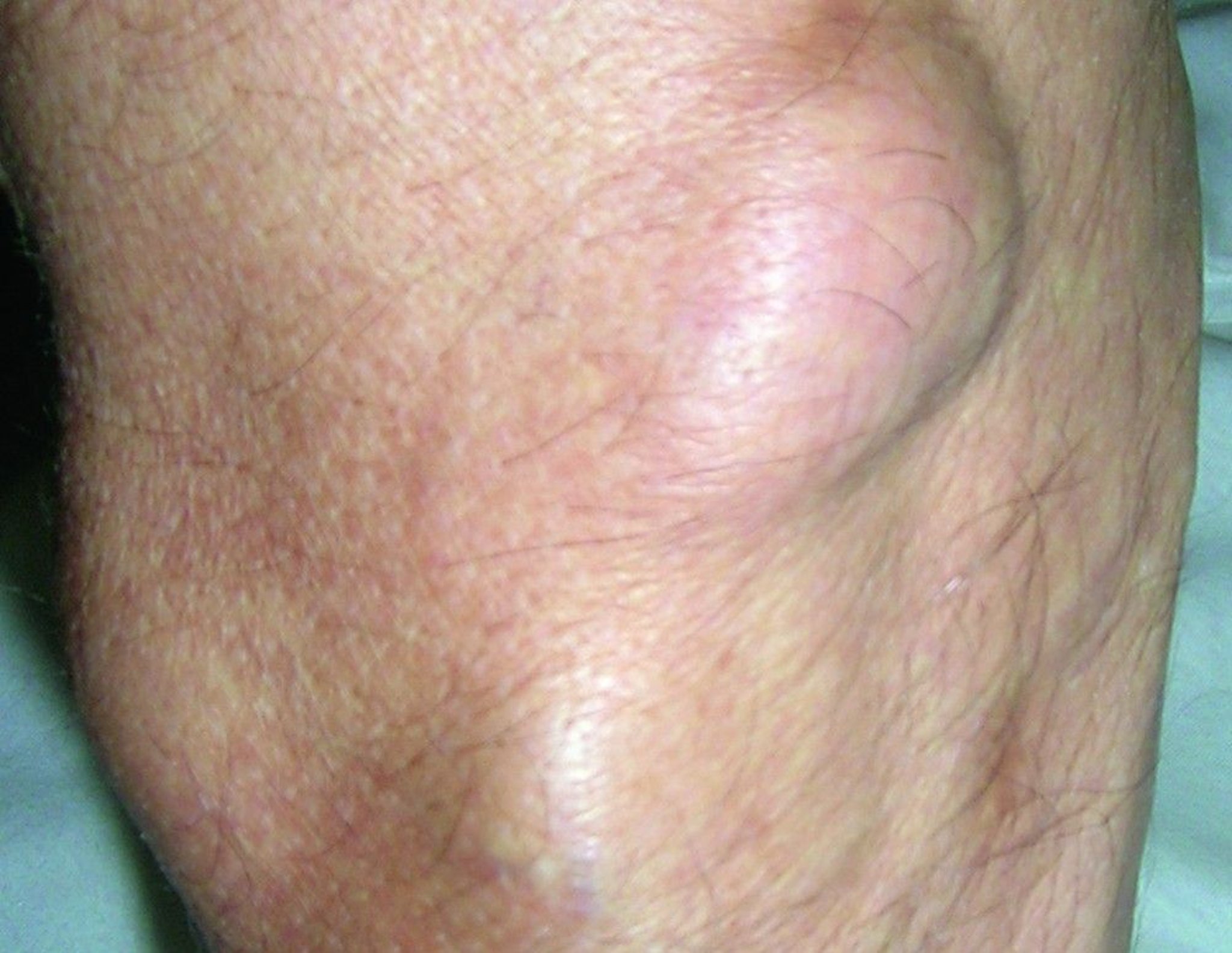
This photo shows a lipoma on the extremity.
© Springer Science+Business Media
Lipomas are very common, benign, and usually solitary, but some patients may have multiple lipomas. Common sites are the proximal extremities, trunk, and neck. Multiple lipomas can be familial and/or associated with various syndromes (eg, genetic disorders). Lipomas are typically benign tumors and malignant transformation is exceedingly rare. The primary clinical concern is distinguishing lipomas from liposarcomas, which are malignant tumors with a different management. There are also several clinical variant forms of lipoma, including angiolipomas, pleomorphic lipomas, spindle cell lipomas, and adenolipomas (1).

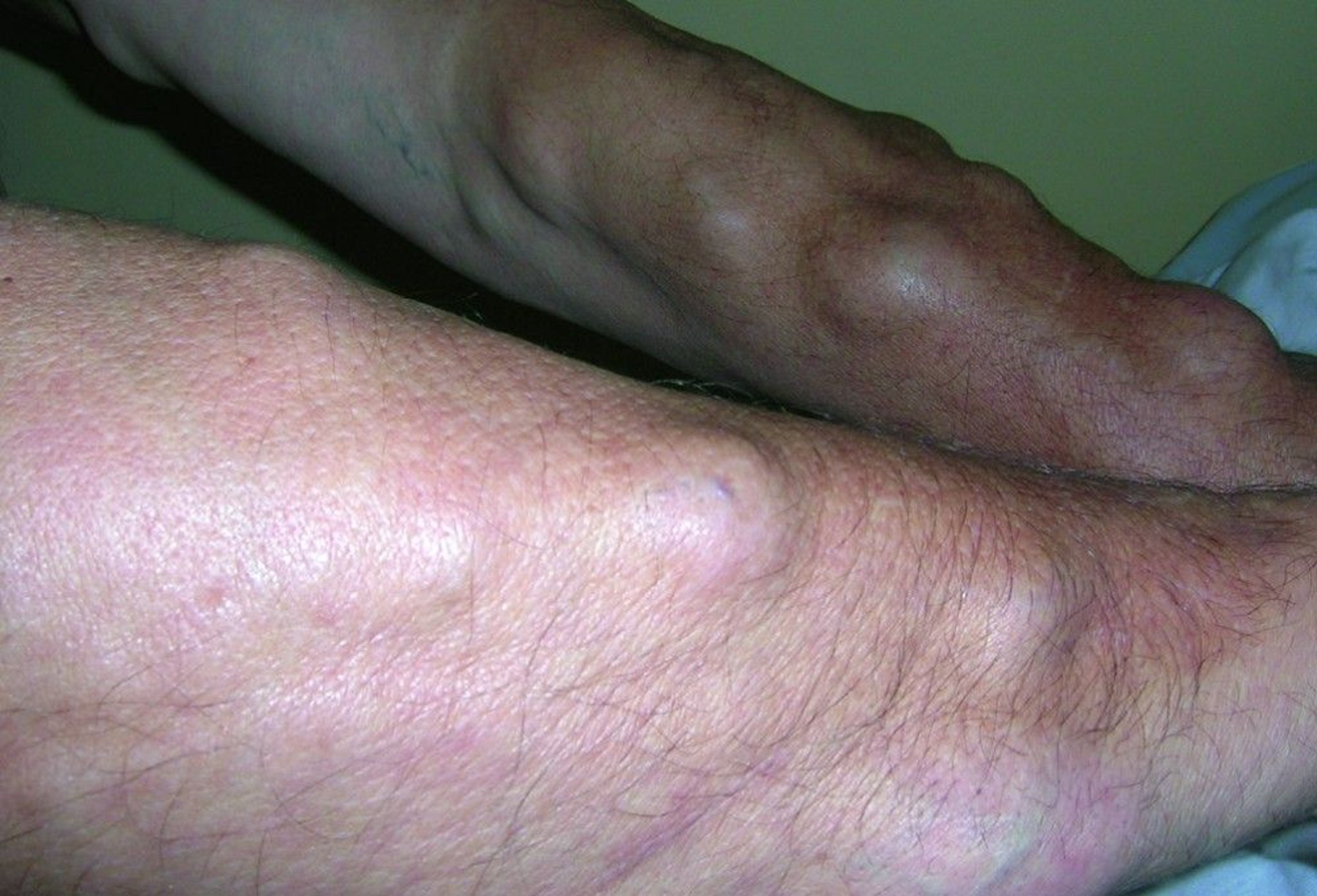
This picture shows multiple lipomas on the arms of an adult patient.
© Springer Science+Business Media
Lipomas are usually asymptomatic but can be tender or painful. A lipoma is usually easily movable within the subcutis and soft.
Reference
1. Salam GA. Lipoma excision. Am Fam Physician. 2002;65(5):901-904.
Diagnosis of Lipomas
Primarily history and physical examination
Rarely biopsy
Diagnosis of lipomas is usually clinical, but a rapidly growing lesion should be biopsied or excised to exclude liposarcoma or other entities.
Treatment of Lipomas
Excision if bothersome
Treatment is not usually required. However, the standard of care for symptomatic or bothersome lipomas is complete surgical excision, which is curative and associated with a low recurrence rate.