This photo shows a patient with bilateral perioral dermatitis in the fissures surrounding the oral cavity, manifesting as erythematous macules and few papules.
agenturfotografin/stock.adobe.com

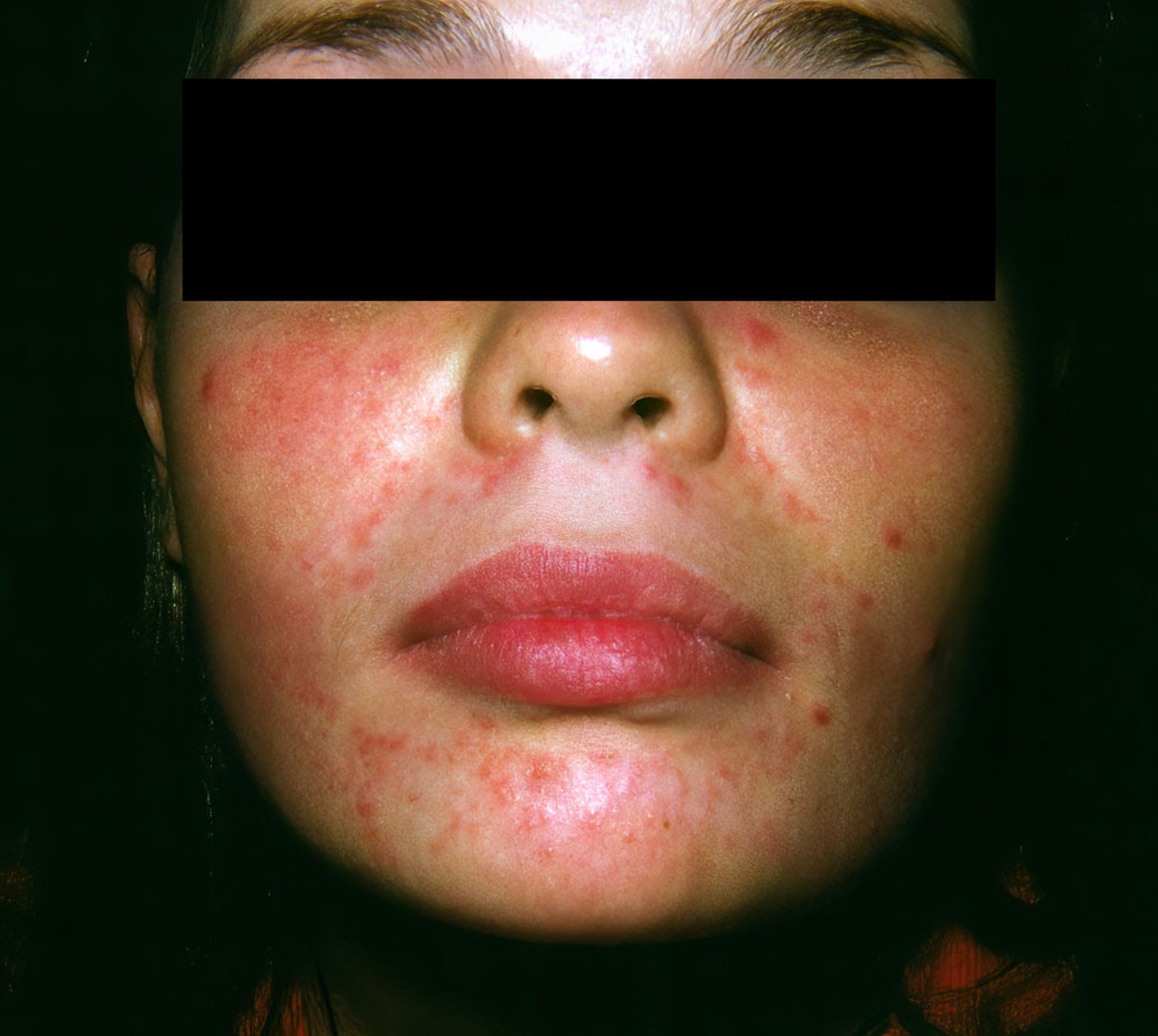
This patient has erythematous papules and some pustules with a perioral and also malar distribution, findings characteristic of perioral dermatitis.
Photo courtesy of Karen McKoy, MD.
Perioral dermatitis (also known as periorificial dermatitis) is a common chronic papulopustular facial dermatitis. The prevalence has been estimated to be < 0.4%, with a significant female predominance (1, 2).
The etiology of perioral dermatitis is poorly characterized. Its development has been associated with a variety of exogenous factors, most notably, glucocorticoid exposure via many routes of administration (topical, intranasal, or systemic), fluoride exposure in water and toothpaste, occlusive emollient use, and environmental triggers (eg, UV light, wind, heat) (1). Proposed endogenous hormonal factors include pregnancy, contraception, and menstrual cycles. These factors lead to skin barrier dysfunction and localized inflammation.
Despite its name, perioral dermatitis is not a true dermatitis. It primarily affects female patients of childbearing age and children.
The eruption classically starts at the nasolabial folds and spreads periorally, characteristically sparing a zone (Grenz zone) around the vermilion border of the lips (3). However, the eruption can also spread periorbitally and to the forehead.
General references
1. Acevedo-Fontanez LA, Sánchez-Feliciano A, Ershadi S, et al. Periorificial dermatitis: Pathophysiology, diagnosis, and management. J Am Acad Dermatol. 2026;94(5):1483-1492. doi:10.1016/j.jaad.2025.10.138
2. Thang CJ, Garate D, Lai J, et al. Incidence and prevalence of perioral dermatitis in the United States: A retrospective cohort study using TriNetX. J Am Acad Dermatol. 2026;94(2):606-608. doi:10.1016/j.jaad.2025.09.096
3. Chiriac A, Chiriac AE, Madke B, et al. Periorificial dermatitis in infants and preschoolers - a narrative review. Eur J Pediatr. 2025;184(2):143. Published 2025 Jan 17. doi:10.1007/s00431-025-05975-3
Diagnosis of Perioral Dermatitis
Primarily history and physical examination
Rarely, biopsy
Diagnosis of perioral dermatitis is primarily based on physical examination; perioral dermatitis is distinguished from acne by the absence of comedones and from rosacea by the latter’s lack of lesions around the mouth and eyes. Seborrheic dermatitis and contact dermatitis must be excluded.
Biopsy, which is generally not clinically necessary, shows spongiosis and a lymphohistiocytic infiltrate affecting vellus hair follicles. In the lupoid variant, granulomas may be present.
Treatment of Perioral Dermatitis
Avoidance of fluorinated dental products and topical glucocorticoids
Topical or sometimes oral antibiotics,
Topical calcineurin inhibitors
The treatment of perioral dermatitis should begin with identification and avoidance of any exogenous triggers (eg, discontinuing the use of fluorinated dental products and topical glucocorticoids (if being used) (1, 2). Topical antibiotics (eg, erythromycin 2% or metronidazole 0.75% gel or cream 2 times a day) are helpful. If there is no response, oral tetracyclines (eg, doxycycline or minocycline 50 to 100 mg 2 times a day, tetracycline itself 250 to 500 mg 2 times a day (between meals) may be given for 4 weeks and then tapered to the lowest effective dose. Tetracycline cannot be taken with food and may have lower efficacy than doxycycline and minocycline.
In contrast to acne, antibiotics can usually be stopped. Topical pimecrolimus (for patients > age 2 years) also reduces disease severity. Isotretinoin has been successfully used to treat granulomatous perioral dermatitis.
Treatment references
1. Acevedo-Fontanez LA, Sánchez-Feliciano A, Ershadi S, et al. Periorificial dermatitis: Pathophysiology, diagnosis, and management. J Am Acad Dermatol. 2026;94(5):1483-1492. doi:10.1016/j.jaad.2025.10.138
2. Gray NA, Tod B, Rohwer A, et al. Pharmacological interventions for periorificial (perioral) dermatitis in children and adults: a systematic review. J Eur Acad Dermatol Venereol. 2022;36(3):380-390. doi:10.1111/jdv.17817
Drug Information for the Topic