Evaluation for a kidney or urinary tract disorder begins with a medical history and physical examination. Doctors sometimes need to do tests or procedures to diagnose a kidney or urinary tract disorder.
History
A doctor obtains a medical history by interviewing a person. The interview includes questions about a person's symptoms, past medical history (what disorders the person has had), medications (prescribed and over-the-counter), drugs and substances (recreational [including alcohol and tobacco] and illicit), allergies, and disorders that run in the family. Typically, people with a possible disorder affecting the kidneys or urinary tract are asked about the following:
The amount, frequency, and timing of urination
Whether urination is painful or burns
Whether there is blood in the urine
Whether urine leakage occurs (urinary incontinence)
Whether starting the urinary stream is difficult
Whether it feels like the bladder does not empty completely
Whether they have had previous urinary tract infections, medical procedures involving the urinary tract, or surgery
Whether they have pain in the flank, side, lower back, or abdomen, or near the genitals (such as the groin or labia)
The diet and timing and type of food and fluid intake (sometimes)
For example, because some foods and medications may change the urine's color, doctors may ask about the person's diet. Some foods, such as beets, rhubarb, and sometimes food coloring, may make urine appear red. Some medications, most commonly phenazopyridine, but sometimes cascara sagrada, phenytoin, rifampin, methyldopa, phenindione, phenolphthalein, phenothiazines, and senna may make urine appear dark yellow to orange or red.For example, because some foods and medications may change the urine's color, doctors may ask about the person's diet. Some foods, such as beets, rhubarb, and sometimes food coloring, may make urine appear red. Some medications, most commonly phenazopyridine, but sometimes cascara sagrada, phenytoin, rifampin, methyldopa, phenindione, phenolphthalein, phenothiazines, and senna may make urine appear dark yellow to orange or red.
Similarly, some foods such as asparagus, garlic, and onions can cause urine odors, as can medications such as sulfa drugs, some diabetes medications, and B vitamins.
There are several medical conditions that can change the color and smell of urine, including diabetes, liver disease, urinary tract and sexually transmitted infections, and some metabolic diseases.
A person who is waking up often during the night to urinate may be asked about the amount, type, and timing of liquids drunk.
Organs of the Urinary Tract
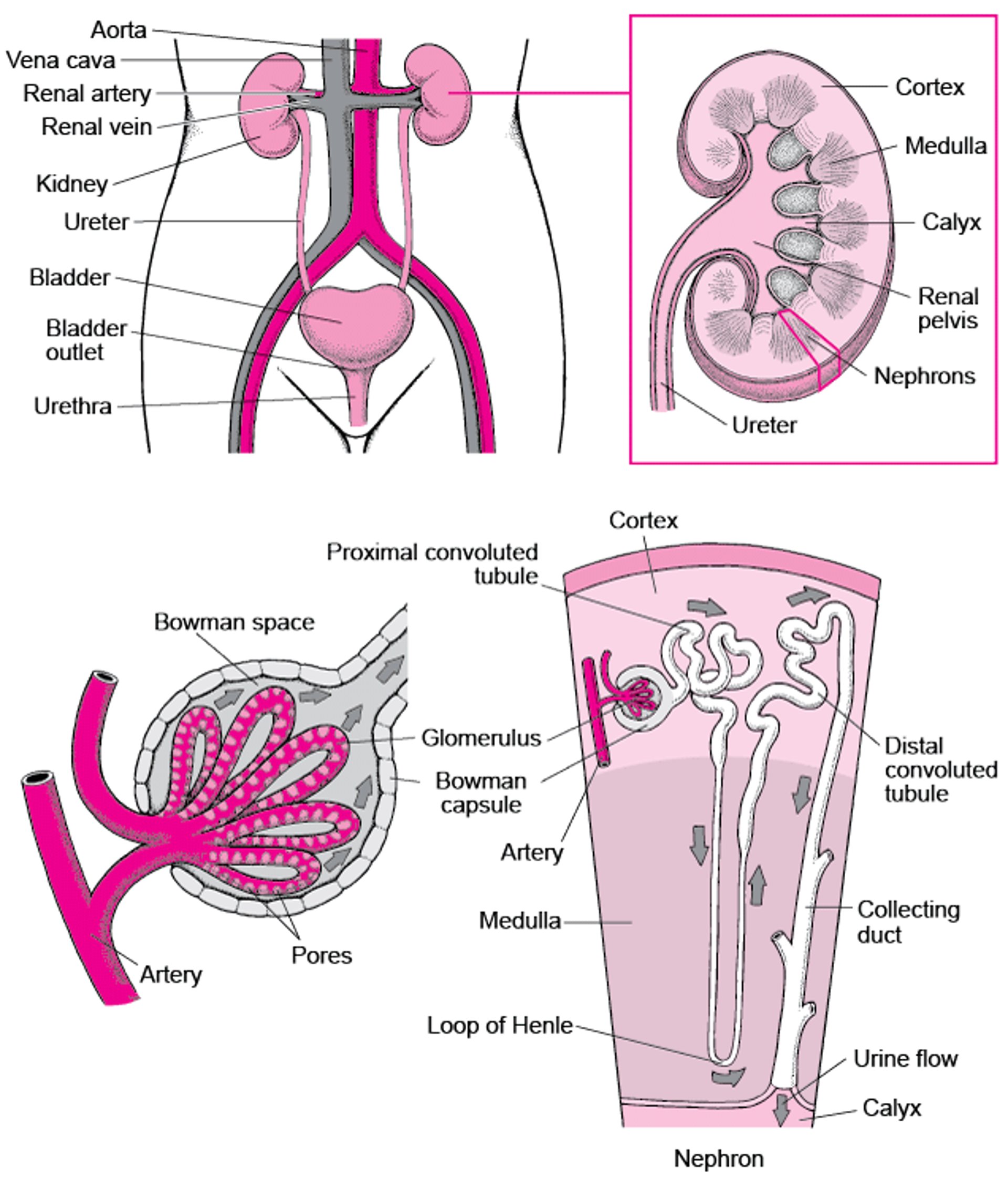
The urinary tract consists of the kidneys, ureters (tubes that carry urine from the kidneys to the bladder), bladder, and urethra (the tube through which urine flows out of the body). These organs may be injured by blunt force (as occurs in a motor vehicle crash or a fall) or by penetrating force (as results from a gunshot or stabbing). Injuries may also occur unintentionally during surgery. |

Physical Examination
Doctors then examine the person. They may try to feel the kidneys. The kidneys usually cannot be felt in normal adults and children, except sometimes in very thin people. Kidneys can be felt in normal newborns. Doctors may apply gentle pressure to the person's side or lower back (flank). Pain that occurs during this maneuver may suggest a problem with a kidney (such as swelling or infection). If a person has difficulty urinating and pressure in the lower abdomen, doctors may put a finger on the lower abdomen and tap on it. If the sound made by the tap is unusually dull, the bladder may be swollen (distended).


In men, doctors may examine the genitals, including the testes, to ensure the testes are not swollen, tender, or abnormally placed. Doctors may then do a rectal examination to determine whether the prostate gland is swollen. An enlarged prostate may inhibit the flow of urine.

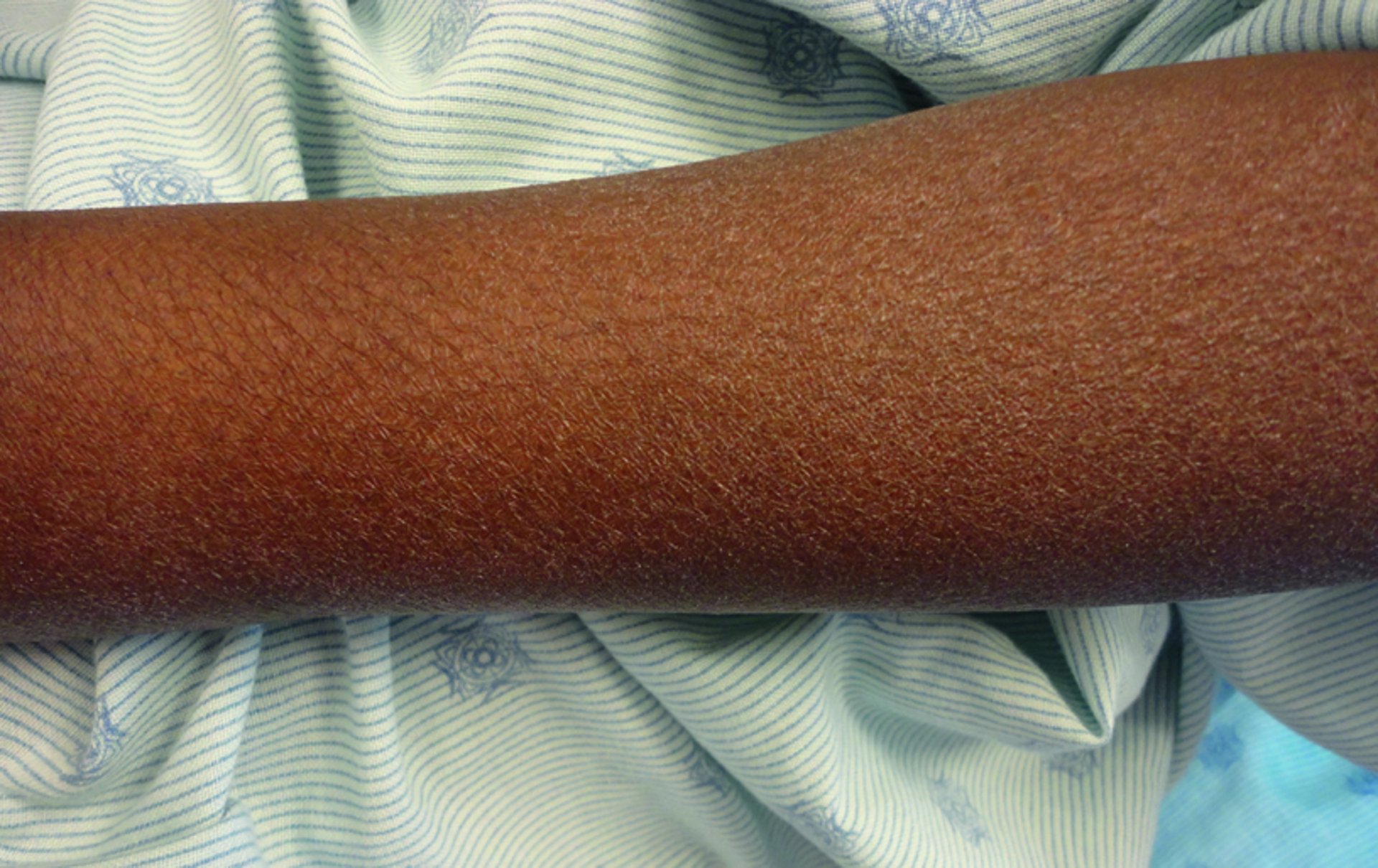
The skin is very rough and dry.
© Springer Science+Business Media
In women, doctors may do a pelvic examination to determine whether inflammation or irritation of the vaginal lining (vaginitis) or the genital organs are contributing to urinary tract symptoms.
Doctors may also examine the person's skin for changes related to kidney disease such as severe dryness, paleness, scratches due to itching, and abnormalities in the nails. They may listen to the heart and lungs with a stethoscope to detect unusual heart and lung sounds that may indicate the effects of a kidney disorder on those organs. If doctors suspect chronic kidney disease, they check to ensure the person is not drowsy or confused.
Testing
After doctors complete the physical examination, they often need to examine a sample of urine. If doctors suspect an infection, they may also ask the laboratory to try to grow microorganisms from the urine sample (this is called a urine culture).
Doctors usually need to do imaging tests if they suspect blockage (obstruction) or an abnormality of the internal organs of the urinary tract.
To determine how well the kidneys are filtering waste from the blood, doctors often do tests on samples of blood and urine (kidney function tests).
Sometimes doctors need to look inside the bladder (cystoscopy) or examine a sample of cells from the urine or from the kidney or prostate (biopsy).
Drug Information for the Topic