In healthy people, urine in the bladder is sterile, which means no bacteria or other infectious organisms are present. The tube that carries urine from the bladder out of the body (urethra) contains no bacteria or too few to cause an infection. However, any part of the urinary tract can become infected. An infection anywhere along the urinary tract is called a urinary tract infection (UTI).
Organs of the Urinary Tract
The urinary tract consists of the kidneys, ureters (tubes that carry urine from the kidneys to the bladder), bladder, and urethra (the tube through which urine flows out of the body). These organs may be injured by blunt force (as occurs in a motor vehicle crash or a fall) or by penetrating force (as results from a gunshot or stabbing). Injuries may also occur unintentionally during surgery. |

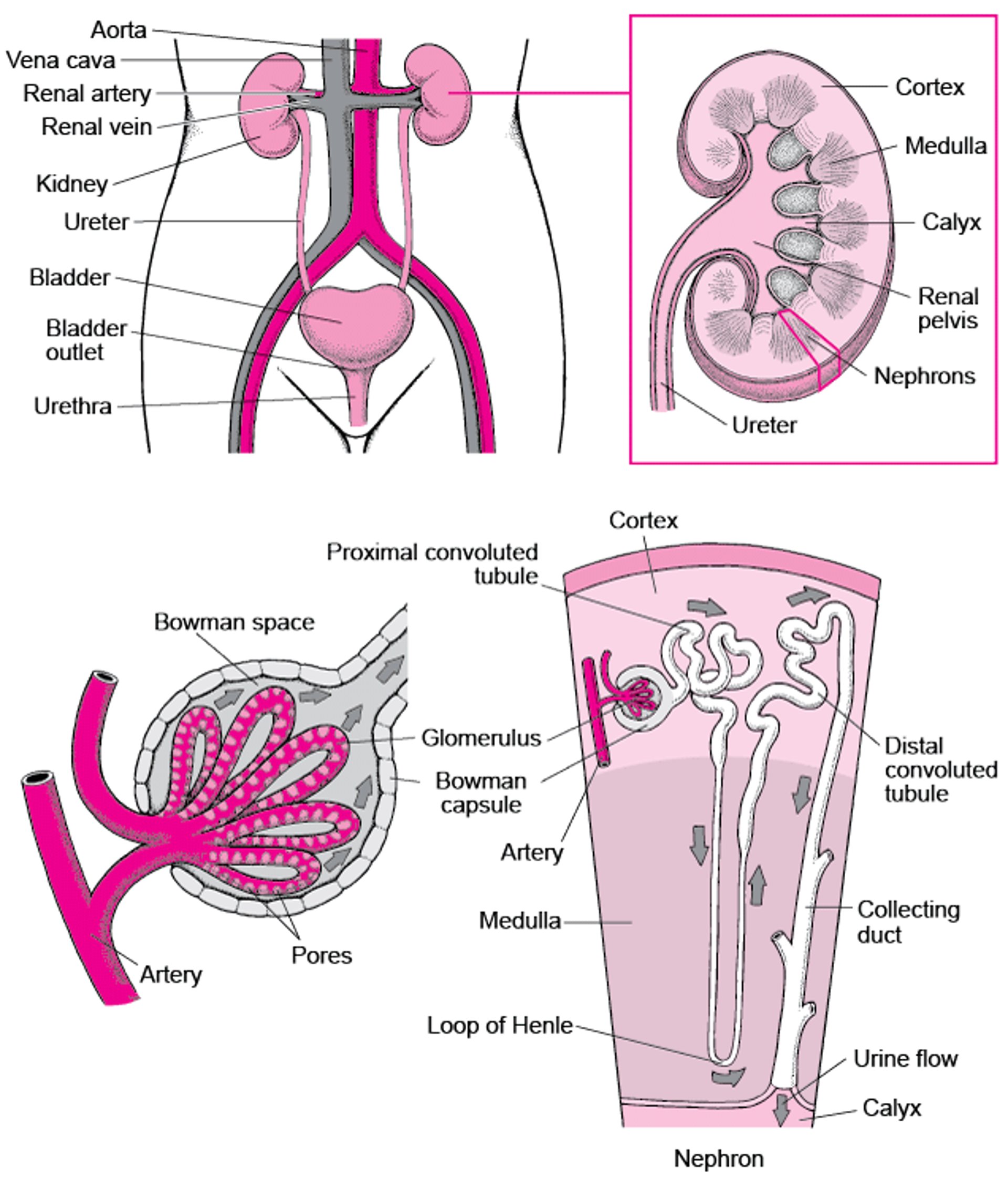
UTIs are usually classified as upper or lower according to where they occur along the urinary tract, but it is sometimes difficult or impossible for doctors to make such a determination:
Lower UTIs: Infections of the bladder (cystitis)
Upper UTIs: Infections of the kidneys (pyelonephritis)
Kidney infections can occur in one or both kidneys.
UTIs can occur in children as well as in adults.


Causes of UTIs
The organisms that cause infection usually enter the urinary tract by one of two routes. The most common route by far is through the lower end of the urinary tract, which is the opening of a man's urethra at the tip of the penis or the opening of a woman's urethra at the vulva. The infection travels up the urethra to the bladder and sometimes to the kidneys, or both. The other possible route is through the bloodstream, usually to the kidneys.
Urinary tract infections (UTIs) are almost always caused by bacteria, although some viruses, fungi, and parasites can infect the urinary tract as well. Most UTIs are caused by bacteria that come from the intestine. Ordinarily, however, bacteria that enter the urinary tract are washed out by the flushing action of the bladder as it empties.
Bacteria
Bacterial UTIs are more common among women than men. About 40 to 50% of women have at least 1 UTI in their lifetime, compared to about 5 to 12% of men. Women also get bacterial kidney infections but less commonly than bladder infections.
Escherichia coli is the most common bacteria to cause a UTI.
Although the urethra is part of the urinary tract, an infection of the urethra (urethritis) is usually caused by bacteria that cause a sexually transmitted infection (STI) such as Neisseria gonorrhoeae (gonorrhea) or Chlamydia trachomatis (chlamydia).
Viruses
The herpes simplex virus may infect the urethra, making urination painful and emptying of the bladder difficult. Other viral UTIs, such as bladder and kidney infections, do not usually develop unless a person's immune system is impaired (for example, by cancer, advanced HIV infection [also called AIDS], or use of a medication that suppresses the immune system).
Fungi
Certain fungi, or yeasts, can infect the urinary tract. This type of infection is often called a yeast infection (yeasts can also cause inflammation of the vagina [vaginitis]). The fungus Candida albicans is the most common fungal organism that causes UTIs (candidiasis). Candida frequently infects people who have an impaired immune system or a bladder catheter in place.
Fungi and bacteria may infect the kidneys at the same time.
Parasites
A number of parasites, including certain types of worms, can infect the urinary tract.
Trichomoniasis, caused by a type of microscopic parasite, is a sexually transmitted infection that can cause a greenish yellow, frothy, fishy-smelling discharge from the vagina in women. Occasionally, the bladder or urethra becomes infected. Trichomoniasis can infect the urethra in men. It usually causes no symptoms in men.
Schistosomiasis, an infection caused by a type of flatworm called a fluke, can affect the kidneys, ureters, and bladder. This infection is a common cause of severe kidney failure among people who live in Africa, South America, and Asia. Persistent bladder schistosomiasis often causes blood in the urine or blockage of the ureters and may eventually result in bladder cancer.