Legg-Calvé-Perthes disease involves death (necrosis) of the hip joint in children.
This disease is caused by a poor blood supply to the upper growth plate of the thighbone near the hip joint.
Typical symptoms include hip pain and trouble walking.
The diagnosis is based on symptoms and x-rays and sometimes on magnetic resonance imaging.
Treatment includes immobilization of the hip and bed rest.
Legg-Calvé-Perthes disease is an osteochondrosis. An osteochondrosis is a disorder of the growth plate of bones that occurs when a child is growing rapidly.
Legg-Calvé-Perthes disease develops most commonly among boys between the ages of 5 and 10. The disease usually affects only one leg. About 10% of children have a relative who has the disease.
Legg-Calvé-Perthes disease is caused by a poor blood supply to the upper growth plate of the thighbone (femur) near the hip joint. The poor blood supply causes the end of the thighbone to die and collapse (avascular necrosis or osteonecrosis). The reason for the poor blood supply in Legg-Calvé-Perthes disease is not known.
Blood supply to the growth plates in the thighbone can be affected by other factors. Such factors include sickle cell disease and the need to take steroids (also called glucocorticoids or corticosteroids) long term, which may lead to a condition called avascular necrosis of the hip. However, hip damage due to avascular necrosis resulting from these and other known causes is not considered Legg-Calvé-Perthes disease.
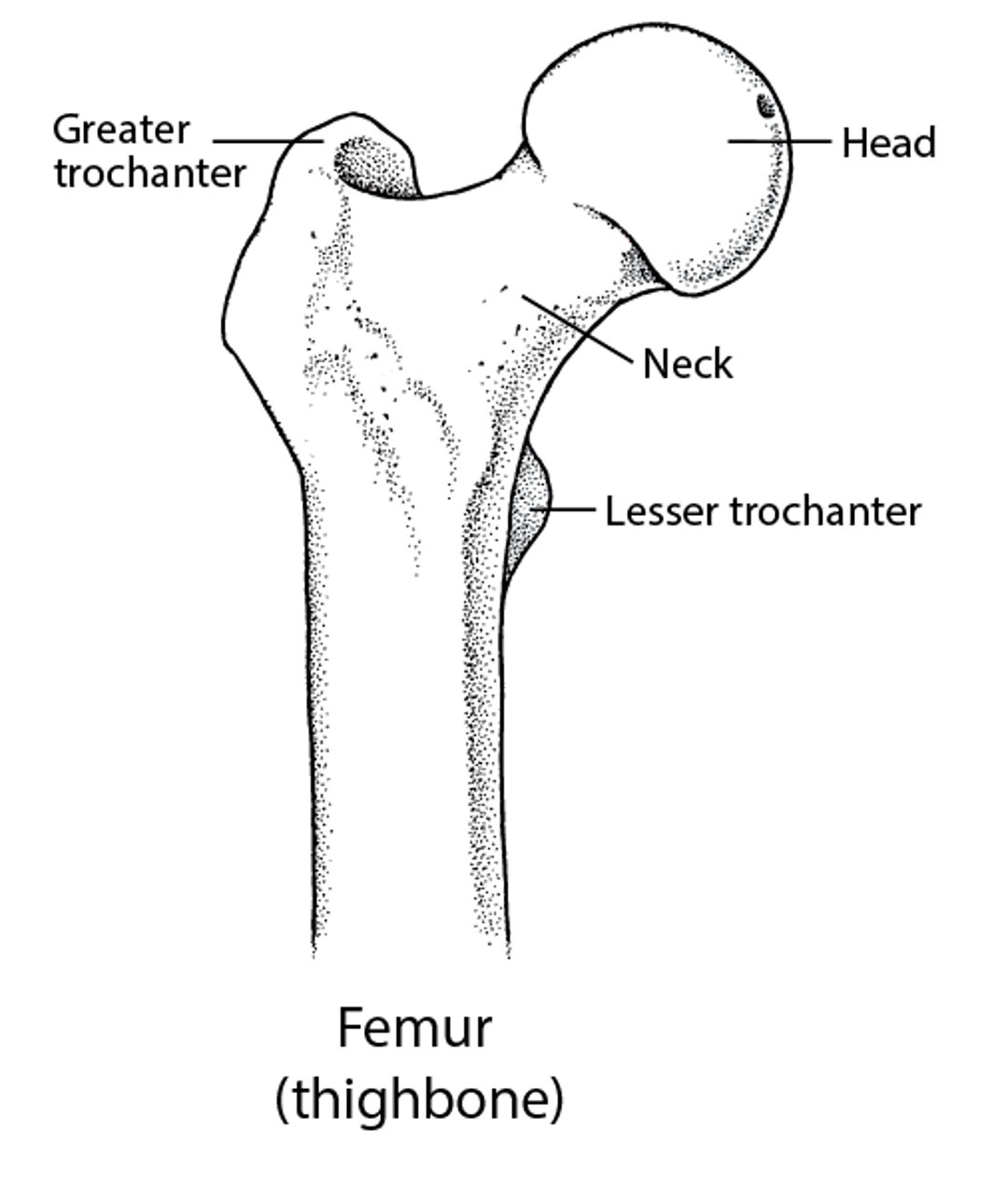
The Femur: Part of the Hip Joint

Symptoms of Legg-Calvé-Perthes Disease
Legg-Calvé-Perthes disease can cause severe hip damage before significant symptoms occur. The severe damage may, however, lead to permanent arthritis of the hip.
The first symptom of Legg-Calvé-Perthes disease often is pain in the hip joint and trouble walking. Pain begins gradually and progresses slowly. The pain tends to worsen when moving the hip or walking. Some children also have pain in the knee. A limp can develop, sometimes before the child has much pain.
Eventually, joint movement may become limited, and the thigh muscles may become wasted (atrophied) from lack of use.
Diagnosis of Legg-Calvé-Perthes Disease
A doctor's evaluation
Usually x-rays
Sometimes magnetic resonance imaging (MRI)
Doctors suspect Legg-Calvé-Perthes disease in children who have the typical symptoms.
Doctors take x-rays and sometimes do an MRI if the x-rays are normal or they need more information on the severity. Later x-rays may show changes around the growth plate, such as destruction of the bone.
Doctors take additional x-rays of the child's skeleton if the disorder runs in the child's family or both of the child's legs are affected. These x-rays are taken to rule out hereditary disorders of the skeleton.
Blood tests are done to rule out other disorders. Doctors also try to determine whether the symptoms resulted from an injury.
Treatment of Legg-Calvé-Perthes Disease
Bed rest and immobilization of the hip
Sometimes surgery
Treatment of Legg-Calvé-Perthes disease includes prolonged bed rest and immobilization of the hip (for example, with a cast or splint). The choice of treatment depends on the child's age and amount of bone damage. Sometimes the partial immobilization provided by bed rest is sufficient. However, sometimes nearly total immobilization using traction, slings, plaster casts, and splints is necessary. Such treatments keep the legs rotated outward.
Physical therapy is used to keep the muscles from tightening up and wasting away.
If a child is over 6 years of age and has moderate or severe bone destruction, surgery may be helpful.
Treatment with bisphosphonates (medications that help increase bone density) has been effective, but more studies are needed.
Prognosis for Legg-Calvé-Perthes Disease
Without treatment, Legg-Calvé-Perthes disease usually gets better, but it takes longer, usually 2 to 3 years, and there is an increased risk of hip arthritis developing later in life.
With treatment, complications are less severe. Children who are under 8 years old and children who have less damage when they are diagnosed have the best outcome.