Hirschsprung disease is a birth defect in which a section of the large intestine is missing the nerves that control the intestine's rhythmic contractions. Symptoms of intestinal obstruction occur.
This defect affects portions of the large intestine so that normal bowel contractions do not occur at the affected locations.
Typical symptoms include delayed passage of meconium in the newborn, vomiting, refusing to eat, and a swollen abdomen in later infancy.
The diagnosis is based on a rectal biopsy and measurement of the pressure inside the rectum.
Surgery is done to restore the normal passage of food through the intestines.
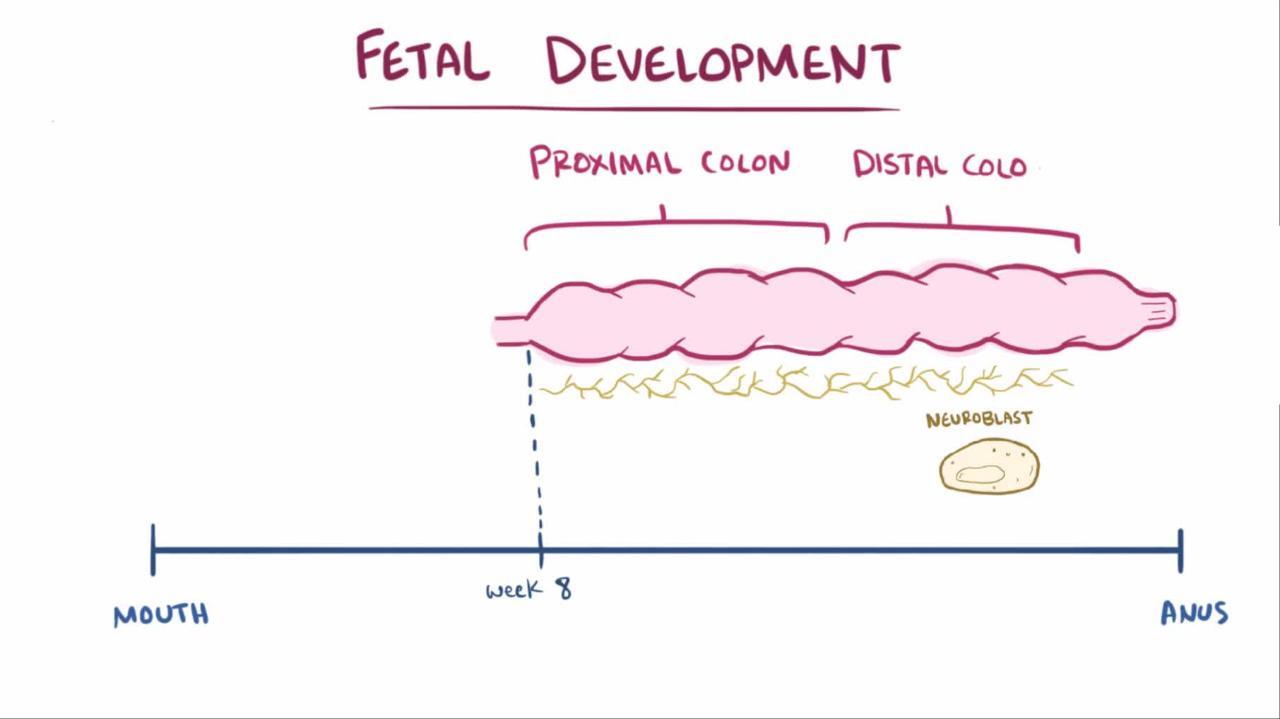
This birth defect occurs when the nerves in the intestine do not form properly while a baby is developing in the womb. Certain gene mutations may also play a role in Hirschsprung disease. This defect may run in families.
Some children with Hirschsprung disease have other abnormalities at birth.
The large intestine depends on a network of nerves within its walls to synchronize rhythmic contractions and move digested material toward the anus, where the material is expelled as stool. In Hirschsprung disease, the affected section of intestine cannot contract normally. Without these normal contractions, material in the intestines builds up. Sometimes, Hirschsprung disease can lead to life-threatening inflammation of the large intestine (colon) called enterocolitis.

(See also Overview of Digestive Tract Birth Defects.)
Symptoms of Hirschsprung Disease
Most infants with Hirschsprung disease have symptoms very early in life. However, if only a small section of the intestine is affected, a child may have milder symptoms and may not be diagnosed until later in childhood or, rarely, adulthood.
Normally, almost all newborns pass meconium (a dark green material that is considered the first bowel movement) in the first 24 hours of life. Most newborns who have Hirschsprung disease do not pass meconium in the first 48 hours of life. Affected newborns have a swollen abdomen and vomiting. They may not gain weight and grow as expected. Infants who have Hirschsprung-associated enterocolitis have sudden fever, a swollen abdomen, and explosive and, at times, bloody diarrhea.
In older infants and children, symptoms may include refusal to eat, no urge to defecate, and constipation.
Diagnosis of Hirschsprung Disease
Barium enema
Rectal biopsy
Measurement of the pressure in the rectum
Initially, a barium enema is done to evaluate the defect. During a barium enema, the doctor instills barium and air into the child's rectum and then takes x-rays. The barium is a contrast agent that looks white on the x-rays and outlines the digestive tract, making it easier for the doctor to see the intestines. (Doctors do not do a barium enema if they suspect the baby has Hirschsprung-associated enterocolitis.)
Rectal biopsy (removal of a piece of tissue from the rectum for examination under a microscope) and measurement of the pressure inside the rectum (manometry) are other tests that doctors do to diagnose Hirschsprung disease.
Doctors may do blood tests if they think the child has a genetic mutation.
Treatment of Hirschsprung Disease
Surgery
Hirschsprung disease is usually treated with surgery to remove the abnormal section of intestine and to connect the normal intestine to the rectum and anus. Timing of surgery depends on how much of the child's intestine is affected.
Severe Hirschsprung disease must be treated quickly to lower the risk of Hirschsprung-associated enterocolitis.
Children who develop Hirschsprung-associated enterocolitis are hospitalized to give their intestines time to rest and are given fluids and antibiotics by vein. Then a long, thin tube is passed through the nose and placed in the stomach or intestine (nasogastric tube) and another tube is placed in the rectum (rectal tube). The main purpose of these tubes is to relieve the pressure that has built up by removing fluid and gas. Sometimes doctors insert saline into a child's rectum to wash away stool (called rectal irrigation) that has built up in the intestines. Surgery is done to remove the section of the intestines that is not functioning.