An esophageal web is a thin mucosal membrane that grows across the lumen of the upper esophagus and may cause dysphagia.

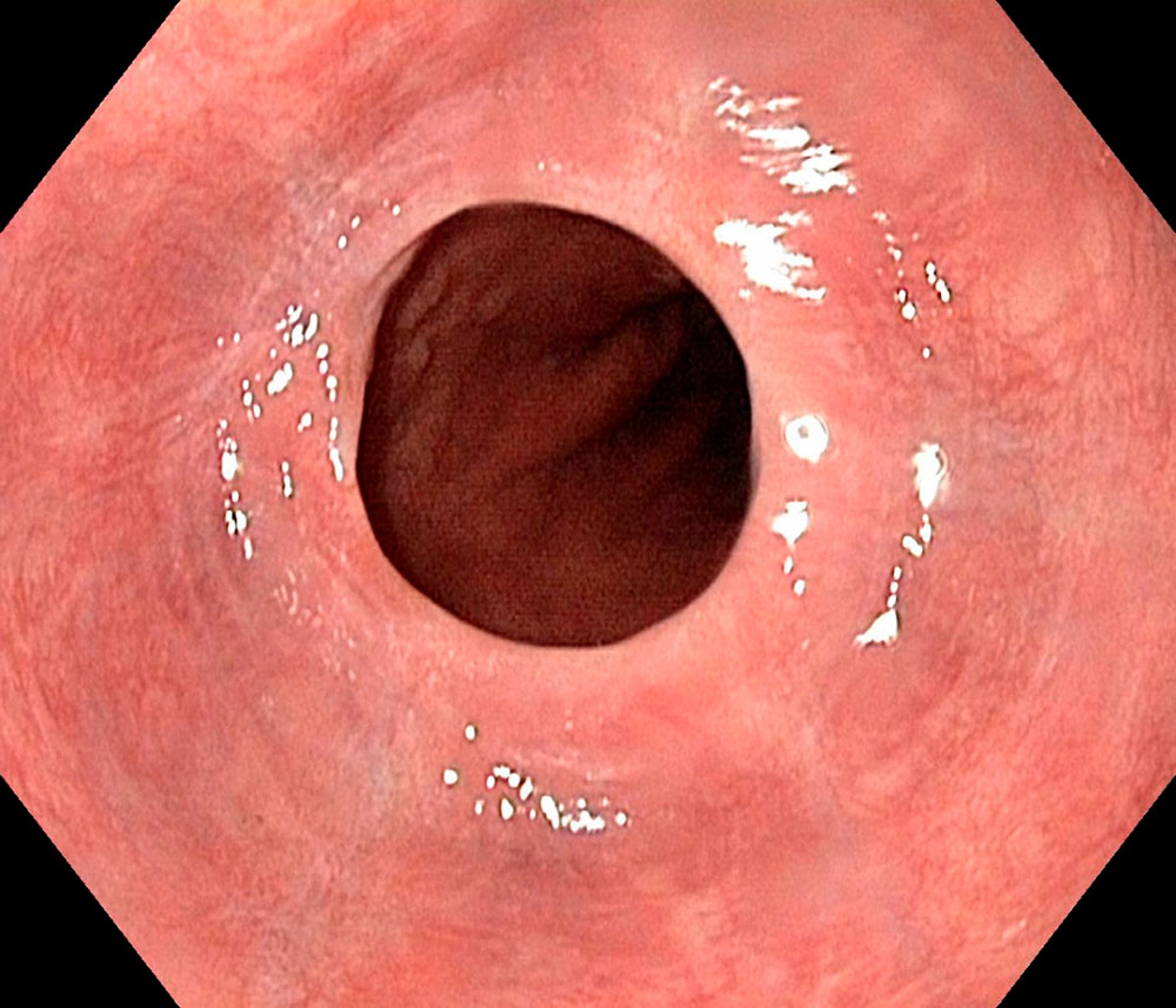
This image shows an esophageal web, a thin membrane that grows across the lumen in the middle or upper esophagus.
GASTROLAB/SCIENCE PHOTO LIBRARY
Esophageal webs are rare. Untreated severe iron deficiency anemia (Plummer-Vinson syndrome) is the most commonly recognized etiology; other etiologies include celiac disease, gastroesophageal reflux disease, radiation therapy, graft-versus-host-disease, and congenital factors (1).
Webs usually occur in the upper esophagus, causing dysphagia for solids. They can be diagnosed by barium swallow or endoscopy.
Some esophageal webs resolve with treatment of the anemia. Esophagoscopy with dilation can also be performed to rupture webs that either do not resolve after treating anemia or are not associated with anemia.
Reference
1. Yang ZM, Stockton SM, Compton EC, Butler JJ, Johnson CM, Postma GN. Prevalence of Esophageal Webs in Patients Undergoing Direct Laryngoscopy. Laryngoscope. 2025;135(10):3594-3599. doi:10.1002/lary.32282