Acute trauma or chronic irritation causes changes in the vocal folds that can lead to polyps, nodules, or granulomas. All cause dysphonia and a breathy voice. Persistence of these symptoms for > 3 weeks dictates visualization of the vocal folds. Diagnosis is based on laryngoscopy and on biopsy in selected cases to exclude malignancy. Judicious surgical removal restores the voice, and avoidance of the underlying cause prevents recurrence.
The prevalence of various benign vocal fold lesions, including vocal polyps, vocal nodules, vocal granulomas, and vocal papillomas, varies based on population studies and clinical settings. The prevalence of vocal polyps in the general population is reported to be between 0.31% and 0.55%. In a treatment-seeking population, vocal polyps are one of the most common benign vocal fold lesions (1, 2). Vocal nodules are more prevalent, with 1 study finding the prevalence to be 1487 per 100,000 individuals (3). In a retrospective cohort of 419 patients with chronic cough, vocal granulomas were found in 5% of patients (4). Vocal fold papillomas usually occur as a part of recurrent respiratory papillomatosis, which is of viral origin, and has a prevalence of 1.8 per 100,000 adults in the United States (5).
References
1. Woo SH, Kim RB, Choi SH, Lee SW, Won SJ. Prevalence of laryngeal disease in South Korea: data from the Korea National Health and Nutrition Examination Survey from 2008 to 2011. Yonsei Med J. 2014;55(2):499-507. doi:10.3349/ymj.2014.55.2.499
2. Brunner E, Eberhard K, Gugatschka M. Prevalence of Benign Vocal Fold Lesions: Long-Term Results From a Single European Institution. J Voice. Published online November 24, 2023. doi:10.1016/j.jvoice.2023.11.006
3. Hah JH, Sim S, An SY, Sung MW, Choi HG. Evaluation of the prevalence of and factors associated with laryngeal diseases among the general population. Laryngoscope. 2015;125(11):2536-2542. doi:10.1002/lary.25424
4. Adessa M, Xiao R, Hull D, et al. Benign Vocal Fold Lesions in Patients with Chronic Cough. Otolaryngol Head Neck Surg. 2020;162(3):322-325. doi:10.1177/0194599819900505
5. Derkay CS. Task force on recurrent respiratory papillomas. A preliminary report. Arch Otolaryngol Head Neck Surg. 1995;121(12):1386-1391. doi:10.1001/archotol.1995.01890120044008
Etiology
Polyps and nodules result from injury to the lamina propria of the true vocal folds. Granulomas result from injury to the perichondrium overlying the vocal processes of the arytenoid cartilages. Papillomas can occur directly on the vocal folds or the space above them (ventricles); in some cases, they may occur elsewhere in the respiratory tract.
Vocal fold polyps may occur at the mid third of the membranous folds and are more often unilateral. Polyps tend to be larger and more pedunculated than nodules and often have a dominant surface blood vessel. They frequently result from an acute phonatory injury. Other polypoid changes, often bilateral, may have several other causes, including gastroesophageal reflux, untreated hypothyroid states, chronic laryngeal allergic reactions, or chronic inhalation of irritants, such as industrial fumes or cigarette smoke. Acute injury usually causes pedunculated polyps, whereas sessile polypoid edema results from chronic irritation.
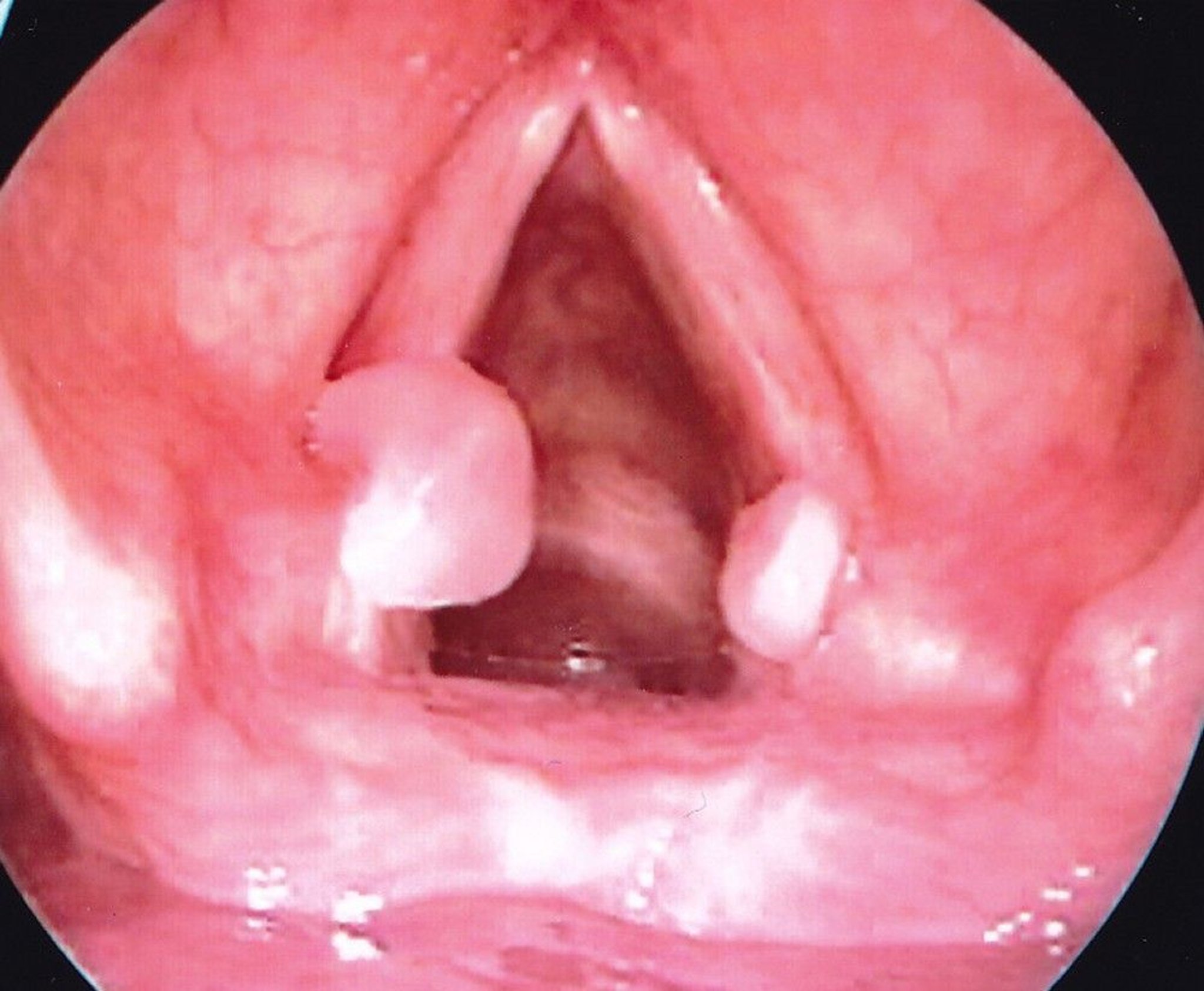
Vocal fold nodules occur bilaterally at the junction of the anterior and middle third of the folds. Their main cause is chronic voice trauma, for example, yelling, shouting, singing loudly, or using an unnaturally low frequency.
Vocal fold granulomas occur in the posterior glottis adjacent to the vocal processes of the arytenoid cartilage. They can be bilateral or unilateral. They usually result from intubation trauma but may occur as a result of irritation from reflux disease or chronic cough.
Vocal fold papillomas can result from infection with some human papillomaviruses (HPVs). In pediatric patients, papillomas most commonly occur between age 1 and 4 years, although they can develop at any time including throughout adulthood. The disorder is also called recurrent respiratory papillomatosis.
Laryngeal Disorders
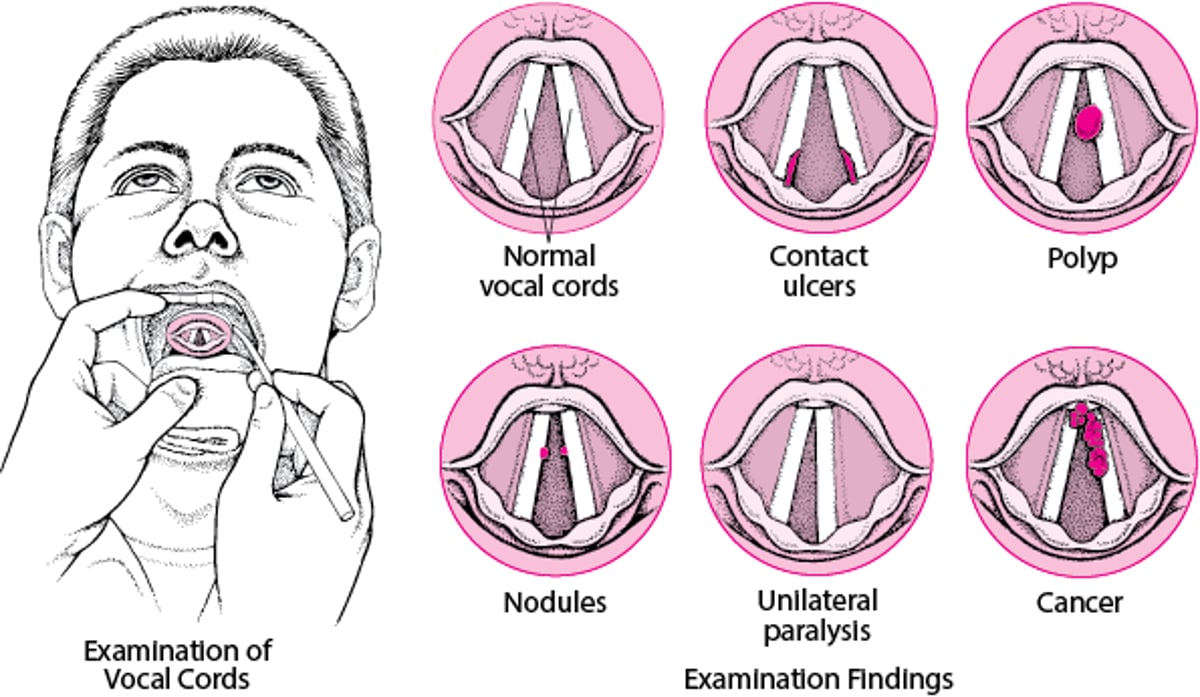
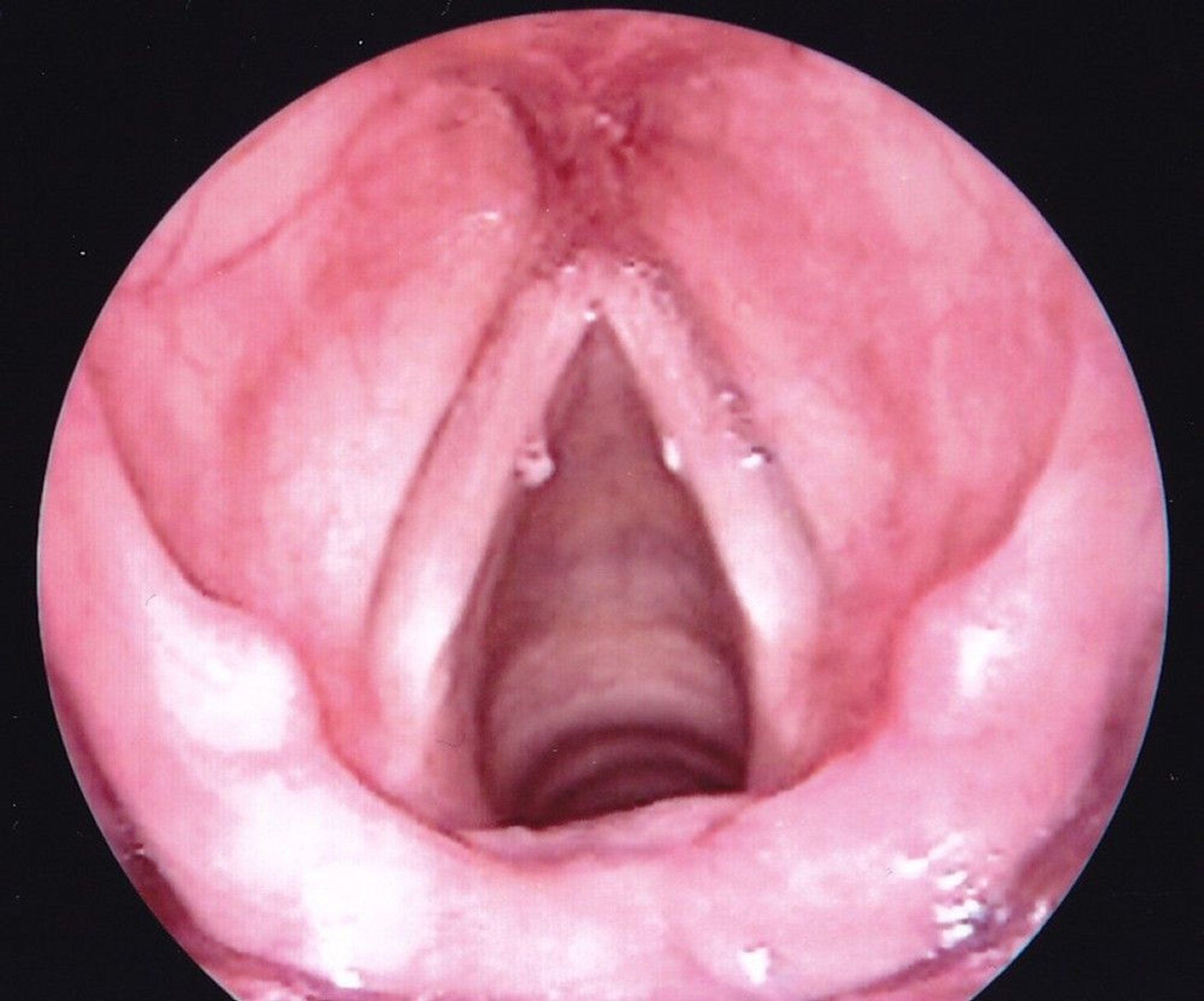
When relaxed, the vocal folds normally form a V-shaped opening that allows air to pass freely through to the trachea. The folds open during inspiration and close during swallowing or speech. When a mirror is held in the back of a patient’s mouth, the vocal folds can often be seen and checked for disorders, such as contact ulcers, polyps, nodules, paralysis, and cancer. Paralysis may affect one (unilateral) or both vocal folds (bilateral—not shown). |


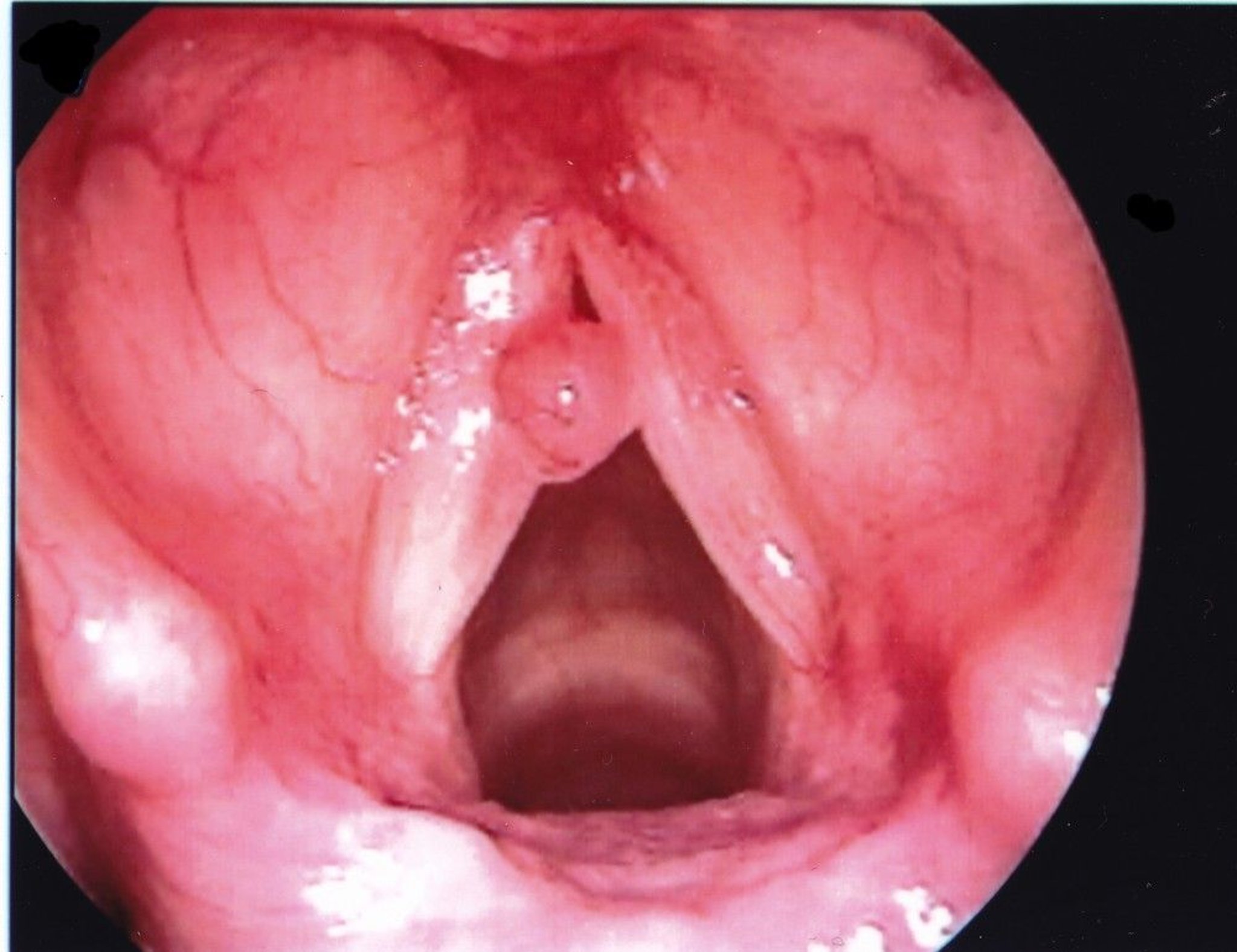
A vocal fold polyp usually appears unilaterally and larger than a nodule.
Image provided by Eiji Yanagisawa, MD.

Vocal fold nodules manifest bilaterally at the junction of the anterior and middle third of the vocal folds.
Image provided by Eiji Yanagisawa, MD.

Vocal fold granulomas occur in the posterior glottis adjacent to the vocal processes of the arytenoid cartilage.
Image provided by Eiji Yanagisawa, MD.
Symptoms and Signs
All polyps, nodules, and granulomas result in slowly developing dysphonia (hoarseness) and a breathy voice.
Symptoms of vocal fold papillomas can include hoarseness or a weak cry early in the course of disease, but airway obstruction is possible in advanced disease.
Diagnosis
Laryngoscopy
Sometimes biopsy
The diagnosis of polyps, nodules, granulomas, and papillomas is based on direct or indirect visualization of the larynx with a mirror or laryngoscope (see table ). Biopsy of discrete lesions to exclude carcinoma is usually performed by microlaryngoscopy (see Laryngeal Cancer).
Differentiating Vocal Polyps, Nodules, and Granulomas
Type | Causes | Features | Treatment |
|---|---|---|---|
Polyps | Acute vocal trauma (most common), gastroesophageal reflux, untreated hypothyroid states, chronic laryngeal allergic reactions, chronic inhalation of irritants (eg, industrial fumes, cigarette smoke, electronic cigarettes) | Traumatic lesions are typically unilateral Bilateral polyps are often due to other causes Occur at the mid membranous vocal fold Larger than nodules Often a surface blood vessel | Surgical removal of traumatic polyps Medical treatment, initially, of other polypoid lesions Speech rehabilitative therapy to alter harsh vocal habits |
Nodules | Chronic voice trauma (eg, from yelling, shouting, singing loudly, using an unnaturally low frequency) | Bilateral Occur at the junction of the anterior and middle third of the vocal folds | Behavior modification (eg, decreasing musculoskeletal laryngeal tension when speaking), voice therapy, antireflux therapy |
Granulomas | Cough, reflux disease, endotracheal intubation | Often bilateral but can be unilateral Occur at vocal processes (posterior vocal folds) Larger than nodules | Voice therapy, antireflux therapy For granulomas that do not regress, surgical removal |
Treatment
Avoidance and/or correction of cause
Sometimes surgical removal (for polyps, papillomas, some granulomas)
Supportive care (voice therapy, treatment of reflux, vaccination against human papillomavirus)
Avoidance and/or correction of the underlying voice abuse cures most nodules and granulomas and prevents recurrence. Removal of the triggers (including treatment of any gastroesophageal reflux) allows healing and is necessary to prevent recurrence. Voice therapy with a speech therapist can reduce the trauma to the vocal folds caused by improper singing or protracted loud speaking. Nodules usually regress with voice therapy alone. Granulomas that do not regress can be removed surgically but tend to recur.
Traumatic polyps must be surgically removed to restore a normal voice. Other polypoid lesions, often bilateral, arising from tobacco abuse or hypothyroid states, should initially receive nonsurgical management with voice therapy and correction of irritants (ie, smoking cessation). Cold-knife microsurgical excision during direct microlaryngoscopy is preferable to laser excision, which is more likely to cause collateral thermal injury if improperly applied.
Papillomas are generally treated with laser or surgery. Human papillomaviruses vaccination can be preventive.
In microlaryngoscopy, an operating microscope is used to examine, biopsy, and operate on the larynx. Images can be recorded on video as well. The patient is anesthetized, and the airway is secured by high-pressure jet ventilation through the laryngoscope, endotracheal intubation, or, for an inadequate upper airway, tracheotomy. Because the microscope allows observation with magnification, tissue can be removed precisely and accurately, minimizing damage (possibly permanent) to the vocal mechanism. Laser surgery can be accomplished through the optical system of the microscope to allow for precise cuts. Microlaryngoscopy is preferred for almost all laryngeal biopsies, for procedures involving benign tumors, and for many forms of phonosurgery.
Key Points
Vocal fold polyps, nodules, and granulomas result from acute trauma or chronic irritation; vocal fold papillomas result from human papillomavirus infection.
Symptoms persisting > 3 weeks warrant visualization of the vocal folds.
Biopsy may be necessary to exclude cancer.
After excision, avoidance of the underlying cause is necessary to prevent recurrence.