Benign laryngeal tumors include leukoplakia, papillomas, hemangiomas, fibromas, chondromas, myxomas, and neurofibromas. They may occur in any part of the larynx. Papillomas and neurofibromas can become malignant. Leukoplakia is a white lesion on the vocal fold that may be an indication of a benign or a pre-malignant change (ie, dysplasia). Diagnosis is based on direct or indirect visualization (laryngoscopy) and imaging studies (eg, CT). Treatment is by removal.
Laryngeal tumors are abnormal growths that occur in the larynx that can be benign or malignant. The main types of benign tumors include leukoplakia, papillomas, hemangiomas, fibromas, chondromas, myxomas, and neurofibromas (1). For malignant laryngeal tumors, see Laryngeal Cancer.

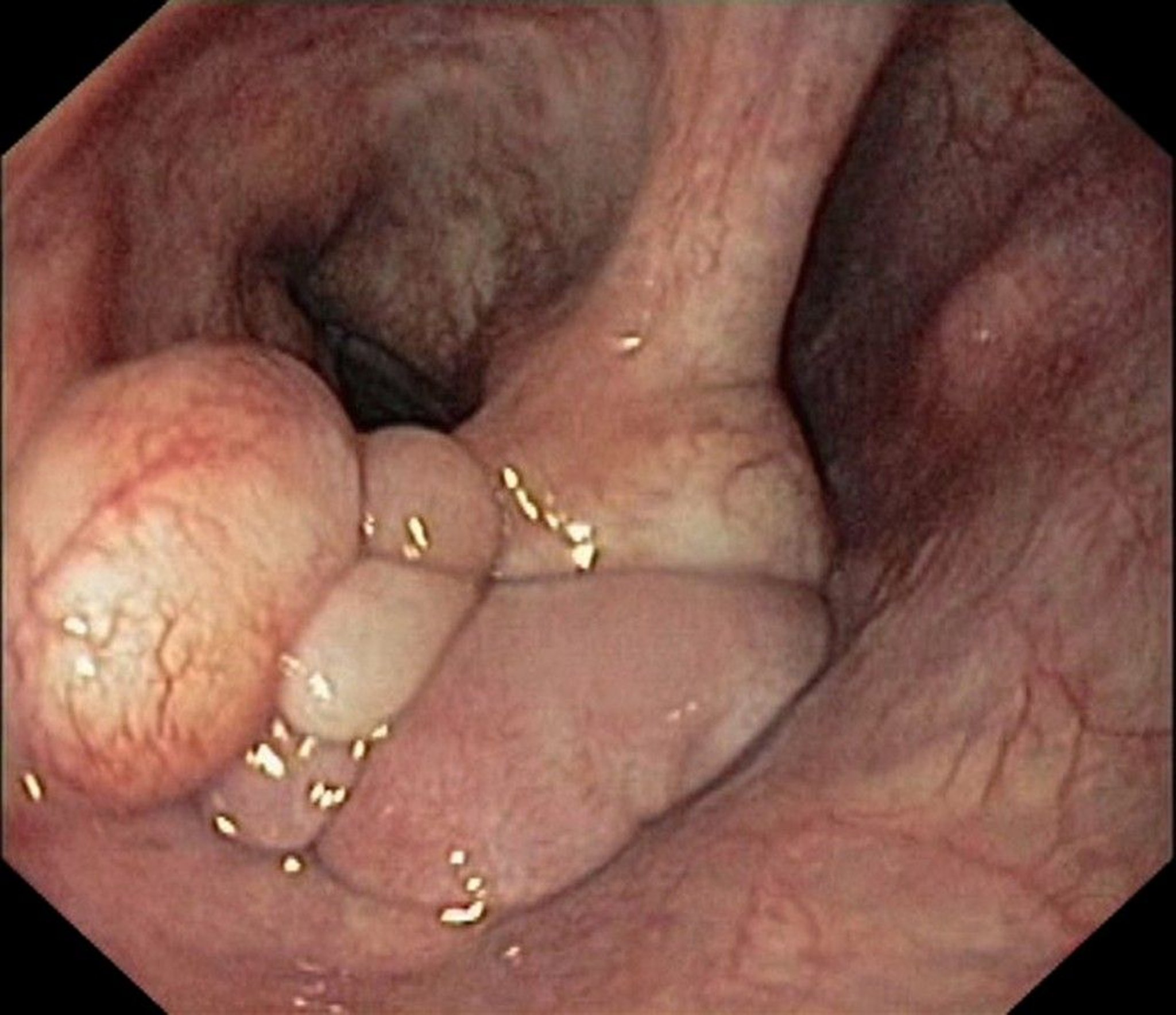
This endoscopic view of the larynx shows a fibrolipoma, a very rare benign tumor. A fibrolipoma is a growth of fibro-fatty tissue along a nerve.
GASTROLAB/SCIENCE PHOTO LIBRARY
Symptoms of benign laryngeal tumors include dysphonia, breathy voice, dyspnea, aspiration, dysphagia, otalgia (ear pain), and hemoptysis. Otalgia represents referred pain to the ear from irritation or distension of the vagus nerve and is more often than not caused by a rapidly growing malignant tumor.
The diagnosis of benign laryngeal tumors is based on direct or indirect visualization of the lesions in the larynx, supplemented by CT. Occasionally, biopsy performed in the office or operating room may be necessary to complete the diagnosis.
Treatment is with removal of the benign tumor. Removal restores the voice, the functional integrity of the laryngeal sphincter, and the airway. Smaller lesions may be excised endoscopically by using a CO2 laser and general anesthesia. Larger lesions extending beyond the laryngeal framework often require pharyngotomy or laryngofissure.
Reference
1. Courey MS, Shohet JA, Scott MA, Ossoff RH. Immunohistochemical characterization of benign laryngeal lesions. Ann Otol Rhinol Laryngol. 1996;105(7):525-531. doi:10.1177/000348949610500706