Squamous cell carcinoma in situ is a superficial squamous cell neoplasm. Diagnosis is based on biopsy. Treatment depends on the tumor’s characteristics and may involve curettage and electrodesiccation, surgical excision, topical chemotherapeutics, electrocautery, or cryosurgery.
(See also Overview of Skin Cancer.)
Squamous cell carcinoma in situ (formerly called Bowen disease) is most common in sun-exposed areas but may arise at any location. It is considered a precursor to and noninvasive form of squamous cell carcinoma that is confined to the epidermis.
In one large, longitudinal cohort study from the Netherlands, the population-based age-standardized incidence rates of cutaneous squamous cell carcinoma in situ was 72/100,000 person-years in women and 68/100,000 person-years in men (1). The cumulative risk of progression to invasive disease after 5-years was approximately 11%.
The risk factors for squamous cell carcinoma in situ are similar to those of squamous cell carcinoma, and include cumulative UV exposure, immunosuppression, chronic irritation or scarring, and, in some cases, human papillomavirus infection.
General reference
1. Tokez S, Wakkee M, Louwman M, et al. Assessment of Cutaneous Squamous Cell Carcinoma (cSCC) In situ Incidence and the Risk of Developing Invasive cSCC in Patients With Prior cSCC In situ vs the General Population in the Netherlands, 1989-2017. JAMA Dermatol. 2020;156(9):973-981. doi:10.1001/jamadermatol.2020.1988
Symptoms and Signs of Squamous Cell Carcinoma in Situ
Lesions can be solitary or multiple. They are red-brown and scaly or crusted, with little induration; they frequently resemble a localized thin plaque of psoriasis or dermatitis or a dermatophyte infection.

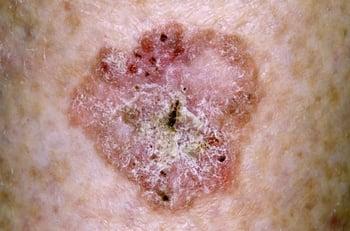
This photo shows a reddish-brown and scaly lesion consistent with squamous cell carcinoma in situ.

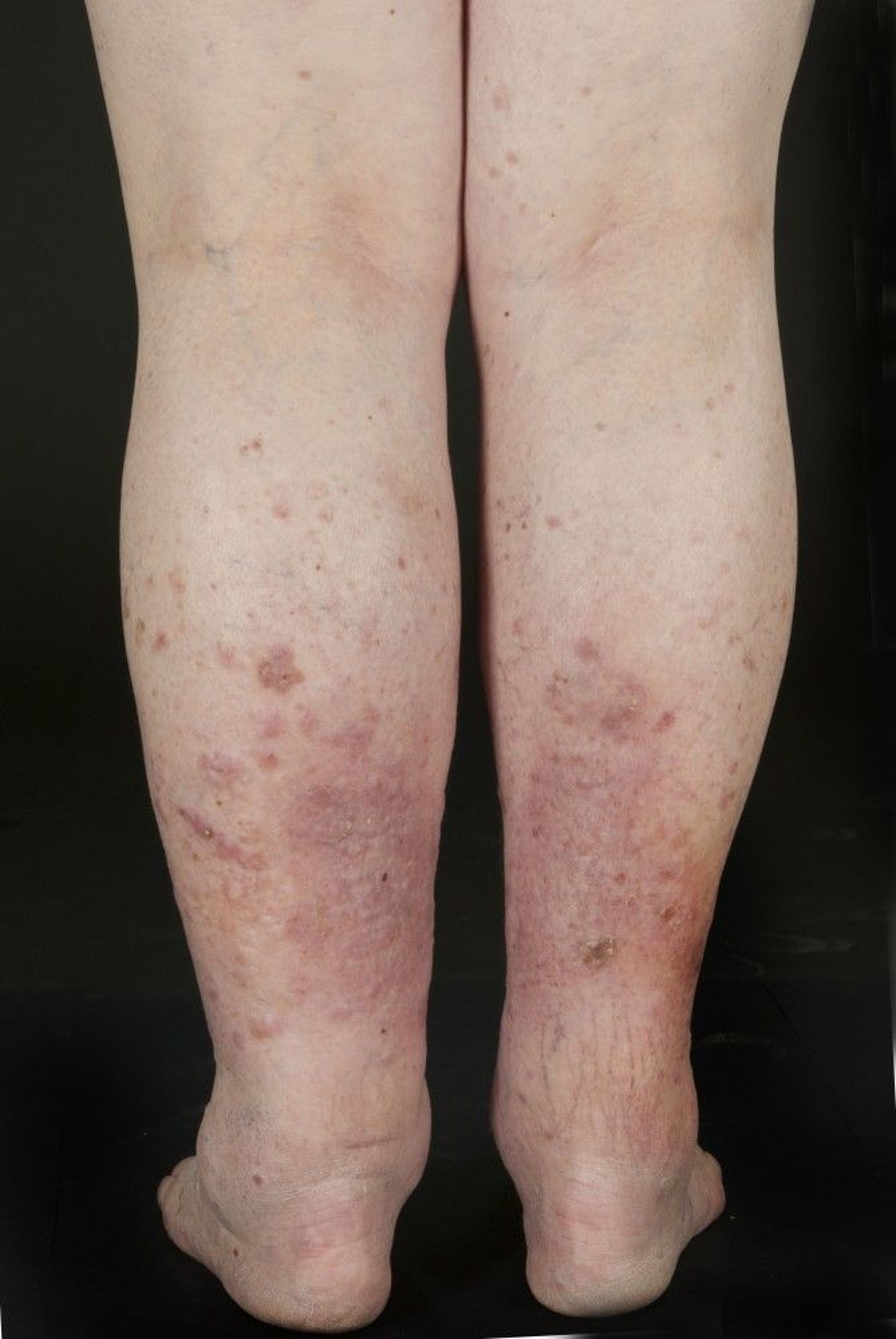
This photo shows lesions on the legs of a female patient with squamous cell carcinoma in situ.
DR P. MARAZZI/SCIENCE PHOTO LIBRARY
Diagnosis of Squamous Cell Carcinoma in Situ
Biopsy
Squamous cell carcinoma in situ is often suspected when a rash attributed to psoriasis or atopic dermatitis fails to respond to treatment.
Diagnosis is by biopsy, which shows full-thickness epidermal dysplasia but no dermal involvement.
Treatment of Squamous Cell Carcinoma in Situ
Treatment with topical chemotherapeutics
Removal or ablation via local methods
Treatment of squamous cell carcinoma in situ depends on the lesion’s characteristics and may involve topical chemotherapeutics, curettage and electrodesiccation, surgical excision, electrocautery, or cryosurgery (1).
Treatment reference
1. National Comprehensive Cancer Network. NCCN Clinical Practice Guidelines in Oncology (NCCN Guidelines). Squamous Cell Skin Cancer, version 1.2026. https://www.nccn.org/professionals/physician_gls/pdf/squamous.pdf. Accessed November 13, 2025.
Prevention of Squamous Cell Carcinoma in Situ
Because many skin cancers seem to be related to ultraviolet (UV) radiation exposure, a number of measures are recommended to limit exposure (eg, sun avoidance measures, use of protective clothing, use of sunscreen). For more detailed information, see Prevention of Effects of Sun Exposure for more detailed information.