


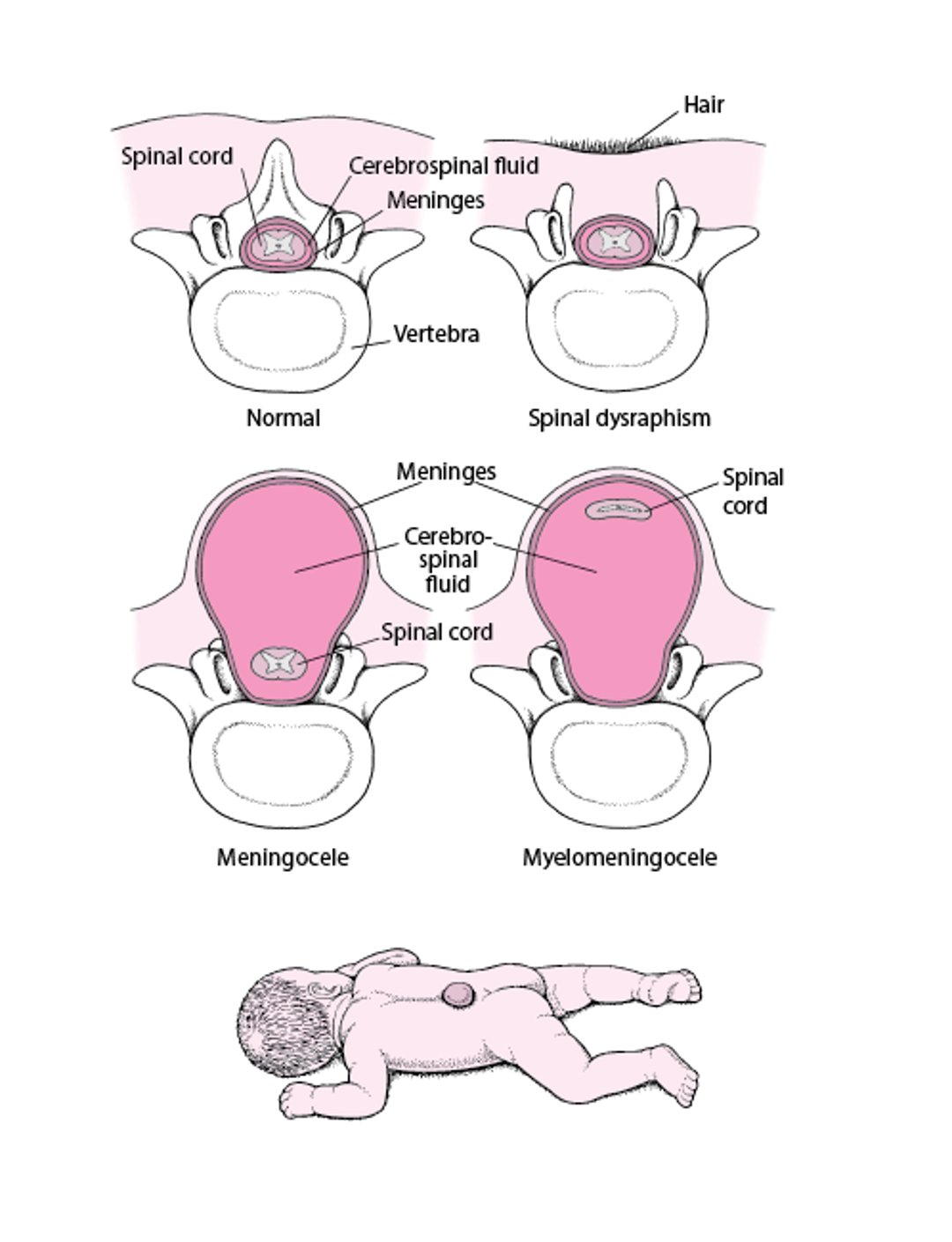
Spina Bifida: A Defect of the Spine
In spina bifida, the bones of the spine (vertebrae) do not form normally. Spina bifida can vary in severity.
In occult spinal dysraphism, one or more vertebrae do not form normally, and the spinal cord and the layers of tissues (meninges) surrounding it may also be affected. There are several types with differing neurologic severities. The diagnosis is sometimes suggested by symptoms in the lower back, such as a tuft of hair, a dimple or pit, or a pigmented area on the skin over the defect.
In a meningocele, the meninges push through the incompletely formed vertebrae, resulting in a fluid-filled bulge under the skin. The spinal cord is in its normal location.
The most severe type is a myelomeningocele, in which the meninges and spinal cord bulge out in a sac from the baby's back. In a myelomeningocele, the meninges are usually exposed or, rarely, are covered by a thin layer of skin (as shown in the figure). The affected area appears raw and red, and the baby is likely to be severely impaired.