The common cold is a viral infection of the lining of the nose, sinuses, and throat.
Many different viruses cause colds.
Usually, colds are spread when a person comes in contact with nasal secretions from an infected person.
Colds often start with a scratchy or sore throat or discomfort in the nose, followed by sneezing, a runny nose, a cough, and a general feeling of illness.
Doctors base the diagnosis on symptoms.
Rest, decongestants, acetaminophen, and nonsteroidal anti-inflammatory drugs (NSAIDs, such as ibuprofen) can help relieve symptoms.
Good hygiene, including frequent hand washing, is the best way to prevent colds.
Common colds are among the most common illnesses. Many different viruses (rhinoviruses, adenoviruses, coronaviruses, and human metapneumoviruses) cause colds, but rhinoviruses (of which there are more than 160 subtypes) cause most colds. Colds caused by rhinoviruses occur more commonly in the spring and fall. Other viruses cause common coldlike illnesses at other times of the year.
Colds can be spread through droplets that are released when an infected person coughs or sneezes. These droplets can enter other people if they breathe them in or if they touch the droplets on a surface and then touch their eyes, nose, or mouth. Some viruses can spread through close personal contact such as when an uninfected person shakes hands with an infected person and then touches their eyes, nose, or mouth. A cold is most contagious during the first 1 or 2 days after symptoms develop.
People are not usually more likely to get a cold if they become chilled or are exposed to cold temperature or have an abnormality of the nose or throat (such as enlarged tonsils or adenoids).
Did You Know...
|

Symptoms of Common Cold

Copyright © 2025 Merck & Co., Inc., Rahway, NJ, USA and its affiliates. All rights reserved.
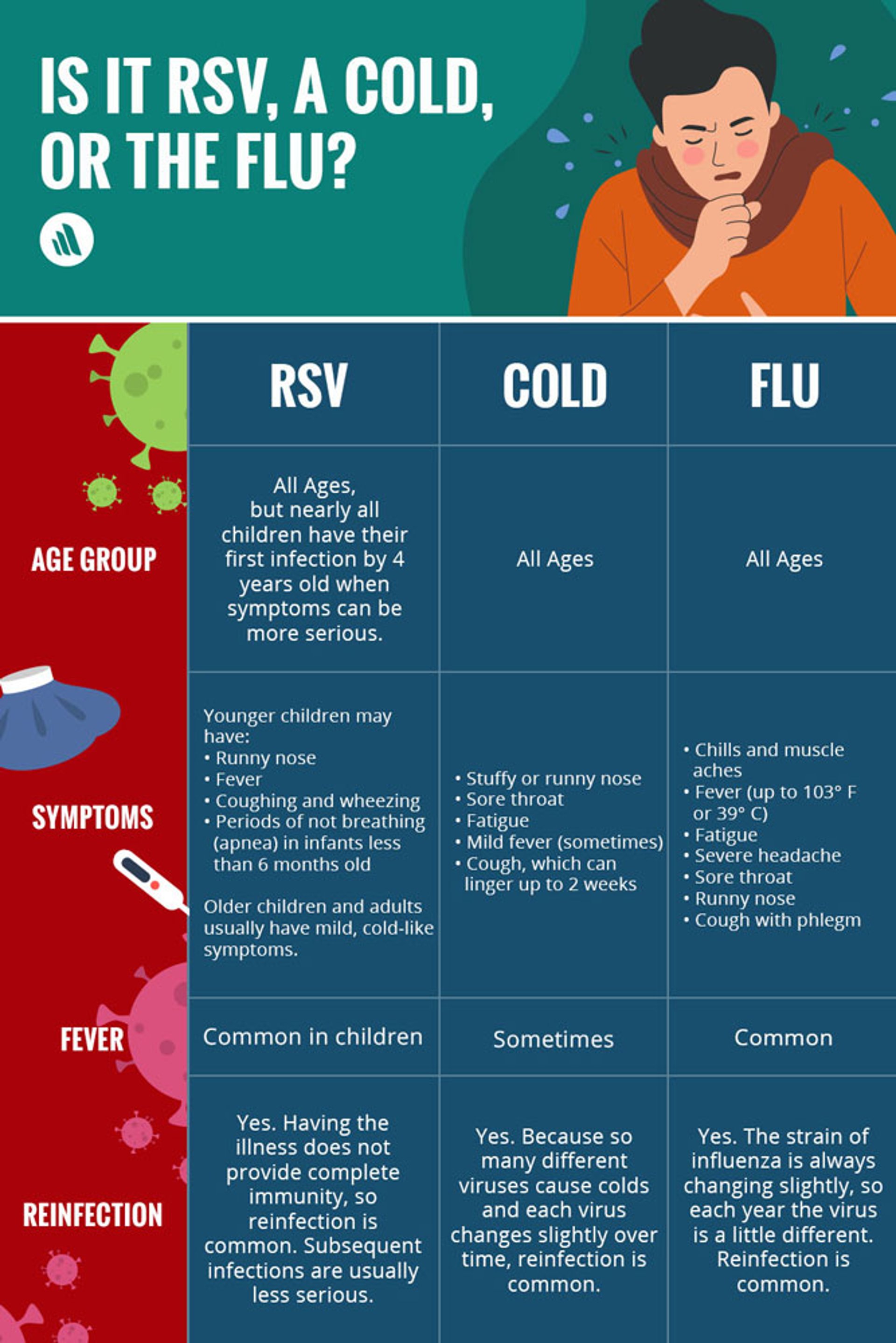
Cold symptoms start 1 to 3 days after infection. Usually, the first symptom is a scratchy or sore throat. Later, people start sneezing and have a congested, runny nose. They may develop a headache and feel mildly ill. Infrequently, a mild fever may occur in older children and adults. At first, people have a lot of discharge from the nose that is watery and clear, but, eventually, the discharge becomes thick, yellow-green mucus, and people have less of it. Many people also develop a mild cough. Symptoms usually disappear within 10 days, but the cough often lasts for 2 weeks.
Sometimes a cold triggers or worsens asthma attacks in people with asthma. Some people develop bacterial infection of the middle ear (otitis media) or sinuses (sinusitis). These infections develop because congestion in the nose blocks fluid from draining normally in the ears and sinuses. The blocked fluid then builds up, which allows bacteria to grow in the fluid and cause an infection.
Did You Know...
|
Diagnosis of Common Cold
A doctor's evaluation
Sometimes laboratory tests
Doctors are usually able to diagnose a cold based on the typical symptoms. People who have a high fever, severe headache, rash, difficulty breathing, or chest pain most likely have a different infection and not a simple cold.
Laboratory tests are not usually needed to diagnose a cold. However, doctors sometimes do laboratory tests if they think a person has a viral infection that can be treated with medication, such as influenza (flu), COVID-19, or respiratory syncytial virus (RSV) infection.
Treatment of Common Cold
Rest at home to prevent spread to others
Plenty of fluids
If needed, over-the-counter medications to relieve symptoms
People with a cold should stay warm and comfortable and should rest. They should try to avoid spreading the infection to others by staying home. Drinking fluids or using a cool mist humidifier may help a little to keep secretions loose and easier to expel. Vaporizers that release hot steam can cause burns if someone gets too close or accidentally knocks over a device filled with hot water.
Currently available antiviral medications are not effective against colds. Antibiotics do not help people with a cold, even when the nose or cough produces thick or colored mucus. Taking an antibiotic when it is not needed can cause unnecessary side effects and contributes to the rise of antibiotic-resistant bacteria.
Doctors have studied echinacea, zinc, and vitamin C as treatments for the common cold, but none has proved effective. Zinc may shorten the duration of cold symptoms. However, zinc lozenges may taste bad and cause nausea, and zinc nasal sprays may cause a permanent loss of smell. Thus, most experts do not recommend any of these supplements as treatment.
Several nonprescription (over-the-counter) medications help relieve cold symptoms. Because they do not cure the infection, which usually resolves after a week regardless of treatments tried, doctors believe that their use is optional, depending on how bad the person feels. Several different types of medications are used:
Decongestants, which help open clogged nasal passages
Antihistamines, which may help dry a runny nose
Nasal saline spray, which may help to loosen mucus
Nonsteroidal anti-inflammatory drugs (NSAIDs) or acetaminophen, which can relieve aches and pains and reduce fever
Cough syrups, which may make coughing easier by thinning secretions and loosening mucus in the chest (expectorants) or which may suppress cough (suppressants or honey)
These medications can be used together or individually. Honey should not be given to infants under 1 year of age because of the risk of infant botulism, but it may alleviate symptoms of cough in children over 1 year of age.
Inhaled decongestants are better than forms taken by mouth (orally) for relieving nasal congestion. However, using an inhaled decongestant for more than 3 to 5 days, then stopping, may make congestion worse than it was originally. Ipratropium, a nasal spray available only by prescription, helps dry a runny nose.
Older oral antihistamines, such as chlorpheniramine, can cause drowsiness. Newer antihistamines, such as loratadine, are less likely to cause drowsiness but do not relieve the symptoms or severity of the common cold.
Decongestants and antihistamines should not be given to children under 4 years old.
NSAIDs, such as aspirin, ibuprofen, and naproxen, can relieve aches and pains and reduce fever, as can acetaminophen. Aspirin is generally not recommended for children because in children, it increases the risk of Reye syndrome, which is a rare but life-threatening disorder.
Cough syrups and suppressants are not routinely recommended by doctors because coughing is a good way to clear secretions and debris from the airways during a viral infection. However, a severe cough that interferes with sleep or causes great discomfort can be treated with a cough suppressant. Expectorants are not routinely recommended by doctors because they are not clearly helpful and may cause side effects.
Nonprescription Remedies for Common Cold Symptoms
Action | Medication | Some Common Side Effects |
|---|---|---|
Analgesics/antipyretics | ||
Relieve aches and pains and reduce fever | Acetaminophen | Minimal |
Aspirin | Stomach irritation Risk of Reye syndrome in children | |
Ibuprofen | Stomach irritation | |
Naproxen | Stomach irritation | |
Antihistamines* | ||
Open nasal passages and help relieve sneezing | Diphenhydramine Chlorpheniramine | Drowsiness, dry mouth, and, in older adults, blurred vision, difficulty urinating, constipation, light-headedness when they stand, and confusion |
Cough suppressants (for example, cough syrups) | ||
May help reduce cough | Benzonatate | Confusion and stomach upset |
Codeine | Constipation, drowsiness, difficulty urinating, and stomach upset | |
Dextromethorphan | Stomach upset, but at high doses, confusion, nervousness, and irritability | |
Decongestants (nasal sprays)* | ||
Open clogged nasal passages | Naphazoline Oxymetazoline Phenylephrine Xylometazoline | Rebound congestion (worse congestion when the medication wears off) if the medication is used for more than a few days |
Decongestants (pills or tablets)* | ||
Dries runny nose | Pseudoephedrine | Palpitations, high blood pressure, nervousness, and insomnia |
Phenylephrine | Anxiety, dizziness, nervousness, and insomnia | |
Expectorant (for example, cough syrup or tablets) | ||
May help loosen mucus | Guaifenesin | Minimal, but at high doses, headache and stomach upset |
* Decongestants and antihistamines (whether alone or combined) should not be given to children under 4 years old. | ||
Prevention of Common Cold
Because so many different viruses cause colds and because each virus changes slightly over time, there is no vaccine for the common cold.
The best preventive measure is practicing good hygiene. Because many cold viruses are spread through contact with the secretions of an infected person, the following measures can help:
People with cold symptoms and people in their household and workplace should wash their hands frequently with soap and water.
The mouth and nose should be covered, for example, with tissues, the crook of an elbow, or a mask, when sneezing or coughing.
When possible, people with symptoms should sleep in a separate room.
People who are coughing or sneezing because of a cold should not go to work or school where they might infect others.
Cleaning shared objects and surfaces with a disinfectant can also help reduce the spread of common cold viruses.
Despite their popularity, echinacea, zinc, and vitamin C do not prevent or treat colds, nor does eating citrus fruits.
Drug Information for the Topic