Certain species of flukes cause infections of the intestine.
Flukes are parasitic flatworms. There are many species of flukes. Different species tend to infect different parts of the body. Flukes that infect the intestines include
Fasciolopsis buski, which causes fasciolopsiasis
Heterophyes heterophyes, which causes heterophyiasis
(See also Overview of Parasitic Infections.)
Intestinal fluke infections usually occur in Egypt, the Middle East, and parts of Asia and the Indian subcontinent.
The life cycle of flukes is complex. People get intestinal fluke infections when they drink contaminated water or eat aquatic plants (such as water chestnuts) or raw, undercooked, or salt-cured freshwater fish that contain cysts that contain fluke larvae.

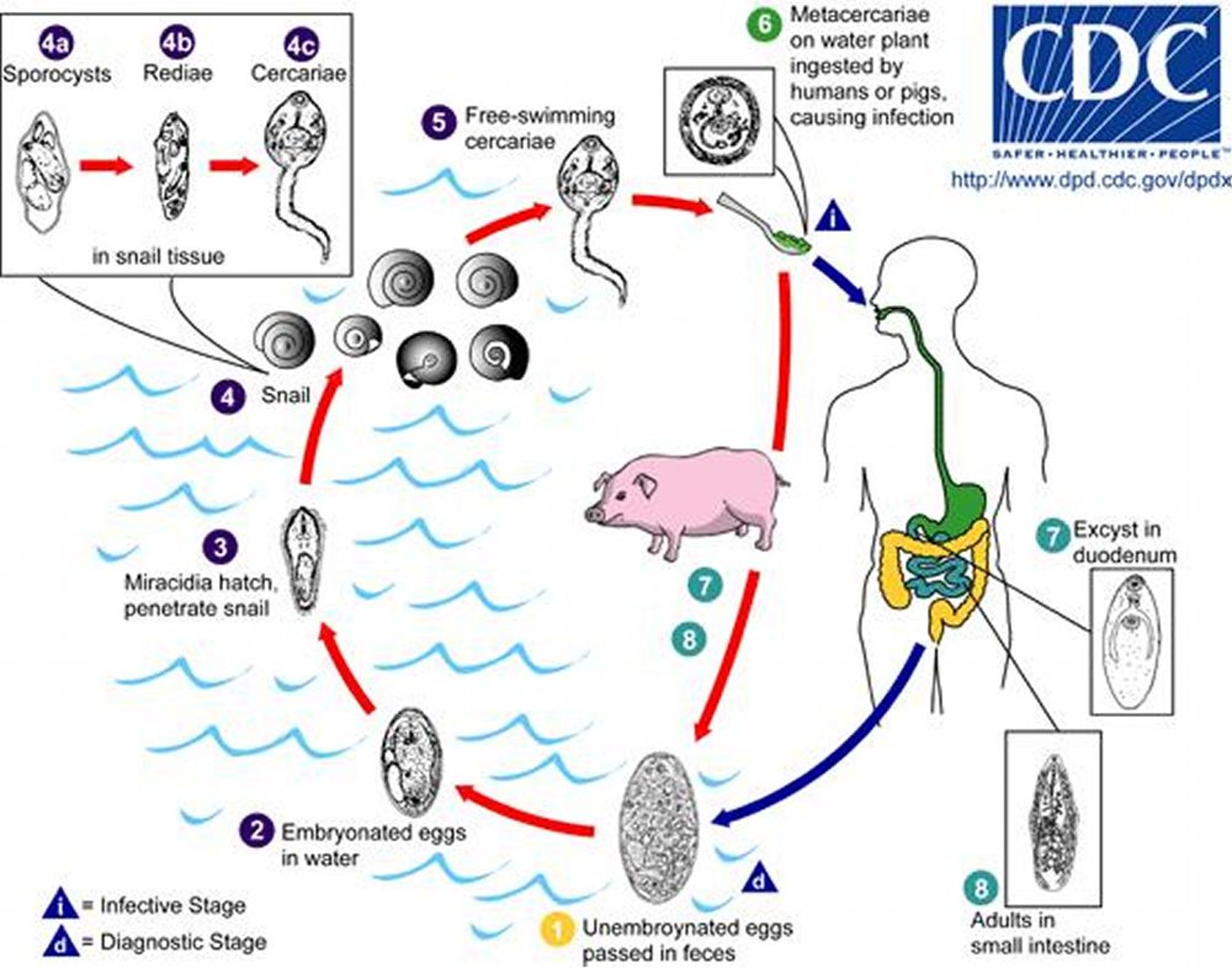
1. In infected people, the adult flukes produce eggs, which pass out of the body in stool (feces).
2–3. In water, the eggs hatch and release immature larvae (called miracidia). The miracidia enter a snail.
4. In the snail, the miracidia go through 2 stages, then develop into a form that has a tail and can swim in water (called cercariae).
5. The cercariae are released from the snail into the water.
6. They form cysts on aquatic plants. People (or other mammals such as pigs) become infected if they drink contaminated water or eat plants that contain the cysts.
7. In the small intestine, fluke larvae leave the cysts and attach to the wall of the small intestine.
8. There, the larvae develop into adult flukes in about 3 months.
Image from the Centers for Disease Control and Prevention Image Library.

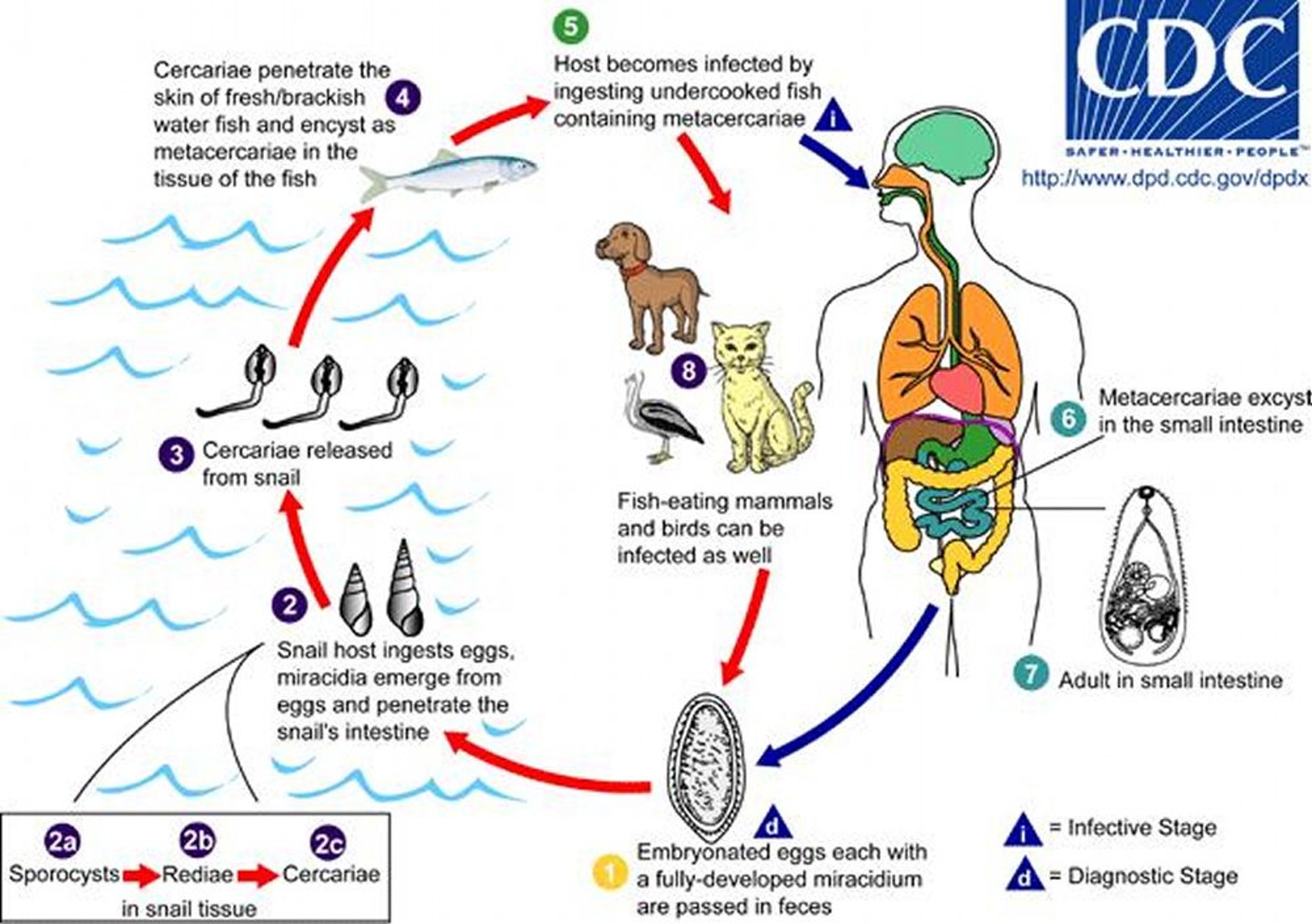
1. In infected people, the adult fluke produces eggs, which pass out of the body in stool (feces).
2. The eggs are eaten by a snail. Inside the snail, the eggs hatch and release larvae (called miracidia), which enter the snail's intestine. The miracidia go through 2 stages, then develop into a form that has a tail and can swim in water (called cercariae).
3. The cercariae are released from the snail into the water.
4. The cercariae penetrate the skin of a freshwater or brackish-water fish and form cysts in the tissues of the fish.
5. People become infected if they eat raw, undercooked, or salt-cured fish that contain the cysts.
6. In the small intestine, the fluke larvae leave the cyst and attach to the wall of the small intestine.
7. There, they mature into adult flukes.
8. In addition to people, various mammals (such as cats and dogs) and birds that eat fish can be infected by Heterophyes heterophyes.
Image from the Centers for Disease Control and Prevention Image Library.
Usually, intestinal fluke infections cause no or mild symptoms, such as indigestion and nausea. But if the infection is severe, people may have abdominal pain, diarrhea, and fever. Sometimes the flukes prevent foods from being absorbed normally (called malabsorption) or block the intestine (called intestinal obstruction).
Doctors diagnose intestinal fluke infections when they see eggs or sometimes adult flukes in a person's stool (feces). Sometimes doctors do blood tests or imaging tests to look for complications of the infection.
These fluke infections are treated with the medication praziquantel.These fluke infections are treated with the medication praziquantel.
See also the Centers for Disease Control and Prevention (CDC) information on fasciolopsiasis.