Diverticulosis is the presence of 1 or more balloon-like sacs (diverticula), usually in the large intestine (colon).
The cause of diverticulosis is unknown but may be related to diet, a sedentary lifestyle, obesity, smoking, and use of certain medications.
Spasms of the muscular layer of the intestine are thought to be another cause of diverticula.
Diverticula usually cause no symptoms, but sometimes they become inflamed, causing abdominal pain, or bleed, causing blood in the stool or bleeding from the rectum.
Typically, the diagnosis is confirmed by computed tomography (CT) scan; sometimes magnetic resonance imaging (MRI), ultrasound, colonoscopy, or other tests are used.
If people have symptoms, a high-fiber diet and stool-bulking agents are given, but sometimes bleeding occurs and requires colonoscopy or even surgery.
What Is Diverticulosis?
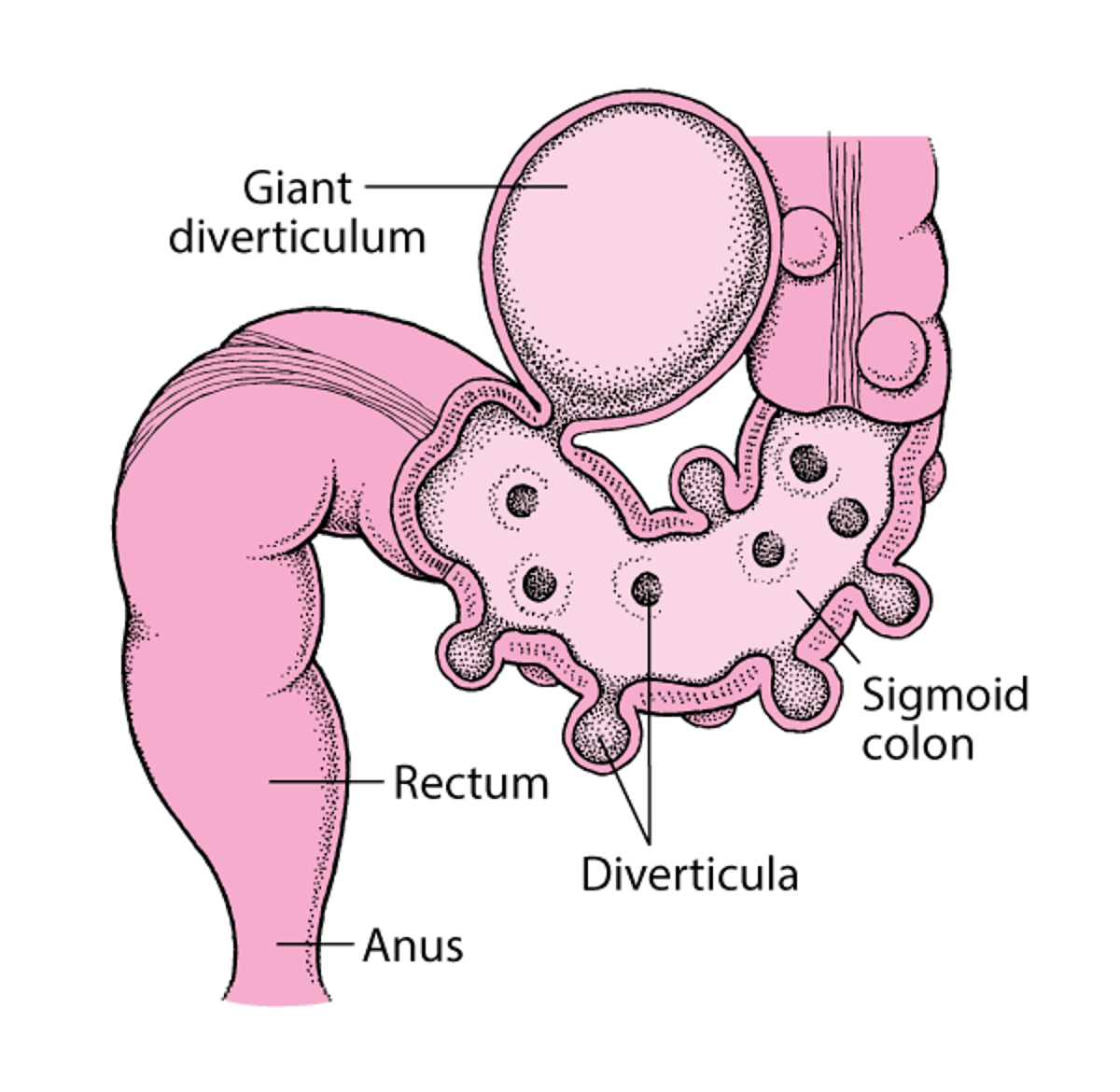
In diverticulosis, many balloon-like sacs (diverticula) develop in the large intestine, most commonly in the last part of it (sigmoid colon). Most diverticula vary in diameter from 1/4 inch to almost half an inch (about 5 to more than 10 millimeters). For unclear reasons, some diverticula become very large. Giant diverticula, which are rare, are larger than 1½ inches (about 4 centimeters) in diameter. |

(See also Definition of Diverticular Disease.)
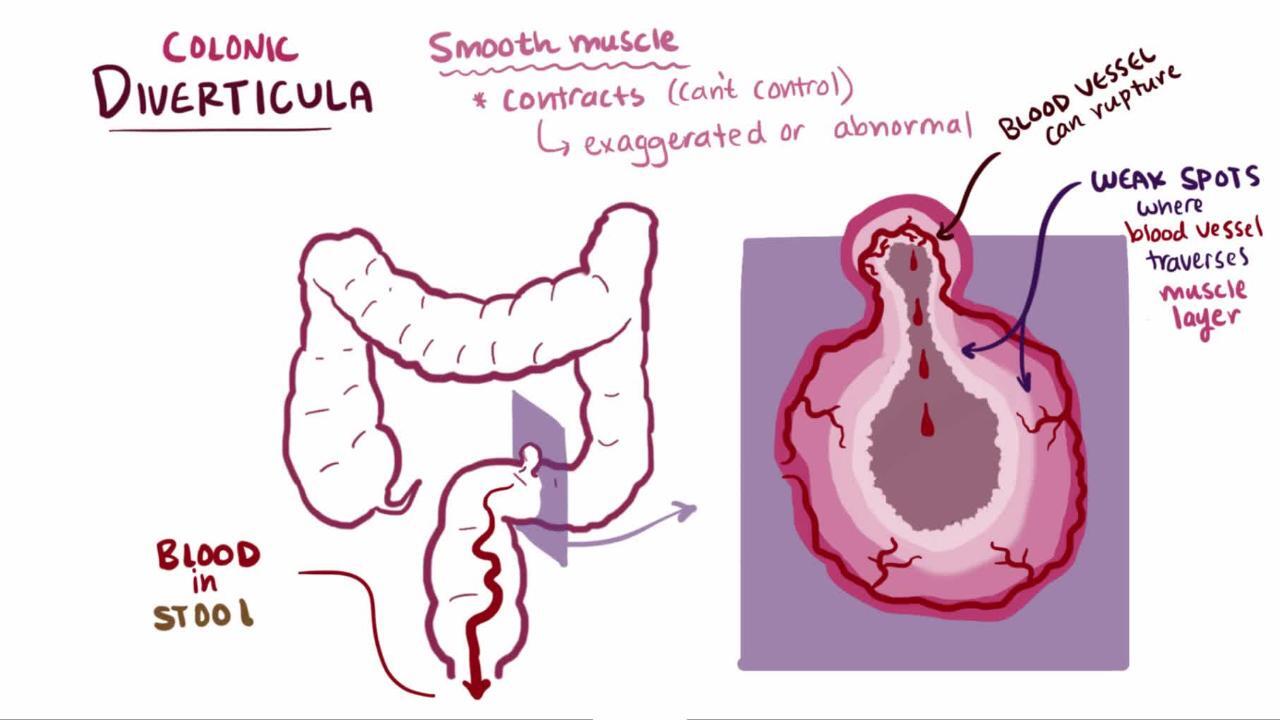
Diverticula in the large intestine occur when a defect develops in the thick, muscular middle layer of the bowel. The thin inner layers of the bowel bulge out through the defect and create a small sac. Diverticula usually do not cause any problems but they sometimes become inflamed or bleed.

Diverticula may develop anywhere in the large intestine, but they are more common in the sigmoid colon, which is the last part of the large intestine just before the rectum.
Diverticula vary in diameter from 1/4 inch to almost half an inch (about 5 to 10 millimeters). Giant diverticula, which are rare, are larger than 1½ inches (about 4 centimeters) in diameter. A person may have only a single giant diverticulum.
Diverticula become more common as people grow older; by age 60 about half of people have them, and by age 80 about 70% of people have them.

Causes of Diverticulosis of the Large Intestine
The cause of diverticulosis is unknown but may be related to a diet low in fiber or high in red meat, a sedentary lifestyle, obesity, and smoking and use of nonsteroidal anti-inflammatory drugs (NSAIDs), aspirin, steroids (sometimes also called glucocorticoids or corticosteroids), and opioids.
Other possible risk factors include family history and alterations in the structure of the large intestine and the way in which waste products move through it.
Diverticula are thought to be caused by spasms of the muscular layer of the intestine. The resulting pressure that these spasms exert on the intestinal contents causes a part of the wall to bulge at a point of weakness, usually near to where an artery penetrates the muscular layer of the large intestine. An increase in the thickness of the muscular layer is a common finding in the sigmoid colon of people with diverticulosis.
The cause of a giant diverticulum is not known.
Symptoms of Diverticulosis of the Large Intestine
Diverticula themselves are not dangerous. In fact, most people with diverticulosis do not have symptoms. However, people with diverticulosis can sometimes have unexplained painful cramps or bowel movement disturbances (such as constipation).
Complications of diverticulosis
Complications of diverticulosis are more common among people who smoke, have obesity, have HIV infection, take NSAIDs, or are undergoing cancer chemotherapy.
The most common complications are:
Diverticulitis is inflammation with or without infection of a diverticulum, which causes abdominal pain and can result in a collection of pus (abscess) around the inflamed diverticulum. If a hole (perforation) develops in the diverticulum, fluid and bacteria can leak into the abdomen and cause a very serious condition called peritonitis.
A diverticulum can bleed into the intestine. Bleeding is painless but can be heavy and result in blood passing out through the rectum (see Gastrointestinal Bleeding). Most episodes of bleeding stop spontaneously. However, in some people, doctors have to do colonoscopy or surgery to stop the bleeding. The bleeding may be serious enough to require a blood transfusion.
Sometimes parts of the intestine in the same segment of the colon may be inflamed in people with diverticulosis, causing symptoms such as rectal bleeding, diarrhea, and abdominal pain. This is called segmental colitis associated with diverticulosis (SCAD).
Sometimes, people with diverticulosis may have symptoms similar to those of irritable bowel syndrome, such as bloating, constipation, or diarrhea. This is called symptomatic uncomplicated diverticular disease (SUDD). Doctors do not know if SUDD is caused by diverticulosis or if it is a form of irritable bowel syndrome that occurs in people who also have diverticulosis.
Diagnosis of Diverticulosis of the Large Intestine
Computed tomography (CT) scan or magnetic resonance imaging (MRI)
Sometimes ultrasound, colonoscopy, capsule endoscopy, or barium enema
Sometimes fecal calprotectin testing
Diverticulosis is suspected when symptoms such as unexplained painful cramps, bowel movement disturbances, or painless rectal bleeding, especially in an older adult, are present.
Sometime ultrasound is performed first and will show diverticulosis. Usually, when doctors are looking specifically for diverticulosis, a computed tomography (CT) scan or magnetic resonance imaging (MRI) is the best test for diagnosis.
Diverticula that do not cause symptoms are usually found incidentally during colonoscopy, video capsule endoscopy, barium enema, computed tomography scan, or magnetic resonance imaging (MRI). When they do cause symptoms, colonoscopy is important to confirm the diagnosis and to exclude other causes of the symptoms such as colon cancer.
If blood is present in the stool, a colonoscopy is usually the best method with which to identify the source. However, in people who are bleeding a lot, CT angiography or radionuclide scans taken after radioactive red blood cells are injected into a vein may be required to determine the location of bleeding.
A fecal calprotectin test may be performed to check for intestinal inflammation. Calprotectin is a protein found in white blood cells, which migrate to areas of inflammation.

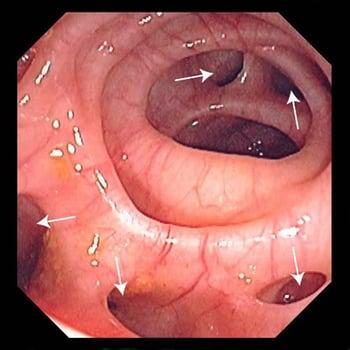
This image shows multiple openings of diverticula (arrows) in the large intestine (colon). To see the diverticula, doctors examine the large intestine using a flexible viewing tube (a procedure called colonoscopy).
Treatment of Diverticulosis of the Large Intestine
No treatment for people who have no symptoms
Changes in diet for people who have symptoms
Treatment of bleeding
People who have diverticula but have no symptoms do not need treatment or changes to their diet.
The goal of treatment in people who have symptoms is usually to reduce intestinal spasms, which may be best achieved by maintaining a high-fiber diet (which consists of vegetables, fruits, and whole grains) and drinking plenty of fluids. Increased bulk in the large intestine reduces spasms, which in turn decreases the pressure on the walls of the large intestine. While it is not clearly proved that fiber helps a great deal with diverticulosis, it does help with overall health. If a high-fiber diet alone is not effective, a daily supplement of bran or a stool-bulking agent, such as psyllium or methylcellulose, may help. People who have constipation may also be given certain laxatives that increase bulk in the large intestine.
Most bleeding stops without treatment, but, if it does not, doctors often do colonoscopy to locate and clot (coagulate) the bleeding area with clips, heat, or a laser, or by injecting the area with a medication.

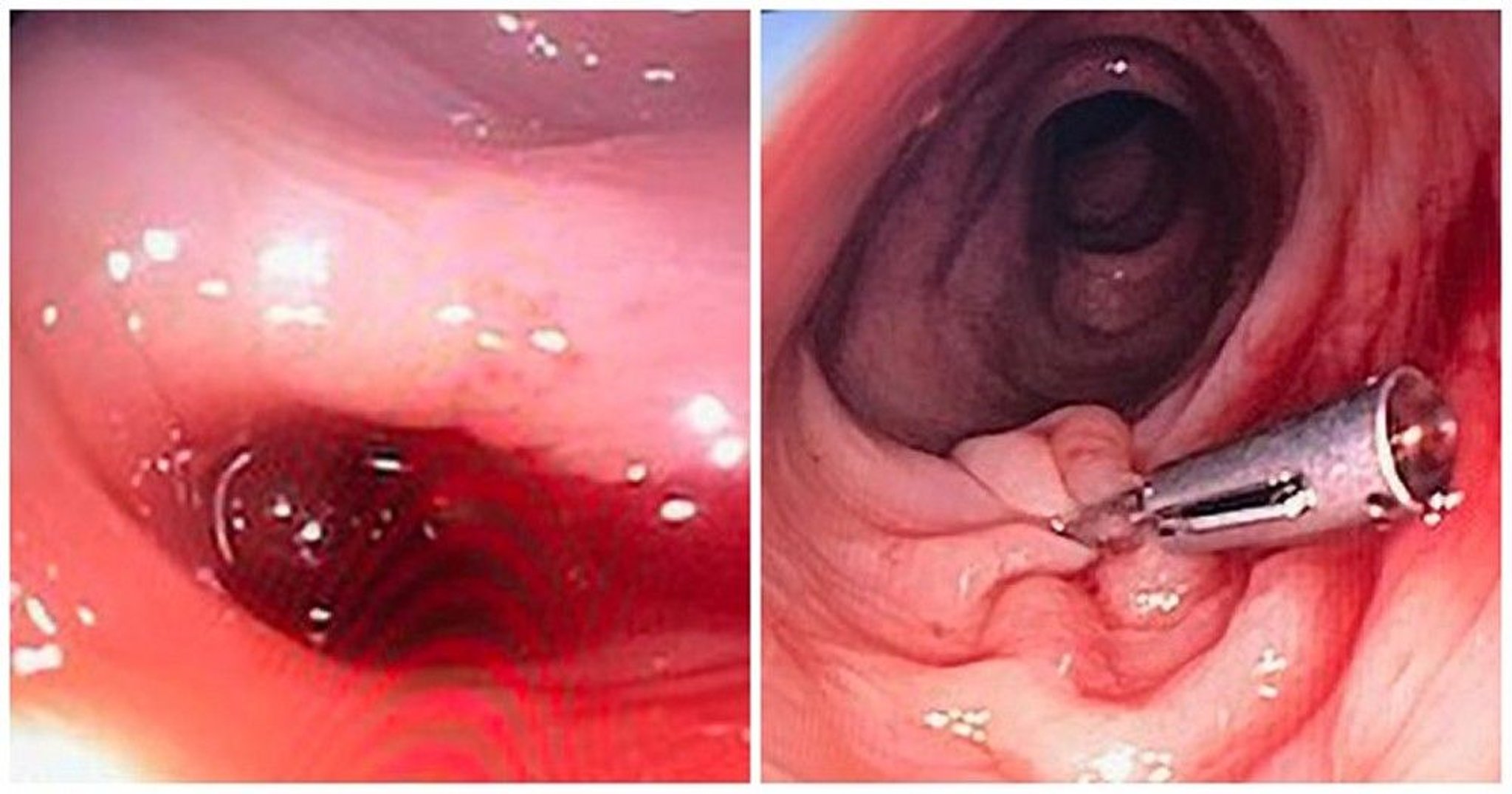
This photo shows a diverticulum with a clotted blood vessel (left) that caused lower gastrointestinal bleeding. Placement of an endoclip (right) during colonoscopy stopped the bleeding.
Photos courtesy of Drs. Joel A. Baum and Rafael A. Ching Companioni.
Alternatively, doctors may do angiography to stop the bleeding. During this procedure, doctors pass a catheter into the artery that goes to the bleeding diverticulum and then inject material (a process called embolization) to reduce blood flow to the bleeding diverticulum.
Rarely, if bleeding cannot be stopped or recurs often, doctors may do surgery to remove some or all of the large intestine (a procedure called colectomy).
A giant diverticulum may require surgery because it is likely to become infected and rupture.
Drug Information for the Topic