Casts should be removed by professionals using appropriate equipment.
Indications
Completion of the period of immobilization
Numbness, tingling, increasing pain, or any other sensation indicating the cast is too tight
Foreign body lodged between the skin and the cast
Cast damage or wetness
Concern about infection or injury to the skin under the cast requiring examination
Contraindications
A date that is before the prescribed period of immobilization
Complications
Injury to underlying skin (eg, abrasions, friction burn)
Equipment
There are several different tools that can be used to remove a cast:
Vibrating cast saw
Cast spreader
Blunt-tipped shears
Vibrating cast saws are designed to cut the cast without lacerating the skin.


Katawut/stock.adobe.com
Additional Considerations
Use a sheet or drape to collect dust generated from cutting the casting material.
If the cast saw has an attached vacuum hose, use it to collect the dust.
Wear appropriate eye and respiratory protection to protect against flying cast debris.
Positioning
The patient should be positioned to provide the operator with optimal access to the extremity with the cast.

Ekaterina/stock.adobe.com
Step-by-Step Description of Procedure
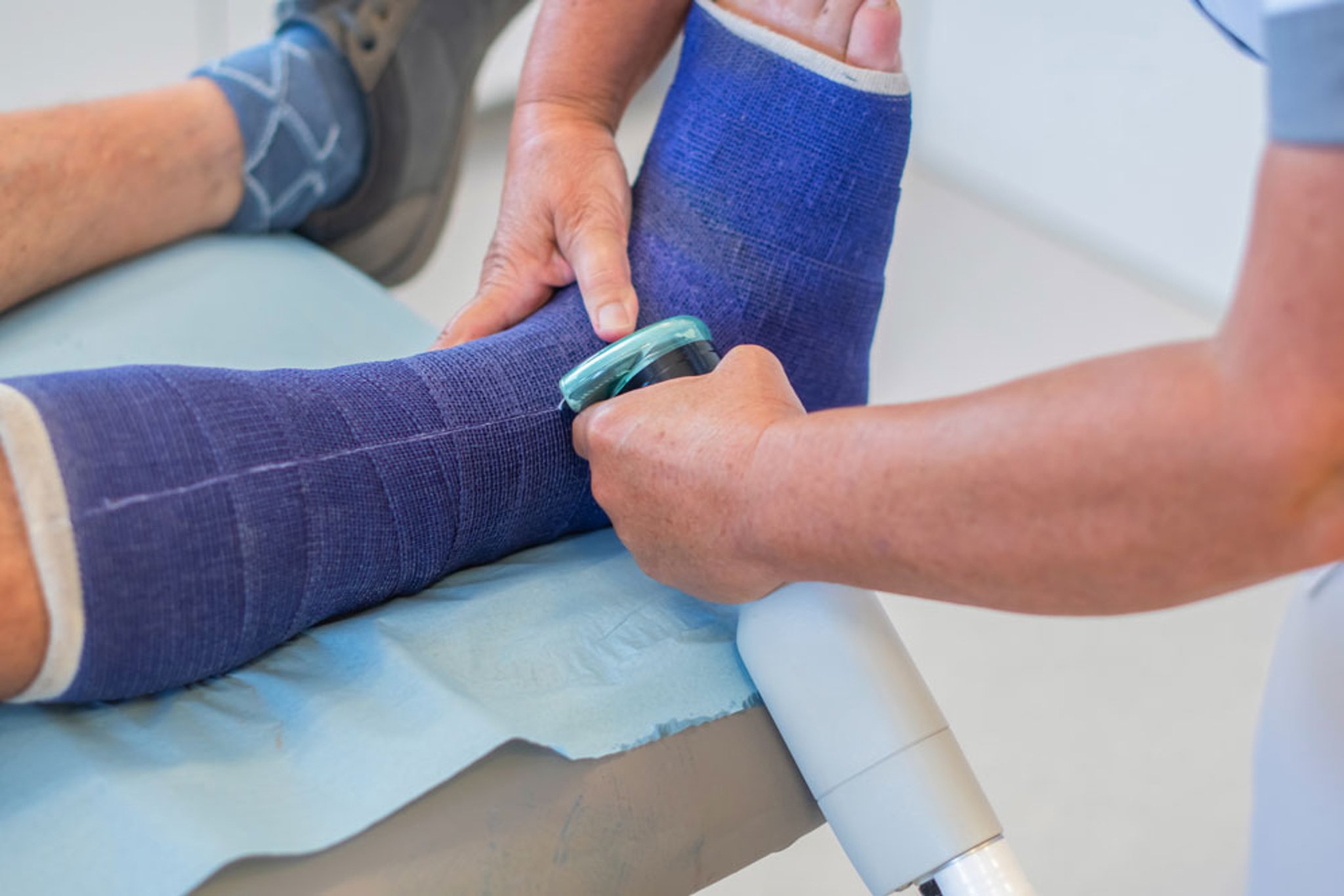
Introduce the vibrating cast saw to the patient, and touch it to your own palm to demonstrate that it does not hurt and will not cut the skin. The vibrating cast saw does not spin but instead oscillates back and forth to cut through rigid plaster and fiberglass, which keeps it from cutting through elastic tissue like skin.
Score the cast along its long axis with the vibrating cast saw.
Continue cutting the cast in the channel created by scoring until the underlying padding is reached.
Cut the padding and stockinette with blunt-tipped shears.
Insert the cast spreader between the cut cast edges.
Spread the cast apart using the cast spreader.
Remove the cast.

Aftercare
Clean the extremity of accumulated dried skin and oils using soap and water.
Arrange or recommend appropriate physical therapy if needed (eg, for joint stiffness).
Warnings and Common Errors
To avoid injury to the underlying skin, do not continue to apply pressure with the cast saw at the same location after cutting through the plaster or fiberglass.
Tips and Tricks
Spreading the cast apart may be easier if both sides are cut rather than just one side.
Brace part of the hand holding the cast cutter on the cast for better control.