Atypical fibroxanthoma is a low-grade sarcoma of the skin.
(See also Overview of Skin Cancer.)
Atypical fibroxanthomas are superficial, low-grade dermal sarcomas that typically present as rapidly growing, red or pink nodules on chronically sun-exposed skin. They are rare among nonmelanoma skin cancers. They most commonly occur on the head and neck of older patients and have a male predilection. They appear similar to other nonmelanoma skin cancers, as nonhealing or tender pink-red skin papules or nodules.
The diagnosis of atypical fibroxanthoma is with biopsy.
Tumors are excised, or Mohs micrographic surgery—in which tissue borders are progressively excised until specimens are tumor-free as determined by microscopic examination during surgery—is performed if clinically appropriate. Recurrence occurs in approximately 5% of patients (1). Metastasis and disease-associated mortality is highly unlikely.

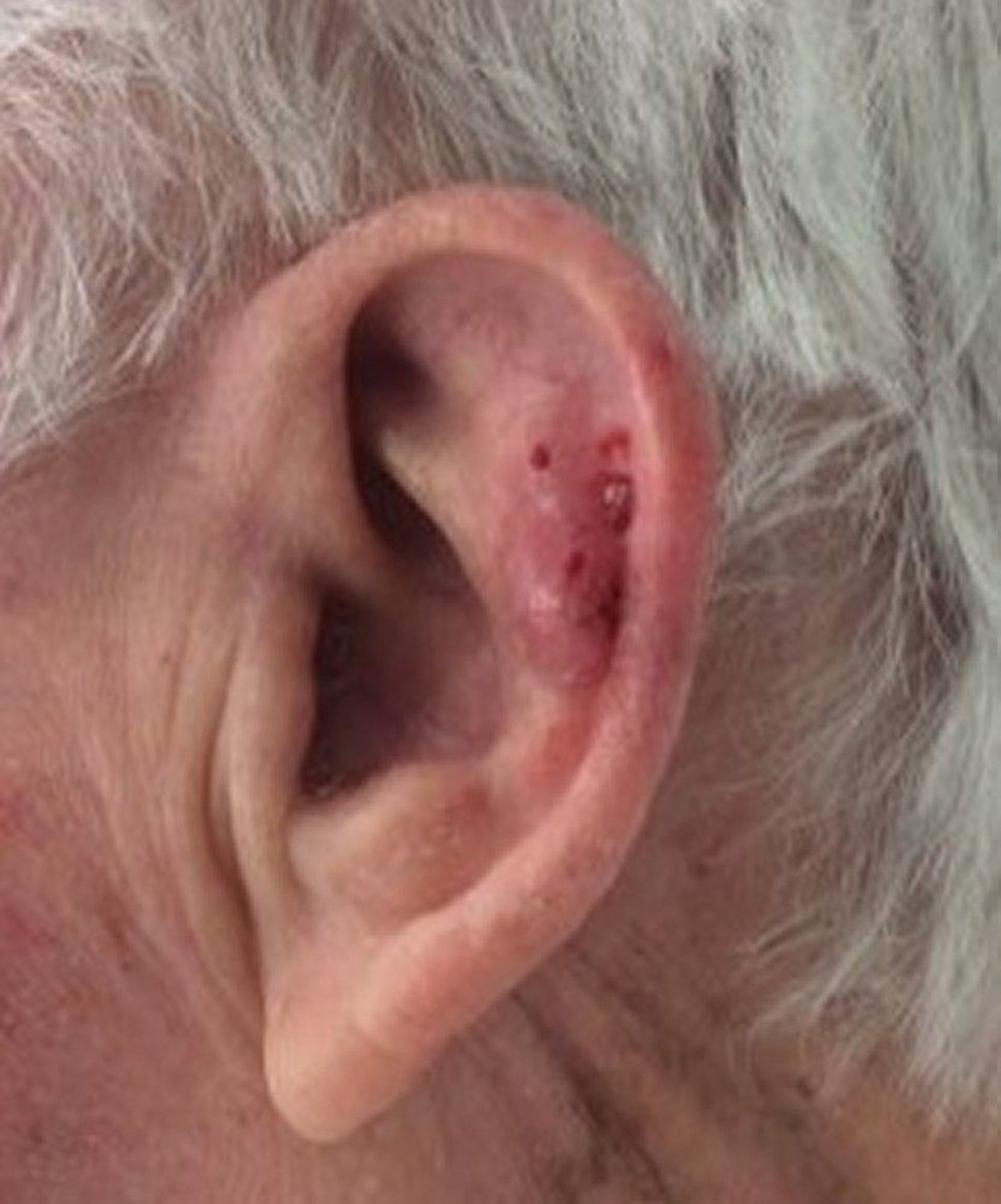
Photo courtesy of Gregory L. Wells, MD.
General reference
1. von Dannecker R, de Oliveira LML, Lapenda I, et al. Clinical Outcomes and Prognosis in Atypical Fibroxanthoma: A Systematic Review and Meta-Analysis. Int J Dermatol. 2025 Sep;64(9):1592-1598. doi: 10.1111/ijd.17841. Epub 2025 May 11. PMID: 40350546.
Prevention of Atypical Fibroxanthoma
Because atypical fibroxanthomas are associated with ultraviolet (UV) radiation exposure, a number of measures are recommended to limit exposure (eg, sun avoidance measures, use of protective clothing, use of sunscreen). For more detailed information, see Prevention of Effects of Sun Exposure.