Cervicitis is infectious or noninfectious inflammation of the cervix. Findings may include cervical discharge and cervical erythema and friability. Diagnosis is made with nucleic acid amplification testing (NAAT) or culture for cervical infection. Treatment is with antimicrobials.
Acute cervicitis is usually caused by an infection; chronic cervicitis is usually not infectious. Cervical infection may ascend to the upper genital tract and cause endometritis or pelvic inflammatory disease (PID) (1, 2).
References
1. Workowski KA, Bachmann LH, Chan PA, et al. Sexually Transmitted Infections Treatment Guidelines, 2021. MMWR Recomm Rep. 2021;70(4):1-187. Published 2021 Jul 23. doi:10.15585/mmwr.rr7004a1
2. Gaydos C, Maldeis NE, Hardick A, Hardick J, Quinn TC. Mycoplasma genitalium as a contributor to the multiple etiologies of cervicitis in women attending sexually transmitted disease clinics. Sex Transm Dis. 2009;36(10):598-606. doi:10.1097/OLQ.0b013e3181b01948
Etiology of Cervicitis
Acute cervicitis is usually caused by a sexually transmitted infection; the most common infectious cause of cervicitis is Chlamydia trachomatis, followed by Neisseria gonorrhoeae. Other causes include herpes simplex virus (HSV), Trichomonas vaginalis, bacterial vaginosis, and Mycoplasma genitalium. Often, a pathogen cannot be identified.
The cervix may be inflamed but not infected as part of vaginitis (eg, bacterial vaginosis, trichomoniasis).
Noninfectious causes of cervicitis include gynecologic procedures, foreign bodies (eg, pessaries, barrier contraceptive devices), chemicals (eg, in douches or contraceptive creams or gels), and allergens (eg, latex).
Symptoms and Signs of Cervicitis
Cervicitis is often asymptomatic It may present with vaginal discharge or bleeding (intermenstrual or postcoital), if discharge or bleeding from the cervix is noted when it passes through the vagina. Some women have dyspareunia.

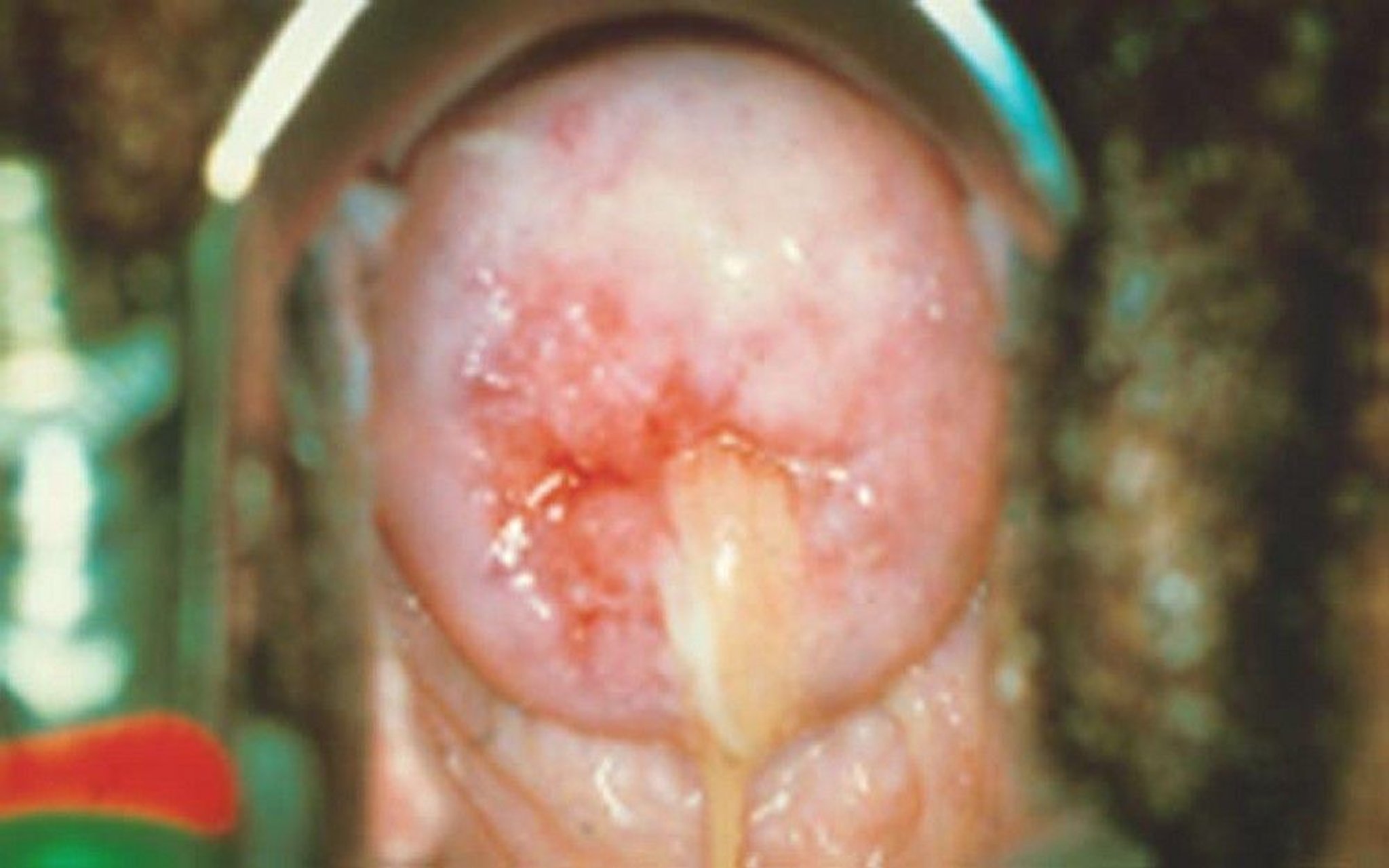
The cervical os is red and inflamed and exudes a thick, yellow discharge.
By permission of the publisher. From Goldfarb A. In Atlas of Clinical Gynecology: Pediatric and Adolescent Gynecology. Edited by M Stenchever (series editor) and AF Goldfarb. Philadelphia, Current Medicine, 1998.
Examination findings can include purulent or mucopurulent cervical discharge, cervical friability (eg, bleeding after touching the cervix with a swab), and cervical erythema and edema.
Diagnosis of Cervicitis
Pelvic examination
NAAT
Cervicitis is suspected if women have a cervical exudate (purulent or mucopurulent) or cervical friability.
A pelvic examination is performed. A sample of cervical discharge is collected. NAAT is the preferred diagnostic test to evaluate for causative organisms. If it is uncertain whether discharge is cervical or vaginal, tests should be performed to evaluate for vaginitis.
Findings that suggest a specific cause of cervicitis include the following:
Fever with cervical motion tenderness, uterine tenderness, and adnexal tenderness: Pelvic inflammatory disease (PID)
Cervical punctate hemorrhages (strawberry spots): Trichomoniasis
Cervical ulcers or erosions, sometimes with vulvovaginal vesicles or painful ulcers and/or fever: Herpes simplex virus (HSV) infection
If the patient reports bleeding or blood is found on examination, appropriate evaluation should be performed, depending on the clinical presentation and patient characteristics. A Pap test and/or human papillomavirus tests should be performed if the patient is due for cervical cancer screening.
Treatment of Cervicitis
Treatment of chlamydia and gonorrhea or other infection, if diagnosed
In certain clinical situations, patients with signs and symptoms suggestive of cervicitis should be treated empirically for gonorrhea and chlamydia, even before test results are received. This includes settings in which patient follow up is uncertain (eg, emergency department, urgent care clinic) or if the clinical suspicion is high and expediting treatment may benefit the patient. Treatment is the following:
Chlamydia: Doxycycline 100 mg orally twice a day for 7 days (preferred regimen) or azithromycin 1 g orally once (alternative)
Gonorrhea: Ceftriaxone 500 mg IM once for patients weighing < 150 kg or 1g IM once for patients weighing ≥ 150 kg plus azithromycin 1 g orally once (due to emerging resistance of N. gonorrhoeae to cephalosporins)
Once the cause or causes are identified based on the results of microbiologic testing, subsequent treatment is adjusted accordingly.
If the cause is the herpes simplex virus, antiviral medications can shorten the duration of symptoms but not eradicate infection.
If cervicitis persists despite treatment, testing for chlamydiae and N. gonorrhoeae should be repeated to exclude reinfection and the patient should be tested for M. genitalium, if NAAT for this organism is available.M. genitalium has been associated with cervicitis, pelvic inflammatory disease, preterm delivery, and infertility and is a major cause of nongonococcal, nonchlamydial cervicitis. If testing positive or unavailable, M. genitalium should be treated with doxycycline (100 mg orally twice daily for 7 days) followed by either azithromycin (if macrolide sensitive, 1 g orally for 1 dose then 500 mg daily for 3 additional days) or moxifloxacin (if macrolide resistant, 400 mg orally once daily for 7 days) (1). If resistance testing is not available, treat with doxycycline followed by moxifloxacin.
If the cause is a bacterial STI, sex partners should be tested and treated simultaneously. They should abstain from sexual intercourse until the infection has been eliminated from the patient and all partners.
All women with confirmed chlamydia or gonorrhea, and those diagnosed with trichomoniasis, should be re-tested 3 months after treatment because reinfection is common.
Treatment reference
1. Workowski KA, Bachmann LH, Chan PA, et al. Sexually Transmitted Infections Treatment Guidelines, 2021. MMWR Recomm Rep. 2021;70(4):1-187. Published 2021 Jul 23. doi:10.15585/mmwr.rr7004a1
Key Points
Acute cervicitis is usually caused by an STI and may develop into PID.
Infection may be asymptomatic; symptoms may include vaginal discharge and intermenstrual and postcoital vaginal bleeding.
Test women for chlamydia, gonorrhea, bacterial vaginosis, and trichomoniasis.
Treat most women for chlamydia and gonorrhea at the first visit.
Drug Information for the Topic