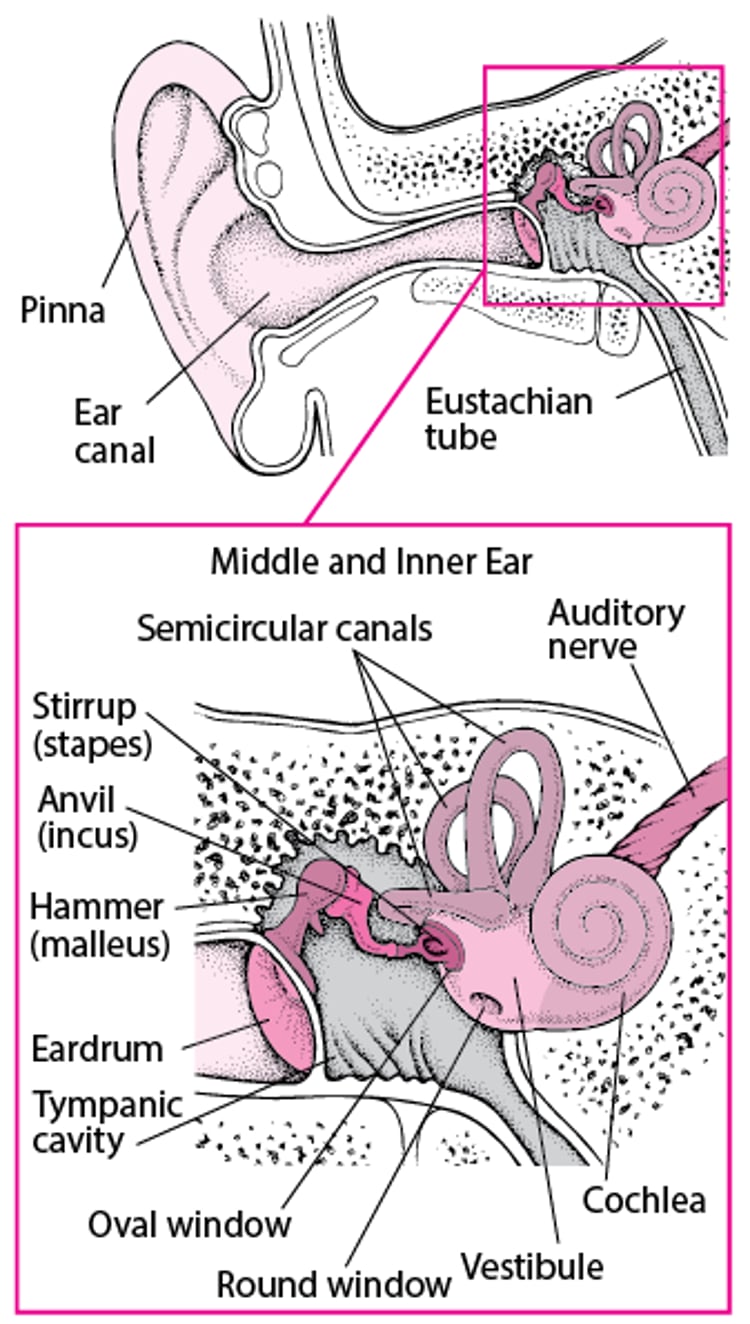
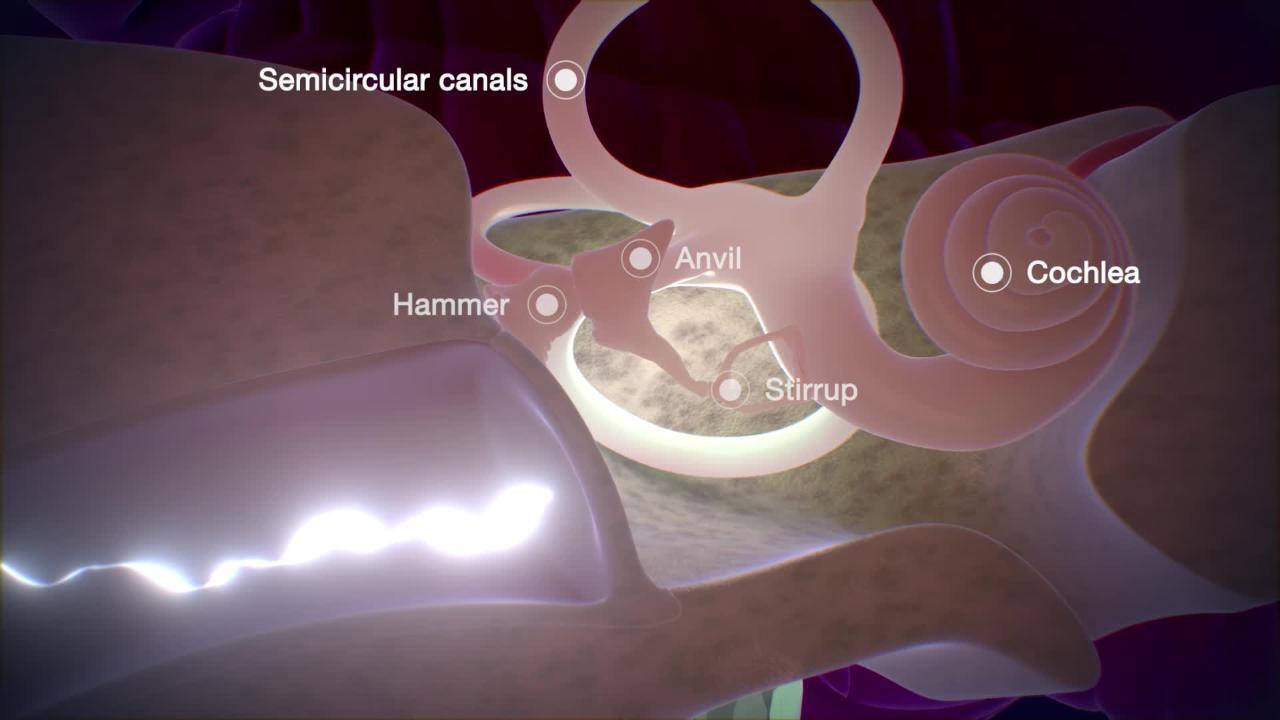
Your middle ear is a hollow space behind your eardrum. The middle ear contains 3 tiny bones that transmit your eardrum's vibrations to the nerves in your inner ear.
Inside the Ear

What is a chronic suppurative ear infection?

A chronic suppurative ear infection is a middle ear infection that lasts more than 3 months and has the following characteristics:
An ear infection that doesn't go away
Your ear doesn't hurt, but you have thick fluid or pus coming out of your ear
You have hearing loss, which can be permanent
Doctors clean your ear canal and give you antibiotic eardrops
What causes chronic suppurative ear infections?
Usually a chronic suppurative ear infection starts with an acute ear infection that:
Leaves a hole in your eardrum that never heals (eardrum perforation)
A chronic suppurative ear infection may flare up after:
You get a cold
Water gets in your middle ear through the eardrum perforation while you're bathing or swimming
Children who have birth defects of their face have an increased risk of chronic suppurative ear infections.
What are the symptoms of a chronic suppurative ear infection?
The most common symptoms are:
Thick fluid or pus coming out of your ear
Hearing loss
What are the complications of a chronic suppurative ear infection?
The hole in the eardrum may let in dangerous bacteria that cause a worse infection. That infection may destroy the tiny bones in your middle ear or spread to nearby skull bones.
Some people with chronic suppurative ear infections develop a cholesteatoma in the middle ear. A cholesteatoma is a growth that looks like skin and isn't cancerous. A cholesteatoma increases your risk of having serious complications, including:
Hearing loss that doesn't get better
Infections in other parts of your ear, the bones of your skull, or your brain
Damage to the nerve that controls movements in your face
How can doctors tell if I have a chronic suppurative ear infection?
Doctors will do a hearing test and use a handheld light (otoscope) to check in your ear for:
Pus (thick fluid)
A cholesteatoma (skin-like growth in your middle ear)
If doctors think you have a cholesteatoma, they may do a computed tomography (CT) scan or magnetic resonance imaging (MRI).
How do doctors treat chronic suppurative ear infections?
When a chronic suppurative ear infection flares up, doctors will:
Clean your ear canal and middle ear
Give you antibiotic ear drops
Give you antibiotics to take by mouth, if needed
If you have a hole in your eardrum, they will tell you to keep water out of your ear.
Doctors may also recommend surgery if you have:
A cholesteatoma (skin-like growth in your middle ear)