Non–X-Linked (Autosomal) Recessive Disorders
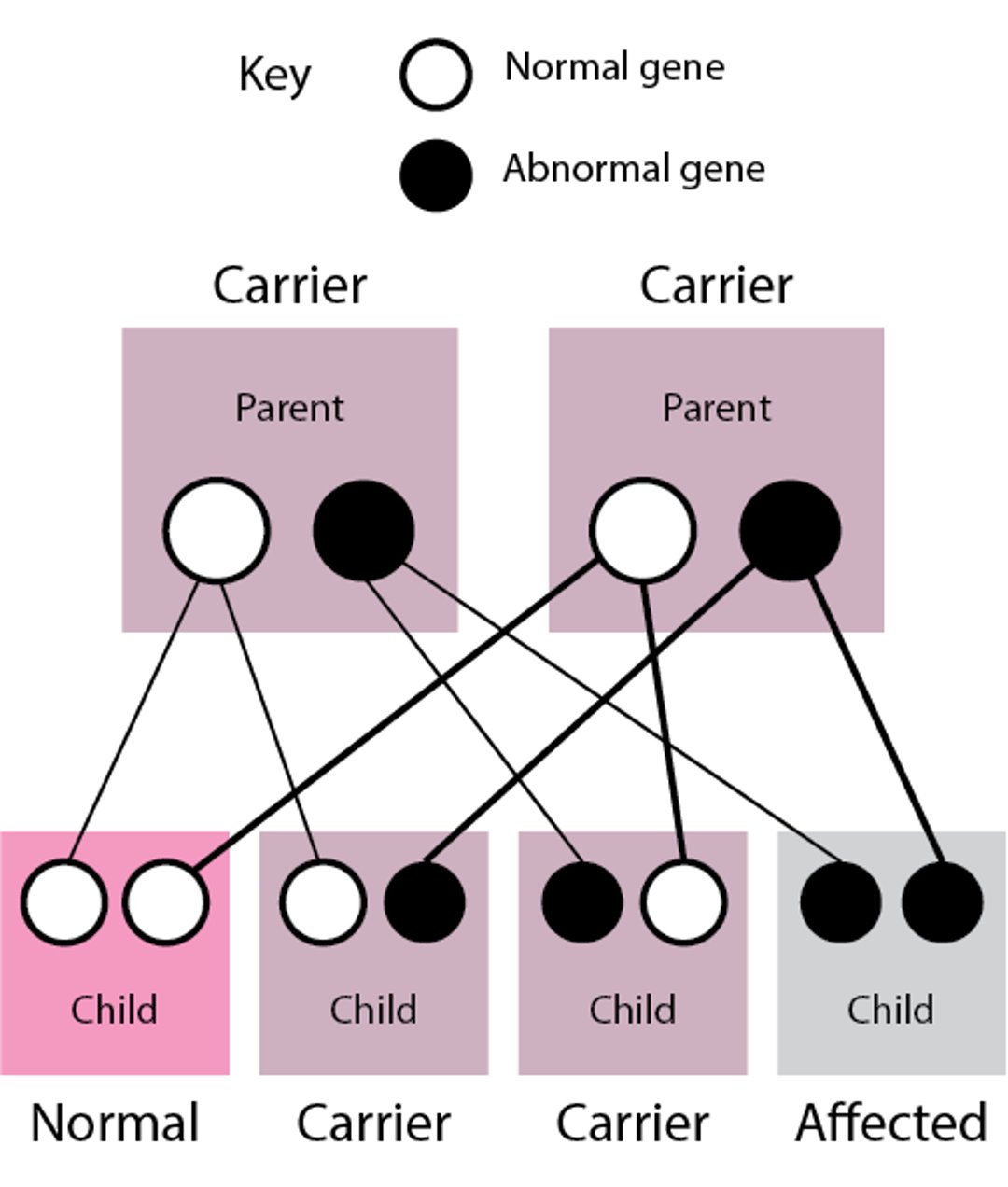
Some disorders represent a non–X-linked recessive trait. To have the disorder, a person usually must receive 2 abnormal genes, 1 from each parent. If both parents carry 1 abnormal gene and 1 normal gene, neither parent has the disorder (they are unaffected) but each has a 50% chance of passing the abnormal gene to the children. Therefore, each child has
A 25% chance of inheriting 2 abnormal genes and thus of developing (being affected by) the disorder
A 25% chance of inheriting 2 normal genes
A 50% chance of inheriting 1 normal and 1 one abnormal gene, thus becoming a carrier of the disorder (but being unaffected by) the disorder, like the parents
Therefore, among the children, the chance of not developing the disorder (that is, not being a carrier or being an unaffected carrier) is 75%.