Leishmaniasis is an infection caused by a species of the protozoa Leishmania.
Leishmaniasis is transmitted through the bite of an infected sandfly.
People may have mild or no symptoms or have skin sores (cutaneous leishmaniasis), or sores in the nose, mouth, or throat that can lead to severe disfigurement (mucosal leishmaniasis), or have fever, weight loss, fatigue, and enlargement of the spleen and liver (visceral leishmaniasis).
Doctors diagnose the infection by analyzing samples of infected tissue or doing blood tests.
Various medications and other treatments are used to treat the infection, and doctors decide which ones to give based on the form of leishmaniasis, the status of the person's immune system, which species of Leishmania is causing the infection, and where the infection was acquired.
Using insect repellents and bed nets and clothing treated with insecticides helps prevent sand fly bites.
Protozoa are a type of parasite. They make up a diverse group of microscopic, one-celled organisms. Some protozoa need a human or animal host to live. There are many different kinds of protozoa.


Leishmania are extraintestinal protozoa, which means they cause infections only in areas outside of a person's intestines such as the skin; the mucous membranes of the nose, mouth, or throat; or internal organs including the liver, spleen, and bone marrow.
Leishmaniasis occurs throughout the world. It is not a rare infection, and thousands of people are infected each year. Poor housing and poor sanitation, undernutrition, and movement of nonimmune people and animals to areas where leishmaniasis is common are risk factors for the development of infection.
Leishmaniasis is spread to people by infected sandflies. Sandflies are vectors, which means they carry and transmit parasites that cause diseases in people. Sandflies transmit different species of Leishmania depending on the geographic location.
(See also Overview of Parasitic Infections.)
Transmission of Leishmaniasis
Tiny, infected female sandflies spread Leishmania when they bite people or animals, such as dogs or rodents.
Rarely, the infection can be spread through blood transfusions, through sharing needles with an infected person, from mother to child before or at birth, through sexual contact, sharing needles, or through laboratory needle-stick accidents.

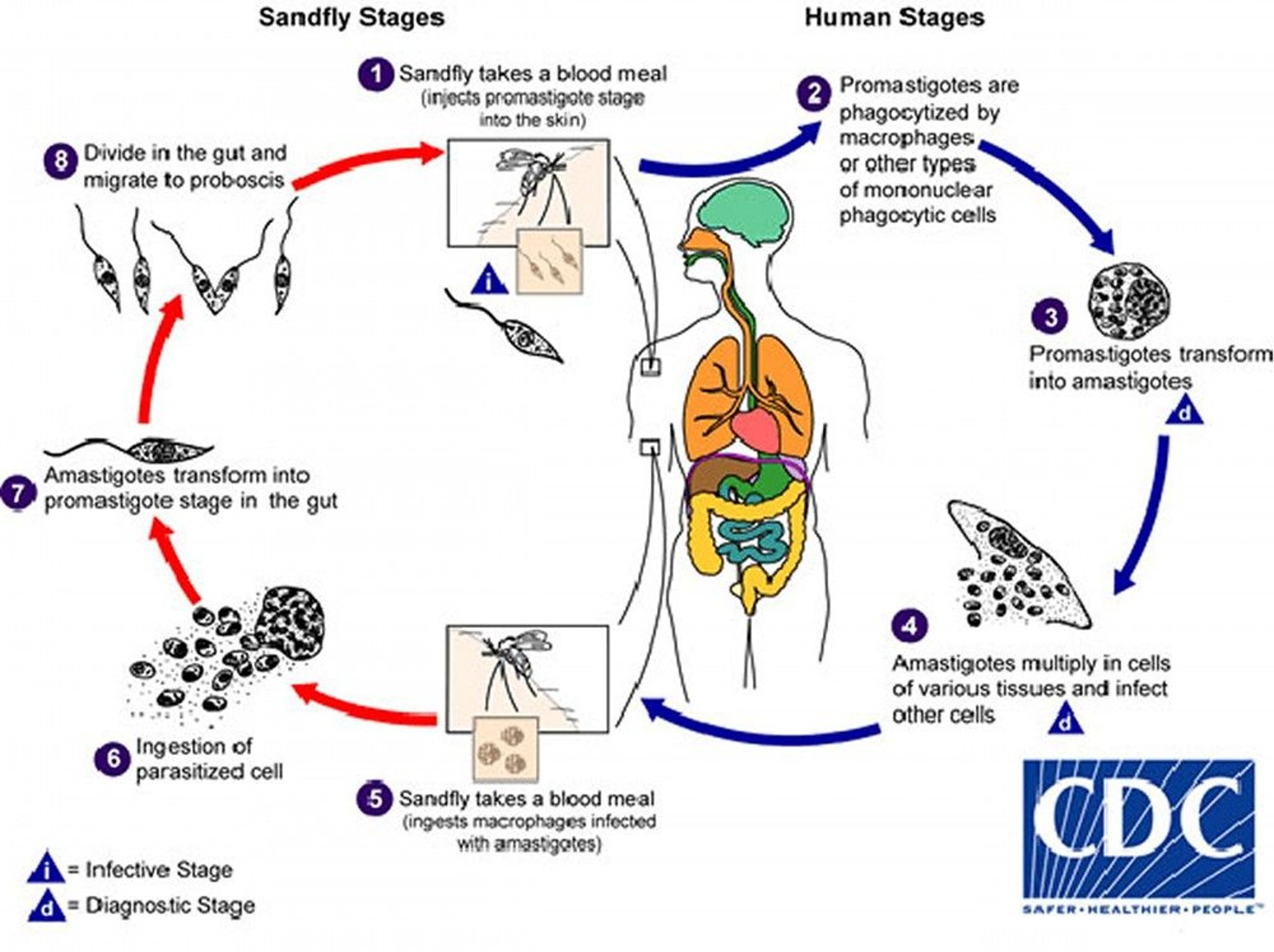
1. People are infected when they are bitten by an infected female sandfly. Sandflies inject a form of the protozoa (called promastigotes) that can cause infection.
2. Promastigotes are ingested by certain immune cells called macrophages. (The process of a cell ingesting a microorganism, another cell, or cell fragments is called phagocytosis, and cells that ingest are called phagocytes.)
3. In these cells, promastigotes develop into another form (called amastigotes).
4. Amastigotes multiply inside macrophages in various tissues.
5–6. When a sandfly bites an infected person or animal, it becomes infected by ingesting blood containing macrophages with amastigotes inside.
7. In the middle part of the sandfly's gut (midgut), amastigotes develop into promastigotes.
8. In the sandfly's midgut, promastigotes multiply, develop, and migrate to the fly's mouth parts. They are injected when the fly bites another person or animal, completing the cycle.
Image from the Centers for Disease Control and Prevention, Global Health, Division of Parasitic Diseases and Malaria.
Leishmaniasis includes several disorders. There are 3 major forms of leishmaniasis: cutaneous, mucosal, and visceral. Each form affects a different part of the body. After the protozoa enter the body through a bite in the skin, they may remain in the skin or spread to the mucous membranes of the nose, mouth, and throat, or to internal organs including the bone marrow, liver, lymph nodes, and spleen.
Cutaneous leishmaniasis
Cutaneous leishmaniasis affects the skin. It is the most commonly diagnosed form of leishmaniasis. Other names for this form are oriental or tropical sore, Delhi or Aleppo boil, uta or chiclero ulcer, and forest yaws.
Cutaneous leishmaniasis occurs in southern Europe, Asia, Africa, Mexico, and Central and South America. Infections have occurred among United States military personnel serving in Iraq or Afghanistan and among travelers to affected areas in Central and South America, Israel, and elsewhere.
Mucosal leishmaniasis
Mucosal leishmaniasis (mucocutaneous leishmaniasis, espundia) affects the mucous membranes of the nose, mouth, and throat, causing sores and destroying tissue. Mucosal leishmaniasis is most commonly found south and west of the Amazon basin, specifically in parts of Bolivia, Peru, and Brazil.
This form begins with a skin sore. The parasites spread from the initial sore through the lymph and blood vessels to the mucous membranes.
Symptoms of mucosal leishmaniasis can develop while the skin sore is present or months to years after the sore heals.
Visceral leishmaniasis
Visceral leishmaniasis (kala-azar, Dumdum fever) affects the bone marrow, lymph nodes, liver, and spleen.
It occurs in India, Africa (particularly the Sudan), Central Asia, the area around the Mediterranean, South and Central America, and occassionally China.
The parasites spread from the area of the sandfly bite to the lymph nodes, spleen, liver, and bone marrow.
Not all infected people develop symptoms. Children are more likely to have symptoms than adults in many areas, and the disease is more likely to progress in people with a weakened immune system, particularly those with advanced HIV infection (also called AIDS).
Symptoms of Leishmaniasis
Symptoms of leishmaniasis depend on the form.
Cutaneous leishmaniasis
In cutaneous leishmaniasis, the first symptom is usually a well-defined bump at the site of a sandfly bite. The bump typically appears after several weeks or months and contains parasites inside white blood cells known as macrophages. As the infection spreads, more bumps may appear near the initial bump.
The initial bump slowly enlarges and often becomes an open sore (ulcer) with a raised and reddish border, which may ooze or form a scab. The sores are usually painless and cause no other symptoms unless another bacterial infection, characterized by redness in nearby areas of the skin, pain, and sometimes fever, develops. The sores eventually heal on their own after several months but may last for years. They leave permanent scars similar to those due to burns.
Rarely, sores appear on skin all over the body. When this happens, the person is evaluated for HIV infection and other causes of a weakened immune system.

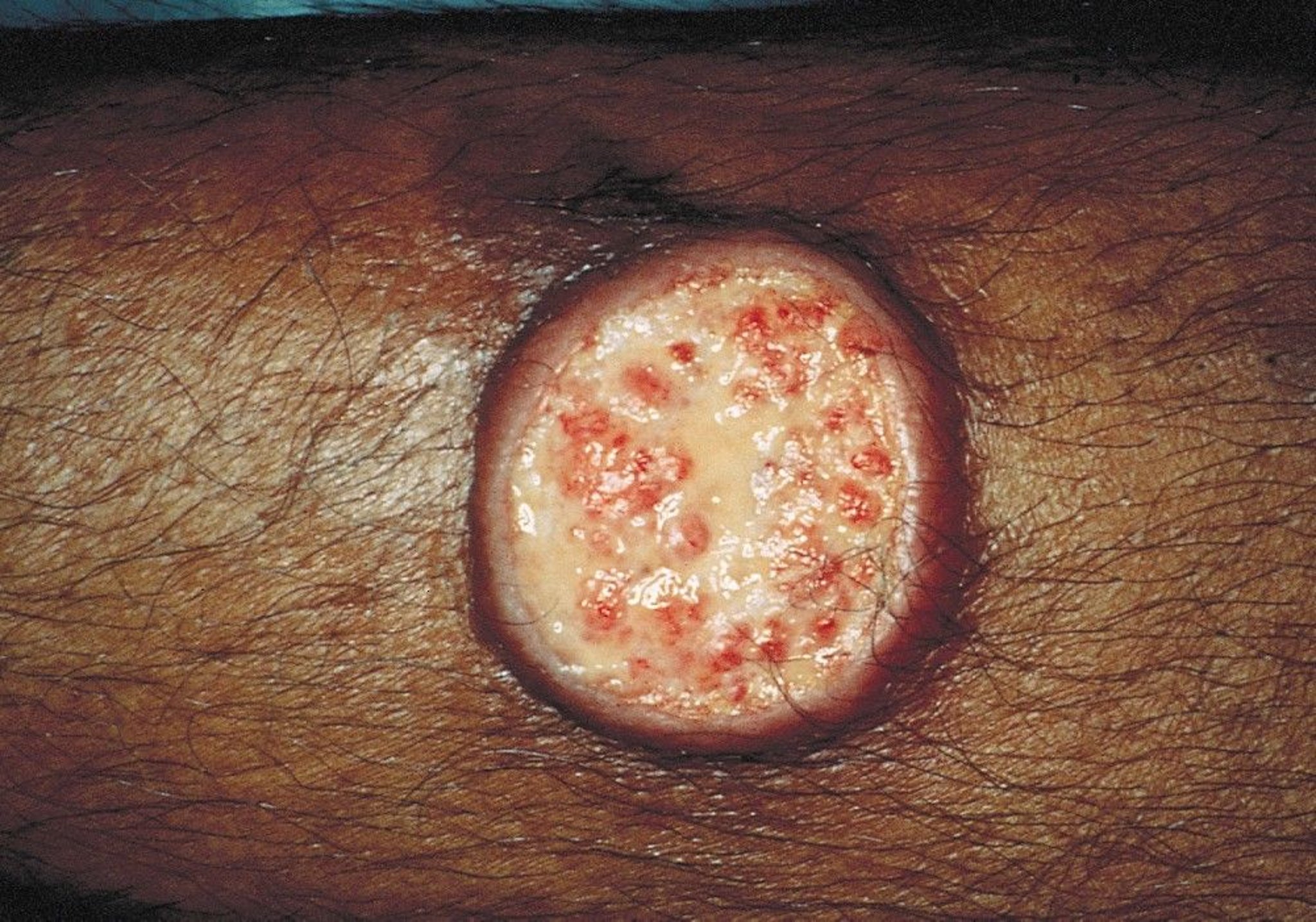
Often, cutaneous leishmaniasis causes a well-defined, open skin sore (ulcer) with a raised, reddish border.
© Springer Science+Business Media
Mucosal leishmaniasis
In mucosal leishmaniasis, symptoms begin with one or more initial skin sores that heal on their own. Sores and tissue destruction may appear on mucous membranes inside the nose, mouth, or throat months to years after the initial sores heal.
Symptoms of affected mucous membranes are a stuffy nose, a discharge from the nose, pain, and nosebleeds. Over time, the infection worsens, and a person's nose, palate, or face becomes severely disfigured.

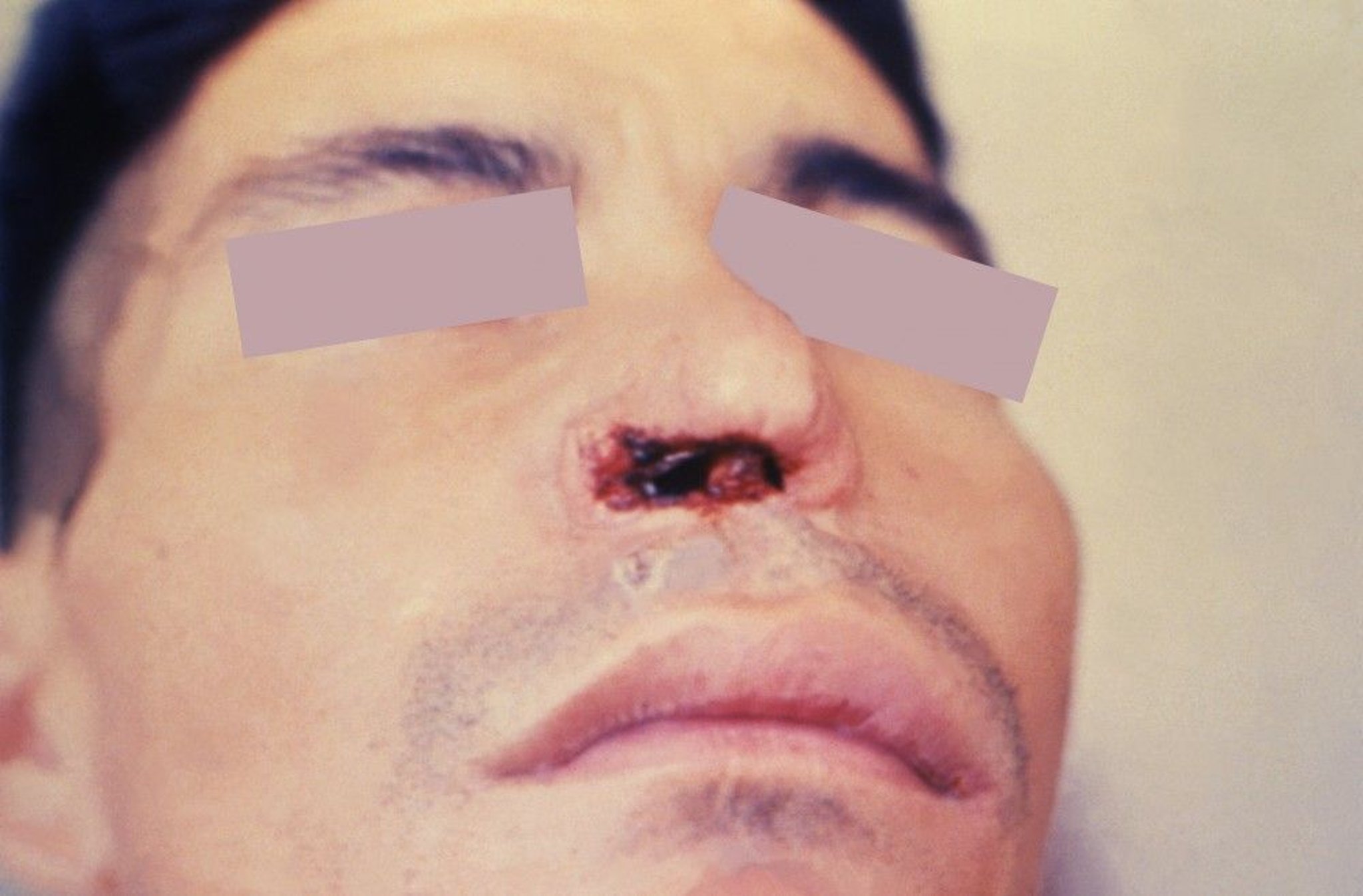
Mucosal leishmaniasis can destroy the tissues of the nose, including the nasal septum, which is the structure that divides the space inside the nose in two. The wearing away of these structures and tissues results in disfigurement.
Image courtesy of Dr. A. Canese via the Public Health Image Library of the Centers for Disease Control and Prevention.
Visceral leishmaniasis
Visceral leishmaniasis may start suddenly but usually develops gradually over weeks to months after the infecting sandfly bite. Skin sores rarely appear. People may have irregular bouts of fever. They may lose weight, have diarrhea, and be generally tired. The liver, spleen, and sometimes lymph nodes enlarge. The number of blood cells decreases, causing anemia and making people more susceptible to other infections. Without treatment, visceral leishmaniasis can be fatal.

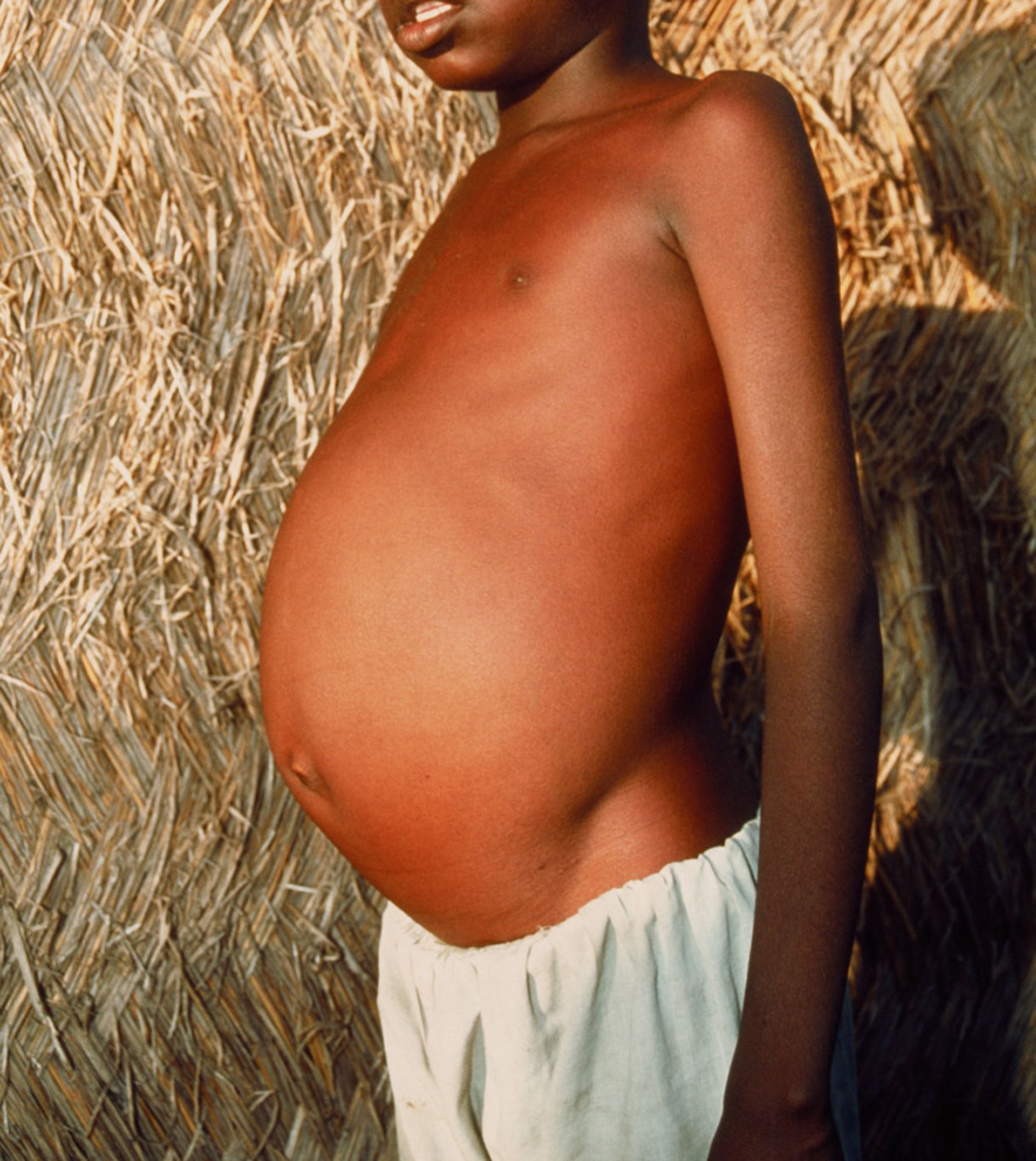
This photo shows a young boy with visceral leishmaniasis (kala-azar) exhibiting clinical features of hepatosplenomegaly and muscle wasting.
A. CRUMP, TDR, WHO/SCIENCE PHOTO LIBRARY
People who recover from the infection with treatment and those who are infected but do not have symptoms are unlikely to have symptoms later in life unless their immune system is weakened (for example, by advanced HIV infection or by medications that are used to suppress the immune system, such as those used to prevent rejection of a transplanted organ).
After treatment of visceral leishmaniasis (called post kala-azar dermal leishmaniasis, or PKDL), flat or raised lumps (nodules) may appear on the skin as other symptoms of visceral leishmaniasis go away. The nodules contain many parasites. When sandflies bite people who have these nodules, the flies become infected and can thus spread the infection.

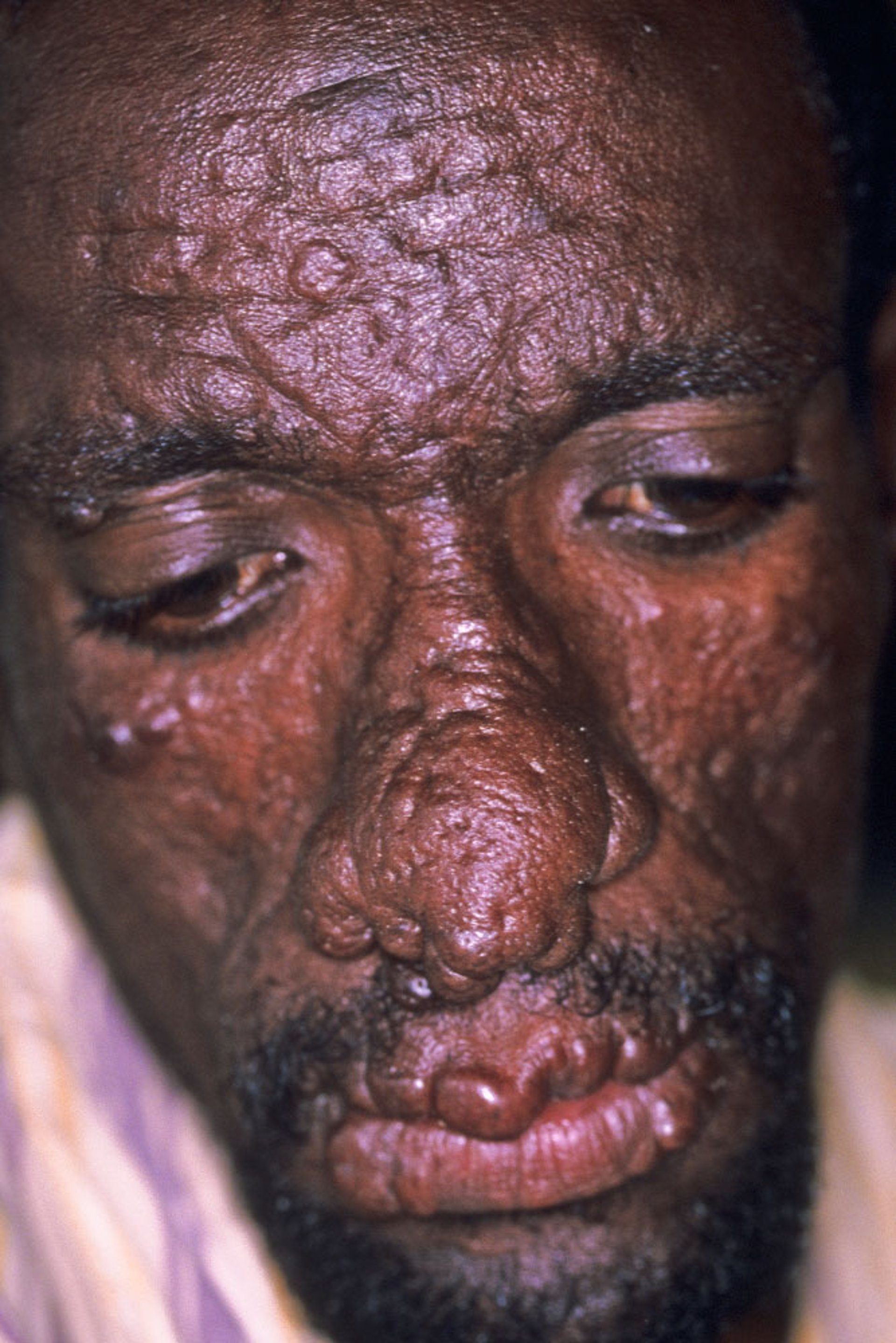
This photo depicts diffuse nodular infiltrates on the face of a man with post kala-azar dermal leishmaniasis (PKDL); lesions are especially prominent on the nose.
ANDY CRUMP / SCIENCE PHOTO LIBRARY
Whether nodules appear on the skin after treatment and how long they last depend on the geographic location where people were infected:
The Sudan (located south of the Sahara) in Africa: Nodules typically remain a few months to a year.
India and nearby countries: Nodules can last for many years.
Southern Europe, North Africa, the Middle East, Central Asia, China, and Latin America: Nodules do not appear.
In people with advanced HIV infection, visceral leishmaniasis often returns.
Diagnosis of Leishmaniasis
Analysis of infected tissue, samples from sores, and blood tests
Polymerase chain reaction (PCR) testing to check for the genetic material of the parasite
Doctors diagnose cutaneous leishmaniasis by taking samples from skin sores and doing PCR tests on the samples to look for the genetic material (DNA) of the parasite.
Doctors diagnose visceral leishmaniasis by taking samples of bone marrow, lymph nodes, or spleen and doing PCR tests on the samples to look for the DNA of the parasite.
Doctors sometimes do blood tests to detect antibodies against Leishmania and help diagnose visceral leishmaniasis. (Antibodies are proteins produced by the immune system to help defend the body against attack, including that by parasites.) However, results of antibody tests may be negative, particularly in people with a weakened immune system, such as those with advanced HIV infection. Blood tests for antibodies are not helpful in diagnosing cutaneous leishmaniasis.
Treatment of Leishmaniasis
Various medications and other treatments, depending on several factors
If mucosal leishmaniasis causes disfigurement, reconstructive surgery after successful treatment
Doctors consider the following factors when selecting a medication to treat leishmaniasis:
The form of the disease, whether it is cutaneous, mucosal, or visceral
The Leishmania species that is causing the infection
The geographic location where the person was infected
The likelihood that the Leishmania species is susceptible to medications
The person's age and immune system status (healthy versus weakened)
Cutaneous leishmaniasis
Miltefosine, paromomycin, and/or sodium stibogluconate
Meglumine antimonate
Some skin sores do not need to be treated. If a sore has started to heal on its own, doctors may observe it rather than treat it, provided the sore is caused by a Leishmania species that is not associated with mucosal leishmaniasis. If it continues to heal, no treatment is needed.
For sores that do need to be treated, treatment options include the following:
Cryotherapy (freezing) or heat therapy applied to sores
Paromomycin ointment (an amebicide) applied directly to sores
Sodium stibogluconate (not available in the United States for injection into sores) or meglumine antimoniate injected into sores
Cryotherapy can be painful and is limited to small sores. Heat therapy also can be painful and requires a special treatment device and is not widely available.
In addition to the treatments applied directly to the sores, some people also need medications that are injected or are taken by mouth. People who have any of the following need additional medications:
Large, multiple, widespread, or disfiguring sores
Sores that are due to a Leishmania species that causes mucosal leishmaniasis
A weakened immune system
Miltefosine is a medication that is taken by mouth. It can be effective for cutaneous leishmaniasis in adults and adolescents. This medication cannot be given to people who are pregnant or breastfeeding (chestfeeding) because it may cause birth defects. People of childbearing age who take miltefosine must use effective birth control measures. Side effects include nausea, vomiting, and dizziness.
Liposomal amphotericin B and amphotericin B deoxycholate are usually used to treat visceral leishmaniasis. However, doctors may prescribe amphotericin B to some people who have cutaneous leishmaniasis.
Doctors give sodium stibogluconate or meglumine antimonate only if these medications are still effective against the species causing the infection. Side effects include nausea, vomiting, and problems with the heart and other organs. As people age, they are more likely to have side effects.
Antifungal medications (such as ketoconazole, itraconazole, and fluconazole) are taken by mouth and may be effective for some cases of cutaneous leishmaniasis. Doctors give antifungal medications if these medications are still effective against the species causing the infection.
When a leishmania skin sore becomes secondarily infected with bacteria, an antibiotic effective for the treatment of skin and soft tissue infections is used.
Mucosal leishmaniasis
Miltefosine
Liposomal amphotericin B
Miltefosine is a medication that is taken by mouth. It can be effective for cutaneous leishmaniasis in adults and adolescents. This medication cannot be given to people who are pregnant or breastfeeding because it may cause birth defects. People of childbearing age who take miltefosine must use effective birth control measures.
Liposomal amphotericin B and amphotericin B deoxycholate are usually used to treat visceral leishmaniasis. However, doctors may prescribe amphotericin B for some people who have mucosal leishmaniasis.
Sodium stibogluconate and meglumine antimonate are medications that are injected into skin sores. They are alternatives for people in Latin America.
Amphotericin B deoxycholate is another medication and is injected into a vein, muscle, or skin sore. It is an alternative if it is still effective against the species causing the infection.
Antifungal medications (such as ketoconazole, itraconazole, and fluconazole) are taken by mouth and may be given for some cases of mucosal leishmaniasis. Doctors give antifungal medications if these medications are still effective against the species causing the infection.
Reconstructive surgery may be needed if the nose, mouth, or face is disfigured. Surgery should be delayed for 12 months after successful treatment so that the skin can regrow and to avoid complications (for example, the skin graft does not survive or is rejected) if the infection returns.
Visceral leishmaniasis
Miltefosine
Liposomal amphotericin B
Sometimes paromomycin and pentamidine
Visceral leishmaniasis is a life-threatening disease, and liposomal amphotericin B is the medication of choice.
Doctors give miltefosine to treat visceral leishmaniasis in certain people in India and nearby areas.
Doctors give sodium stibogluconate or meglumine antimonate to treat visceral leishmaniasis in people who were infected in Latin America or other areas of the world where these medications are still effective against this infection. Some people may be given the antibiotics paromomycin and pentamidine.
Amphotericin B deoxycholate is another medication and is injected into a vein, muscle, or skin sore. It is an alternative if it is still effective against the species causing the infection.
Relapses of visceral leishmaniasis are common among people with a weakened immune system. Antiretroviral medications can improve the functioning of the immune system in people who have HIV and reduce the risk of relapse. Medications that treat the parasite may help prevent relapses in people with advanced HIV infection.
People who have visceral leishmaniasis often need supportive care measures, such as adequate nutrition, blood transfusions, or antibiotics to treat bacterial infections that occur, in addition to medications that treat the parasite.
Prevention of Leishmaniasis
Leishmaniasis prevention begins with preventing sandfly bites.
For people who travel to or live in areas where the infection is common, the following can help:
Using insect repellents containing DEET (diethyltoluamide) on exposed skin
Using insect screens, bed nets, and clothing that are treated with insecticides such as permethrin
Wearing long-sleeved shirts, long pants, and socks
Avoiding outdoor activities from dusk to dawn, when sandflies are most active
To further prevent transmission, people should avoid sharing needles and should practice safe sex.
Pregnant people who are in regions where leishmaniasis is common should avoid sandflies and should seek medical care so they can be diagnosed early and be given pregnancy-appropriate medication (liposomal amphotericin B).
More Information
The following English-language resource may be useful. Please note that The Manual is not responsible for the content of this resource.
Centers for Disease Control and Prevention: About Leishmaniasis
Drug Information for the Topic